Arromanches-les-Bains: Where D-Day Changed the World
Arromanches-les-Bains is a small Normandy seaside town that bears the weight of one of the most consequential days in human history. On June 6, 1944, this quiet stretch of the Channel coast — designated Gold Beach by Allied planners — became the site of one of the most audacious engineering feats of World War II: the construction of Mulberry B, an artificial harbour assembled from massive concrete caissons towed across the English Channel, which would enable the Allied forces to land the men, vehicles, and supplies needed to liberate Western Europe. In the hundred days following D-Day, over two and a half million men, five hundred thousand vehicles, and four million tonnes of supplies passed through this improvised port — a logistical achievement that Churchill himself considered one of the war's greatest triumphs.
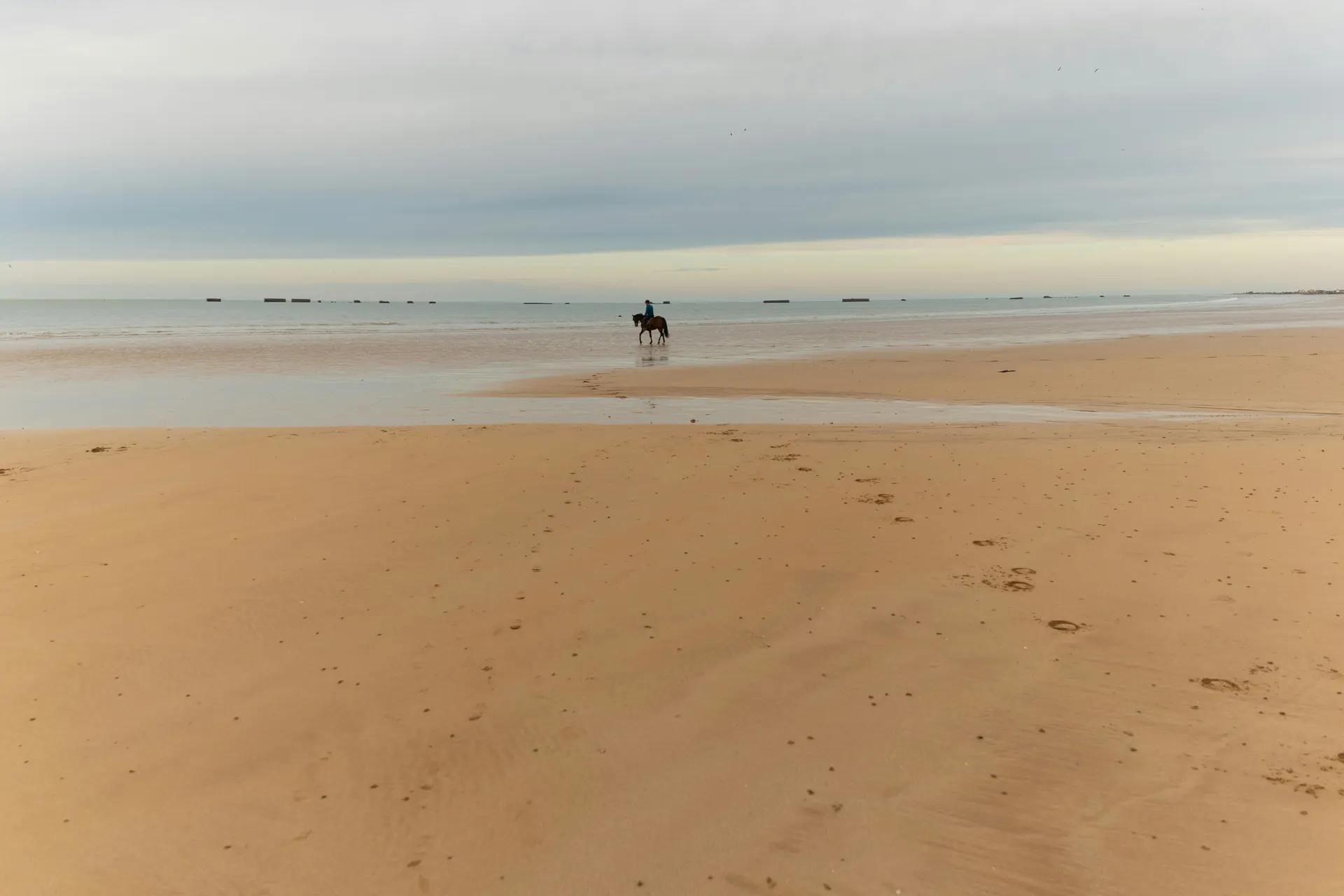
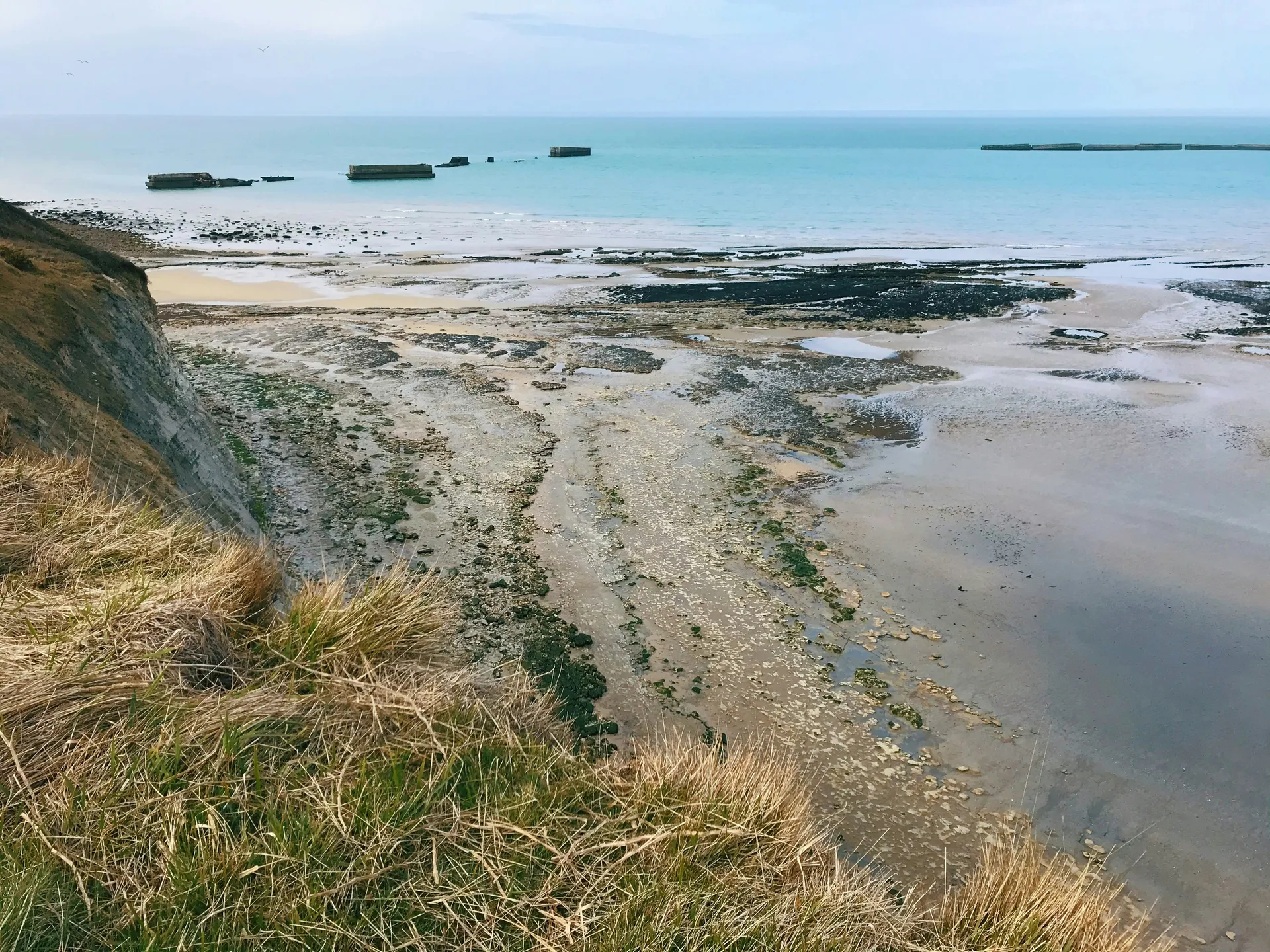
The character of Arromanches today is shaped by this history, which is present in every sightline. The remains of the Mulberry harbour are still visible at low tide — massive concrete structures now colonised by barnacles and seaweed, sitting on the sand like the bones of some enormous creature, their presence a permanent memorial to the ingenuity and sacrifice of 1944. The D-Day Museum (Musée du Débarquement), positioned directly above the beach with panoramic views of the harbour remains, tells the story of the Mulberry harbour's design, construction, and operation with models, film footage, and original artefacts. Arromanches 360, a circular cinema on the cliff top, presents a nine-screen film using archival footage and modern shots to create an immersive, emotionally powerful account of the Battle of Normandy.
The broader D-Day beaches stretch along the Normandy coast for eighty kilometres, and Arromanches serves as an ideal base for exploring them. Omaha Beach, where American forces suffered the heaviest casualties, lies to the west — the American Cemetery at Colleville-sur-Mer, with its ten thousand white marble crosses overlooking the beach, is one of the most moving memorial sites in the world. Utah Beach, Juno Beach (where Canadian forces landed), and Sword Beach complete the five landing zones. The Pointe du Hoc, where US Rangers scaled thirty-metre cliffs under fire to destroy German gun emplacements, preserves its cratered, war-torn landscape as a testament to extraordinary courage.
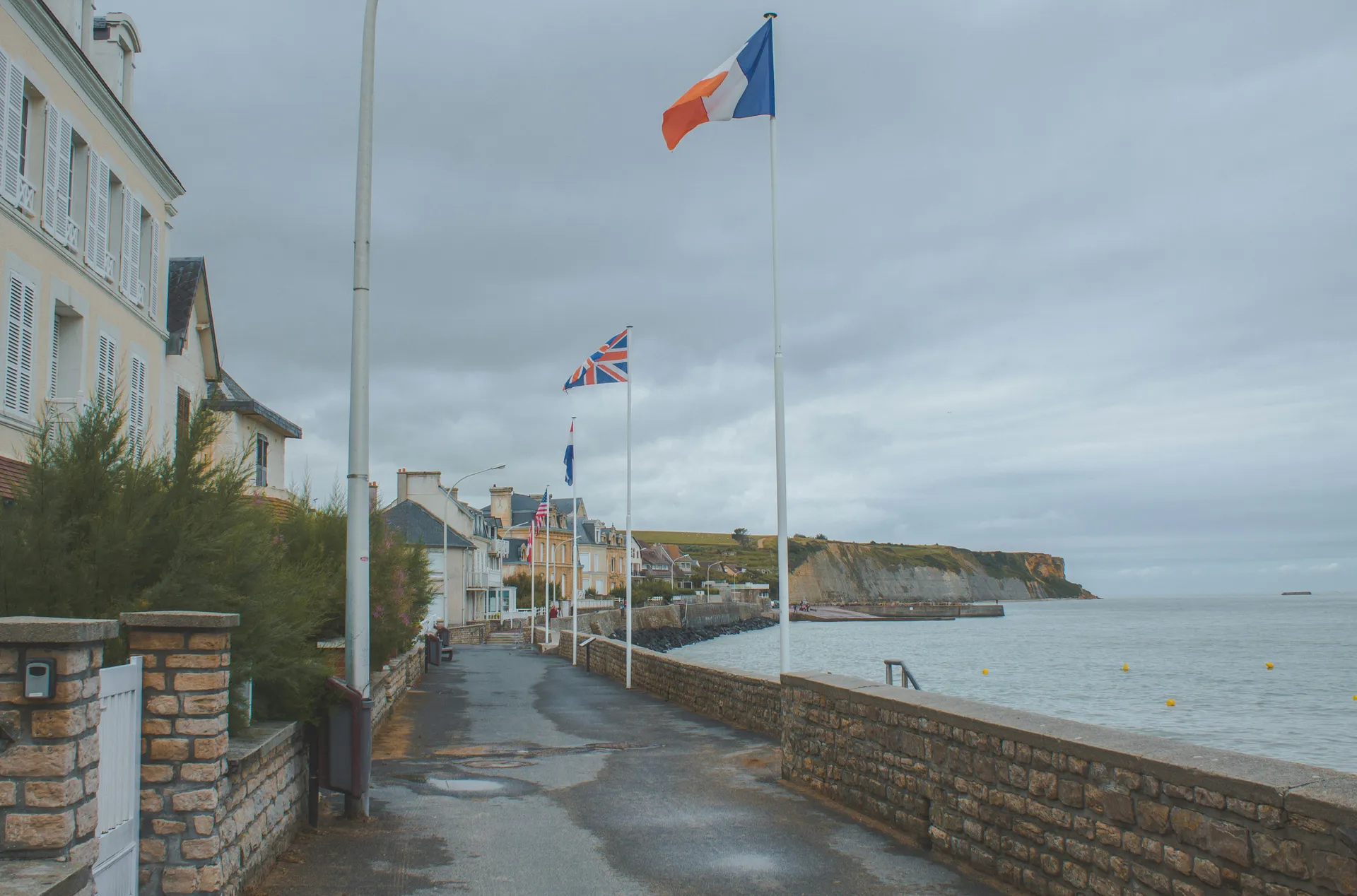
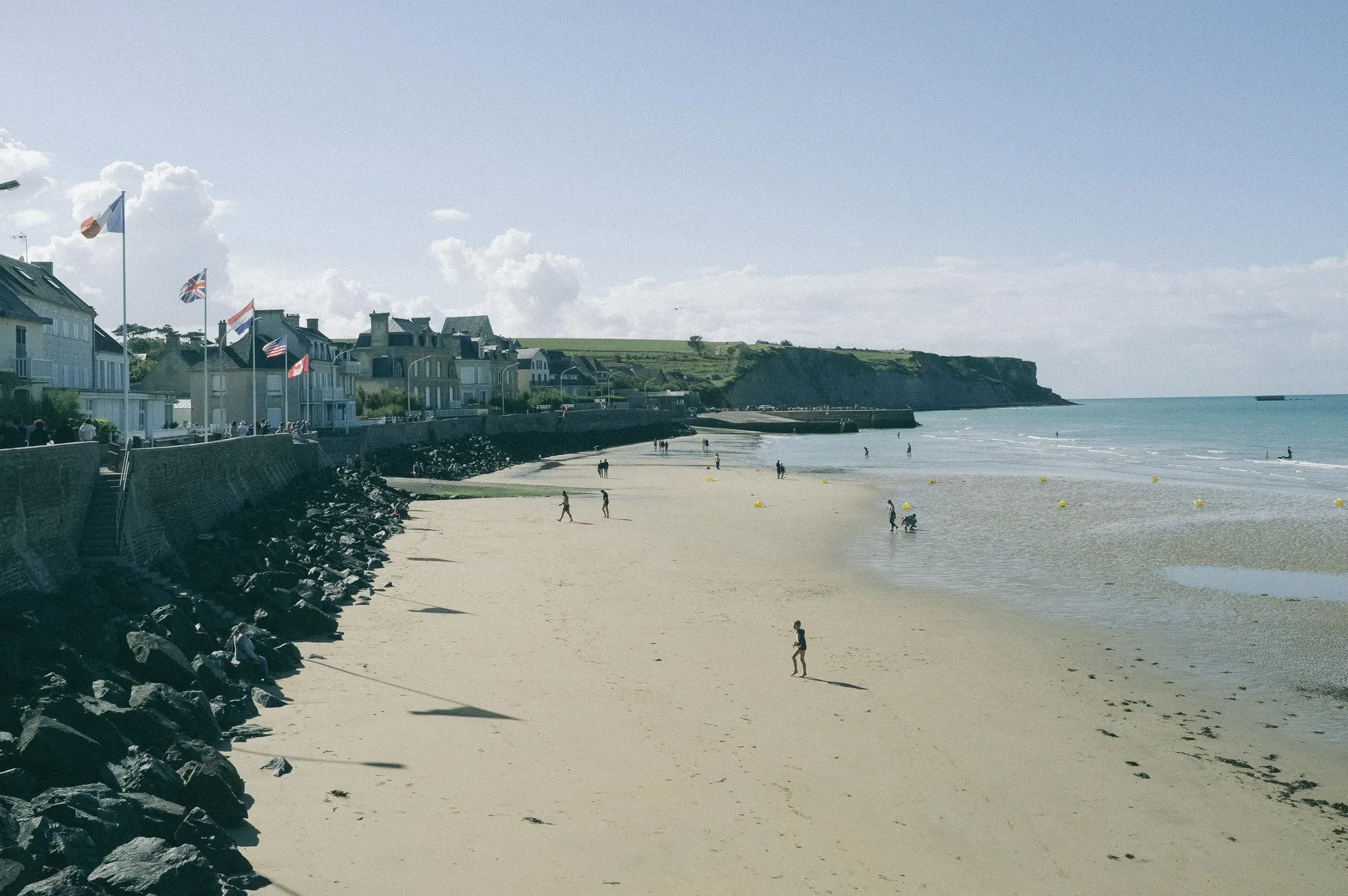
Away from the battlefield sites, Arromanches retains the character of a traditional Norman seaside resort. The seafront promenade, lined with restaurants and cafés, offers views across the Channel to the English coast on clear days. The cuisine of Normandy — among France's richest — is well represented: moules marinières, fresh oysters from nearby beds, sole meunière, and the region's famous camembert, paired with local cider and calvados (apple brandy). The surrounding bocage countryside — the hedgerow-enclosed fields that proved so deadly to Allied armour in 1944 — is now peaceful farmland producing the cream, butter, and apples that define Norman cuisine.
Riviera Travel includes Arromanches on its Normandy and northern France itineraries, recognising that the D-Day beaches represent one of the most significant and emotionally resonant historical sites accessible to travellers. The experience of standing on Gold Beach, watching the tide recede to reveal the Mulberry harbour remains, and comprehending the scale of what was achieved here in June 1944 is profoundly affecting regardless of nationality. The D-Day anniversary period around June 6 brings special ceremonies, but the beaches and museums are compelling year-round. April through October offers the best weather, with the long June days providing the most light for beach exploration.