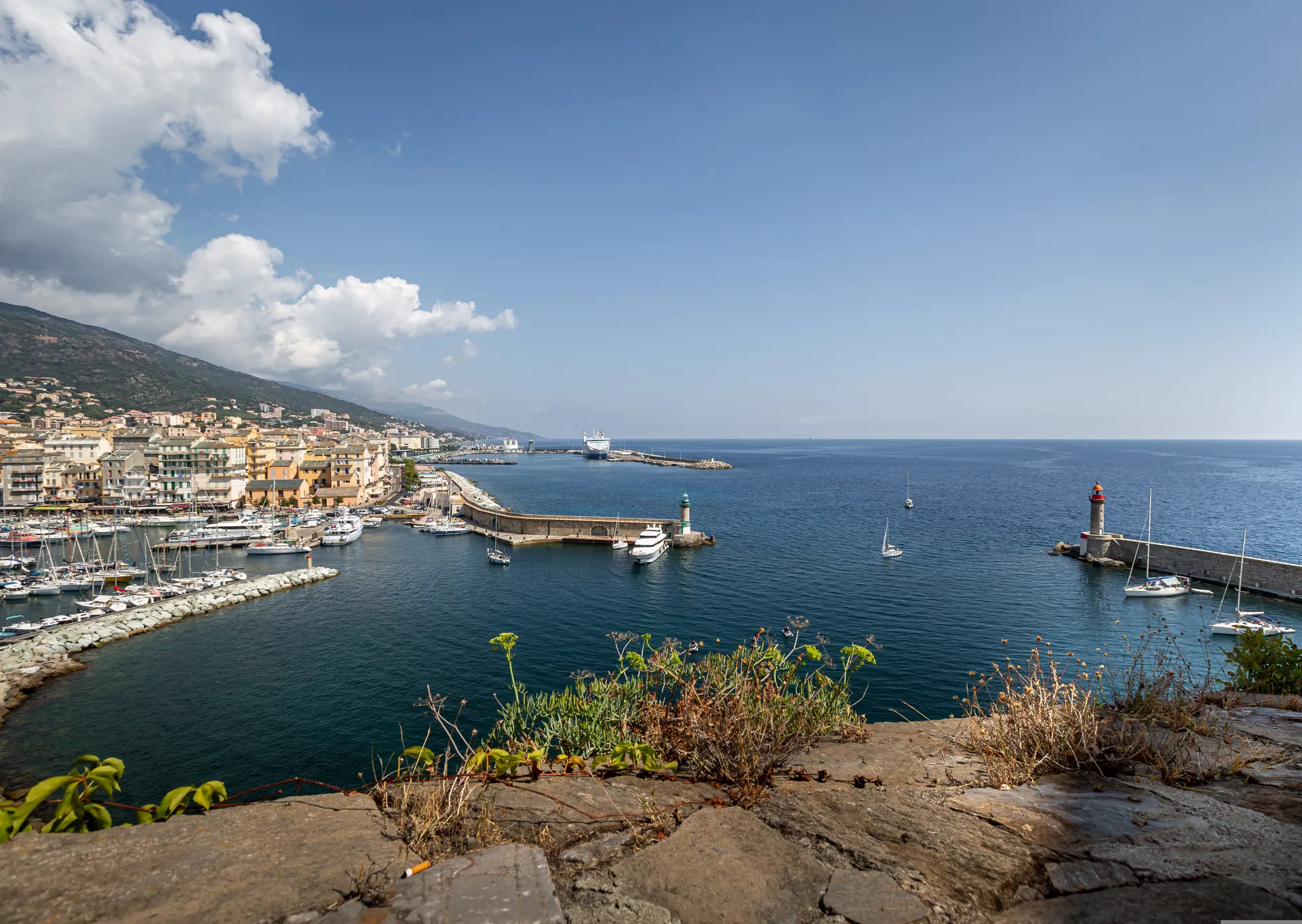
Bastia is Corsica's most authentically French-Italian city — a working port on the island's northeastern coast whose old harbor, Baroque churches, and dramatic citadel create an atmosphere that Ajaccio, the capital, cannot match for genuine Mediterranean character. While Ajaccio markets its Napoleon connection, Bastia simply lives its Genoese heritage without self-consciousness or apology.
The Vieux Port — the old harbor — is Bastia's emotional center, a horseshoe-shaped inlet surrounded by tall, pastel-colored buildings whose crumbling facades and laundry-draped balconies create the Mediterranean port aesthetic that Hollywood art directors attempt to replicate on soundstages. The Church of Saint-Jean-Baptiste, whose twin bell towers dominate the harbor's southern end, is the largest church in Corsica and contains a Baroque interior of gilded excess that reflects the Counter-Reformation Catholicism imported by Bastia's Genoese rulers.
The citadel — Terra Nova — rises above the old port on a rocky promontory, its Genoese fortifications enclosing a quarter of narrow streets, the former Governor's Palace (now the Corsica Museum), and viewpoints that encompass the harbor, the city, and the Tyrrhenian Sea stretching east toward the Italian coastline that shaped Bastia's identity for five centuries.
Azamara, CroisiEurope, Scenic Ocean Cruises, Seabourn, and Silversea include Bastia on Mediterranean and Corsican itineraries. The Cap Corse peninsula, extending north from Bastia like a rocky finger pointing toward Genoa, provides dramatic coastal drives past medieval watchtowers, tiny fishing harbors, and vineyards producing Corsica's most distinctive wines — particularly the white Muscat of Cap Corse, a sweet aperitif wine unique to this peninsula.
May through October provides ideal conditions, with September offering warm seas, thinning crowds, and the grape harvest that gives the Cap Corse its most atmospheric season. Bastia is the Corsica that tourism brochures often overlook — grittier than Calvi, more authentic than Porto-Vecchio, and possessed of a Mediterranean character that only centuries of Genoese and French cultural layering can produce.

