Bayeux holds a place in history out of all proportion to its modest size—a small Norman town of 14,000 inhabitants that gave its name to the most famous textile artwork in existence and served as the first French city liberated in the D-Day invasion of June 1944. These two claims alone would make Bayeux essential, but the town also possesses one of France's finest Gothic cathedrals, a beautifully preserved medieval quarter, and a graceful provincial atmosphere that rewards slow, attentive exploration.
The Bayeux Tapestry is the town's incomparable treasure—a 68-meter embroidered cloth that narrates the Norman Conquest of England in 1066 with the vivid, sequential storytelling of a medieval graphic novel. Created within a decade of the events it depicts, the tapestry follows Duke William of Normandy (later William the Conqueror) from his claim to the English throne through the Battle of Hastings in fifty-eight scenes of extraordinary narrative energy. The figures fight, feast, sail, and scheme with an immediacy that transcends their nearly thousand-year age, and the marginal decorations—mythical beasts, Aesop's fables, scenes of everyday medieval life—add layers of meaning that scholars continue to debate.
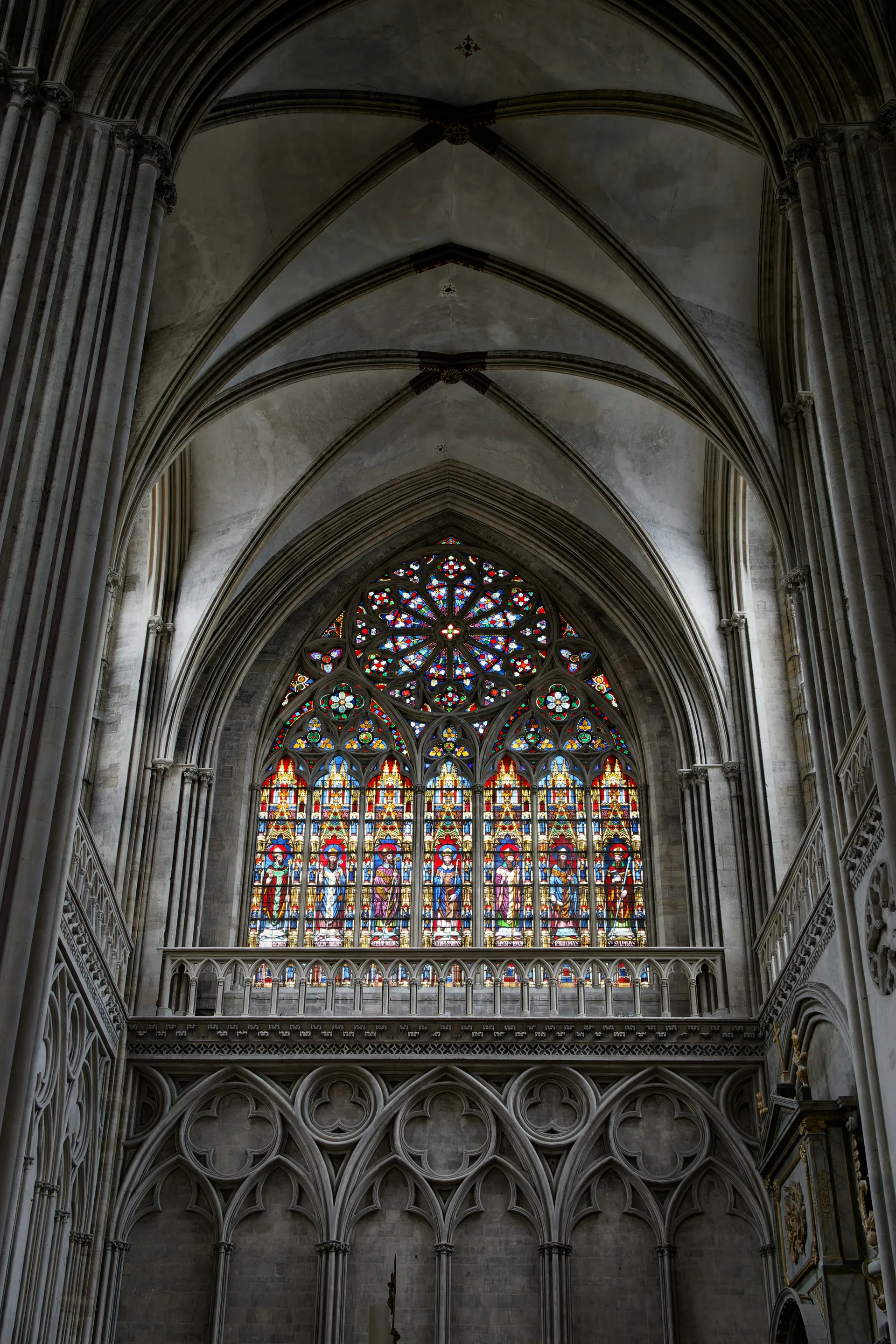
The Cathédrale Notre-Dame de Bayeux, consecrated in 1077 in the presence of William the Conqueror himself, soars above the town center with the confident verticality of Norman Gothic architecture. Its crypt preserves eleventh-century Romanesque frescoes of remarkable quality, while the nave and choir display the full evolution of Gothic style from the austerity of the twelfth century to the exuberance of the fifteenth. The cathedral's exterior, particularly the ornate central tower added in the fifteenth century, provides the town's most photographed silhouette.
Bayeux's role in the D-Day landings of June 6, 1944, adds a powerful twentieth-century layer to its medieval heritage. The Musée Mémorial de la Bataille de Normandie offers a comprehensive account of the Battle of Normandy from June to August 1944, while the British War Cemetery—the largest Commonwealth war cemetery in France, with 4,648 graves arranged in immaculate rows—provides a place of quiet reflection that moves visitors regardless of nationality. The D-Day beaches themselves—Omaha, Gold, Juno, Utah, and Sword—are all within easy excursion distance, with Arromanches and its remains of the Mulberry artificial harbor particularly accessible.
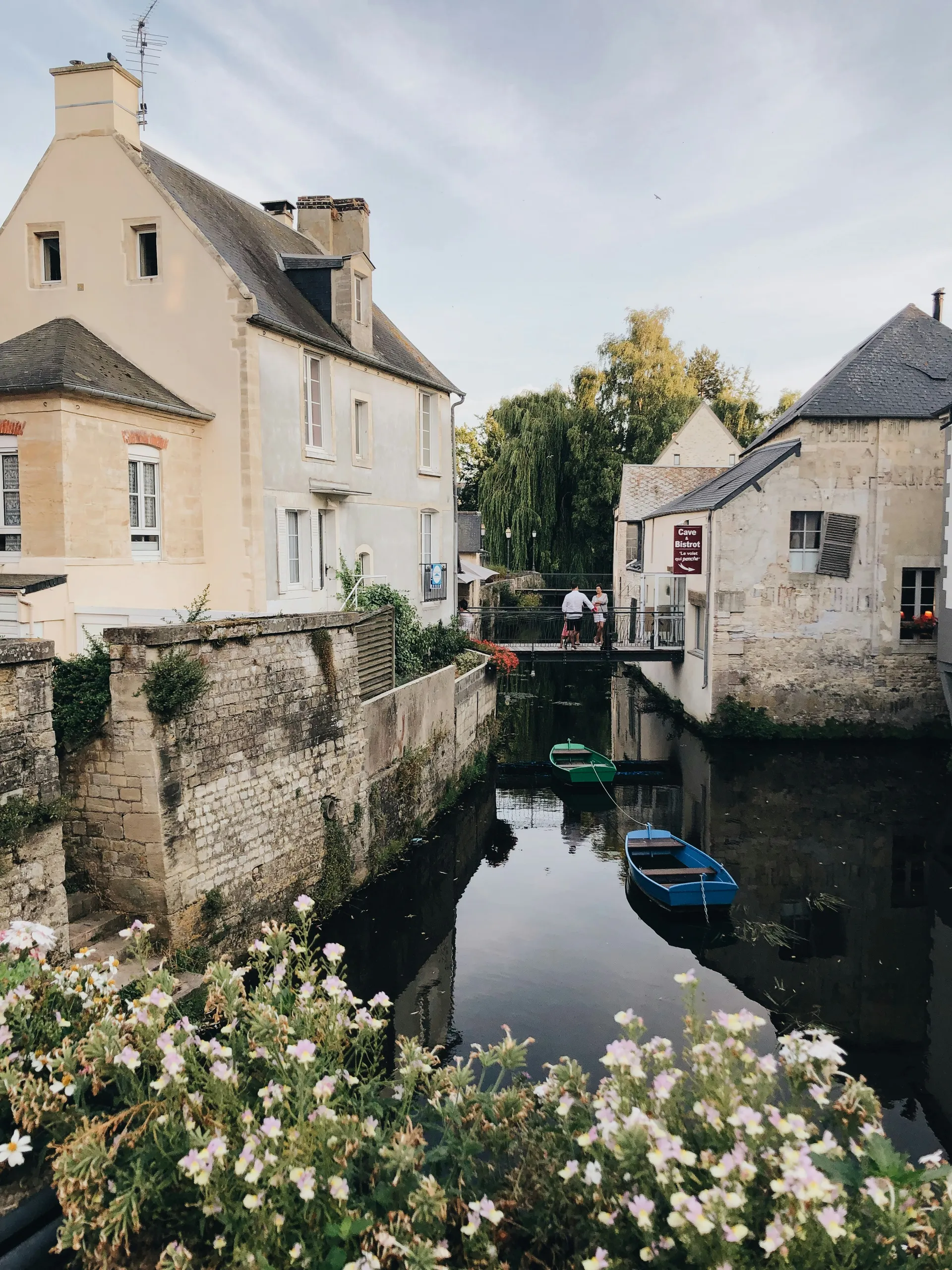
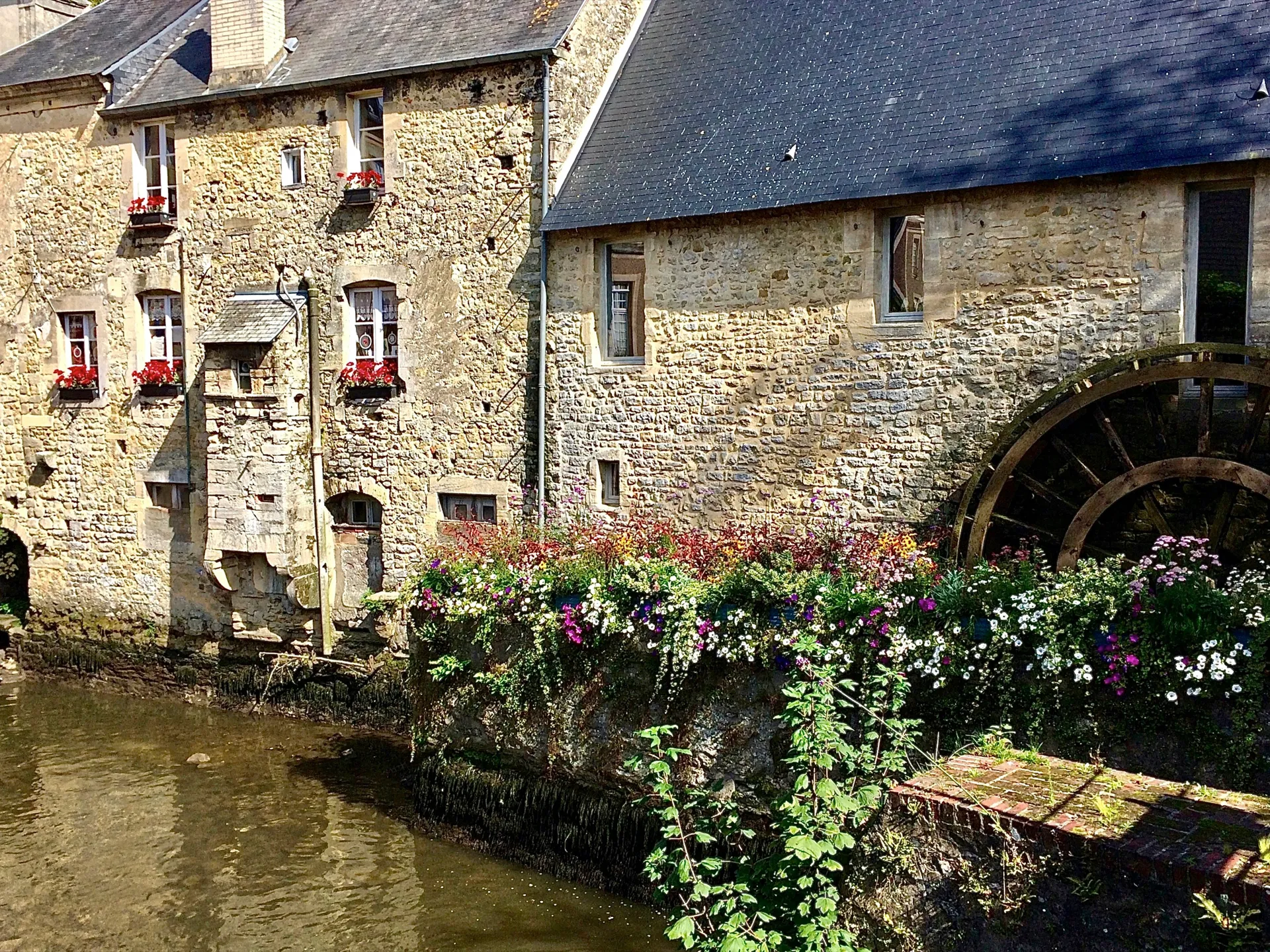
Bayeux is visited as a port excursion from Normandy cruise calls or as part of Seine River cruise itineraries. The town center is compact and entirely walkable, with the tapestry museum, cathedral, and war museum all within a fifteen-minute stroll. The medieval old town, with its half-timbered houses reflected in the millstream of the River Aure, provides atmospheric wandering between major sites. Spring and early autumn offer the most pleasant visiting conditions, with June—the anniversary month of D-Day—bringing special commemorative events and a particularly poignant atmosphere to the beaches and cemeteries.