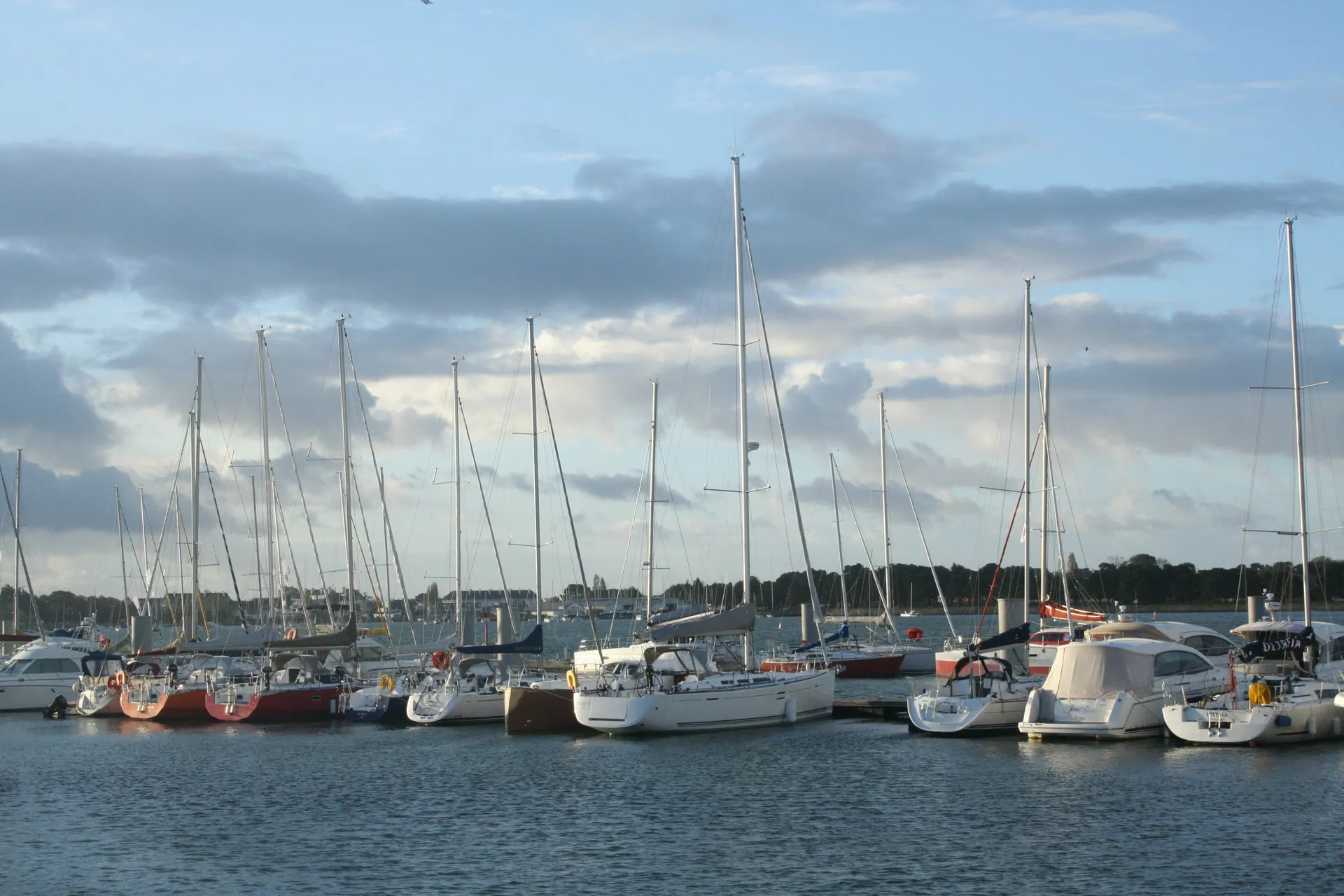
Lorient was built by the sea and for the sea — its very name derives from L'Orient, the name of a French East India Company ship that sailed from this Breton port in 1666, and for over three centuries the city's fortunes have risen and fallen with the tides of maritime commerce, naval warfare, and the fishing industry that remains the lifeblood of its waterfront. During World War II, the Germans transformed Lorient into one of the most formidable submarine bases on the Atlantic coast, constructing massive concrete U-boat pens that were so heavily built — their walls up to seven metres thick — that Allied bombing destroyed 90 percent of the city while leaving the submarine base virtually intact. Those pens survive today, repurposed as exhibition spaces, concert halls, and the Sous-marin Flore museum, where visitors can tour a Cold War-era submarine and gain a visceral understanding of life beneath the waves.
The rebuilt city of Lorient, while architecturally modest compared to pre-war photographs, has developed a cultural vitality centred on its Celtic heritage. The Festival Interceltique de Lorient, held each August, is the world's largest celebration of Celtic culture — drawing over 700,000 visitors and performers from all seven Celtic nations (Brittany, Ireland, Scotland, Wales, Cornwall, the Isle of Man, and Galicia) for ten days of music, dance, pipe bands, and the cultural cross-pollination that reveals how deeply connected these Atlantic communities remain. The festival transforms the city into an open-air celebration of bagpipes, harps, fiddles, and the crashing energy of Celtic rock bands that pack the festival stages until the early hours.
Lorient's position on the coast of southern Brittany places it at the centre of one of France's most productive seafood regions. The port of Keroman is the second-largest fishing port in France, and the daily fish auction — accessible to visitors on guided tours — is a high-speed spectacle of commerce where tonnes of langoustines, monkfish, sole, and sardines change hands in minutes. The restaurants of Lorient serve this catch with the simplicity it deserves — plateau de fruits de mer (seafood platters), grilled sardines, and the kouign-amann, a Breton pastry of laminated butter and sugar whose richness defies nutritional propriety and rewards every calorie.
The coast surrounding Lorient offers a succession of islands, beaches, and historical sites. The Ile de Groix, a small island accessible by ferry, provides car-free cycling, dramatic cliff walks, and the only convex beach in Europe — the Plage des Grands Sables, whose unusual shape is caused by tidal currents. The Citadelle de Port-Louis, across the harbour from Lorient, houses the Musee de la Compagnie des Indes — a museum documenting the French East India Company's trade routes to Asia and the objects — porcelain, silk, spices — that flowed through this port from the Orient. The standing stones of Carnac, the largest concentration of megalithic monuments in the world, lie 35 kilometres east along the coast.
Lorient is served by Ambassador Cruise Line and Windstar Cruises on Breton and Bay of Biscay itineraries, with ships docking at the port facilities. The most enjoyable visiting season is May through September, with August being the obvious highlight for the Festival Interceltique. The Breton climate, while milder than its reputation suggests, does favour waterproof layers — but the compensation of dramatic Atlantic skies, extraordinary seafood, and the passionate Celtic culture that defines this city is more than sufficient.

