Royan stands at the mouth of the Gironde Estuary on France's Atlantic coast, a city whose dramatic postwar reconstruction makes it one of the most significant—and most overlooked—examples of 1950s modernist architecture in Europe. The original Royan, a Belle Époque seaside resort of Victorian villas and grand hotels, was devastated by Allied bombing in January 1945, an attack aimed at the German garrison that instead destroyed 85 percent of the city. The rebuilding that followed, under the direction of architect Claude Ferret, transformed Royan into a showcase of postwar modernism whose concrete curves, soaring rooflines, and sun-catching facades now enjoy architectural heritage protection.
The Church of Notre-Dame de Royan, designed by Guillaume Gillet and completed in 1958, is the city's architectural masterpiece—a sweeping concrete shell whose saddle-shaped roof rises above the city like a prayer made physical. The interior, lit by stained glass designed by Henri Martin-Granel, combines the spiritual ambition of Gothic cathedral building with the material vocabulary of postwar reinforced concrete, creating a space that is simultaneously powerful and serene. The covered market, also by Ferret, employs a dramatic shell-concrete roof that has become a template for modernist market architecture worldwide.
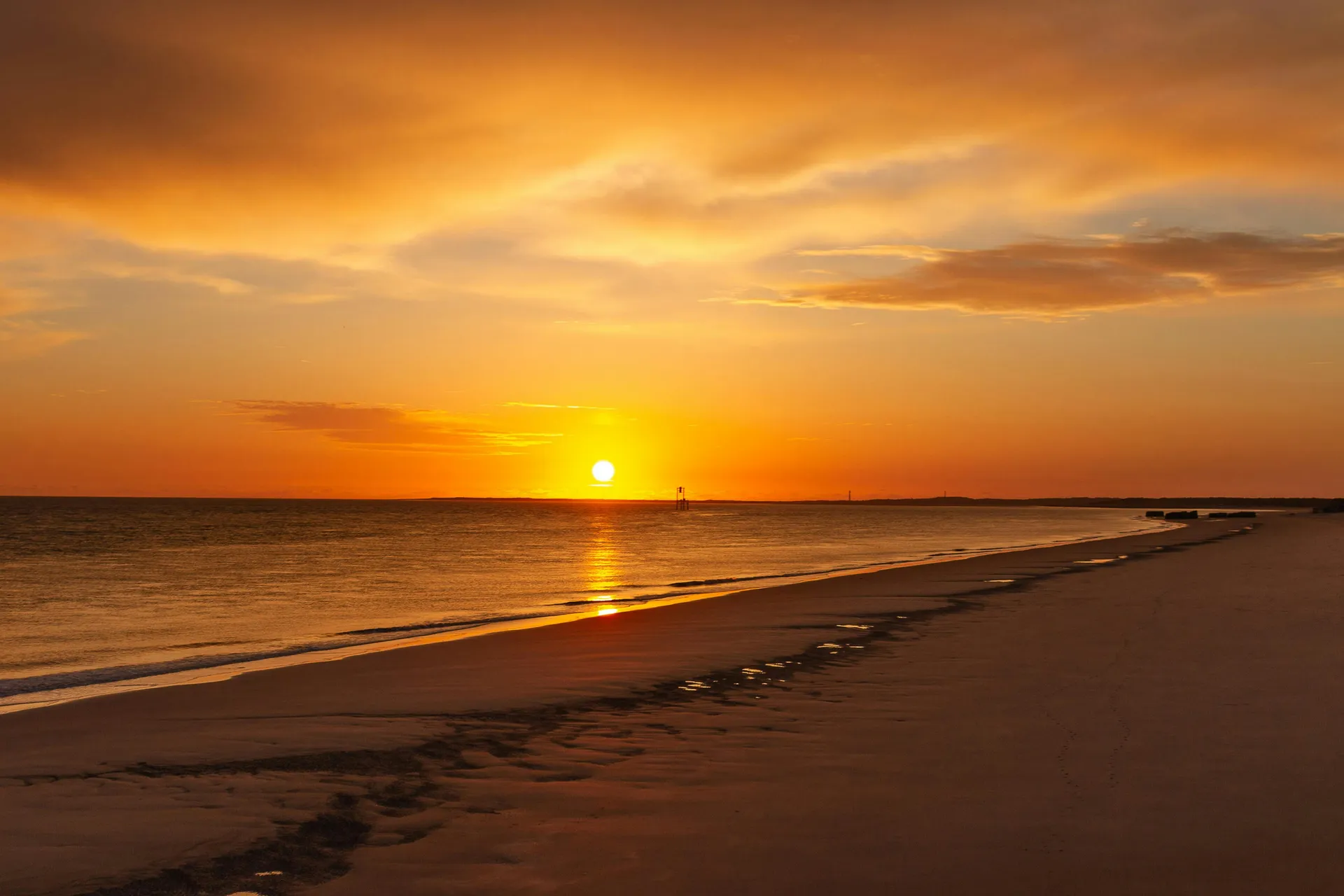
Royan's beaches are its primary recreational attraction—five distinct sandy beaches curve along the peninsula in a series of coves that face the Atlantic in slightly different directions, ensuring that there is always a sheltered option regardless of wind direction. The Grande Conche, the largest and most central, stretches for two kilometers in a gentle crescent backed by the modernist apartment blocks and villas that define the city's distinctive skyline. The surf beaches at the peninsula's western tip attract board riders from across France, while the calmer waters of the estuary side offer safer swimming for families.
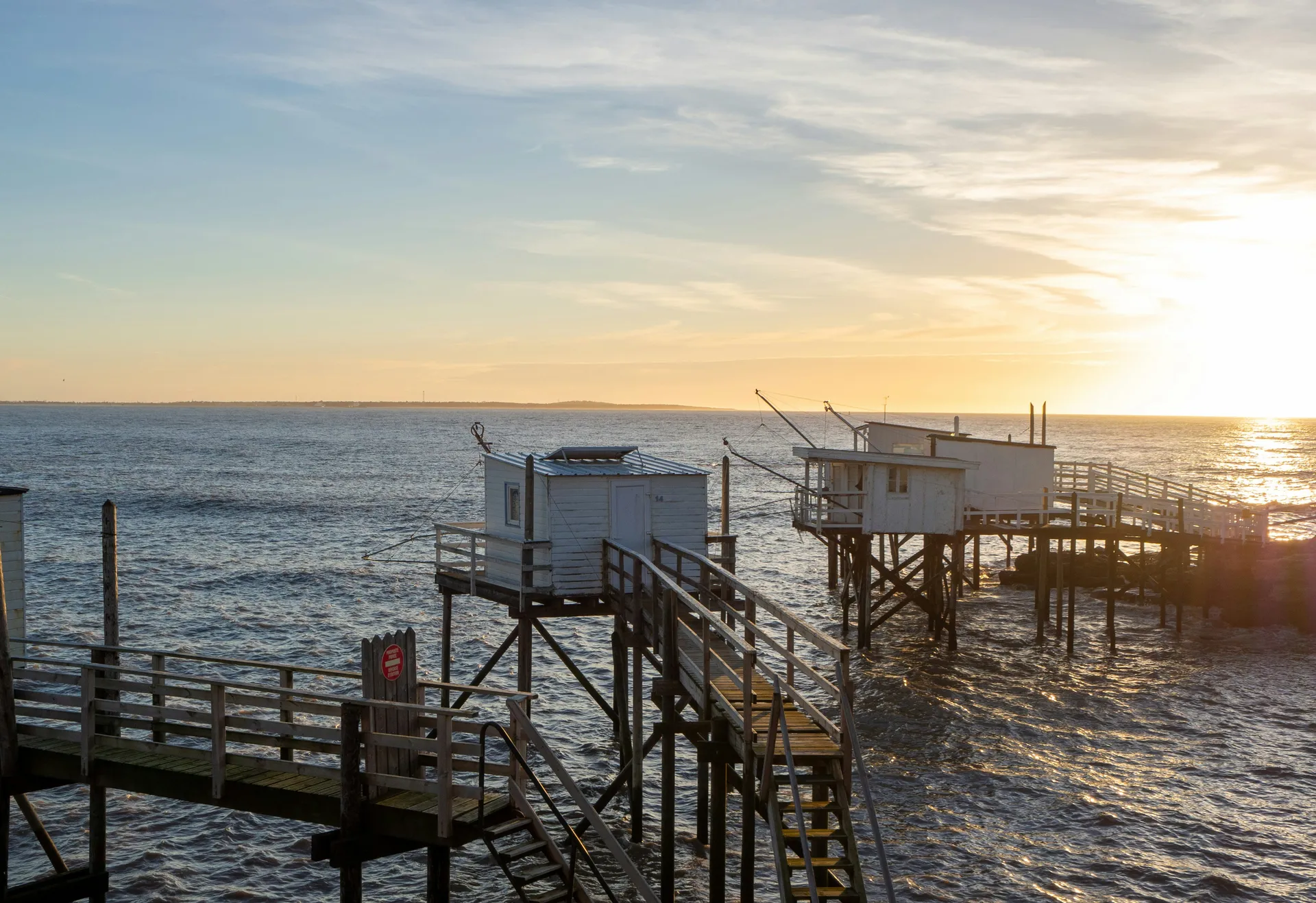
The Gironde Estuary, Europe's largest, dominates the geography and gastronomy of the region. The estuary's waters support the distinctive Marennes-Oléron oyster beds, where Pacific oysters are refined in the estuary's brackish water to develop the green-tinged meat and mineral flavor that distinguish them from all other French oysters. The fishing port of Royan's La Grande Terrasse neighborhood maintains a fleet of small boats that harvest sardines, sole, and the tiny shrimp called crevettes grises that are a regional delicacy—bought fresh from the boat and boiled with sea salt, they represent one of the Atlantic coast's simplest and finest pleasures.
Cruise ships anchor off Royan in the estuary or dock at the nearby port of Le Verdon, from which the city is accessible by short transfer. Royan also serves as a gateway to the Médoc wine region, whose prestigious appellations—Margaux, Pauillac, Saint-Julien—lie just across the estuary, and to the Île d'Oléron, France's second-largest island, with its fishing villages, salt marshes, and oyster farms. May through September offers the best weather, with July and August bringing the warmest temperatures (around 25°C) and the liveliest beach scene. The shoulder months of May-June and September-October are ideal for architecture tours, wine visits, and oyster tasting without the summer crowds.