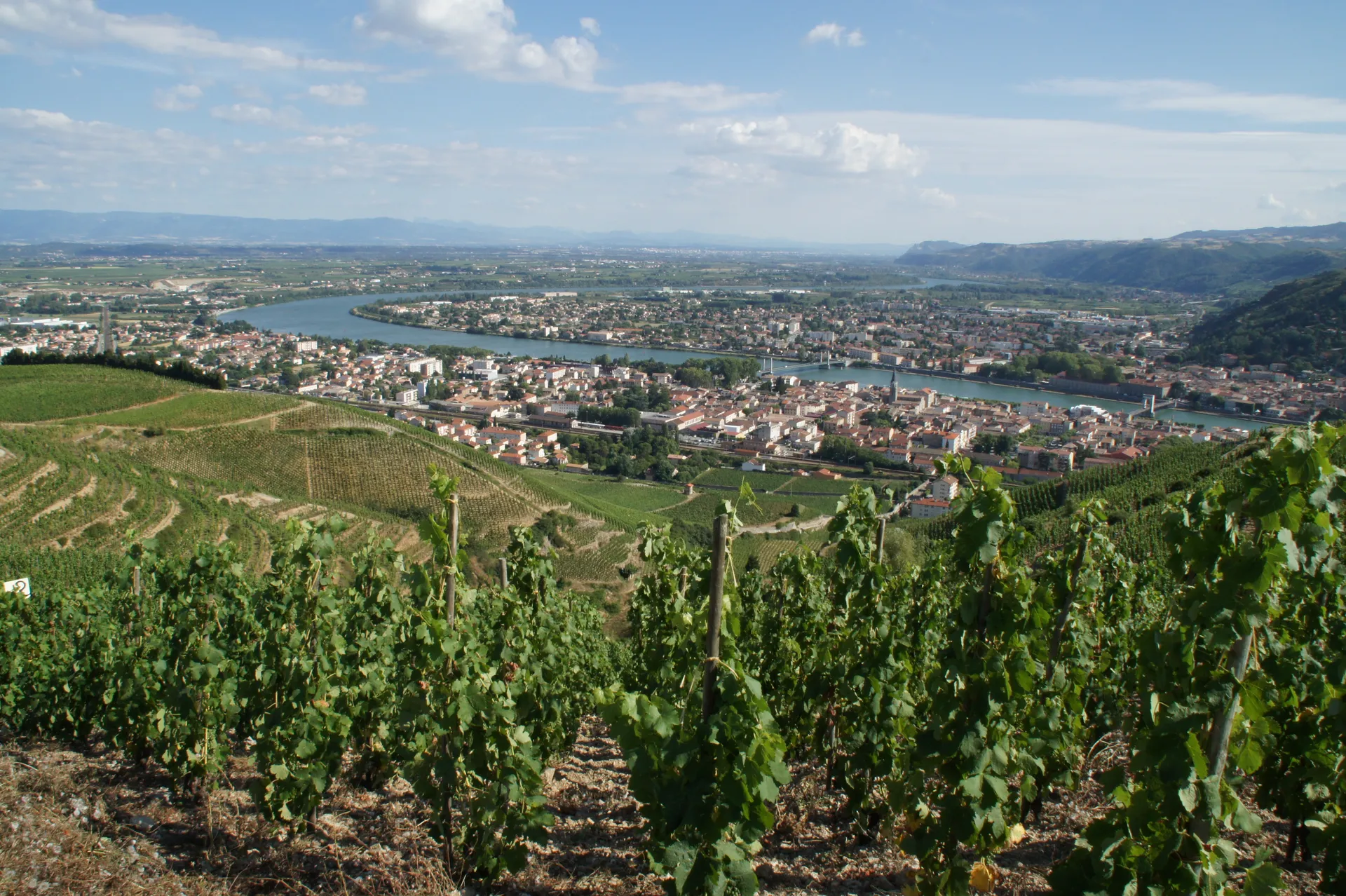
Tain-l'Hermitage, a small town pressed against the steep, sun-baked granite hillside of the northern Rhône Valley, guards one of the most legendary vineyards in the world. The hill of Hermitage, whose south-facing terraces rise three hundred meters above the Rhône, has been cultivated since at least the Roman era, when Pliny the Elder praised the wines of this region. Legend attributes the vineyard's name to a crusader knight, Gaspard de Stérimberg, who in 1224 retreated to a hermit's chapel on the hill after returning from the Albigensian Crusade, spending his remaining years tending vines. The wines of Hermitage — rich, brooding, age-worthy Syrah reds and opulent Marsanne-Roussanne whites — were considered the finest in France long before Bordeaux claimed that title, and were famously used to strengthen the thinner clarets of Bordeaux in the eighteenth and nineteenth centuries.
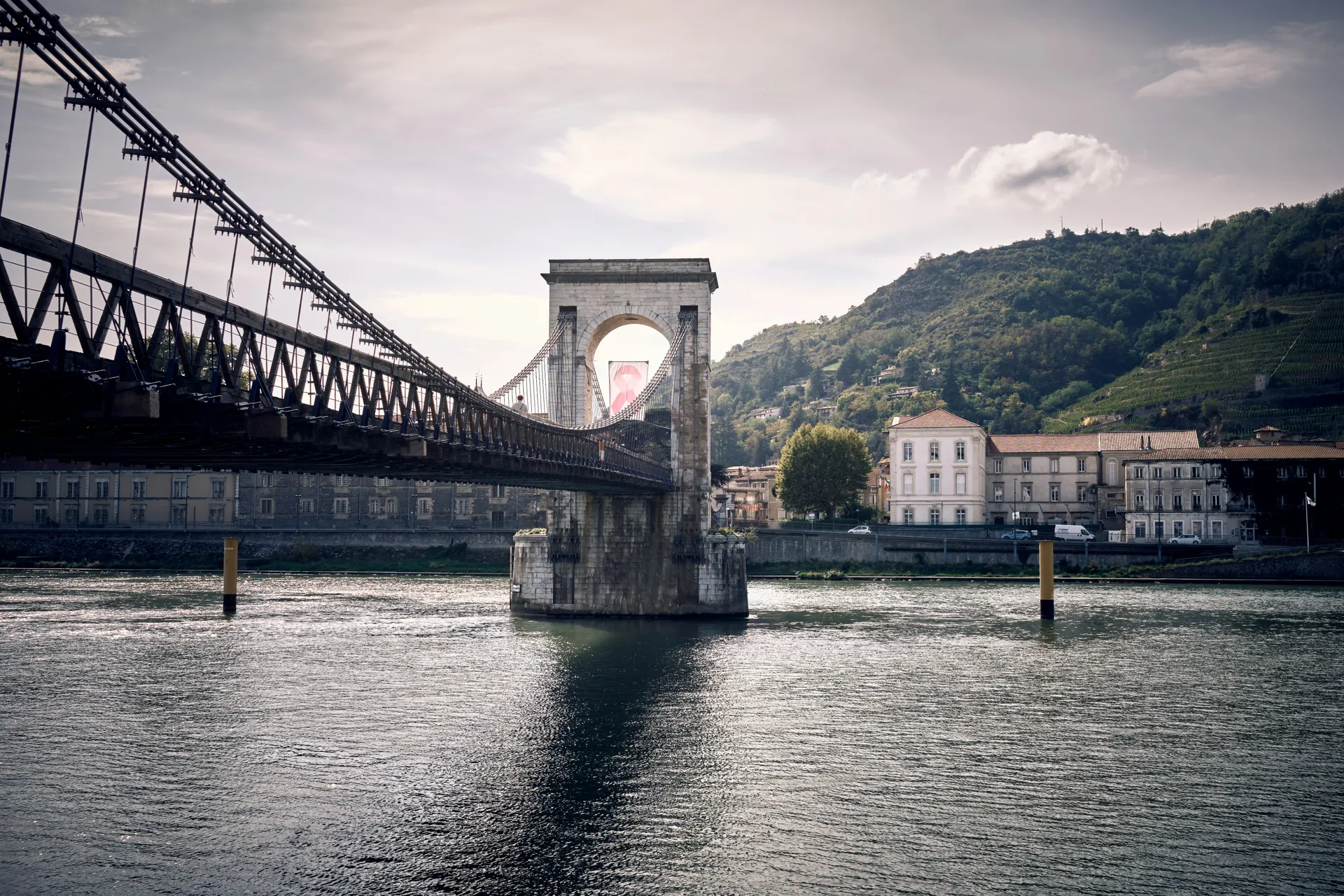
The town itself, though modest in size, exudes the quiet confidence of a place that knows its worth. The vineyards climb in dramatic terraces above the rooftops, their ancient granite walls radiating heat that ripens Syrah to incomparable depth. The Cité du Chocolat Valrhona, headquarters of France's most celebrated chocolate maker, offers an immersive museum experience where visitors can blend their own chocolate and learn the bean-to-bar process — a fitting complement to the wine culture that defines the town. Across the Rhône, the twin town of Tournon-sur-Rhône preserves a sixteenth-century castle and a collegiate church with views back across the river to the Hermitage hill, its terraces glowing amber in the afternoon light.
Northern Rhône gastronomy is robust, wine-friendly, and rooted in the land. Ravioles, tiny pillows of pasta filled with Comté cheese and fresh herbs, are the region's signature starter, often served gratinéed in cream. Pôchouse, a freshwater fish stew simmered in white wine with potatoes and pearl onions, reflects the river's bounty. Picodon, a small, sharp goat cheese from the Ardèche hills across the river, pairs magnificently with the region's white wines. The Saturday market in Tournon brims with Saint-Marcellin cheese, Nyons olives, Ardèche chestnuts, and nougat from Montélimar, just an hour south. Lunch at a guinguette along the riverbank, with a carafe of Crozes-Hermitage and a platter of local charcuterie, is the very essence of la belle vie.
From Tain, the treasures of the Rhône Valley unfold in both directions. The Palais Idéal du Facteur Cheval, a fantastical palace built over 33 years by a rural postman from the stones he collected on his daily rounds, is forty minutes north in Hauterives — a proto-surrealist masterpiece. The medieval town of Valence, with its Romanesque cathedral and the Maison des Têtes (a sixteenth-century house adorned with sculpted heads), is twenty minutes south. The Gorges de l'Ardèche, a grand canyon of limestone cliffs and emerald waters perfect for canoeing, is an hour to the southeast. Avignon, with its Papal Palace and the famous bridge, is ninety minutes south.
River cruises along the Rhône make Tain-l'Hermitage a marquee stop for wine enthusiasts. AmaWaterways, Scenic River Cruises, and Uniworld River Cruises offer luxury itineraries with vineyard excursions and sommelier-led tastings. Viking and Avalon Waterways provide large-fleet consistency and panoramic suites. Tauck pairs premium river cruising with curated overland experiences, while CroisiEurope and Emerald Cruises offer European river expertise. Riviera Travel, A-ROSA, and VIVA Cruises complete the diverse lineup. The Rhône cruising season runs from March through November, with the September-October grape harvest offering the most magical atmosphere — when the vineyards blaze gold and the air carries the perfume of fermenting wine.