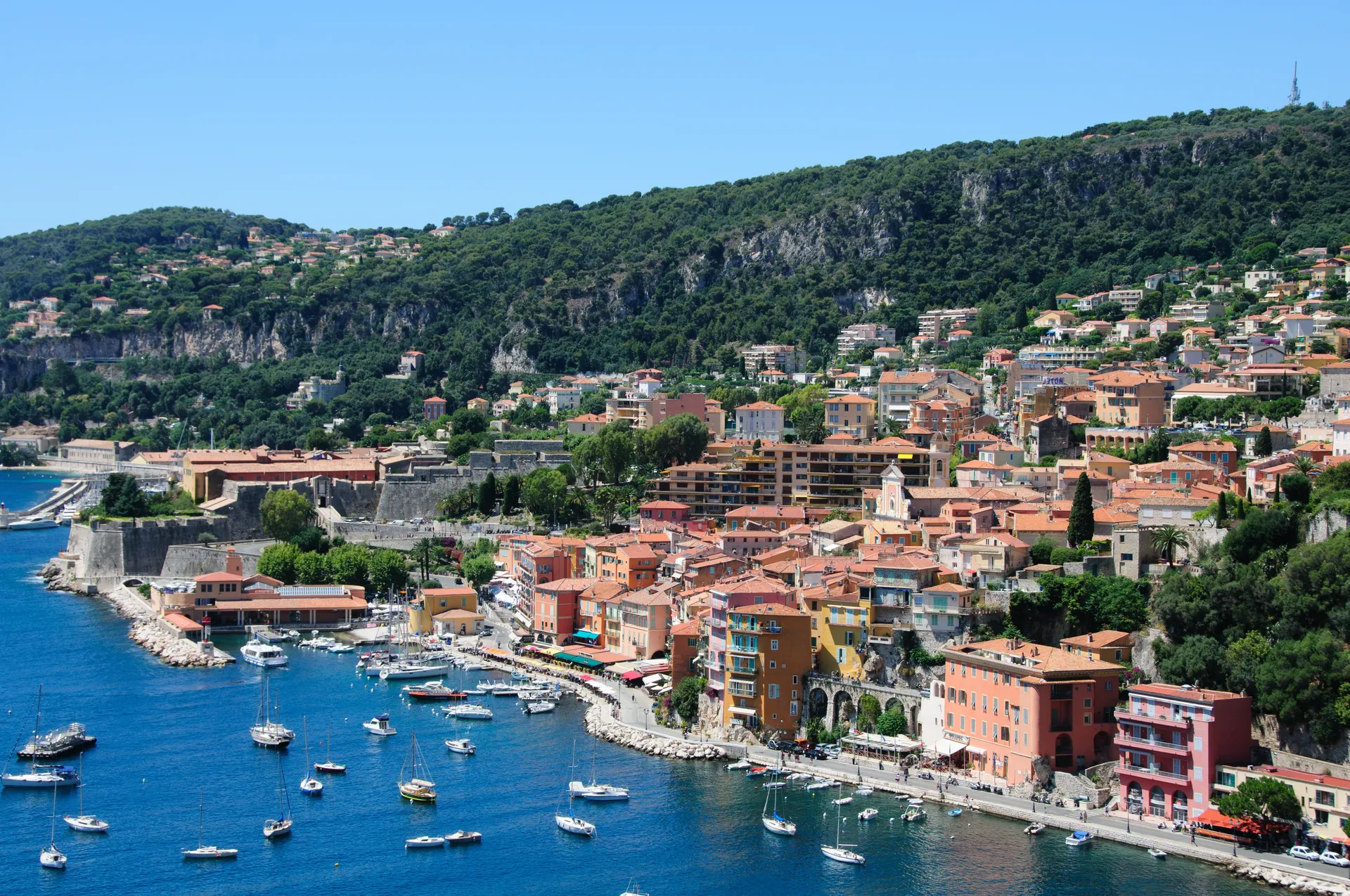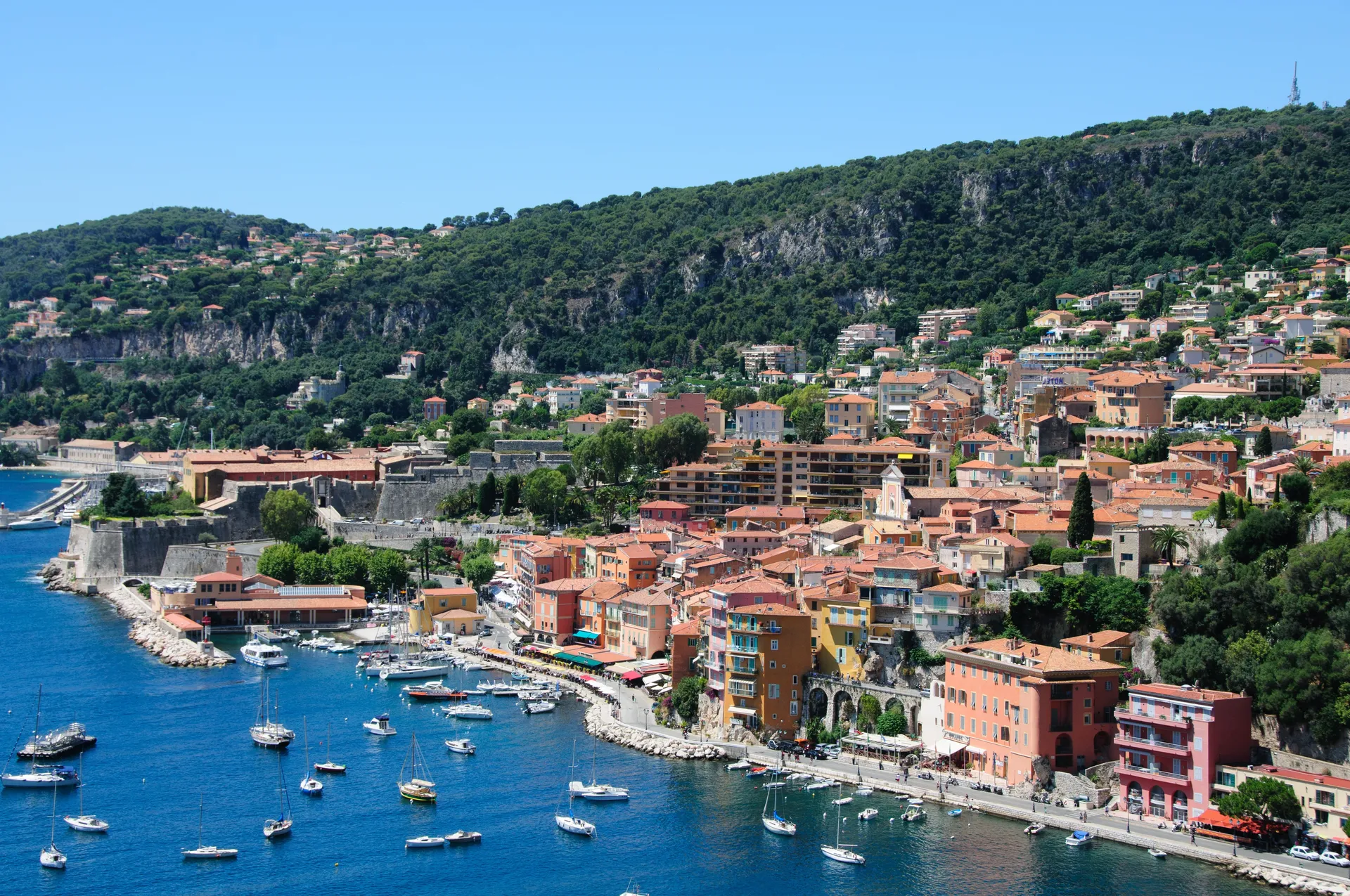
Where the foothills of the Maritime Alps tumble into waters of such startling cobalt they seem almost theatrical, Villefranche-sur-Mer has enchanted visitors since the Greeks of Marseille established a trading post along this sheltered bay in the fourth century BC. Charles II of Anjou founded the town as a duty-free port in 1295 — its very name, "Free Town," a testament to that medieval ambition — and for centuries it served as a strategic harbor for the House of Savoy's galley fleet. Jean Cocteau, captivated by the village's luminous stillness, transformed the fourteenth-century Chapelle Saint-Pierre into a painted sanctuary in 1957, filling its barrel-vaulted interior with pastel frescoes of fishermen, the Romany of Saintes-Maries-de-la-Mer, and wide-eyed apostles that remain one of the Côte d'Azur's most intimate artistic treasures.
To arrive in Villefranche by sea is to understand why this particular crescent of coastline has resisted the glossy reinvention that overtook its neighbours. The Rue Obscure — a covered medieval passage carved beneath the ramparts in the thirteenth century — still smells faintly of salt and cool stone, its low arches opening onto sudden shafts of Mediterranean light. Fishermen continue to mend nets along the Darse, the old military harbour where galleys once wintered, while above them the Citadelle Saint-Elme presides with the quiet authority of a fortress that has watched empires rise and recede since 1557. The town's scale is its grace: everything unfolds within a fifteen-minute stroll, from the ochre facades cascading down to the waterfront to the terraced gardens where bougainvillea spills in extravagant silence.
The cuisine here belongs to the Niçois tradition yet carries a distinctly maritime accent. Begin with pissaladière, that magnificent onion tart glazed with anchovy fillets and stippled with Niçoise olives, paired with a chilled Bellet rosé from the vineyards just above Nice — one of France's smallest and most beguiling appellations. The local socca, a chickpea-flour crêpe cooked on vast copper plates until its edges crisp into golden lace, is best eaten standing at the market with fingers still warm from the pan. For something more composed, seek out estocaficada, the Niçois preparation of dried stockfish braised slowly with tomatoes, olives, and potatoes until it yields to the gentlest pressure of a fork — a dish that speaks of centuries of trade between Provence and the salted-cod routes of Scandinavia. The bouillabaisse served at the handful of restaurants along the Plage des Marinières carries none of Marseille's tourist-weary fatigue; here, the rascasse and saint-pierre arrive from boats you can see bobbing in the bay.
The Riviera radiates outward from Villefranche in every direction with irresistible pull. The hilltop village of Èze, perched vertiginously between sky and sea just minutes along the Grande Corniche, offers panoramic views that have undone the composure of even the most seasoned travellers. Cap-Ferrat's Villa Ephrussi de Rothschild — a rose-pink Italianate palace surrounded by nine themed gardens — sits on the peninsula directly across the bay, close enough to see from the quay. For those drawn to the quieter poetry of the French interior, the medieval riverside town of Viviers in the Ardèche reveals Romanesque architecture largely untouched since the twelfth century, while the painted caves near Montignac in the Dordogne offer a pilgrimage to the very origins of human artistic expression at Lascaux.
Villefranche's deep natural harbour — one of the finest anchorages on the entire Mediterranean coast — has made it a favoured port of call for the world's most discerning cruise lines. Viking positions the town as a gateway to the art and architecture of the Riviera, while Azamara's longer port stays allow passengers the rare luxury of watching the late-afternoon light transform the bay from turquoise to amber. Explora Journeys, with its emphasis on unhurried Mediterranean immersion, often schedules evening departures that permit dinner ashore, and Norwegian Cruise Line offers the accessibility that opens this rarefied stretch of coastline to a broader audience without diminishing its charm. Tenders ferry guests from ship to shore in minutes, depositing them directly onto a waterfront where the only decision required is whether to turn left toward Cocteau's chapel or right toward the old citadel.