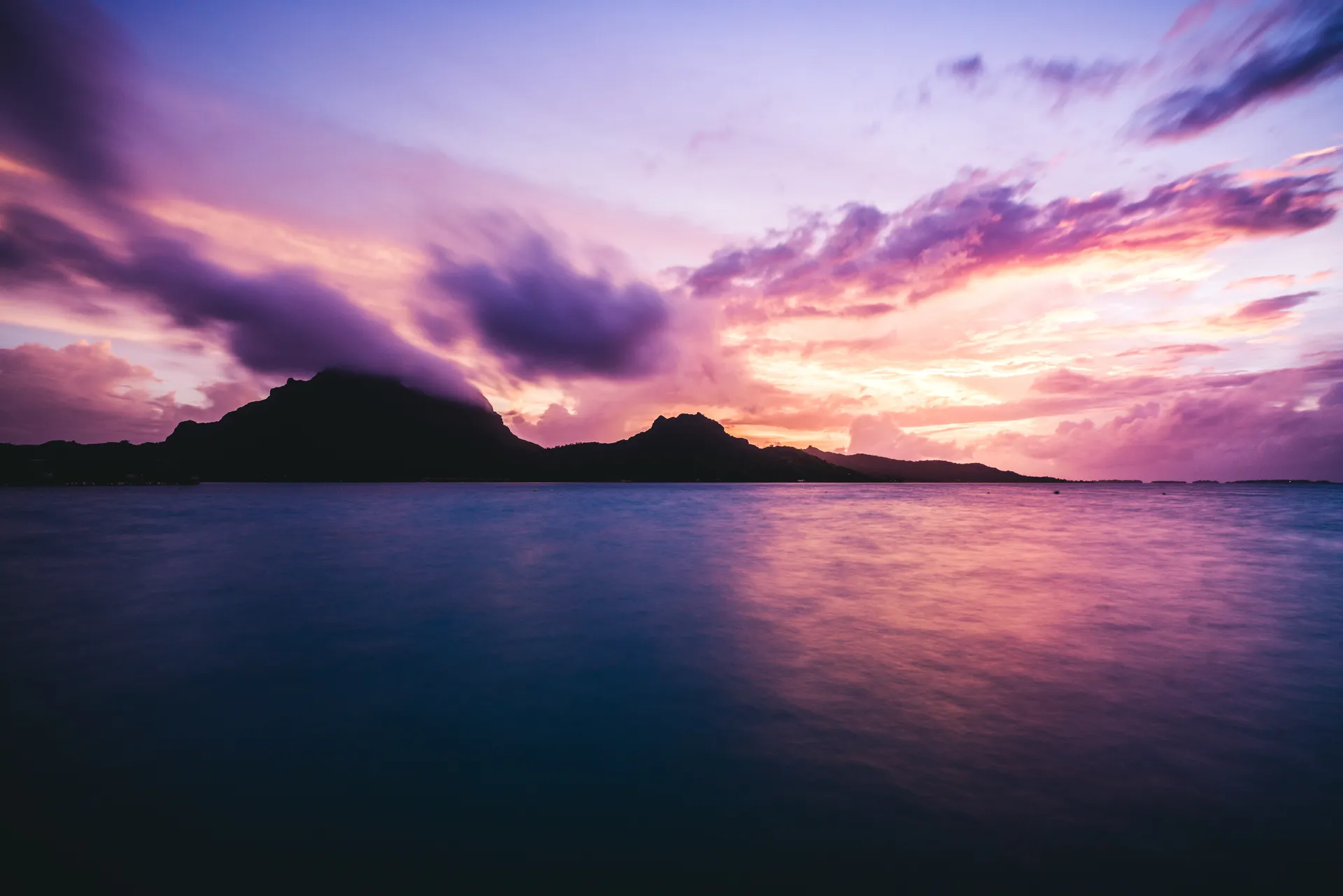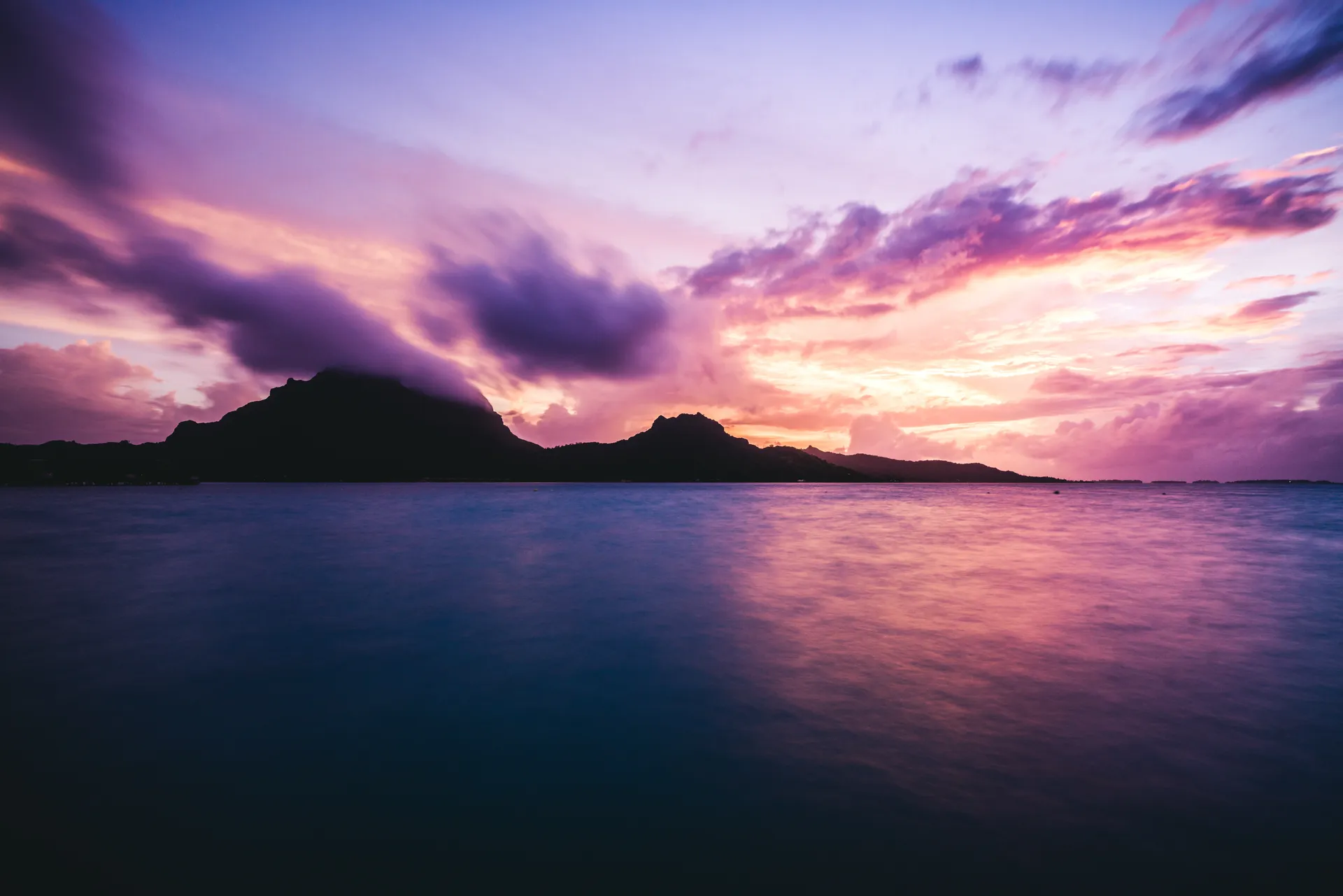
Bora Bora rises from the South Pacific like a vision from a dream — a volcanic island ringed by a turquoise lagoon of such impossible beauty that American servicemen stationed here during World War II called it the most beautiful island in the world, a reputation it has never relinquished. The island was first settled by Polynesian voyagers around the fourth century AD, and its original name, Pora Pora, means "first born" in the Tahitian language, reflecting its status in local mythology as the first island raised from the sea by the god Taaroa. Mount Otemanu, the dramatic basalt peak that dominates the island's silhouette at 727 metres, is the eroded remnant of the volcano that created Bora Bora millions of years ago.
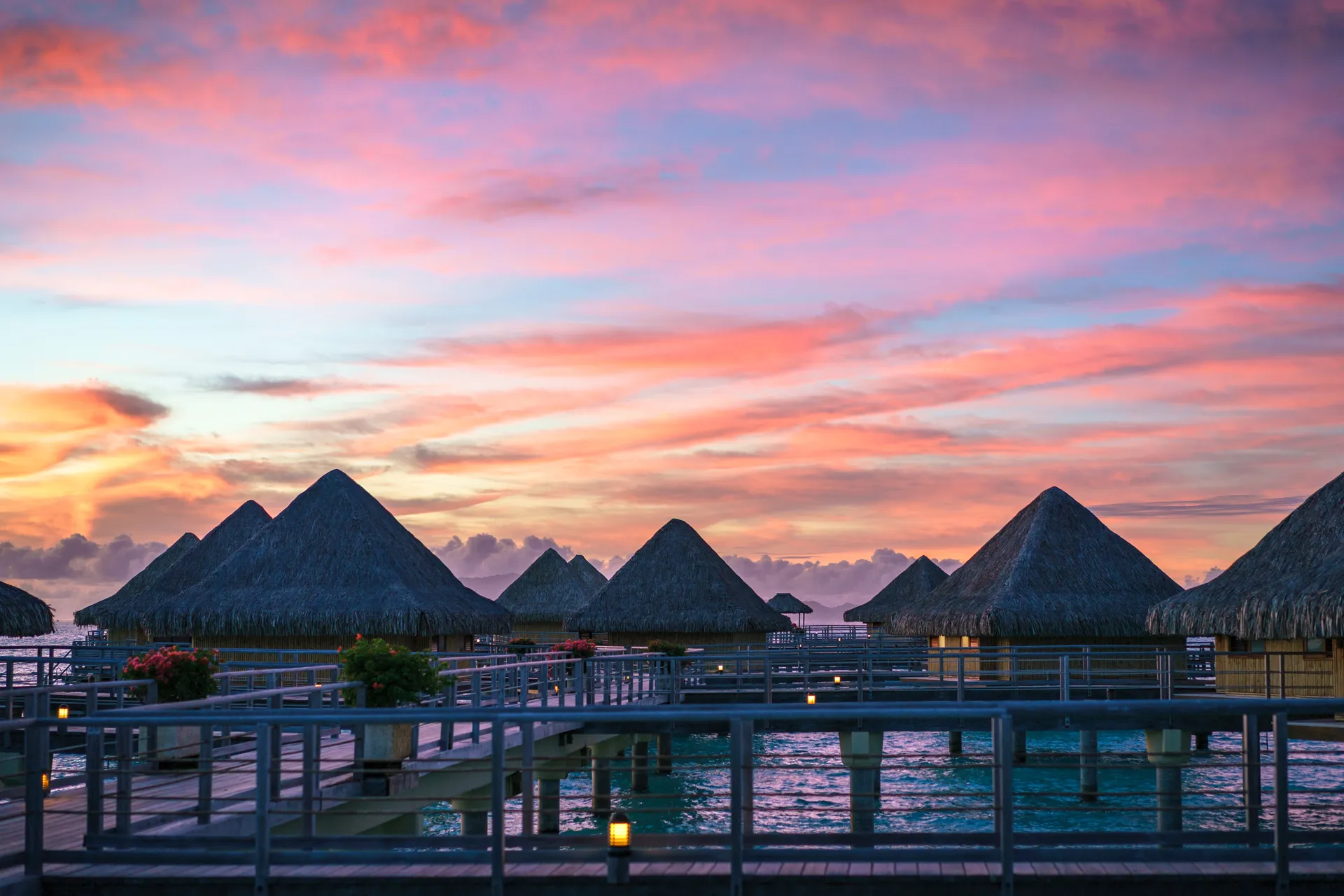
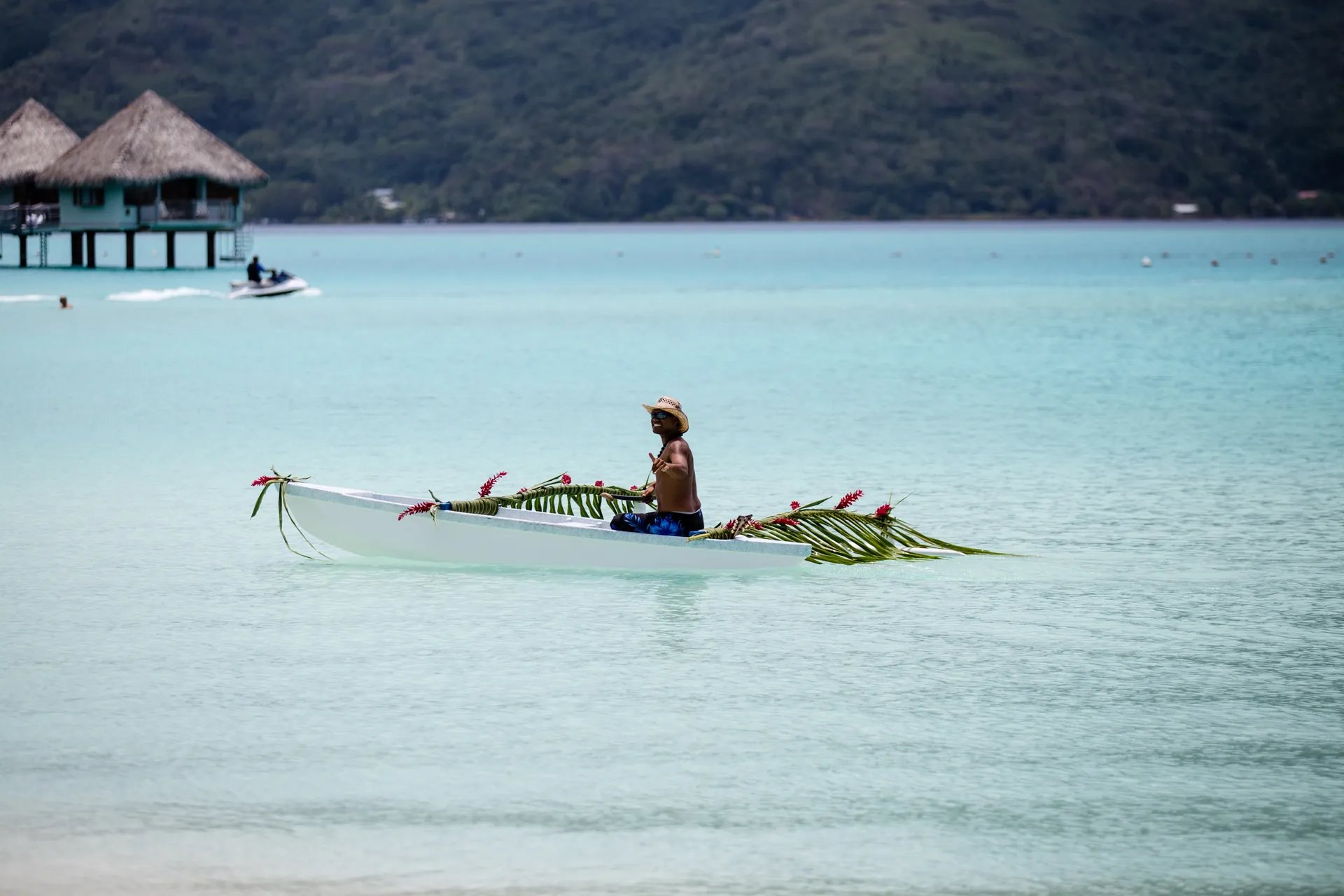
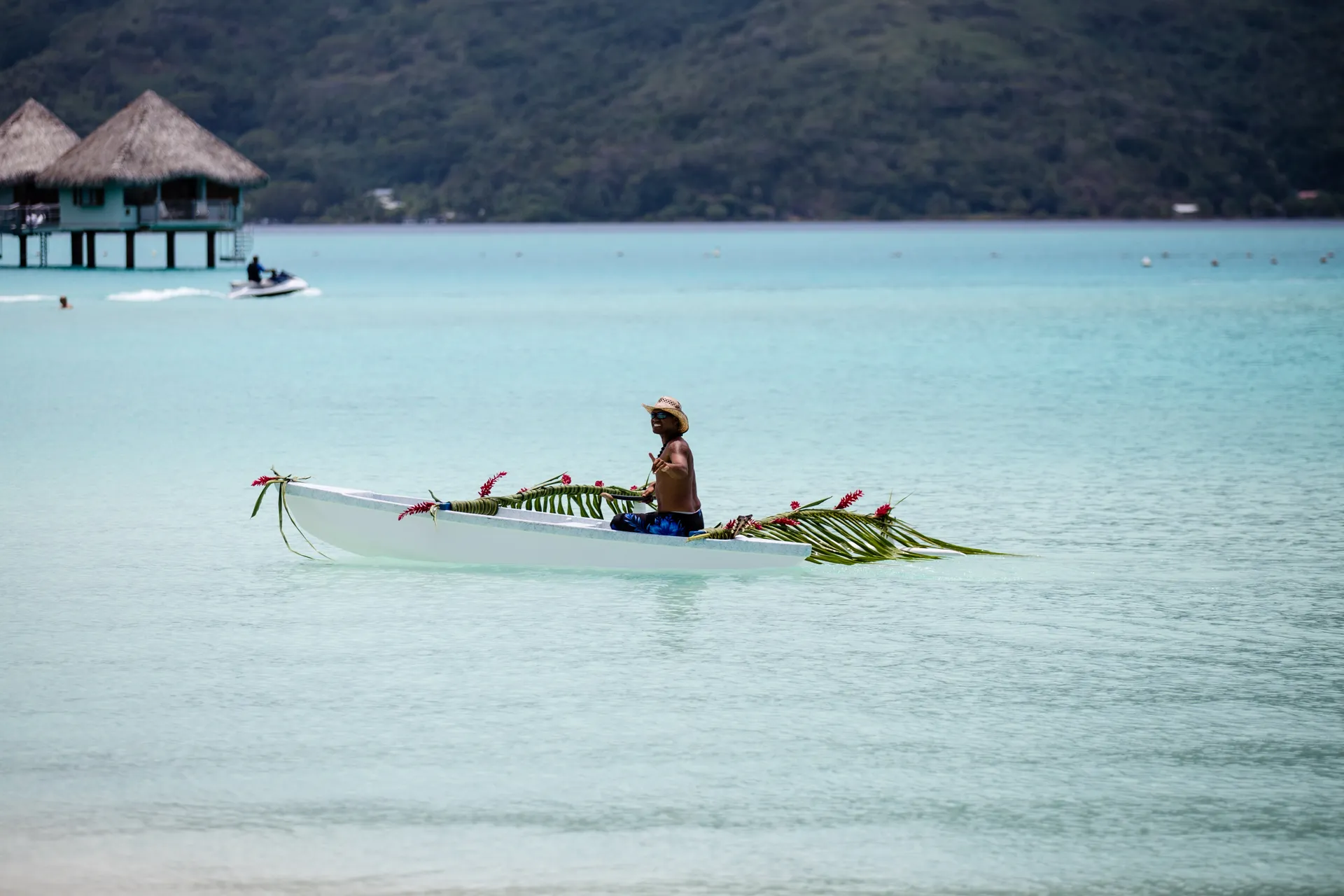
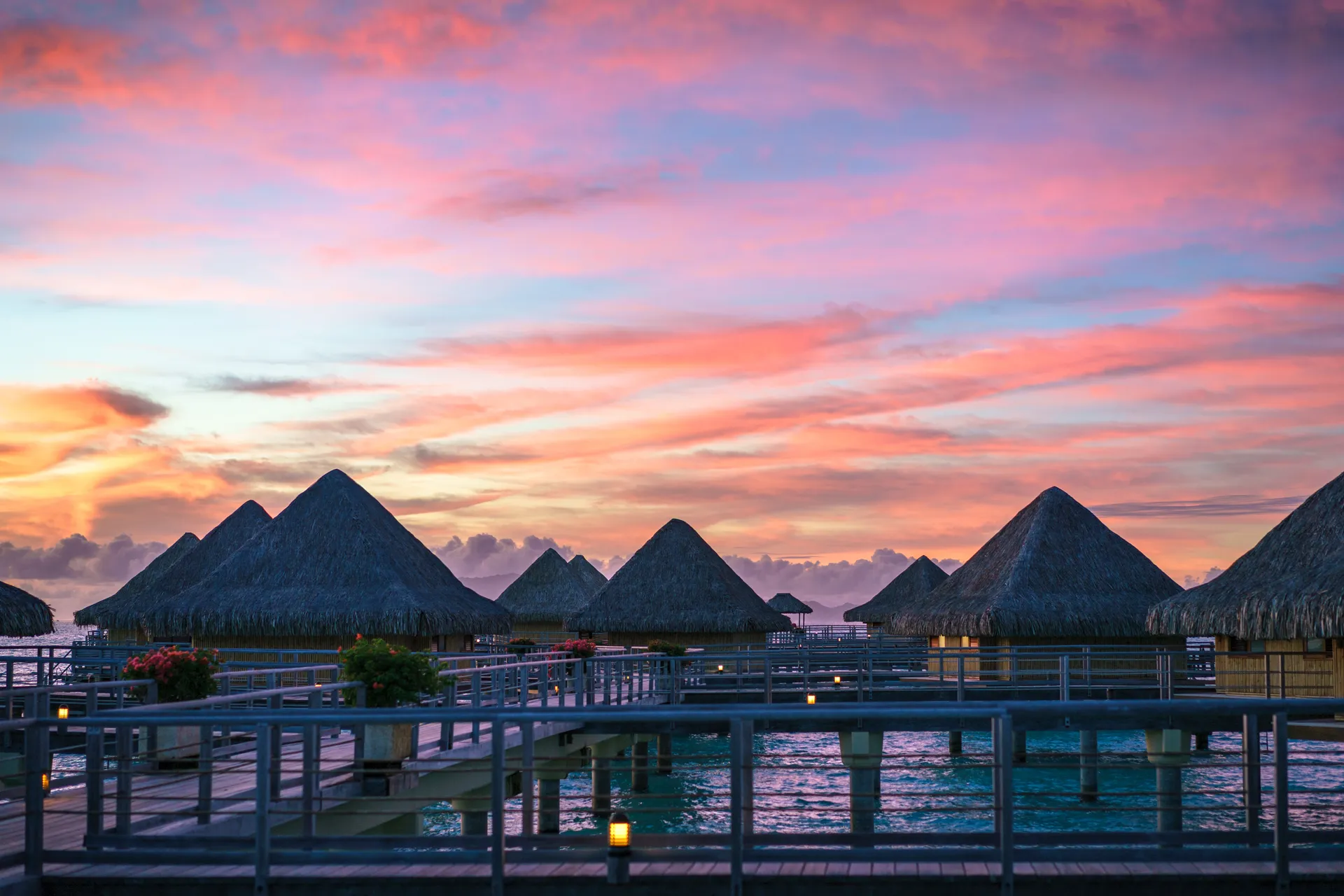
The lagoon is Bora Bora's defining wonder — a vast, shallow expanse of water in graduated shades of turquoise, aquamarine, and sapphire, protected by a necklace of coral motus (islets) and a barrier reef. Overwater bungalows, pioneered in French Polynesia and now synonymous with tropical luxury worldwide, perch on stilts above the crystalline water, their glass-floor panels revealing the reef life below. The main village of Vaitape retains a relaxed Polynesian atmosphere, its waterfront lined with pearl shops, fruit stands, and small restaurants where the pace of life is dictated by the tides rather than the clock.
Polynesian cuisine in Bora Bora centres on the lagoon's bounty. Poisson cru, the national dish of French Polynesia — raw tuna marinated in lime juice and coconut milk with cucumber, tomato, and onion — is served at every restaurant from beachside snack bars to luxury resort dining rooms. Mahi-mahi grilled with vanilla sauce, using the fragrant Tahitian vanilla that is among the world's finest, is a signature preparation. Ma'a Tahiti, the traditional Sunday feast cooked in an underground oven called an ahima'a, layers banana leaves over pork, taro, breadfruit, and fish, steaming them for hours into tender, smoky perfection.
The lagoon offers extraordinary aquatic experiences. Snorkelling with blacktip reef sharks and stingrays in the shallow, sandy-bottomed Coral Gardens is Bora Bora's most iconic excursion — the creatures are habituated to human presence and glide serenely alongside swimmers. Scuba diving on the outer reef reveals Napoleon wrasse, manta rays, and during the right season, migrating humpback whales. A four-wheel-drive tour of the main island visits World War II gun emplacements, ancient Polynesian temple sites (marae), and viewpoints offering staggering perspectives of the lagoon and Mount Otemanu.
Bora Bora is served by Azamara, Crystal Cruises, Hapag-Lloyd Cruises, Holland America Line, Norwegian Cruise Line, Oceania Cruises, Paul Gauguin Cruises, Ponant, Regent Seven Seas Cruises, Scenic Ocean Cruises, Seabourn, Silversea, Viking, and Windstar Cruises. It pairs with Moorea, Tahiti, and Huahine on French Polynesian itineraries. The dry season from May to October offers the most comfortable conditions, though the lagoon's beauty is transcendent in any weather.