Papeete, the capital of French Polynesia, occupies the northwest coast of Tahiti, the largest island in the Society archipelago — a volcanic peak that has entranced Western visitors since Captain Samuel Wallis of HMS Dolphin became the first European to sight it in 1767. Louis-Antoine de Bougainville followed a year later and named it "New Cythera" after the Greek island of Aphrodite, so enchanted was he by its beauty and the warmth of its people. Paul Gauguin arrived in 1891, seeking a primitive paradise, and painted the Tahitian works that would secure his posthumous fame. The mythology of Tahiti as an earthly Eden — an image part truth, part colonial fantasy — endures in the collective imagination to this day.
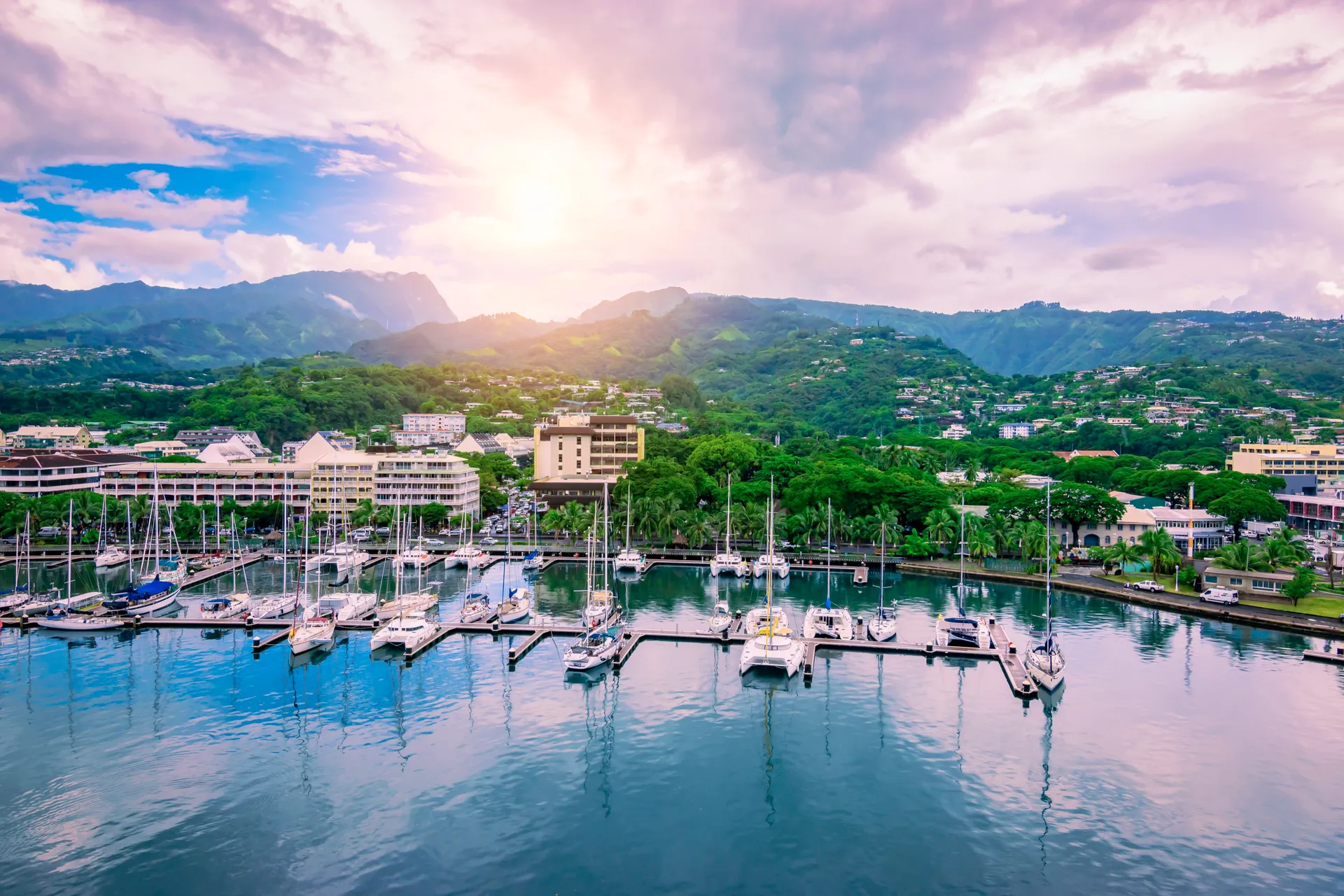
Modern Papeete is a bustling, traffic-choked town that wears its French colonial heritage proudly. The waterfront marché (market) is the island's social and commercial heart, its ground floor overflowing with papayas, breadfruit, vanilla pods, monoi oil, and woven pandanus hats, while the upper level displays black pearls — Tahiti's most famous export — in every conceivable setting. The Cathedral of Notre-Dame, a butter-yellow colonial church dating to 1875, anchors the town centre, while the Bougainville Park offers shade beneath its enormous banyan tree. At dusk, the roulottes (food trucks) line the waterfront near Place Vai'ete, transforming the quayside into an open-air dining room scented with grilled fish, garlic, and frying crêpes.
Tahitian cuisine reflects its Polynesian roots and French colonial overlay. Poisson cru — the national dish — is raw tuna marinated in lime juice and mixed with coconut milk, diced cucumber, and tomato, served in a coconut shell. Fafaru, fermented raw fish with a pungent aroma, is an acquired taste that adventurous eaters embrace. Ma'a Tahiti, the traditional Polynesian feast, involves wrapping pork, chicken, taro, breadfruit, and banana in banana leaves and slow-cooking them in an underground ahima'a (earth oven) for hours. French influence manifests in the excellent baguettes, croissants, and crêpes available throughout Papeete — the juxtaposition of a perfect pain au chocolat and a fresh coconut is quintessentially Tahitian.
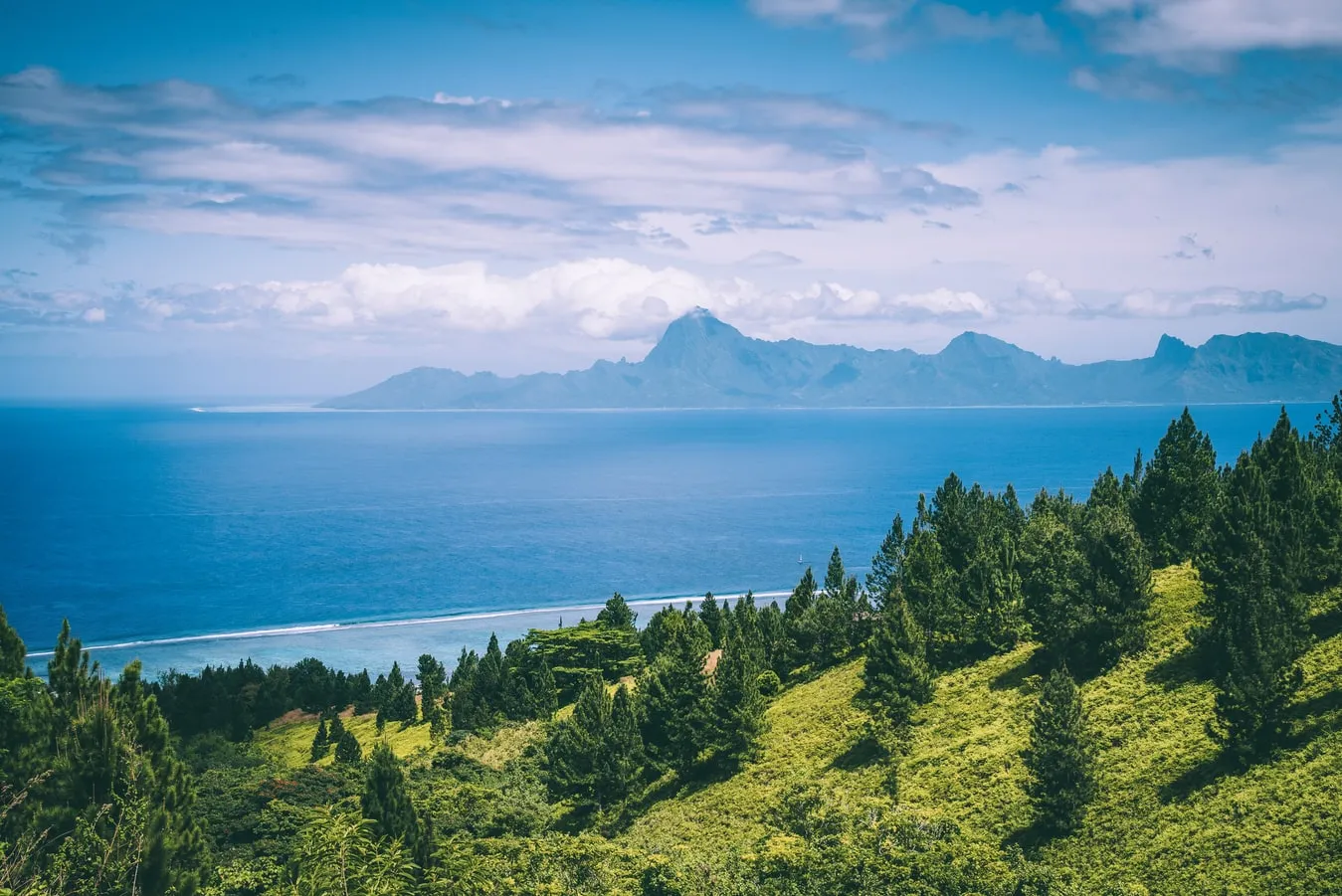
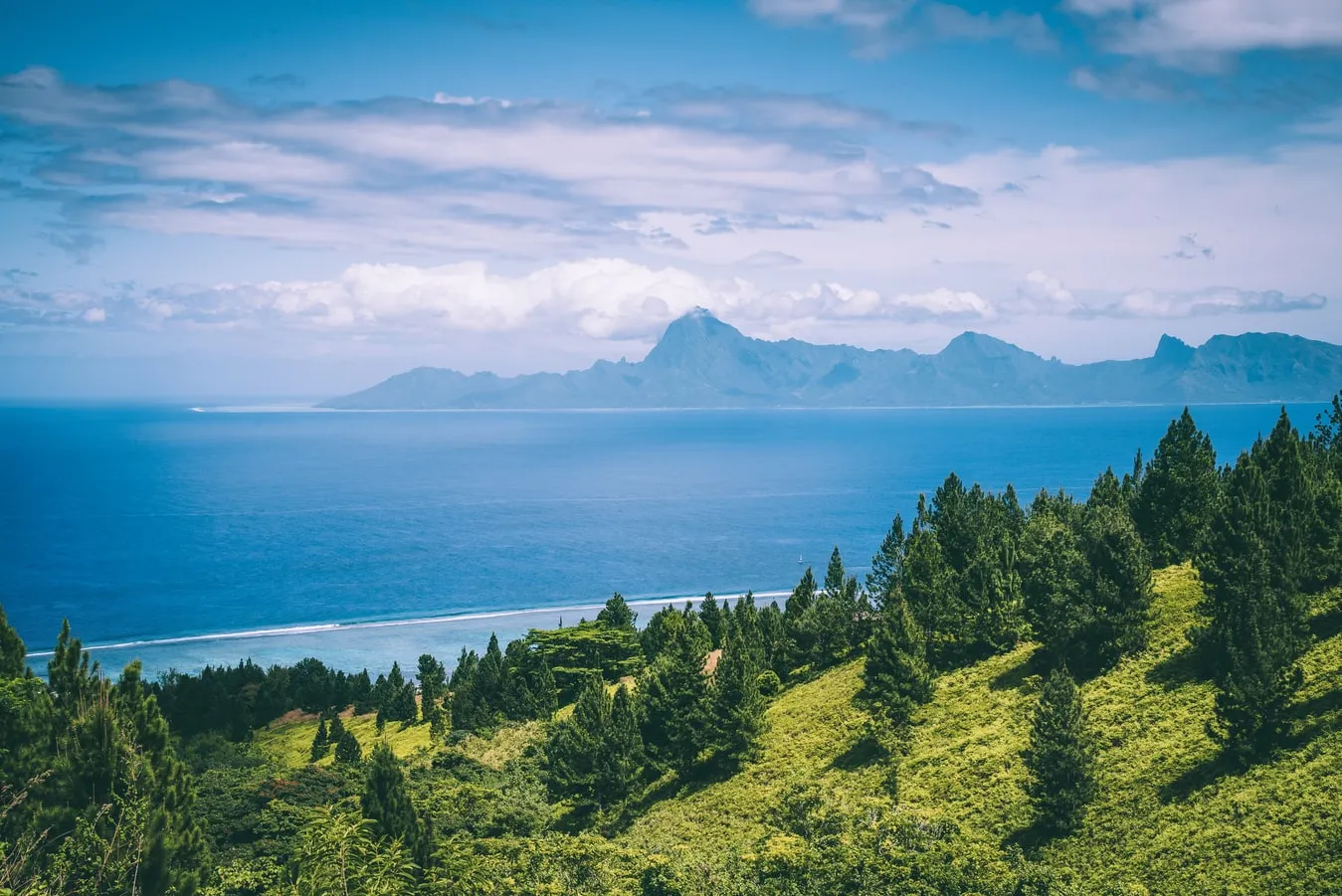
From Papeete, the Society Islands fan out in a string of volcanic peaks and coral atolls. Moorea, just seventeen kilometres across the Sea of the Moon, is a jaw-dropping amphitheatre of jagged green peaks, pineapple plantations, and crystalline lagoons reachable by a thirty-minute ferry. Bora Bora, the most famous of all South Pacific islands, lies a fifty-minute flight northwest — its turquoise lagoon, ringed by motus (islets) and overwater bungalows, defines the tropical paradise fantasy. The atolls of Rangiroa and Fakarava, part of the Tuamotu archipelago, offer world-class diving in passes where sharks, dolphins, and manta rays converge. The Marquesas Islands, rugged and remote, preserve ancient Polynesian temple platforms and tiki carvings.
Papeete's cruise port serves as the hub for South Pacific itineraries operated by Azamara, Carnival Cruise Line, Celebrity Cruises, Costa Cruises, Crystal Cruises, Hapag-Lloyd Cruises, Holland America Line, MSC Cruises, Norwegian Cruise Line, Oceania Cruises, Paul Gauguin Cruises, Ponant, Princess Cruises, Regent Seven Seas Cruises, Royal Caribbean, Scenic Ocean Cruises, Seabourn, Silversea, Viking, and Windstar Cruises. Nearby ports include Moorea, Bora Bora, Raiatea, and the Marquesas. The dry season from May through October offers the most comfortable weather, though the islands' tropical allure is year-round.