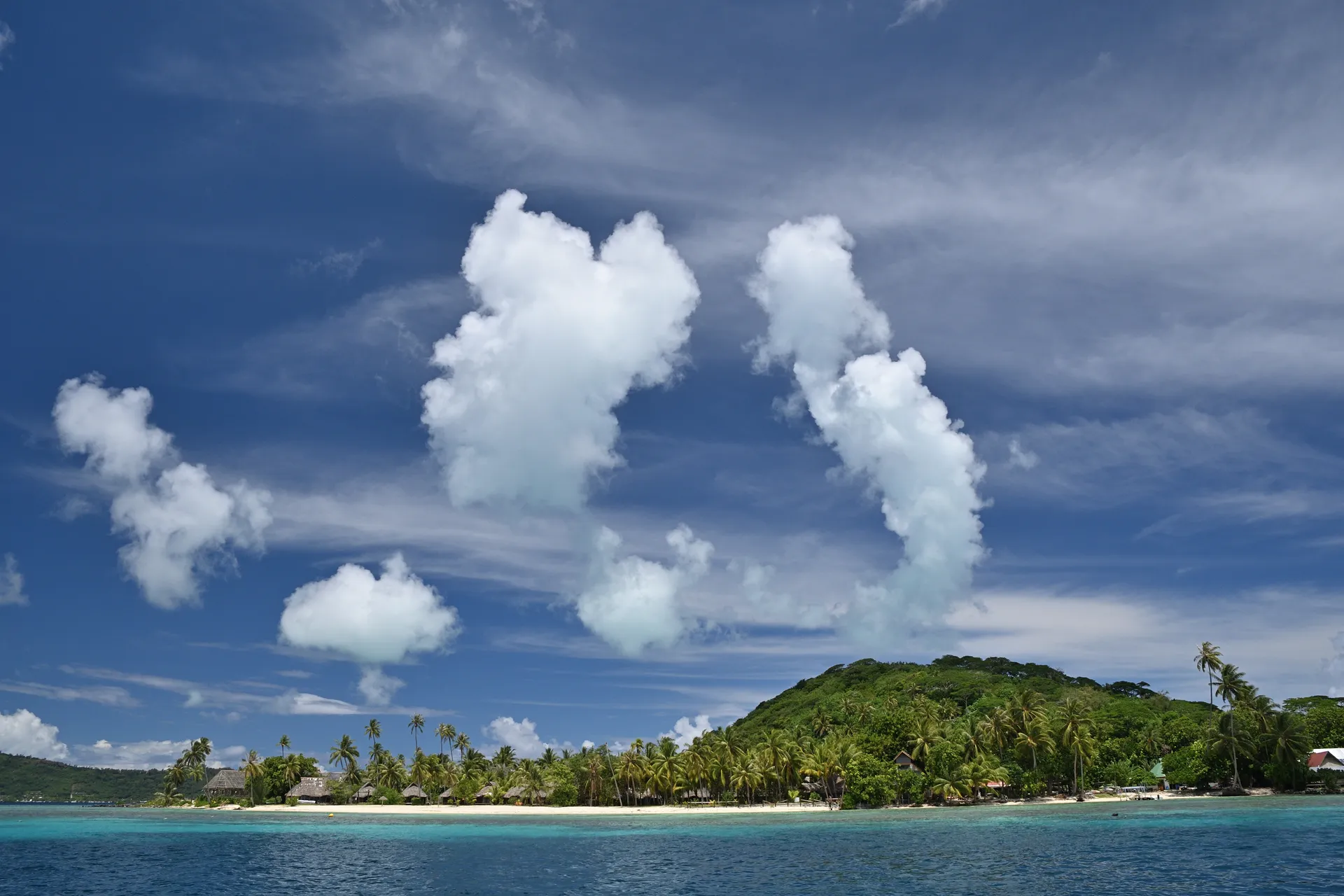
Uturoa is the quiet administrative capital of Raiatea — the sacred island, the cradle of Polynesian civilisation, and the most historically significant island in the Society Archipelago of French Polynesia. While neighbouring Bora Bora and Tahiti claim the world's attention with their overwater bungalows and cinematic beauty, Raiatea guards a heritage of far greater depth: the marae Taputapuātea, a vast stone temple complex on the island's southeastern coast, is the spiritual heart of the Polynesian world — the place from which, according to oral tradition, the great ocean voyages were launched that populated Hawaii, New Zealand, and Easter Island. Its UNESCO World Heritage designation in 2017 confirmed what Pacific Islanders have known for centuries: this is where Polynesian civilisation was born.
Uturoa itself is a modest town of 3,500 residents strung along the island's northeastern shore, its waterfront lined with the Chinese-owned general stores, small restaurants, and the administrative buildings that serve as the commercial centre for Raiatea and its sister island Tahaa. The daily market — le marché — is the town's social epicentre, its stalls laden with tropical fruit (pawpaw, star fruit, rambutan, and the Tahitian lime whose juice is essential for poisson cru), fresh fish, and the flower crowns — couronnes de fleurs — that Polynesian women wear with a grace that turns the marketplace into an informal fashion show. The atmosphere is unhurried, francophone, and suffused with the gentle warmth that distinguishes the Society Islands from their more hectic neighbours.
Marae Taputapuātea, 30 kilometres south of Uturoa along the coastal road, is unlike any archaeological site in the Pacific. The complex of stone platforms, standing stones, and ceremonial courts occupies a point of land facing a passage in the reef — the pass through which the ancient navigators departed on their extraordinary voyages — and the spiritual power of the site is palpable even to visitors with no knowledge of Polynesian religion. The main ahu (altar), a raised platform of carefully fitted coral blocks, was the site where the god Oro was worshipped and where political and spiritual authority was invested in chiefs from across the Polynesian triangle. The site's UNESCO inscription recognises both its tangible archaeological significance and its intangible spiritual value — it remains an active place of ceremony and connection for Maori, Hawaiian, and Cook Island Polynesian delegations who travel here to reconnect with their ancestral homeland.
Raiatea's natural environment, while overshadowed by its cultural heritage, is remarkable in its own right. The island is the only place in French Polynesia where the tiare apetahi — a delicate white flower found nowhere else on Earth — blooms on the slopes of Mount Temehani. The lagoon shared by Raiatea and Tahaa is a superb sailing ground, and the Faaroa River — the only navigable river in French Polynesia — winds through a valley of tropical vegetation so lush it feels Amazonian. The culinary traditions centre on the lagoon's fish and the earth oven — the ahima'a — where pork, breadfruit, taro, and banana are wrapped in banana leaves and slow-cooked over hot stones in a communal preparation that is both a cooking method and a social event.
Uturoa's harbour can accommodate cruise ships alongside the quay, with the town centre within walking distance. The best time to visit is from May through October, when the dry season brings the clearest skies and most comfortable temperatures. The Heiva festival in July — French Polynesia's most important cultural celebration, featuring traditional dance, music, sport, and craft competitions — transforms the entire island into a celebration of Polynesian heritage that connects the ancient traditions of Taputapuātea to the living culture of modern Raiatea.

