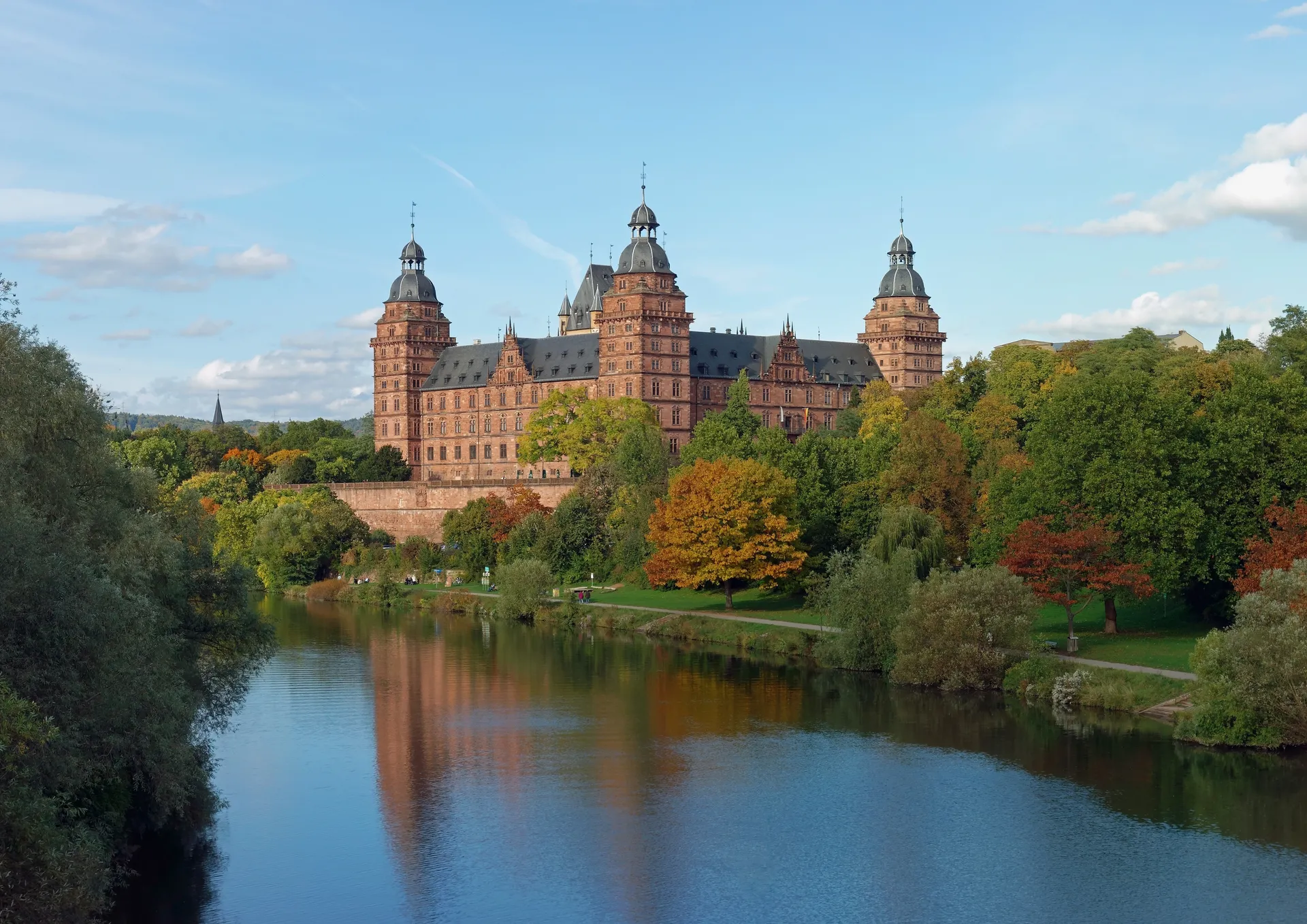
Positioned at the confluence of the River Aschaff and the Main, in the gentle wine-growing hills of Lower Franconia, Aschaffenburg has been called "the Nice of Bavaria" — a title bestowed by King Ludwig I in the nineteenth century in tribute to its mild climate and its remarkable collection of parks, palaces, and cultural treasures. This city of seventy thousand, just forty kilometres southeast of Frankfurt, combines Franconian warmth with a density of art and architecture that belies its modest size.
The Johannisburg Palace, built between 1605 and 1614 from the distinctive red sandstone that gives the city its warm character, is one of the most important Renaissance palaces in Germany. Its four massive wings enclose a courtyard of classical proportions, and its towers provide commanding views across the Main valley. The palace houses the State Gallery, with an impressive collection of German and Flemish paintings, and one of the world's finest collections of architectural cork models — miniature replicas of Roman temples and monuments crafted with extraordinary precision by Carl May in the eighteenth century.
The Pompejanum, directly below the palace on the bank of the Main, is one of the most unusual buildings in Germany — a full-scale replica of a Roman villa from Pompeii, commissioned by Ludwig I and completed in 1848. Its frescoed rooms, mosaic floors, and peristyle garden faithfully recreate the domestic architecture of ancient Rome, providing a vivid window into classical daily life. The surrounding Schönbusch Park, an English landscape garden of over one hundred hectares with a neoclassical pleasure palace, temples, and a small lake, offers some of the most refined parkland in Germany.
Franconian cuisine and wine culture provide daily pleasures. The local Bocksbeutel wines — served in the distinctive flat-bellied bottles unique to Franconia — include excellent Silvaner and Müller-Thurgau from vineyards visible from the palace terraces. The city's restaurants serve traditional dishes like Schäufele (roast pork shoulder), Bratwurst, and seasonal specialties including Spargel (white asparagus) in spring and Zwiebelkuchen (onion tart) in autumn. The Main riverbank promenade, lined with beer gardens and cafés, provides the perfect setting for a leisurely afternoon of Franconian Gemütlichkeit.
Aschaffenburg is a common stop on Main River cruise itineraries and is easily accessible from Frankfurt by train (approximately forty minutes). The city's compact historic centre is best explored on foot, with the palace, Pompejanum, and old town within comfortable walking distance. The most rewarding visiting season stretches from April through October, with spring's asparagus season and autumn's wine festivals providing particular incentives. Aschaffenburg demonstrates that some of Germany's finest cultural treasures are found not in the obvious metropolises but in the smaller cities where history, art, and daily life blend with unassuming grace.

