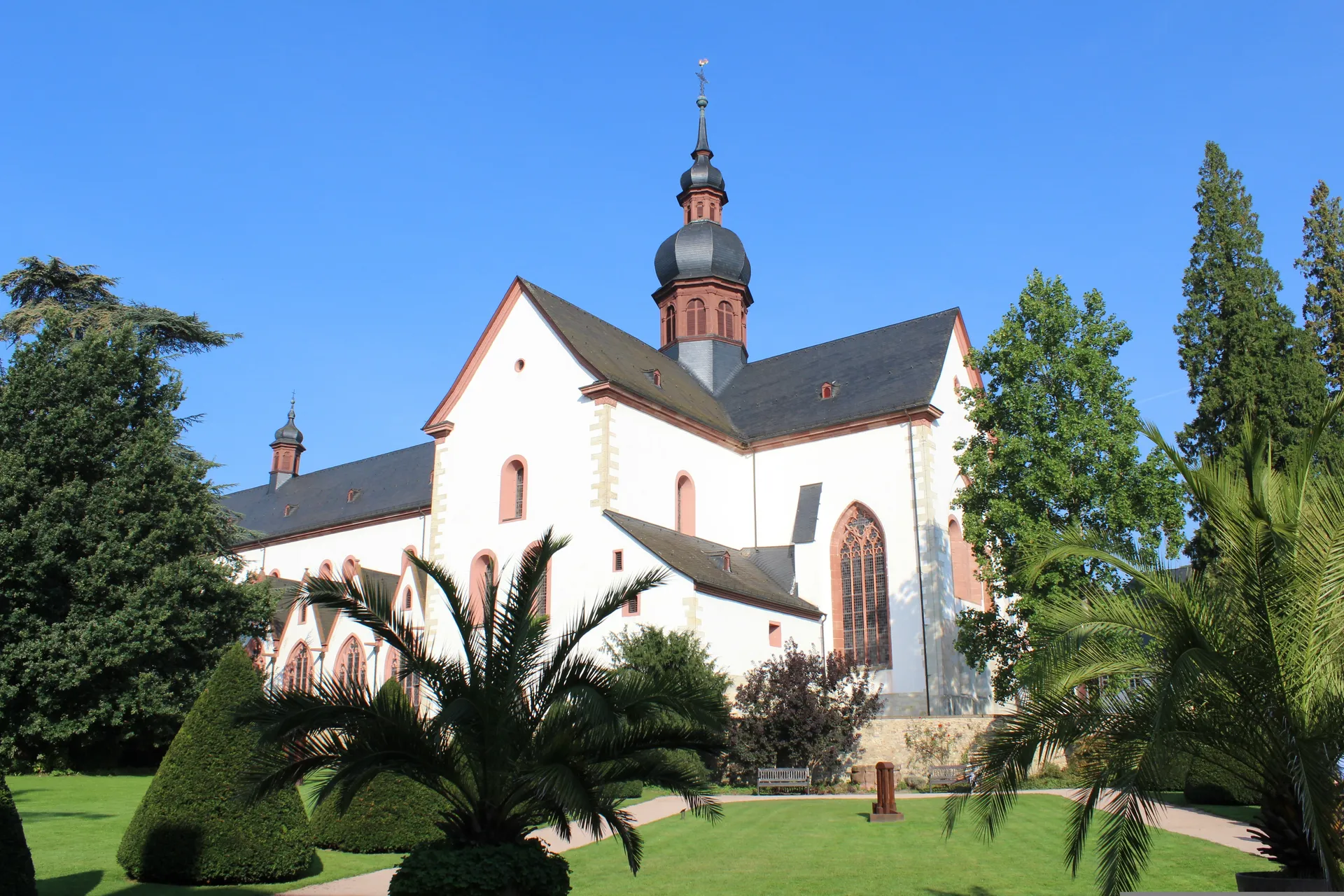
Eberbach is a small Neckar River town in the Odenwald region of Baden-Württemberg, Germany — a place where the half-timbered architecture of the medieval old town, the forested hills of the Odenwald, and the gentle, vine-lined valley of the Neckar create a landscape of quintessential German Romanticism. The town, population approximately 14,000, straddles the river at a point where the valley narrows between steep, wooded hillsides, creating a setting that combines the intimacy of a medieval trading post with the natural drama of a river gorge. Eberbach has been a settlement since at least the Roman era, received its town charter in 1227, and developed as a center of river commerce, leather tanning, and forestry — industries that have yielded in the modern era to tourism, light manufacturing, and the administrative functions of a district town.
The old town of Eberbach preserves one of the most complete ensembles of half-timbered architecture in the Neckar valley. The Altes Badhaus (Old Bathhouse), the Haspelturm (a medieval defense tower), and the rows of timber-frame houses along the Hauptstraße create streetscapes that have changed little since the sixteenth century. The town's four surviving medieval towers — remnants of the fortification wall that once encircled the settlement — provide architectural punctuation and historical context. The Catholic and Protestant churches, standing within a few hundred meters of each other, reflect the religious history of a region that experienced the Reformation, the Thirty Years' War, and the subsequent confessional divisions with particular intensity.
The cuisine of the Neckar valley combines the heartiness of Swabian cooking with the wine culture of a region that has produced excellent Riesling and Pinot Noir (Spätburgunder) since the Middle Ages. Maultaschen — the Swabian ravioli, large pasta pockets filled with meat, spinach, and breadcrumbs — are the region's most famous dish, allegedly invented by monks who wanted to hide meat from God's view during Lent. Schäufele (roasted pork shoulder) with Kartoffelsalat (warm potato salad dressed with broth and vinegar rather than mayonnaise) is the Sunday standard. The local Weinstuben (wine taverns) serve these dishes alongside wines from the Neckar valley's south-facing slopes, where the continental climate and slate-influenced soils produce whites and reds of increasing refinement.
The Odenwald, the forested upland that surrounds Eberbach, provides hiking and cycling terrain of considerable beauty. The Neckar valley cycle path — one of Germany's most popular long-distance cycling routes — follows the river through a landscape of castles, villages, and vineyard-covered slopes, with Eberbach as a natural stopping point. The Katzenbuckel, the highest point in the Odenwald (626 meters), offers views across the forested hills to the Rhine plain. Castle ruins dot the ridgelines — the Eberbach Castle, perched on a hill above the old town, provides the most accessible, its medieval walls and tower offering panoramic views of the river and the town below. The Margarethenschlucht, a narrow gorge with a waterfall south of town, provides a dramatic geological contrast to the gentle river valley.
Eberbach is a regular stop on Neckar River cruises between Heidelberg and Stuttgart, and is accessible by train from Heidelberg (thirty minutes) and Mannheim (forty-five minutes). The old town is compact and walkable, with the principal attractions — the half-timbered houses, the towers, the riverfront — within easy reach. The best visiting months are May through October, with the wine harvest season (September–October) offering the most atmospheric experience — vineyard-covered slopes turning gold, new wine (Federweißer) flowing in the taverns, and the annual wine festivals celebrating the valley's 2,000-year viticultural tradition.

