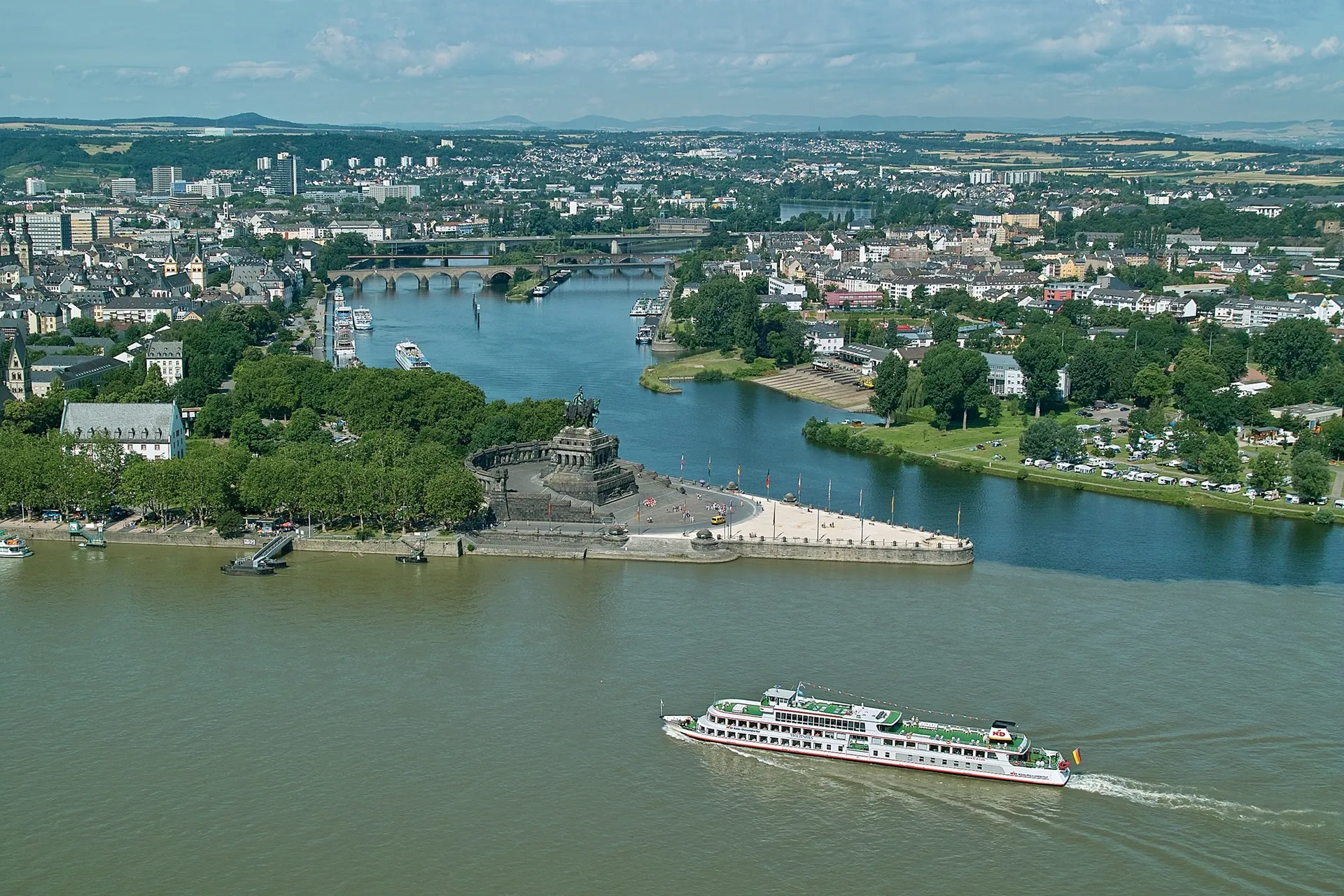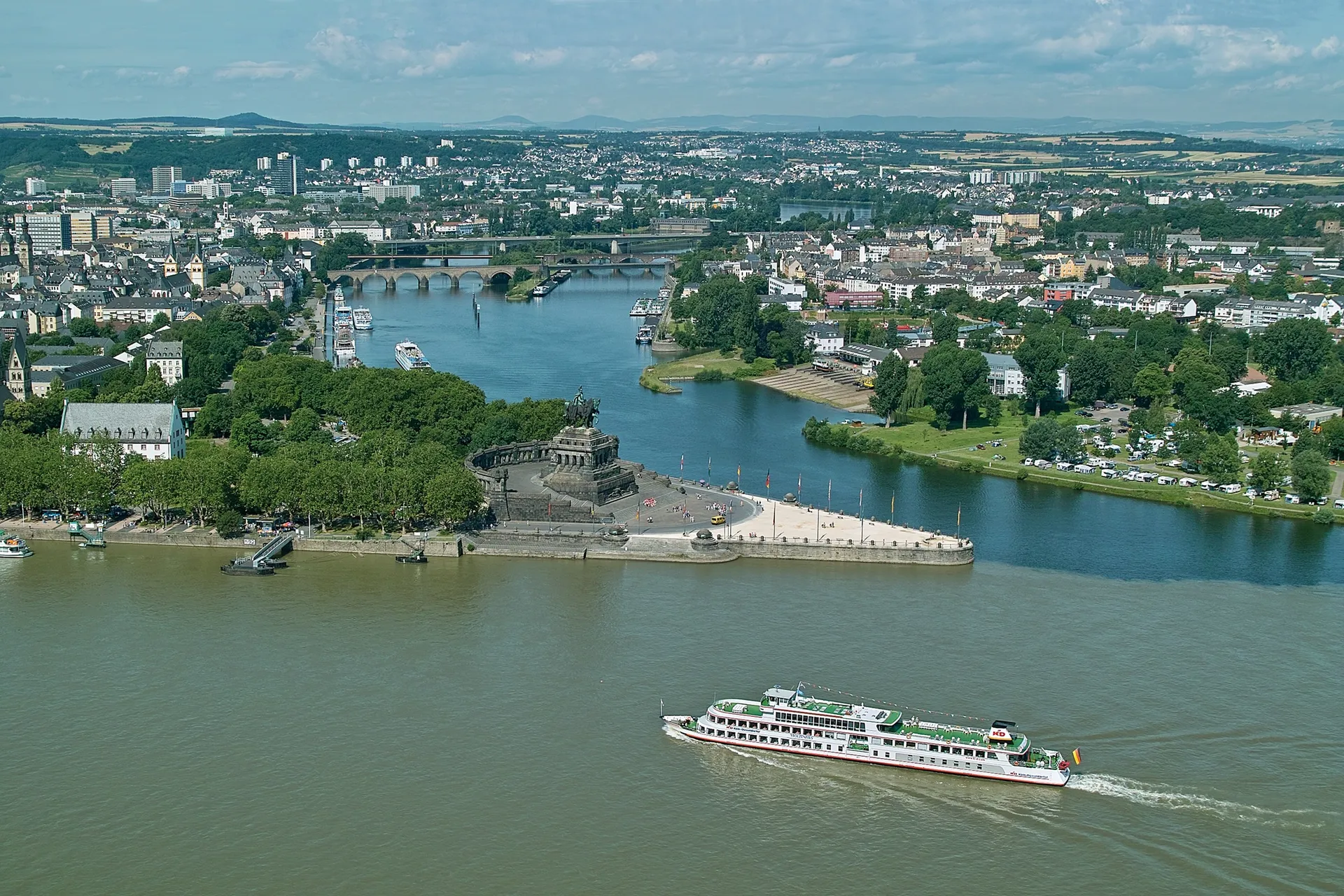
Koblenz takes its name from the Latin Confluentes — "the confluence" — for it stands at the point where the Moselle river flows into the Rhine, a meeting of waters so geographically commanding that the Romans built a fortified camp here in 9 BC. The Deutsches Eck (German Corner), a dramatic spit of land at the rivers' junction crowned by a massive equestrian statue of Kaiser Wilhelm I, has been a symbol of German unity since the nineteenth century and offers one of the most photographed viewpoints along the entire Rhine.
The city's strategic value ensured centuries of fortification, and the Ehrenbreitstein Fortress — Europe's second-largest preserved fortress after Gibraltar — looms 118 metres above the Rhine on the opposite bank, accessible by cable car. Built by the Prussians between 1817 and 1828, it offers panoramic views of the twin rivers, the city's Altstadt, and the vine-clad slopes extending in every direction. Below, the old town's Baroque churches, medieval squares, and the restored Kurfürstliches Schloss (Electoral Palace) create a walkable core of considerable charm.
Koblenz's culinary identity draws from both the Rhine and the Moselle. Riesling from the Moselle Valley's steep slate vineyards is among the finest in the world, and local Weinstuben pair it with Döppekuchen (a baked potato cake with speck and onions), Debbekooche (a similar potato dish from the Eifel region), and Rheinischer Sauerbraten — a sweet-sour pot roast marinated in vinegar and spiced with raisins, cloves, and gingerbread crumbs. The Altstadt's cafés serve Rüdesheimer Kaffee (coffee flamed with brandy and topped with cream) as an after-dinner indulgence.
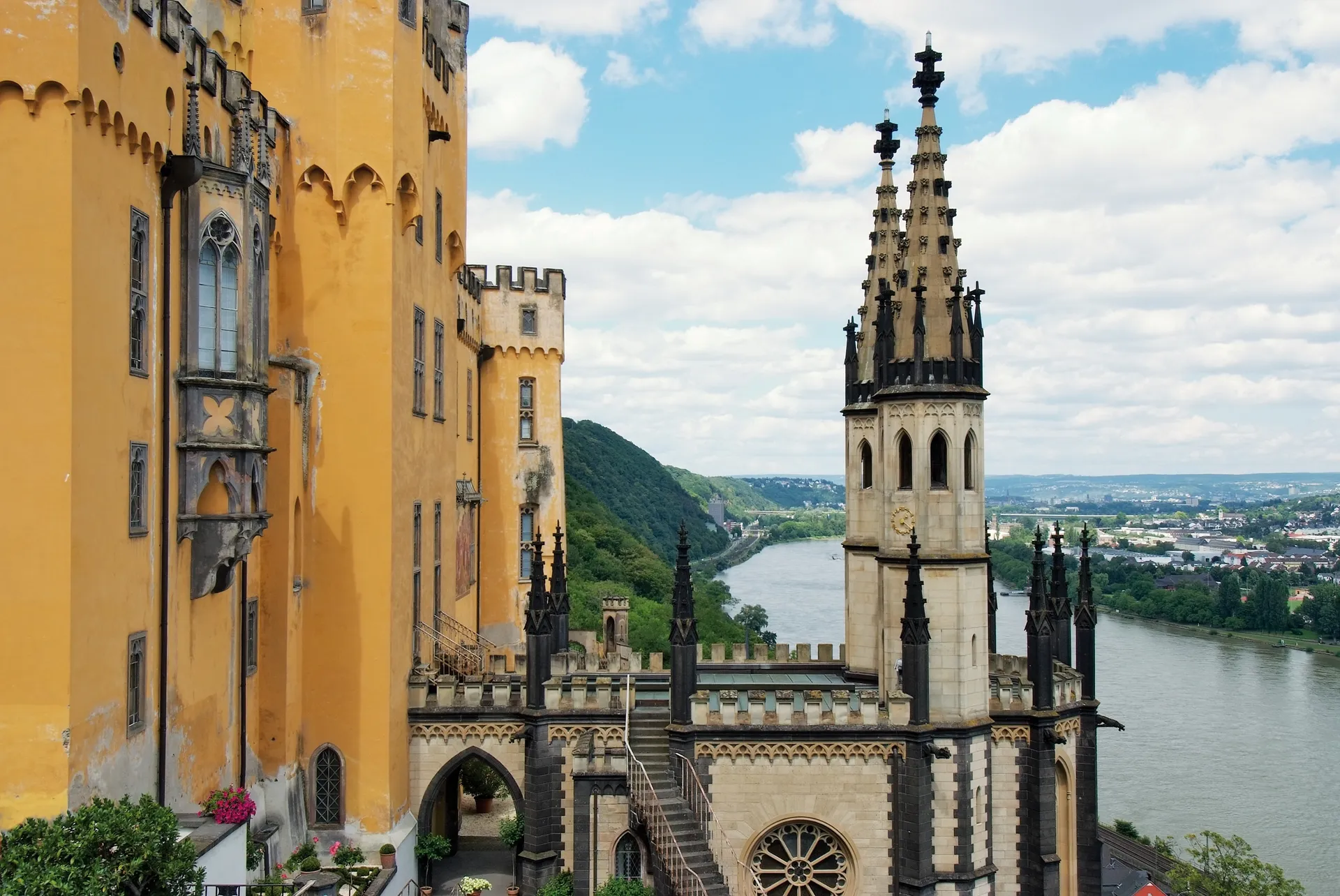
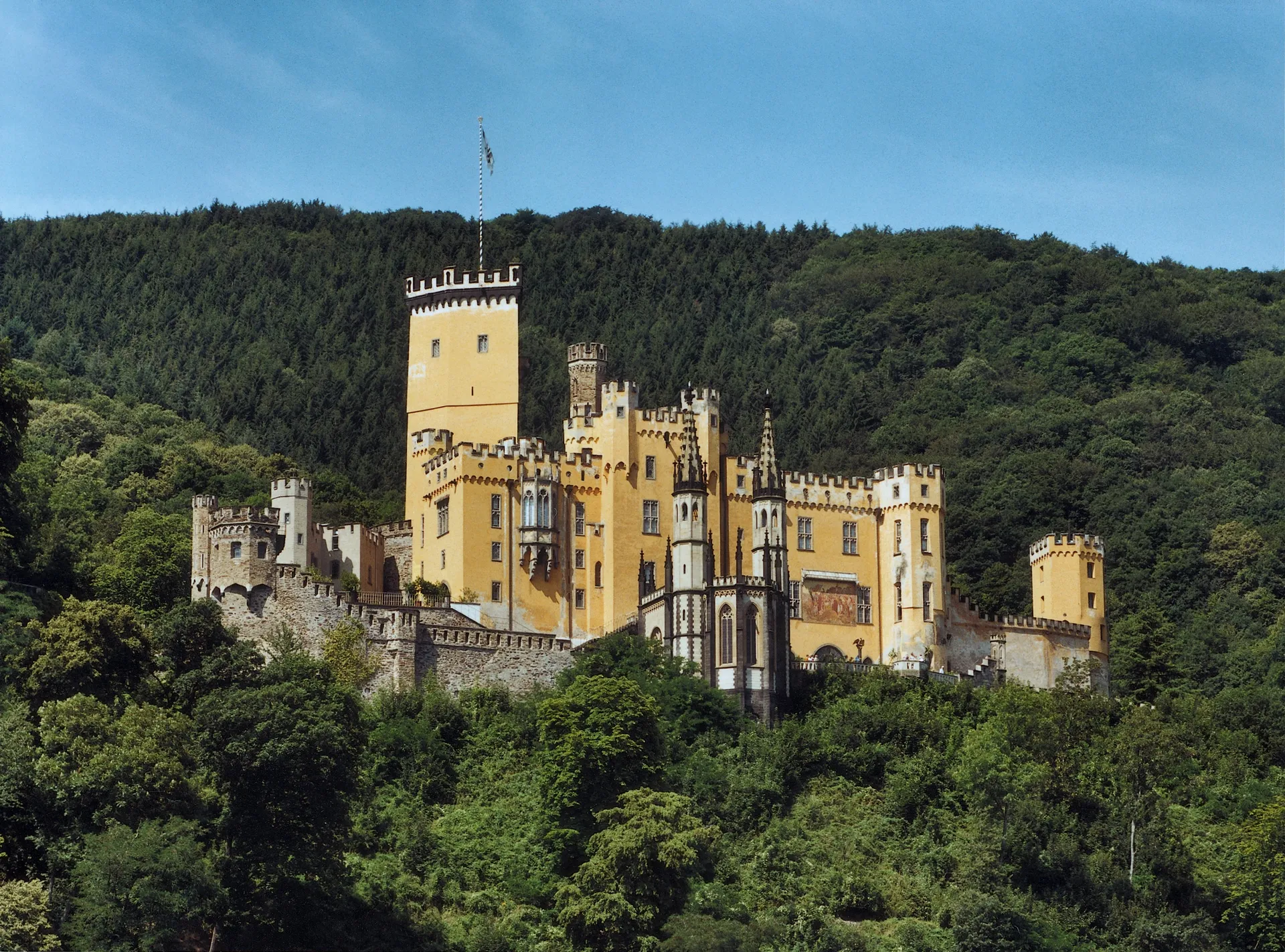
The Middle Rhine Valley, a UNESCO World Heritage Site stretching sixty-five kilometres from Koblenz to Bingen, is one of Europe's most castle-dense river corridors. Marksburg Castle, the only hilltop castle on the Rhine never destroyed, stands twenty minutes upstream. The Moselle Valley, winding southwest toward Cochem and its fairy-tale castle, and onward to Trier — Germany's oldest city with its Roman Porta Nigra — offers an entire second itinerary.
Koblenz is a central hub on Rhine and Moselle river cruises, hosting A-ROSA, AmaWaterways, Avalon Waterways, CroisiEurope, Emerald Cruises, Riviera Travel, Scenic River Cruises, Tauck, TUI River Cruises, Uniworld River Cruises, Viking, and VIVA Cruises. Its position at the junction of two great river valleys makes it a natural transit point for itineraries in both directions. The Rhine in Flames festival in August, when fireworks illuminate the castles and river, is a spectacular event, while spring and autumn offer ideal cruising weather.