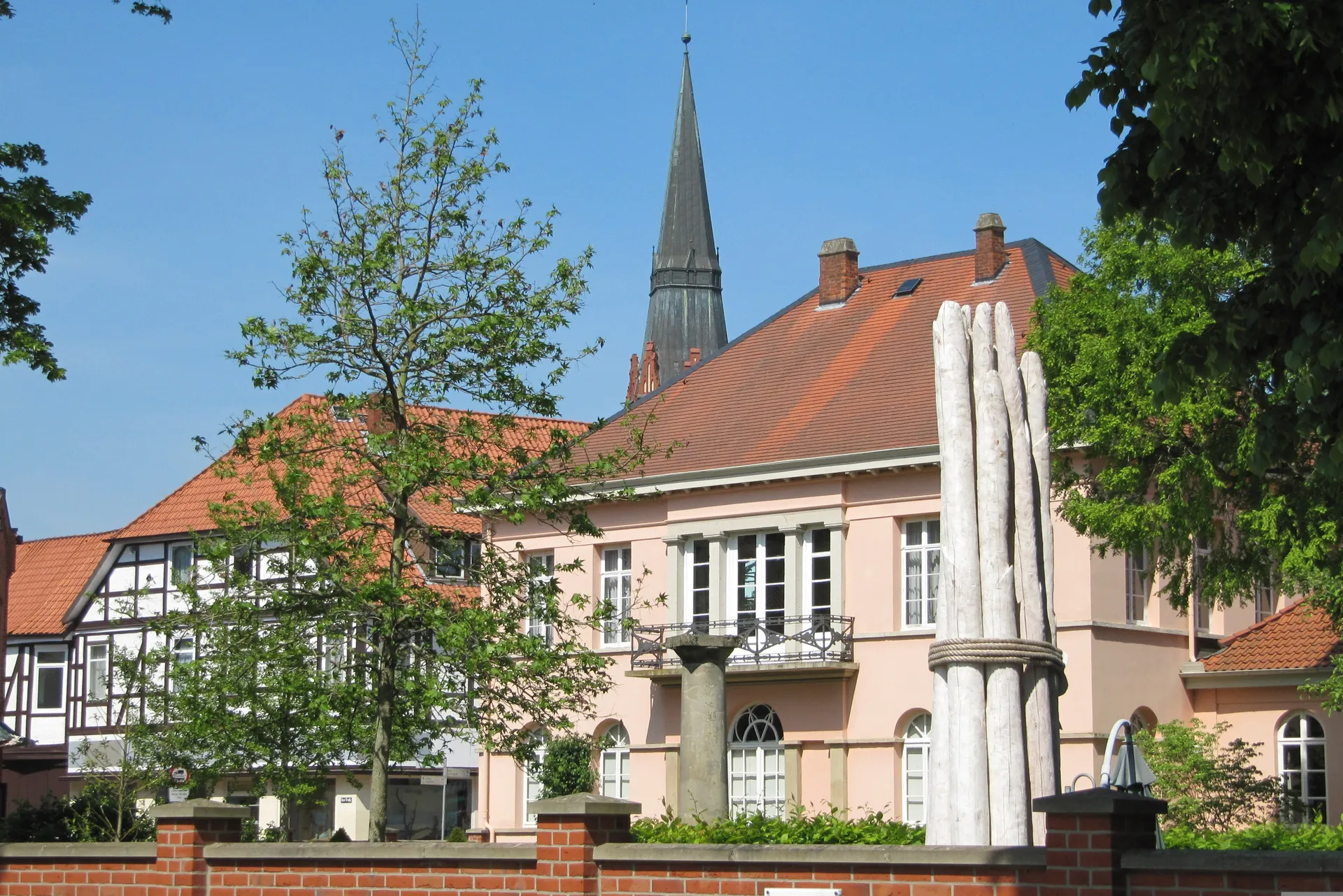
Nienburg an der Weser — to give the town its full ceremonial name — straddles the Weser River in Lower Saxony with the confident air of a place that has been quietly prospering since the Middle Ages. This market town of 31,000 residents, situated midway between Hanover and Bremen, was once a fortified stronghold controlling river traffic on the Weser, and its half-timbered old town preserves the architectural evidence of centuries of mercantile success with a pride that stops just short of smugness.
The old town is Nienburg's greatest charm. Half-timbered houses from the sixteenth through eighteenth centuries line the streets around the Marktplatz, their carved beams and painted facades displaying the exuberant decorative style known as Weser Renaissance. The Town Church of St. Martin, with its distinctive tower, anchors the historic center, while the nearby Quaet-Faslem-Haus — an elaborately decorated merchant's house — serves as a museum documenting the town's history. The old fortification walls have been transformed into a riverside promenade that offers pleasant walks along the Weser.
Nienburg's culinary contribution to German gastronomy is singular and celebrated: the Nienburger Spargelzeit, or asparagus season. The sandy soils of the Weser valley produce white asparagus (Spargel) of exceptional quality, and from late April through June, the town devotes itself to this vegetable with an enthusiasm that borders on religious fervor. Asparagus appears in every possible preparation — with hollandaise, wrapped in ham, in soup, in salad — and the annual Asparagus Festival draws visitors from across northern Germany. Beyond asparagus season, local restaurants serve robust Lower Saxon fare: Grunkohl mit Pinkel (kale with smoked sausage), Bremer Knipp (a grain-and-meat patty), and hearty stews suited to the northern climate.
The Weser valley surrounding Nienburg offers gentle cycling and hiking through a landscape of meadows, forests, and picturesque villages. The Weser Renaissance Route connects a series of towns whose architecture displays the distinctive regional style — elaborate stone and timber facades, bay windows, and scroll gables — that flourished here during the sixteenth and seventeenth centuries. The Dinosaur Park at nearby Munchchagen entertains families with life-size prehistoric models and interactive paleontology exhibits.
River cruise ships dock at Nienburg's riverside quay, within walking distance of the old town center. The town is a common stop on Weser River itineraries between Bremen and Hameln (Hamelin, of Pied Piper fame). The most rewarding visiting season is April through October, with the asparagus season of late April through June offering the most distinctive local experience. Nienburg is a town that exemplifies the quiet pleasures of German river travel — a place where the half-timbered houses lean companionably over cobblestone streets, the beer is well-brewed, and the asparagus is taken very, very seriously.

