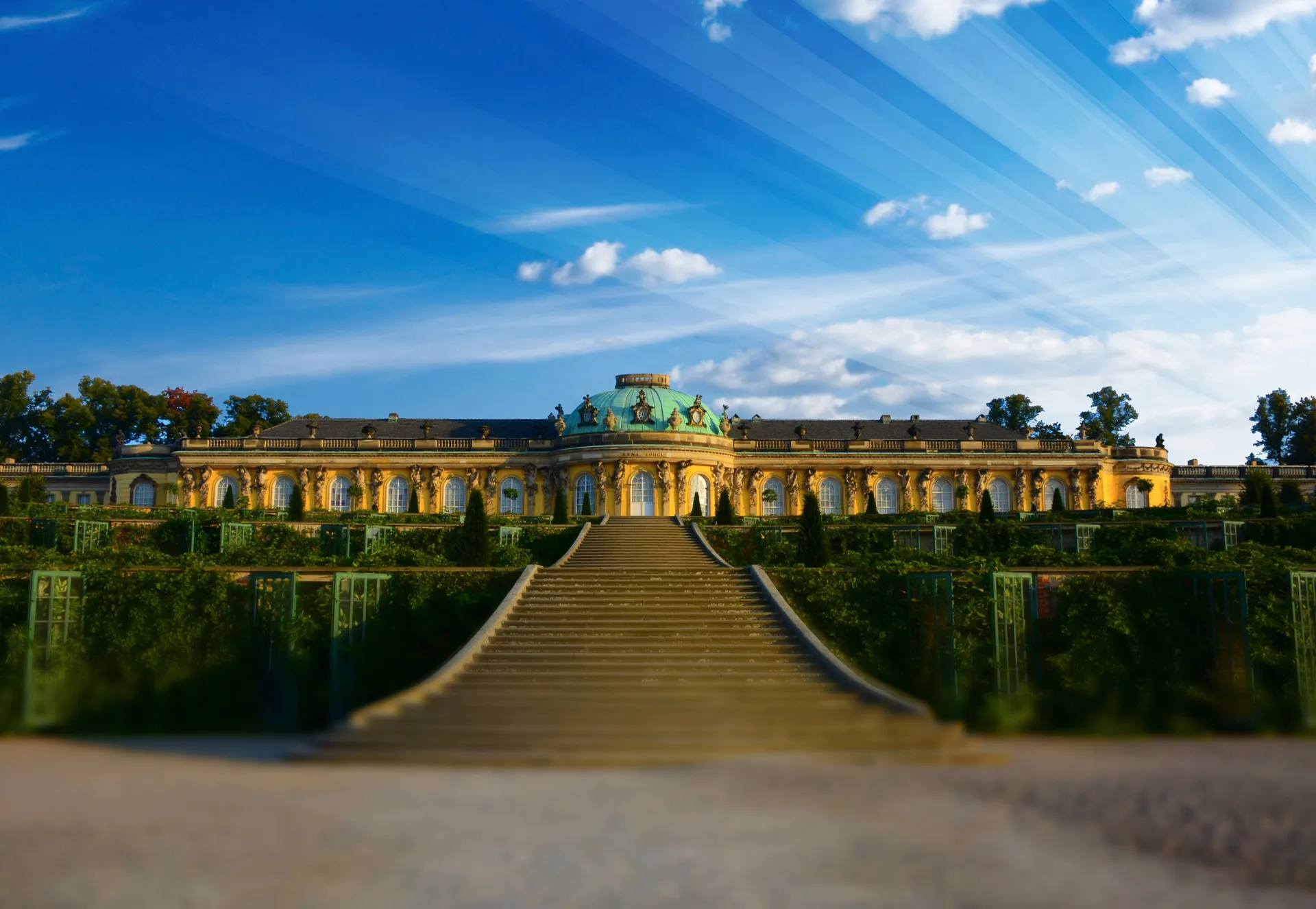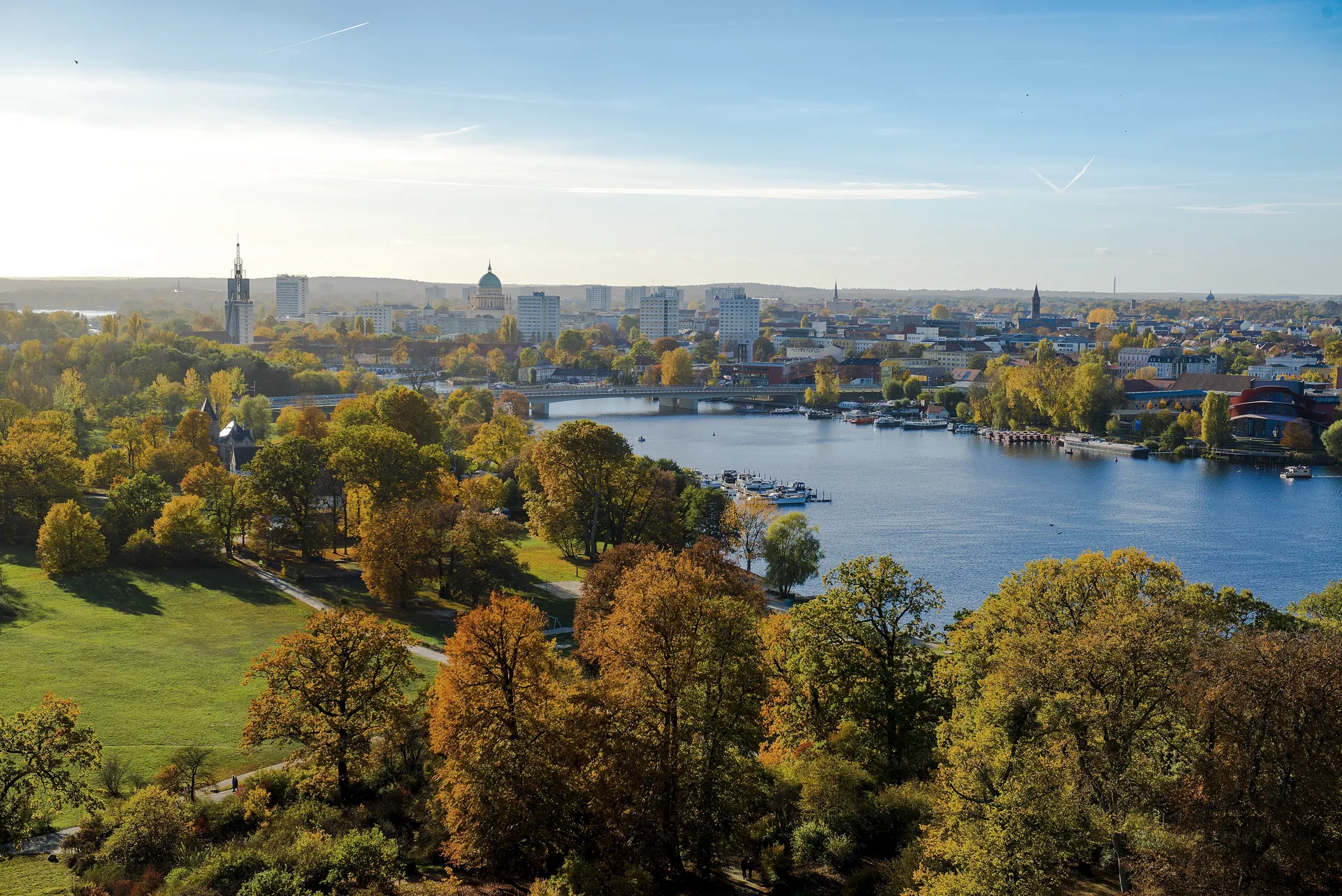
Potsdam is Berlin's elegant alter ego — a city of palaces, parks, and Prussian grandeur that sits on the banks of the Havel River just thirty minutes from the German capital, yet feels like an entirely different world. For two centuries, this was where the kings of Prussia and later the German emperors retreated to conduct the business of state, pursue the arts, and cultivate gardens of exquisite beauty. Frederick the Great, the philosopher-king who transformed Prussia into a European power, made Potsdam his permanent residence in 1747 and bequeathed it the palace and park that remain its crowning glory: Sanssouci, a name that means "without care" and that perfectly captures the spirit of refined pleasure that Frederick embedded in every terrace, fountain, and vineyard of his creation.
Sanssouci Park stretches across nearly 300 hectares of landscaped grounds that rank among the finest in Europe. The palace itself — a single-storey rococo confection of yellow and white, topped by a cupola and fronted by six tiers of terraced vineyards — was designed as a place for intimate entertainment and intellectual conversation. Frederick's library, his music room (he was an accomplished flute player), and the intimate round table where Voltaire was a regular dinner guest all survive intact. At the far end of the park, the Neues Palais — built after the Seven Years' War to demonstrate that Prussia's treasury was far from exhausted — is a palace of truly imperial scale, its 200 rooms a gallery of baroque and rococo excess that makes Sanssouci look positively modest by comparison.
Potsdam's culinary landscape reflects its dual identity as a Prussian capital and a modern Brandenburg city. Traditional Brandenburg cuisine — hearty, seasonal, and deeply rooted in the sandy soil of the Mark — offers dishes like Eisbein (pickled pork knuckle), Spreewälder Gurken (the famous pickled cucumbers of the nearby Spreewald), and Quarkkeulchen, sweet fried potato-and-quark cakes. The Dutch Quarter — a grid of red-brick gabled houses built in the 1730s to attract Dutch artisans — is now a charming enclave of cafés, boutiques, and restaurants that serve everything from traditional German fare to Vietnamese pho and Italian gelato. The weekly market on the Bassinplatz is a showcase for the organic farms and artisan producers of Brandenburg.
Beyond Sanssouci, Potsdam's historical landscape is remarkably dense. The Cecilienhof Palace, built in the style of an English Tudor country house, hosted the Potsdam Conference of July 1945, where Truman, Churchill (later Attlee), and Stalin decided the post-war fate of Germany and Europe — the round table at which they sat is preserved exactly as they left it. The Glienicke Bridge, spanning the Havel to Berlin, was the famous "Bridge of Spies" where Cold War prisoner exchanges took place in the grey dawn of divided Germany. The Babelsberg Film Studio, Europe's oldest large-scale film studio, produced Metropolis and The Blue Angel and continues to operate today, lending Potsdam an unexpected cinematic dimension.
Potsdam is a port of call for CroisiEurope, VIVA Cruises, and Viking on their German waterway itineraries. Ships dock along the Havel within easy reach of the city centre and Sanssouci Park. The best time to visit is May through October, when the park's gardens are in full bloom, the palace interiors are illuminated by natural light, and the riverside cafés offer the most pleasant setting for a Brandenburg afternoon. Potsdam is one of those rare places that manages to be both profoundly historical and thoroughly livable — a city where the past is not a burden but a gift.