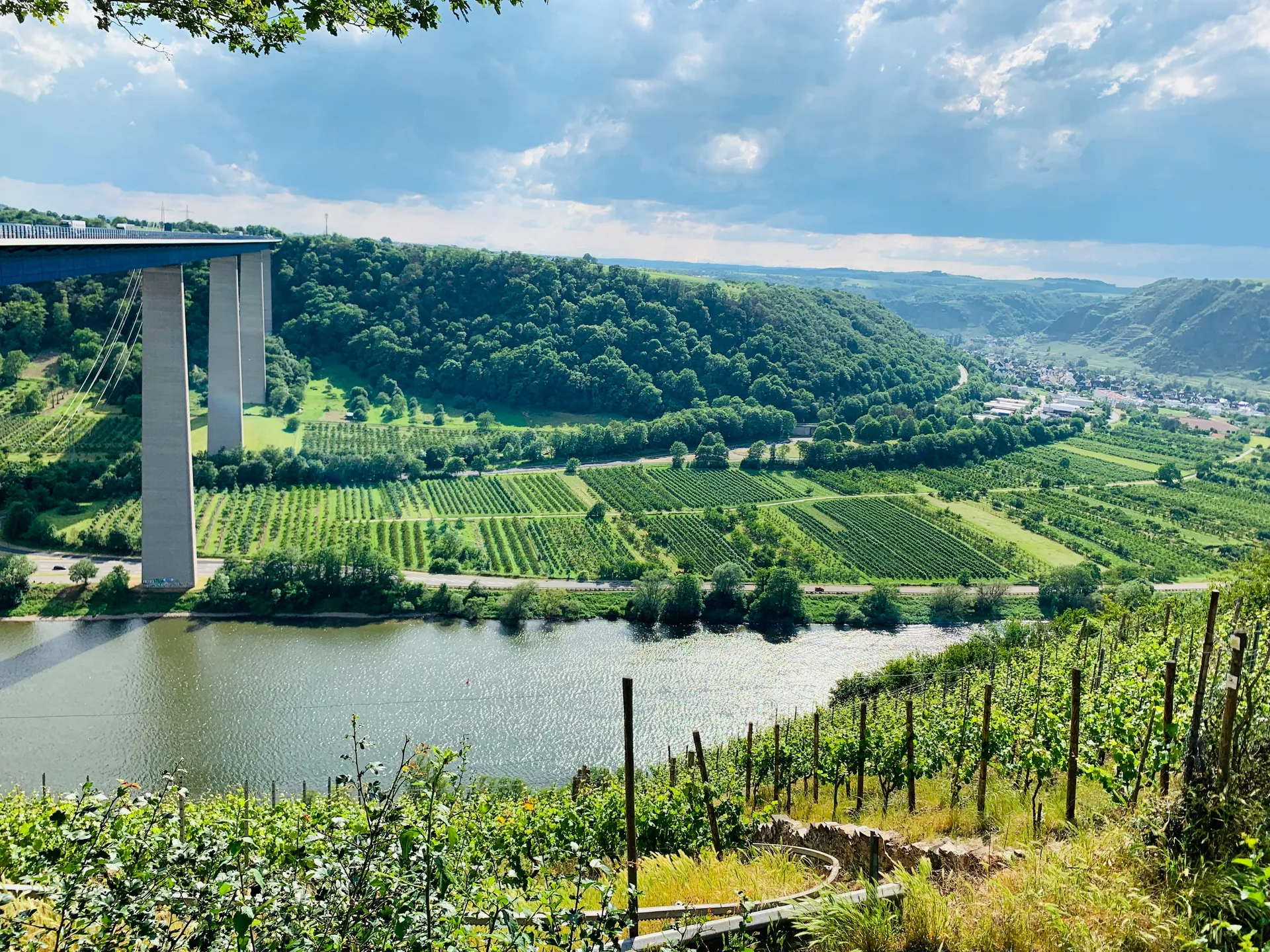
Clinging to the steep slopes above the Moselle River just before it joins the Rhine at Koblenz, the tiny wine village of Winningen is a place of extraordinary viticultural heritage — home to what is believed to be the oldest Riesling vineyard in the world, the Uhlen, documented in records dating to 1304. This immaculate settlement of half-timbered houses, flower-bedecked balconies, and winding alleyways carved into the hillside represents the Moselle wine tradition at its most concentrated and authentic.
The vineyards of Winningen cascade down slopes so precipitous that they can only be worked by hand — mechanical harvesting is physically impossible on gradients that frequently exceed sixty degrees. These are among the steepest vineyards in Europe, their ancient dry-stone terraces built into dark Devon slate that absorbs heat during the day and radiates it back through the cool Moselle nights, creating the thermal conditions that coax the Riesling grape to a perfection found in very few other locations. The resulting wines — crystalline, mineral-driven, and possessed of an almost electric acidity balanced by delicate fruit — rank among Germany's finest.
The village itself is a living exhibition of Moselle architecture and viticulture. Half-timbered wine houses from the sixteenth and seventeenth centuries line the narrow main street, their ground floors housing the stone-vaulted cellars where wine has been aged for centuries. The village church perches above the settlement, its cemetery offering panoramic views over the vineyards to the river below. During the Winninger Weinfest in late August, the village transforms into a celebration of wine and community that has been held annually since 1806 — one of the oldest wine festivals on the Moselle.
Tasting wine in Winningen is an intimate experience far removed from the commercial operations of larger wine regions. The village's dozen or so producers welcome visitors to their cellars, where tastings proceed at a leisurely pace through flights of wines that demonstrate the remarkable range of expression that Riesling achieves on the Moselle — from bone-dry to lusciously sweet, each reflecting the specific slate composition and sun exposure of its vineyard plot. Paired with local cheeses, cured meats, and the traditional Flammkuchen (a thin-crusted tart topped with cream, onions, and bacon), these tastings become memorable gastronomic events.
River cruise ships dock at Winningen's small riverside quay, which sits directly below the village. The settlement is compact enough to explore on foot in an hour, though wine tastings have a way of extending any visit well beyond planned schedules. The Moselle cruise season runs from April through October, with late September and early October — harvest time — offering the most atmospheric visiting conditions. The autumn light on the golden-leafed vines, the activity of grape-pickers on the steep slopes, and the scent of fermenting juice drifting from the cellars create an experience that captures the essence of European wine culture at its most traditional and heartfelt.