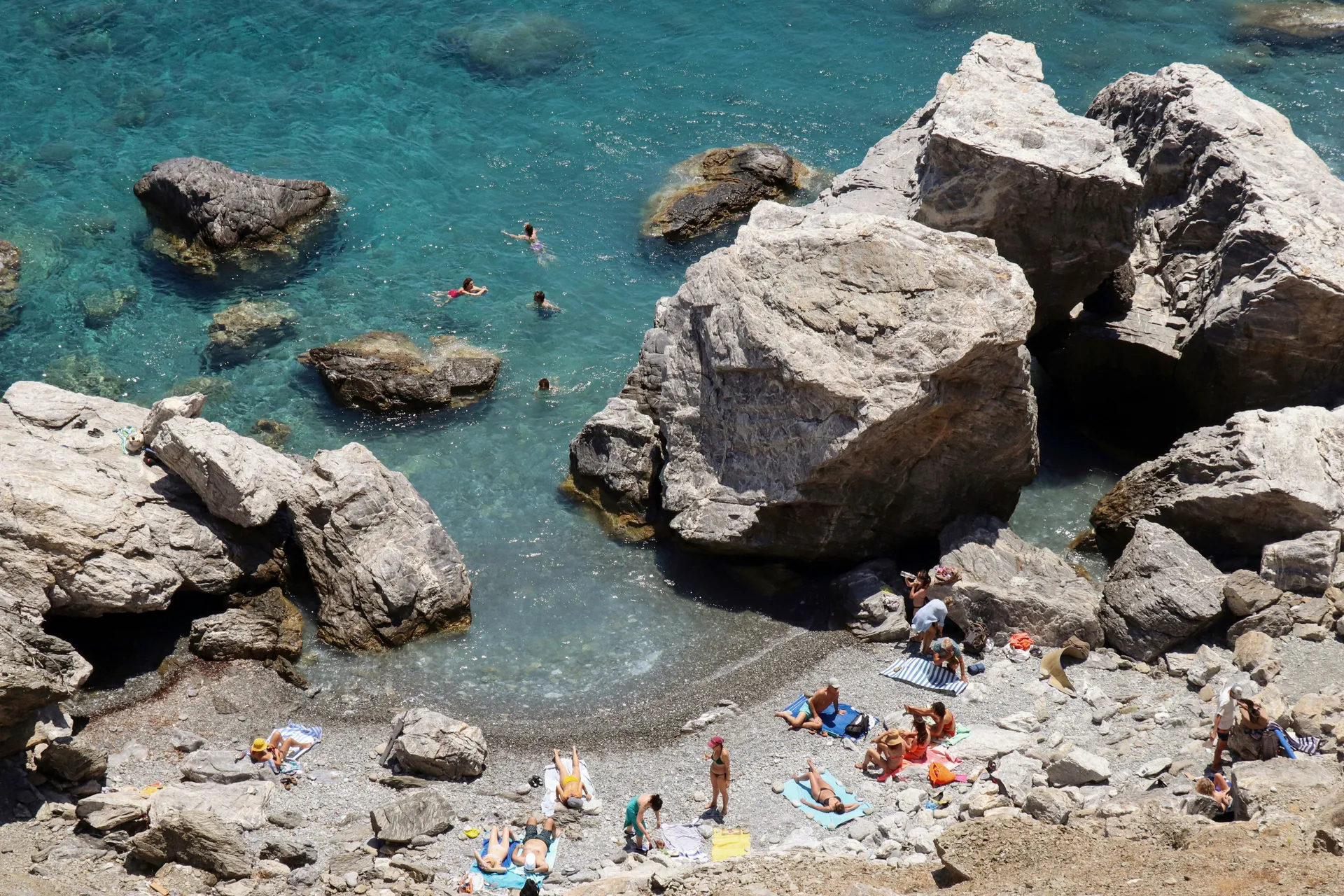
Agia Anna is one of the Aegean's quiet masterstrokes — a slender crescent of golden sand on the western coast of Naxos that consistently ranks among the finest beaches in Greece, yet retains a languorous, unhurried atmosphere that the more famous Cycladic islands lost decades ago. Named for the tiny whitewashed chapel of Saint Anna that overlooks its southern end, this beach is the distillation of everything the Greek island dream promises: crystalline turquoise water, fine sand that squeaks beneath your feet, and a backdrop of low dunes crowned with cedars.
Naxos itself is the largest and most fertile of the Cycladic islands, and its character is markedly different from the volcanic austerity of Santorini or the nightlife-driven energy of Mykonos. This is an agricultural island where marble has been quarried since antiquity, where the Venetian Duchy of the Archipelago left behind a medieval hilltop castle in the main town, and where villages in the mountainous interior produce potatoes, citrus, and the island's signature liqueur — Kitron, distilled from the leaves of the citron tree in a process unchanged for over a century.
The culinary scene at Agia Anna reflects this abundance. Beachfront tavernas serve grilled octopus dried on lines in the salt air, slow-cooked goat stew rich with red wine and onions, and the island's celebrated Graviera cheese — a hard, nutty variety aged in caves and paired with thyme honey and walnuts. Fresh fish, pulled from the Aegean hours earlier, arrives at the table simply grilled with olive oil and lemon. A cold glass of Assyrtiko wine, bone-dry and mineral, completes the picture.
Beyond the beach, Naxos rewards exploration. The Portara — the massive marble doorframe of an unfinished sixth-century BC temple to Apollo — stands on a causeway-connected islet at the entrance to Naxos Town harbor, perhaps the most iconic ancient ruin in the Cyclades. The interior villages of Halki, Filoti, and Apiranthos preserve medieval Venetian tower-houses, Byzantine churches with original frescoes, and marble-paved streets that echo with a sense of time undisturbed. Mount Zas, at 1,004 meters the highest peak in the Cyclades, offers challenging hiking with views spanning a dozen islands.
Cruise ships typically anchor off Naxos Town, with tenders bringing passengers to the harbor, from where Agia Anna is a short taxi or bus ride south along the coast road. The beach has sun lounger rentals, several tavernas, and water sports operators but remains blissfully free of high-rise development. The ideal visiting season is May through October, with July and August delivering the warmest swimming conditions and September offering quieter beaches and golden afternoon light. Agia Anna is a reminder that the best beaches need not be the most famous — only the most generous with their beauty.

