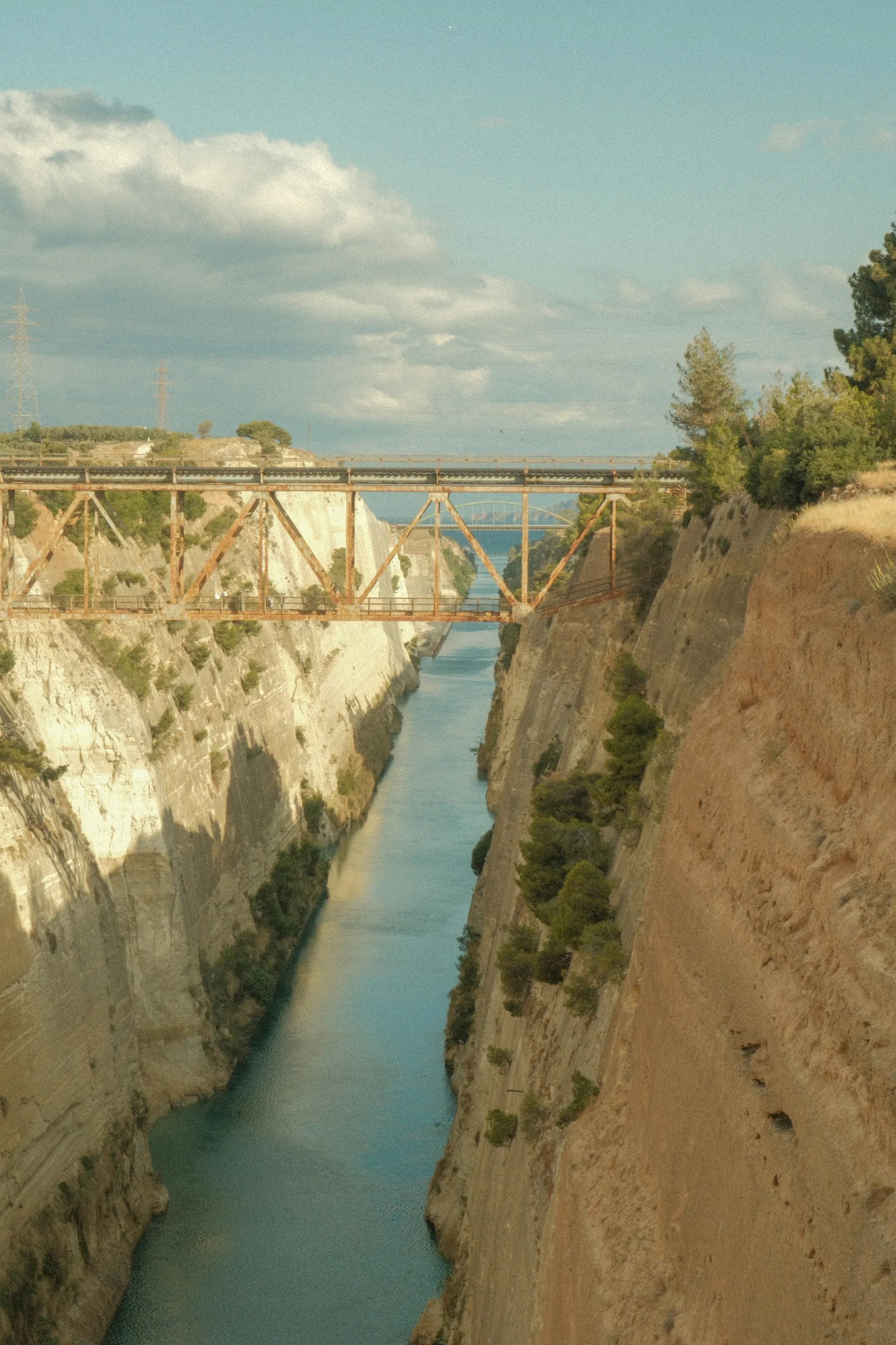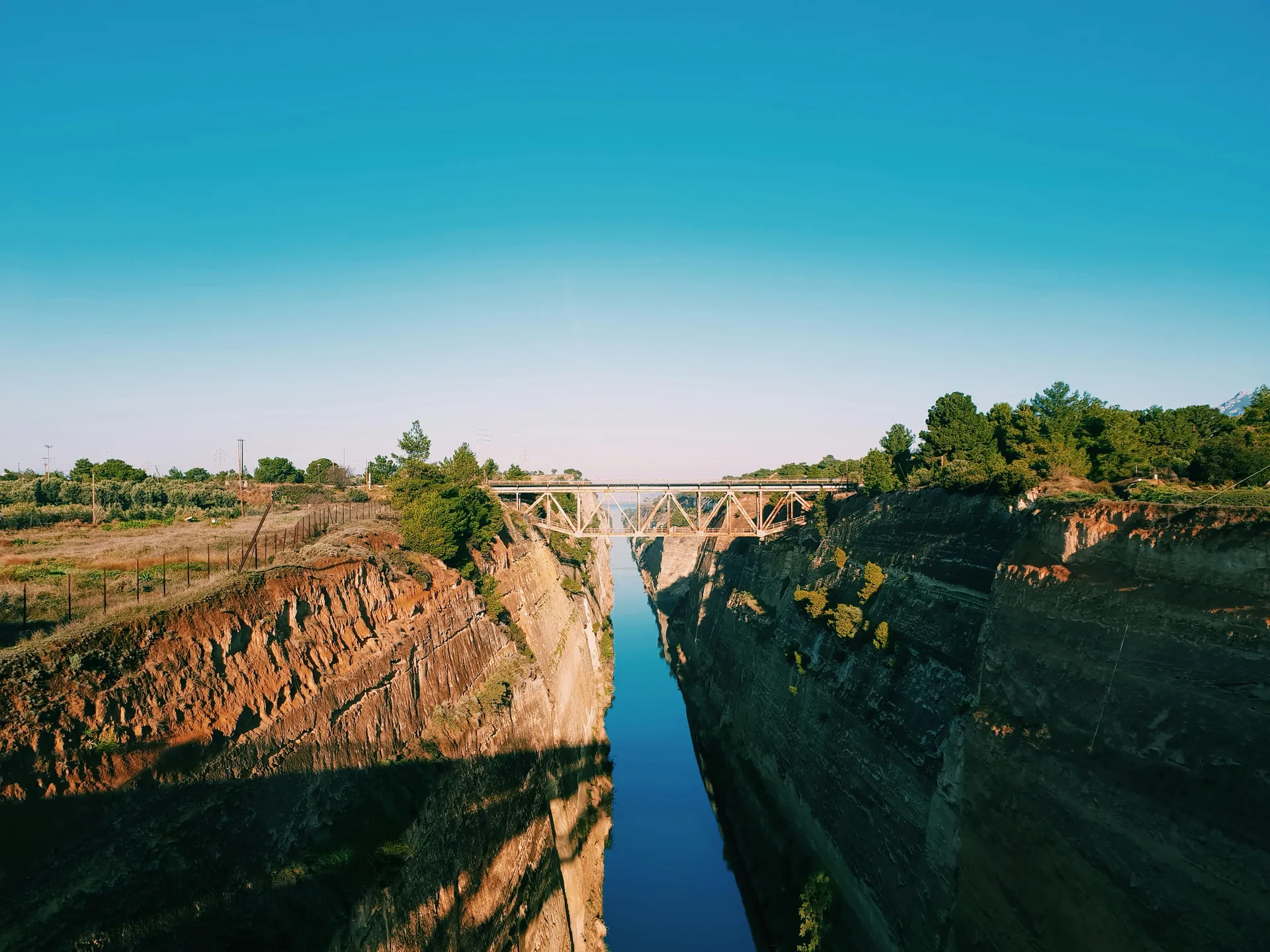
The Corinth Canal is not a port in any conventional sense — it is an experience, a six-kilometer passage through solid rock that slices the Peloponnese from the Greek mainland with the surgical precision of a geological scalpel. Cut between 1882 and 1893 through the narrow Isthmus of Corinth, this remarkable waterway realizes an ambition that tormented engineers and emperors for over two thousand years: Periander of Corinth contemplated it in the seventh century BC, Julius Caesar commissioned surveys, and Nero himself broke ground in 67 AD with a golden pickaxe, employing six thousand Jewish prisoners of war before abandoning the project. The modern canal, just twenty-four meters wide at its base and eighty meters deep, remains one of the world's great engineering spectacles.
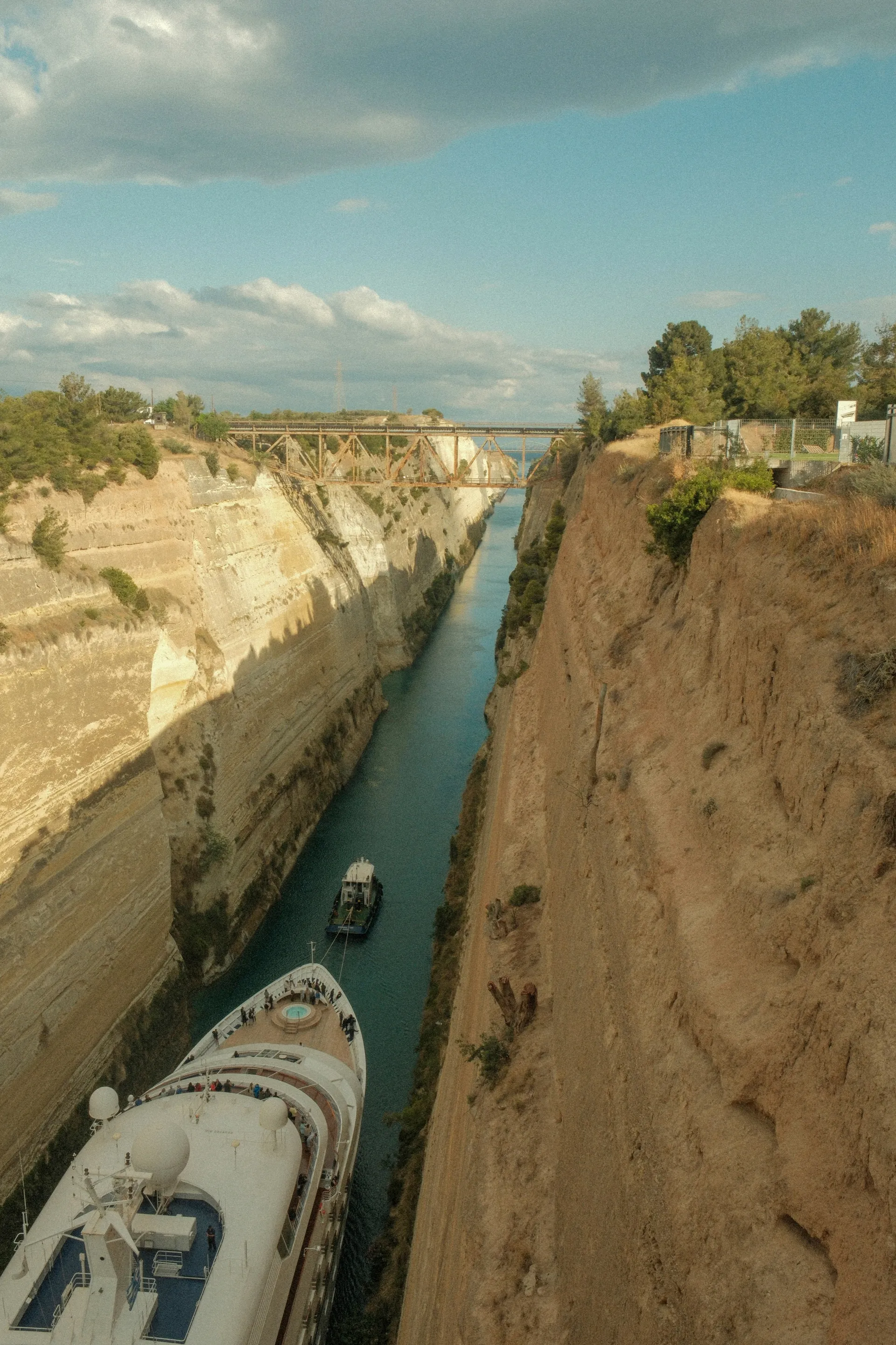
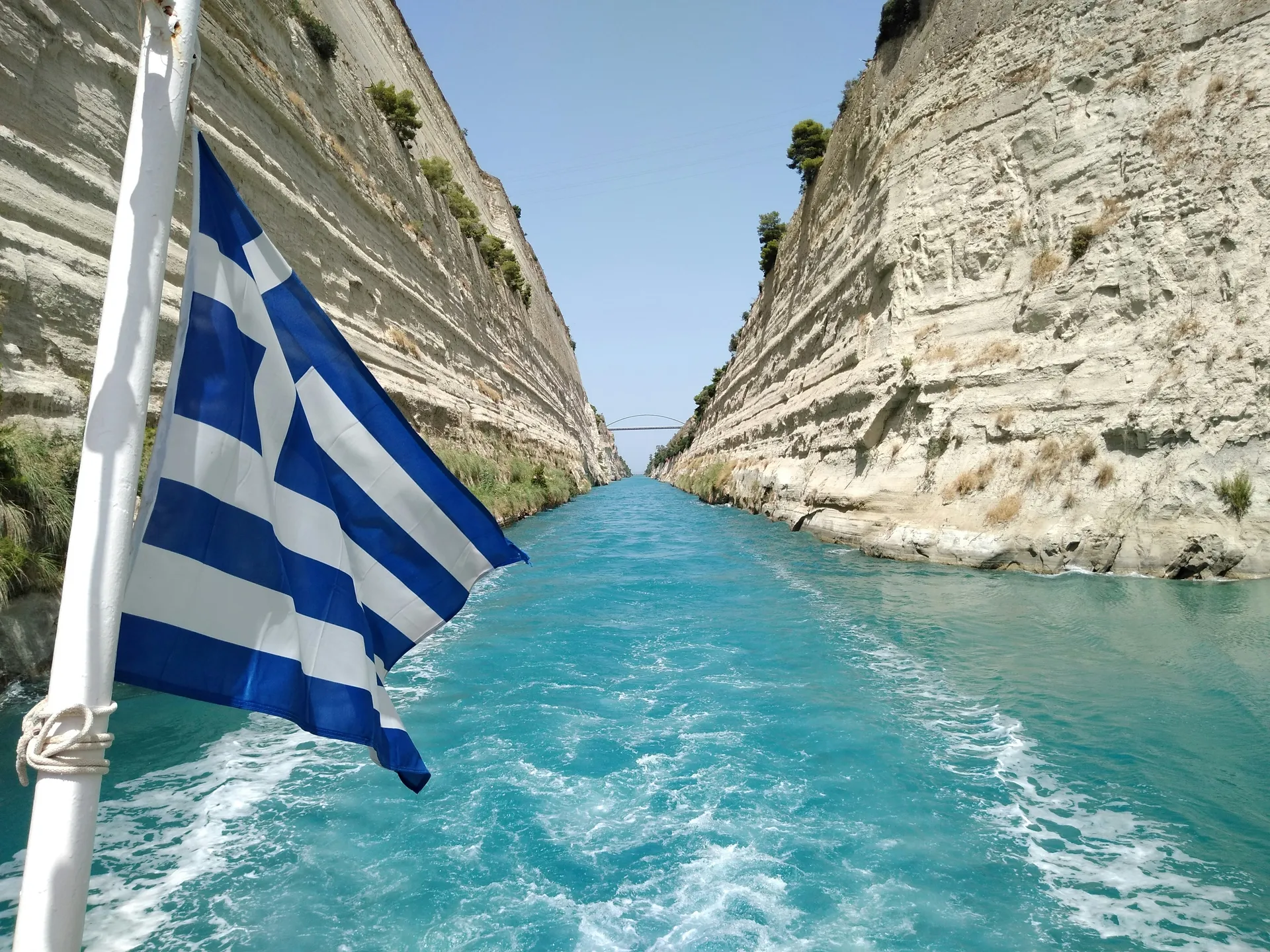
The transit itself lasts approximately thirty minutes, but those minutes contain a concentration of visual drama that few maritime experiences can match. The sheer limestone walls rise on either side like a man-made canyon, their striations recording millions of years of geological history in horizontal bands of cream, ochre, and grey. At water level, the canal feels impossibly narrow — large vessels pass with just meters to spare on either side, and passengers standing on deck can almost touch the rock face. The bridges that span the canal at regular intervals frame rectangles of Greek sky overhead, while the water below takes on a deep turquoise that reflects the limestone walls in hypnotic ripples.
Ancient Corinth, sprawling across a plateau beneath the dramatic fortress of Acrocorinth, provides the historical context that elevates a canal transit from spectacle to pilgrimage. This was one of the wealthiest and most powerful cities of the ancient world, controlling trade between the Aegean and Adriatic seas from its strategic position at the isthmus. The Temple of Apollo, its seven remaining Doric columns silhouetted against the Peloponnese sky, dates from the sixth century BC and stands as one of the oldest stone temples in Greece. The archaeological museum houses an extraordinary collection that traces Corinth's history from its Mycenaean origins through its Roman apotheosis, when it served as the capital of the province of Achaea and the city where Saint Paul preached and wrote his epistles.
Acrocorinth, the massive fortress crowning the 575-meter peak above the ancient city, deserves the steep climb for its panoramic views alone. From the summit, the entire isthmus is visible — the Saronic Gulf to the east, the Gulf of Corinth to the west, and the canal cutting its improbable line between them. The fortress itself layers Byzantine, Frankish, Venetian, and Ottoman fortifications into a defensive palimpsest that spans over two thousand years of military architecture. The surrounding Peloponnese, with Mycenae, Epidaurus, and Nafplio all within easy reach, provides some of the richest archaeological exploration in the Mediterranean.
Emerald Yacht Cruises and Windstar Cruises include the Corinth Canal transit in their Greek Islands and Aegean itineraries, selecting vessels specifically sized to navigate the canal's narrow passage. The transit is typically combined with shore excursions to ancient Corinth, Mycenae, or the theatre at Epidaurus, creating a day that spans three thousand years of Greek civilization. The cruising season runs from April through October, with the canal operational year-round barring occasional closures for maintenance or landslide remediation. Nearby Parga and the islands of the Ionian Sea offer contrasting Greek experiences for those continuing westward.