Delos: The Sacred Heart of the Ancient Greek World
Delos is the most important archaeological site in the Cyclades and one of the most significant in the entire Mediterranean — a small, rocky island of barely three and a half square kilometres that was, for over a thousand years, the spiritual centre of the Greek world. According to mythology, Delos was the birthplace of Apollo, god of light, music, and prophecy, and his twin sister Artemis. This divine association made the island sacred and inviolable: from the seventh century BC, no one was permitted to be born or to die on Delos, and the dead were exhumed and reinterred on the neighbouring islet of Rheneia. Despite — or perhaps because of — these restrictions, Delos became fabulously wealthy as a religious sanctuary, a trading hub, and a free port, its population swelling to thirty thousand at its peak.
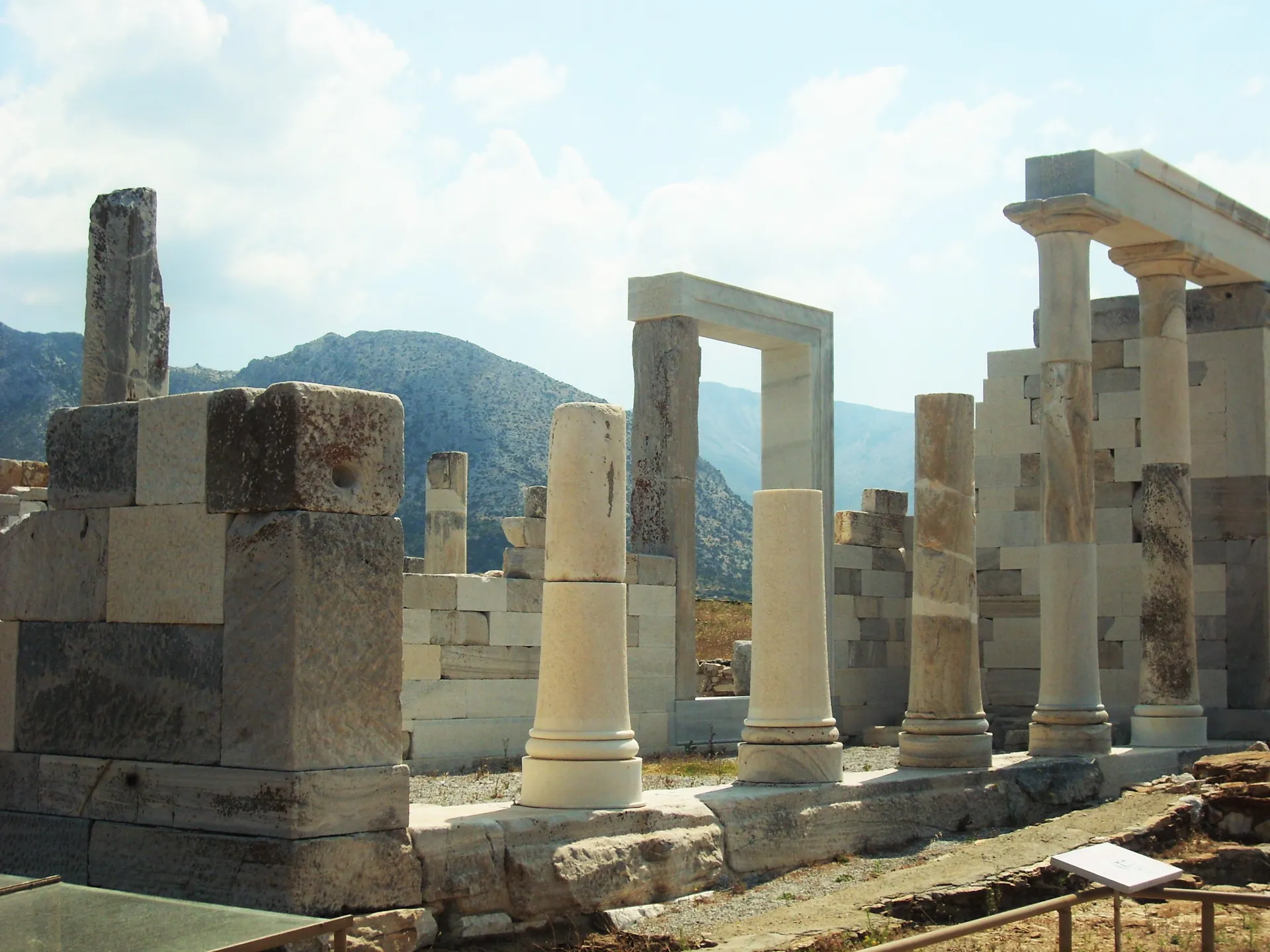
The character of Delos today is that of an open-air museum of staggering completeness. The ruins cover almost the entire island, and walking through them is a journey through the evolution of ancient Greek civilisation. The Terrace of the Lions — a row of weathered marble beasts that originally guarded the Sacred Lake — is the island's most iconic image, though the originals are now housed in the museum and replaced by replicas. The Sanctuary of Apollo preserves three successive temples dedicated to the god, surrounded by treasuries, altars, and ceremonial halls donated by city-states and rulers from across the Greek world. The theatre quarter, on the hillside above, contains the well-preserved houses of wealthy merchants, their mosaic floors — depicting Dionysus riding a panther, dolphins leaping through waves — demonstrating a sophistication of domestic decoration that rivals Pompeii.
The Sacred Lake, now dry, was the mythological site of Apollo's birth, and the area surrounding it constituted the religious core of the island. The Agora of the Competaliasts — the Roman trading association — reflects the island's later role as the most important commercial centre in the eastern Mediterranean, a position it achieved after Rome declared it a free port in 167 BC. At its peak, Delos processed an estimated ten thousand enslaved people daily — a grim reminder that the splendour of the ancient world was built on human suffering. The House of Cleopatra and the House of the Dolphins contain mosaics and statues that speak to the refined tastes of the island's international merchant class.
The archaeological museum on Delos houses a collection of sculpture, pottery, and everyday objects that illuminates the island's millennia of habitation. The archaic lions — elongated, stylised, and deeply expressive — are the museum's centrepiece, but the collection also includes exquisite Hellenistic and Roman sculpture, jewellery, and household objects that provide intimate glimpses into daily life on this extraordinary island. The view from Mount Kynthos, the island's highest point at just 113 metres, encompasses the entire Cycladic archipelago — a panorama that explains why the ancients chose this position as the navel of their island world.
Emerald Yacht Cruises and Ponant include Delos on their Greek islands itineraries, with passengers typically arriving by tender from Mykonos, just a few kilometres to the northeast. Delos is uninhabited and has no accommodation or permanent facilities — visitors arrive, explore the ruins, and return to their vessel, an arrangement that preserves the island's archaeological integrity. For travellers who have explored the Acropolis in Athens and the ruins of Olympia, Delos offers something different and arguably more moving — an entire sacred city, preserved by its very abandonment, where the stones still seem to hum with the devotion and commerce of three thousand years. April through October is the visiting season, with spring and autumn offering the most comfortable temperatures for walking the exposed archaeological site.

