Long before the first yacht glided into its amphitheatrical harbor, Hydra commanded the Aegean with a different kind of power. During the Greek War of Independence in 1821, this small island contributed nearly two hundred ships to the revolutionary fleet, its wealthy merchant captains — among them Andreas Miaoulis and Lazaros Kountouriotis — bankrolling the struggle against Ottoman rule. By the mid-nineteenth century, Hydra had transformed from naval stronghold to artists' colony, drawing Leonard Cohen, who lived here through much of the 1960s, and later captivating filmmakers, painters, and poets seeking a landscape untouched by modernity.
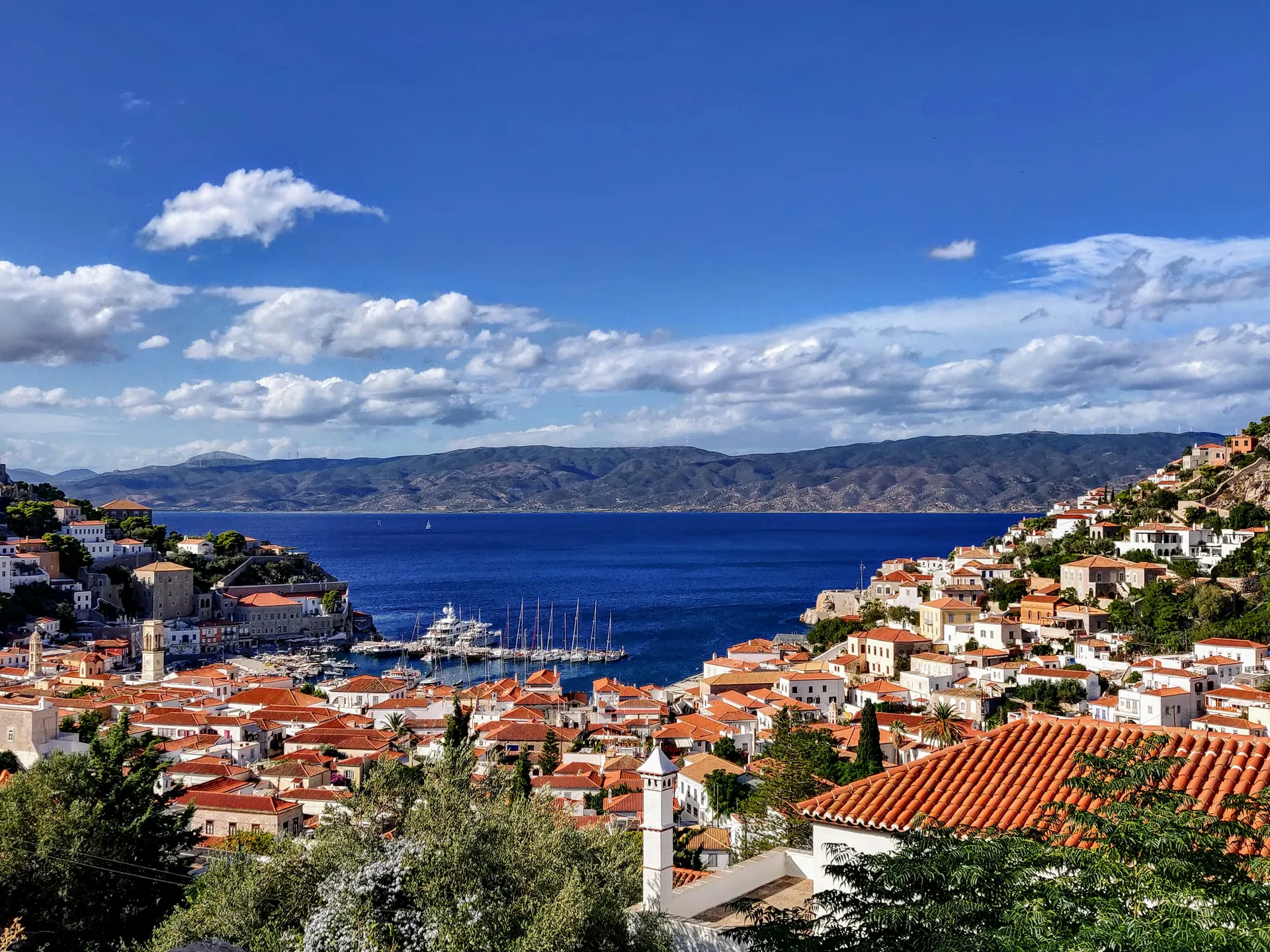
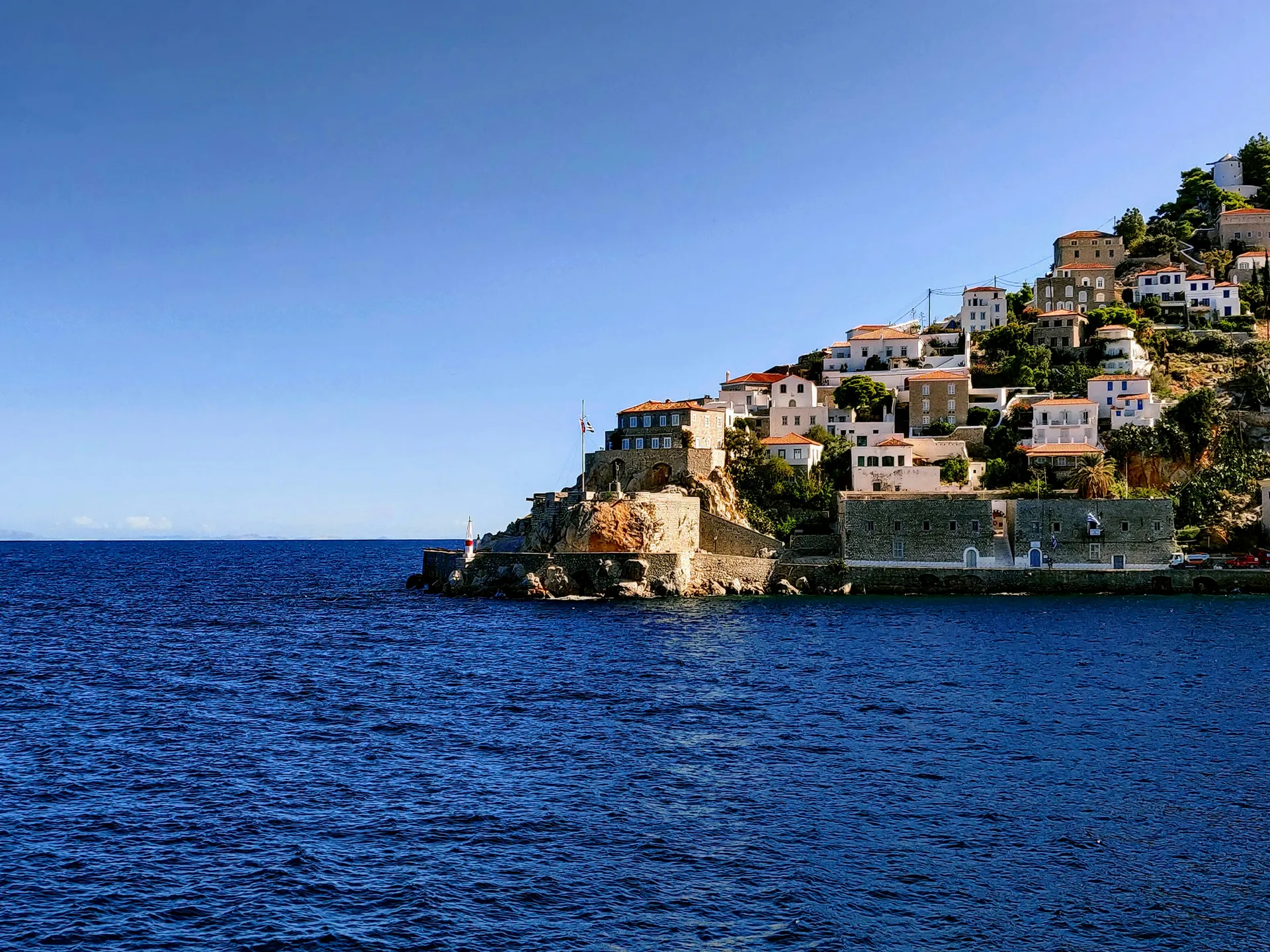
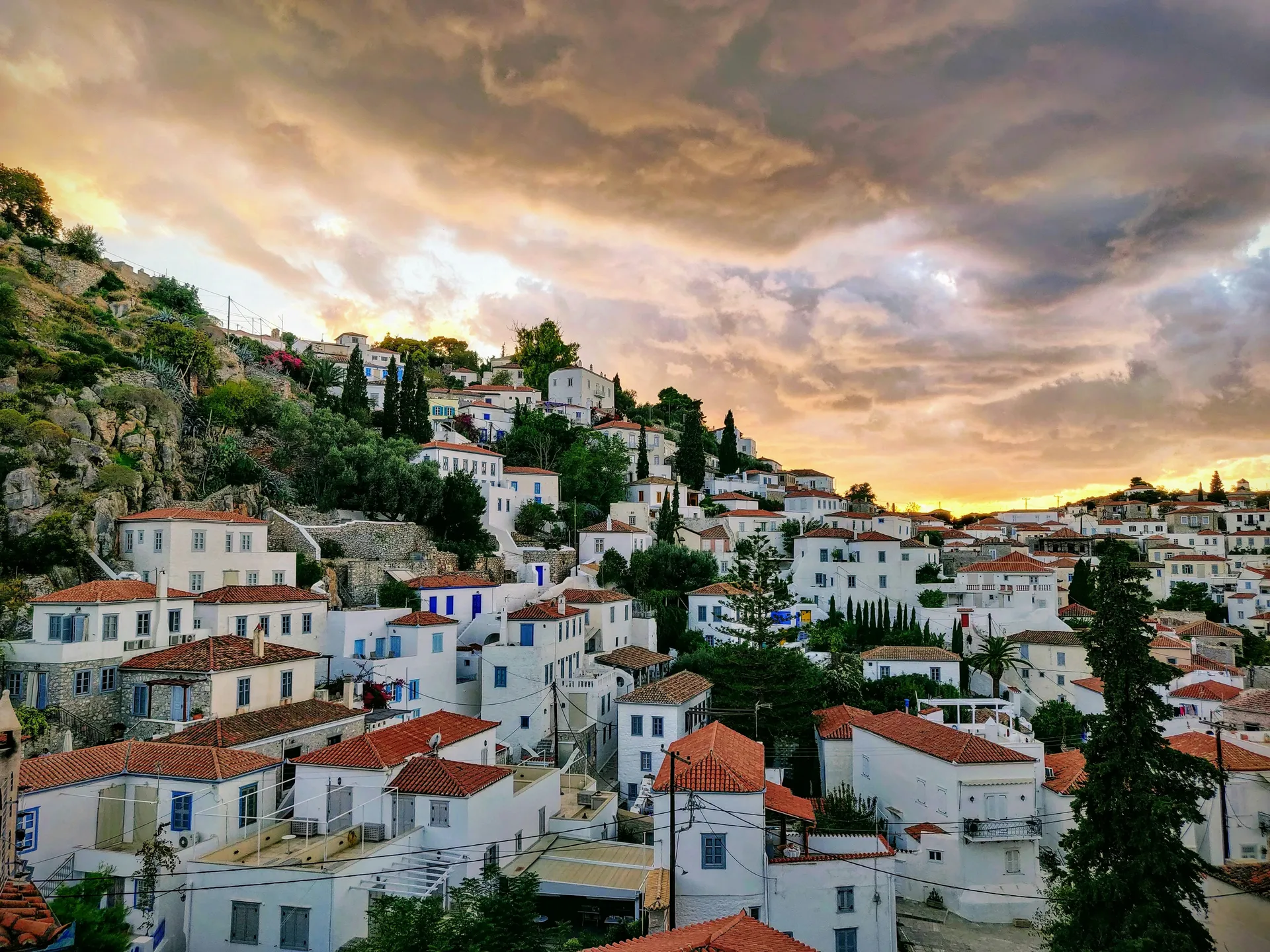
Step ashore at the crescent-shaped port and the silence registers immediately — not the absence of sound, but a deliberate, almost philosophical stillness. No cars, no motorcycles, not even bicycles disturb the cobblestone lanes; donkeys and water taxis remain the only sanctioned transport, a regulation the island has upheld since the 1950s. Grey stone mansions with terracotta roofs rise in orderly tiers above the waterfront, their neoclassical facades concealing cool courtyards fragrant with jasmine and bougainvillea. The harbor itself functions as an open-air salon — captains' houses converted into galleries, waterside tavernas where espresso is sipped with the unhurried gravity of ritual, and cats draped across warm marble like living ornaments.
Hydra's table reflects both its Saronic position and its seafaring heritage. Begin with a plate of *amygdalota*, the island's signature almond cookies dusted with powdered sugar, best sampled at the small bakeries lining Tombazi Street. For something more substantial, seek out *psarosoupa* — a brothy, lemon-bright fisherman's soup ladled with whatever the morning catch delivered — or *spetsiota*, fish baked with fresh tomatoes, garlic, and a scattering of breadcrumbs, a preparation shared with neighboring Spetses. The wild capers that grow across the island's rocky hillsides appear everywhere: pickled alongside *fava* dip, folded into rustic salads with sun-ripened tomatoes and local *kopanisti* cheese, or simply scattered over grilled octopus still glistening with olive oil and oregano.
The surrounding waters and coastlines reward those willing to extend their exploration beyond the harbor. A short sail northwest brings you to Parga, where Venetian fortress walls tumble toward turquoise coves framed by olive groves — a mainland counterpoint to Hydra's island austerity. Further afield, the lush green flanks of Nisos Lefkada shelter the yacht haven of Nydri, gateway to the Ionian's most dramatic anchorages. Eastward across the Aegean, the pastel-painted harbor of Symi offers a chromatic echo of Hydra's own architectural splendor, while inland Neméa — birthplace of the Nemean Games and home to one of Greece's most distinguished wine appellations — trades coastal light for vineyard-covered valleys producing the celebrated Agiorgitiko grape.
Hydra's intimate scale and car-free ethos make it a natural fit for the boutique expedition vessels that thread through the Greek islands each spring and autumn. Celebrity Cruises positions the island as a highlight of its Aegean itineraries, tendering guests directly into the harbor's embrace, while Ponant's sleek explorer yachts slip alongside the quay with the discretion the island demands. Emerald Yacht Cruises and Scenic Ocean Cruises each weave Hydra into wider eastern Mediterranean voyages, their smaller tonnage allowing unhurried morning arrivals and lingering sunset departures. Tauck, pairing its cruises with curated shore excursions, often arranges private guided walks through the upper town — past the Historical Archives Museum, the Monastery of the Assumption, and onward to pine-shaded trails where the only company is the sound of cicadas and the distant Aegean below.
The optimal window for visiting falls between late April and mid-June, when wildflowers carpet the hillsides and the summer crowds have yet to arrive, or again in September and October, when the sea retains its warmth and the golden afternoon light lingers on the stone facades well past seven. In either season, Hydra offers something increasingly rare in the Mediterranean: a place where time is measured not in itineraries but in the slow arc of the sun across an uncorrupted horizon.