Itea is the port that serves Delphi — and in this single fact lies its significance. This small Greek town on the northern shore of the Gulf of Corinth provides the maritime approach to the most important oracle of the ancient world, the sanctuary where the Pythia spoke Apollo's prophecies and where the ancient Greeks believed the navel of the Earth could be found.
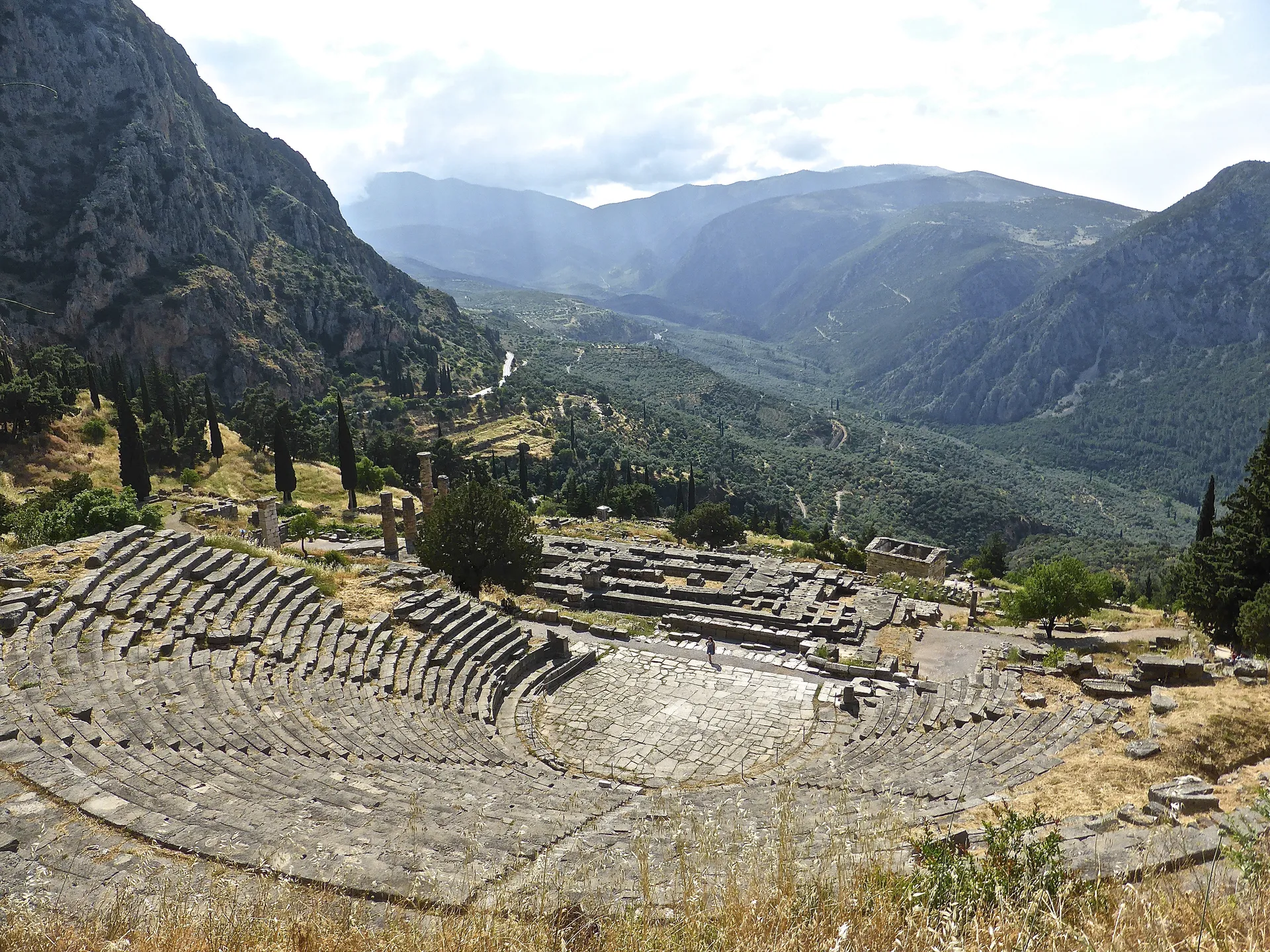
Delphi, perched on the slopes of Mount Parnassus twelve kilometers above Itea, operates at a level of archaeological and spiritual significance that few sites on Earth can match. The Sacred Way — the processional path ascending through the sanctuary — passes the treasuries built by Greek city-states to house their offerings (the reconstructed Treasury of the Athenians being the most complete), the Temple of Apollo where the oracle delivered her prophecies, and the perfectly proportioned theatre with views across the valley to the Gulf of Corinth that rank among the most moving panoramas in Greece.
The Delphi Archaeological Museum houses the bronze Charioteer — one of the finest surviving bronzes of the ancient world, its inlaid eyes and naturalistic detail demonstrating a level of artistic achievement that the Renaissance would take two millennia to rediscover. The Sphinx of Naxos, the Frieze of the Siphnian Treasury, and the extraordinary twin statues of Kleobis and Biton round out a collection that any national museum would envy.
Emerald Yacht Cruises, Ponant, and Seabourn include Itea on Greek itineraries, with shore excursions ascending to Delphi through an olive grove that contains an estimated one million trees — one of the largest in Greece — its silvery canopy creating the approach that the ancient Greeks knew as the Sacred Plain of Krisa.
April through June and September through November provide the most comfortable visiting conditions, avoiding the fierce summer heat that makes climbing Delphi's ancient pathways a test of endurance rather than a spiritual experience. Itea itself offers waterfront dining and the Corinthian Gulf's swimming, but makes no pretense of competing with its hinterland — this is a port that exists because Delphi demands a harbor, and the demand has been met with Greek practicality for three thousand years.

