Kalamáta occupies a privileged position on the Messenian Gulf in the southwestern Peloponnese—a city that would be famous for its olives alone but has much more to offer: a medieval castle crowning a dramatic hilltop, a thriving waterfront promenade, and access to some of the most spectacular and least visited landscapes in mainland Greece. The city takes its name from a local word meaning "beautiful eyes," and one look at the cerulean gulf backed by the snow-tipped Taygetos Mountains—the highest range in the Peloponnese at 2,407 meters—makes the etymology feel less poetic than descriptive.
The Kalamata olive, plump, dark, and possessed of a rich, slightly bitter flavor that sets it apart from all other varieties, has been cultivated on the alluvial plains surrounding the city for over 3,500 years. The olive groves that extend in every direction from the city constitute one of the great agricultural landscapes of the Mediterranean, their gnarled, silver-leafed trees planted in rows that follow the contours of the land like a living calendar of the seasons. The harvest, from November through February, transforms the region's social calendar, and visitors during this period can witness the traditional methods of gathering and pressing that have changed less than one might expect in the age of industrial agriculture.
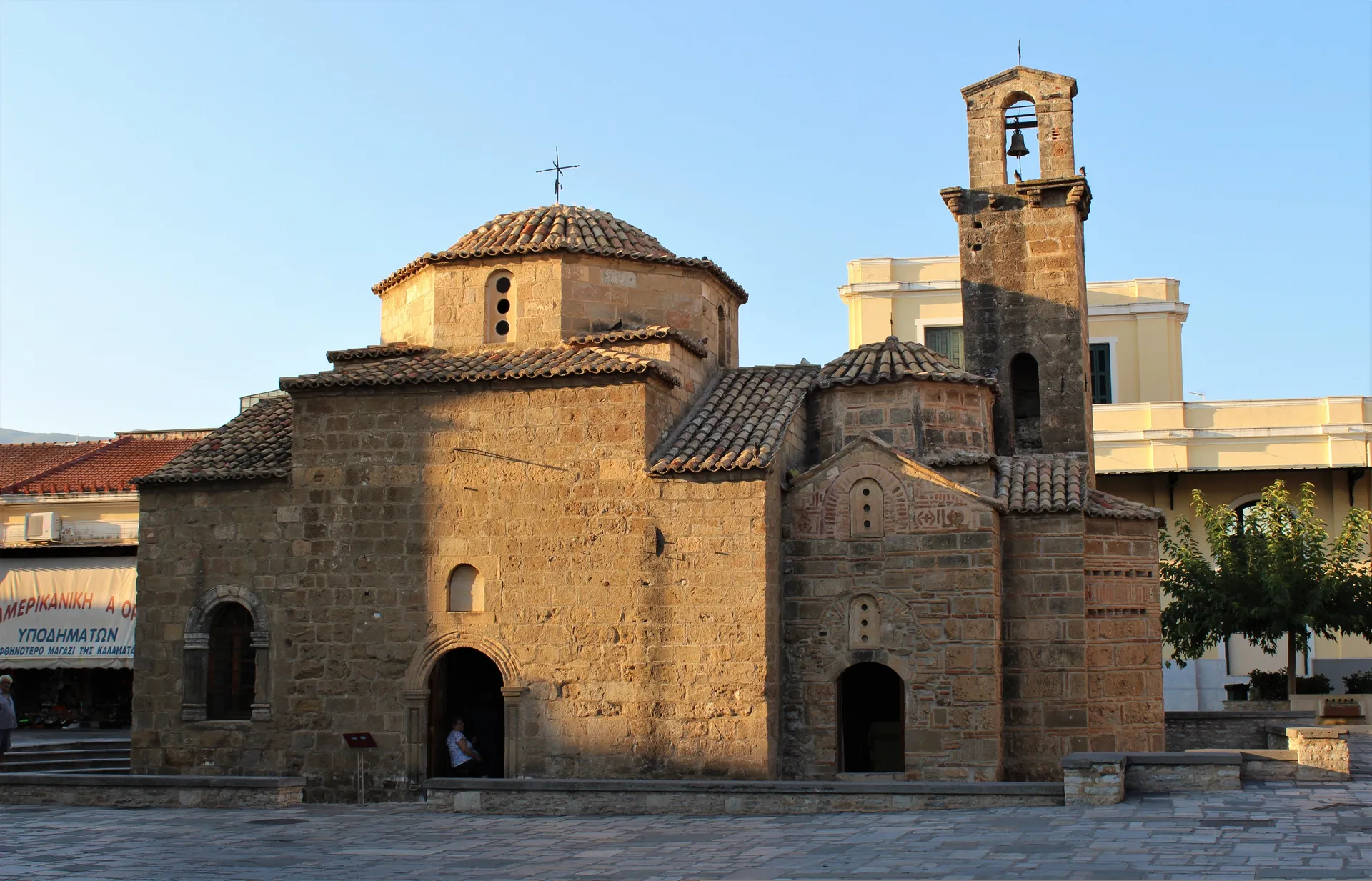
The old town climbs the hillside below the Frankish-era castle, its narrow streets lined with Ottoman-era houses and Byzantine churches that tell the story of a city ruled successively by Romans, Franks, Byzantines, and Turks. The Castle of Kalamáta, built by the Villehardouin family during the Frankish occupation of the Peloponnese in the thirteenth century, provides panoramic views of the city, the gulf, and the Taygetos range from its restored battlements. The city's Archaeological Museum, though modest in scale, houses finds from ancient Messene—one of the best-preserved classical Greek cities—located just thirty kilometers north.
The Messenian coastline extends south and west from Kalamata in a succession of beaches, fishing villages, and olive groves that constitute the Deep Mani—a peninsula of austere, tower-studded villages that juts into the Mediterranean like a stone finger. The Mani's tower houses, built by feuding clans during centuries of isolation, create a unique architectural landscape that has drawn comparisons to the tower towns of Tuscany. At the peninsula's southern tip, the Diros Caves—a network of underground rivers and lakes navigable by boat—reveal a subterranean world of stalactites and stalagmites reflected in perfectly still water.
Cruise ships dock at Kalamata's port, conveniently located near the waterfront promenade and its restaurants, cafés, and market. The promenade itself, lined with palm trees and opening onto a long pebble beach, is one of the most pleasant in the Peloponnese—a place to sit with a Greek coffee and watch the fishing boats come and go against the mountain backdrop. The best visiting season is April through June and September through October, when the weather is warm but not scorching and the Taygetos peaks may still carry snow. July and August bring temperatures exceeding 35°C, while the olive harvest season (November-February) offers a unique cultural experience despite cooler weather.

