Where the cerulean waters of the Argolic Gulf meet the sun-bleached stones of the Peloponnese, Nafplion rises like a living palimpsest of Mediterranean power. This compact jewel of a city served as the first capital of the modern Greek state from 1829 to 1834, a distinction that still echoes through its neoclassical façades and broad plateia. Long before that, the Venetians held dominion here for centuries, sculpting the town in their own image — most dramatically in the form of the Palamidi Fortress, a marvel of military engineering completed in 1714 with some 999 steps carved into the rock face leading to its crenellated ramparts.
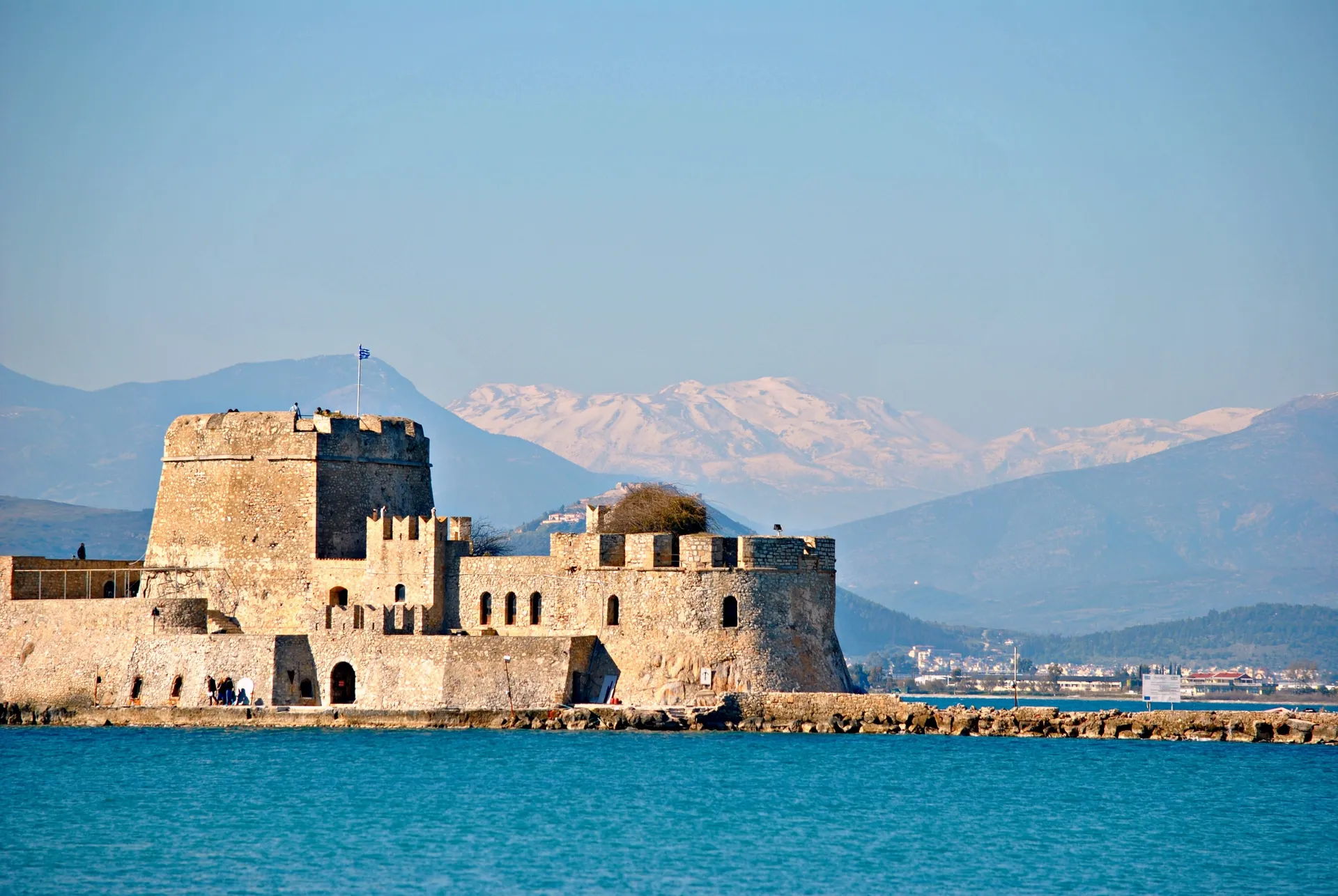
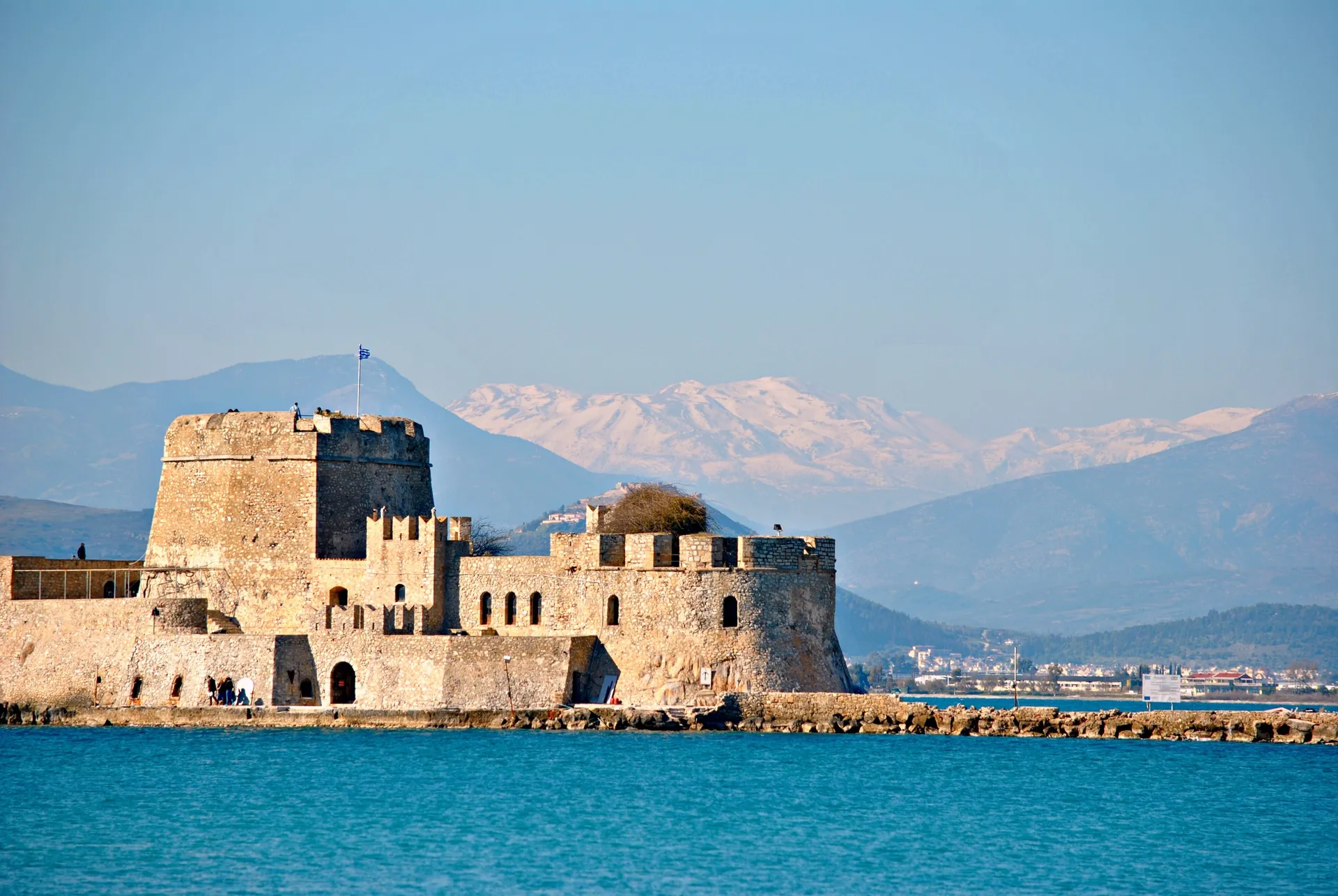
The character of Nafplion reveals itself best on foot. Syntagma Square, the elegant heart of the old town, unfolds beneath the watchful gaze of Ottoman-era mosques repurposed as cinemas and museums, while narrow lanes draped in bougainvillea lead past Venetian balconies and Byzantine churches. The waterfront promenade — arguably the most refined in all of Greece — curves gently past fishing caïques and sleek yachts toward the tiny fortified islet of Bourtzi, a former executioner's residence turned ethereal landmark that appears to float on the harbour like a stone mirage. There is a theatrical quality to this town, a sense that every cobblestone has been placed with deliberate artistry, yet Nafplion wears its beauty without affectation.
The culinary landscape here is rooted in the Argolid's generous terroir. Morning begins properly at a traditional kafeneío with thick Greek coffee and bougatsa — flaky phyllo filled with semolina custard, dusted with cinnamon and icing sugar. For lunch, seek out the local speciality of bourdeto, a peppery fish stew with Peloponnesian variations, or octopus grilled over charcoal and dressed simply with olive oil and oregano from the surrounding hillsides. The Nemean wine region lies barely thirty minutes inland, producing exceptional Agiorgitiko reds — deep, velvety wines that have earned comparisons to fine Burgundy — and a tasting excursion through its sun-drenched vineyards makes for an afternoon of unhurried sophistication.
Indeed, Nafplion's position makes it a superb base for exploring some of the eastern Mediterranean's most compelling landscapes. The ancient site of Nemea, with its beautifully preserved Temple of Zeus and the stadium where Panhellenic games predating the Olympics were held, lies within easy reach. Further afield, the western Greek coast beckons: Parga, with its pastel Venetian houses cascading toward a turquoise bay, rewards those willing to venture across the Peloponnese. The Ionian island of Lefkada — reached via Nydri, its principal sailing port — offers dramatic white cliffs plunging into impossibly blue waters. And for travellers continuing through the Aegean, the island of Symi dazzles with its amphitheatre of neoclassical mansions painted in ochre, terracotta, and Aegean blue, a chromatic spectacle best witnessed from the deck of an arriving vessel at dawn.
Nafplion's intimate harbour and deep anchorage have made it a favoured port of call for the world's most distinguished cruise lines. Ponant's expedition-style vessels and Windstar Cruises' elegant sailing yachts slip into the harbour with particular grace, their smaller profiles perfectly suited to the town's scale. Seabourn and Viking bring their trademark refinement to longer Aegean and Adriatic itineraries that feature Nafplion as a cultural centrepiece, while Emerald Yacht Cruises and Tauck offer curated shore experiences that transform a port call into genuine immersion. Even Carnival Cruise Line includes Nafplion on select Mediterranean voyages, introducing a wider audience to a destination that cognoscenti have long considered one of Greece's finest secrets. Regardless of the vessel, arriving by sea — watching the Palamidi's silhouette sharpen against the morning sky as the ship glides into the gulf — remains one of the most stirring approaches in all of Mediterranean cruising.
What lingers after Nafplion is not any single monument or meal, but the cumulative grace of a town that has absorbed the imprint of Byzantines, Franks, Venetians, Ottomans, and modern Greeks, and distilled it all into something effortlessly refined. This is a place where history is not preserved behind velvet ropes but lived in — where fortress walls double as sunset viewpoints and medieval alleyways lead to candlelit tavernas serving wine from vines planted in the age of myth.