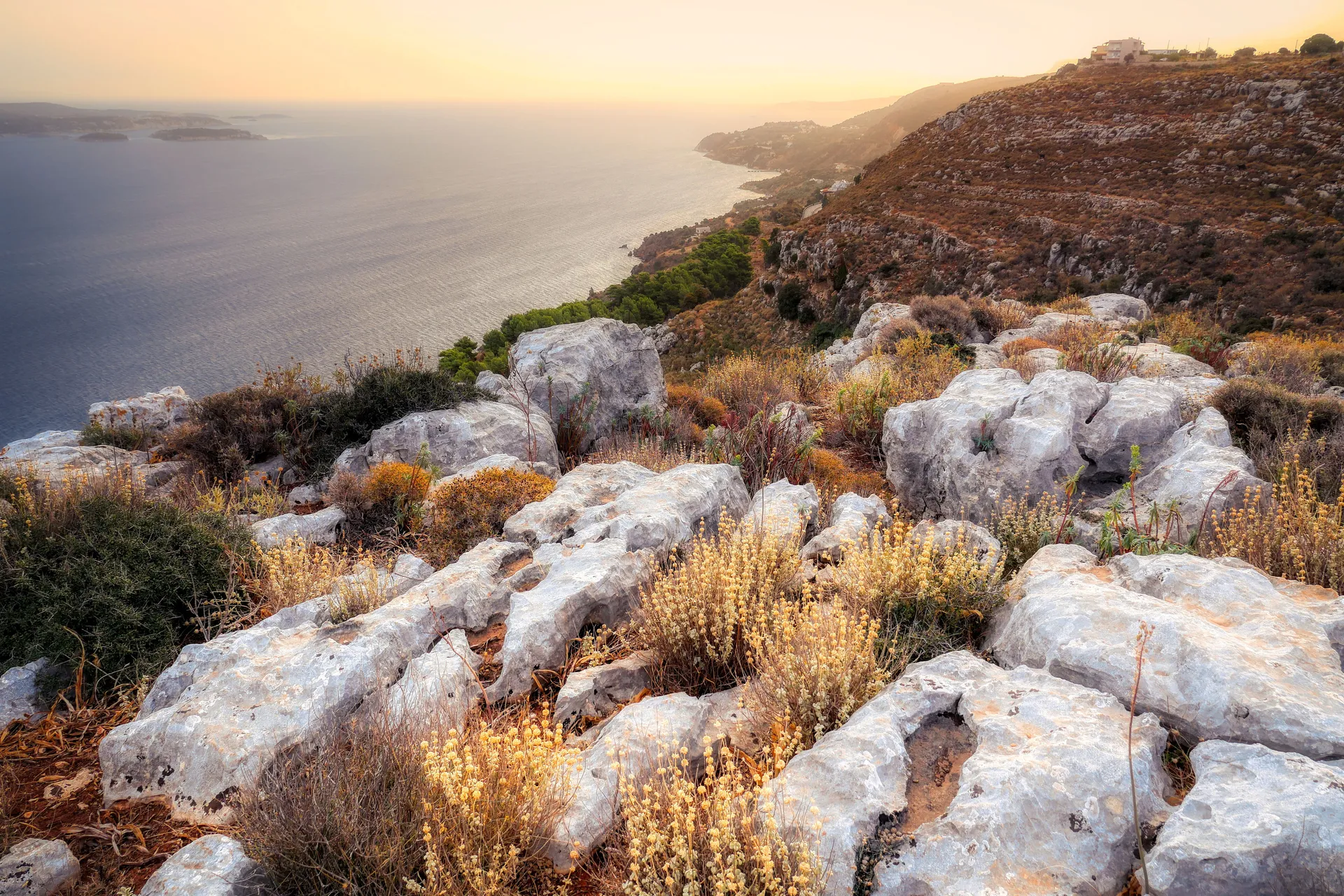
Long before the first Venetian fortress rose above its sheltered waters, Souda Bay served as one of the most strategically coveted natural harbours in the entire Mediterranean. Minoan traders likely recognised its potential millennia ago, and successive empires — Byzantine, Ottoman, Venetian — fortified the islet of Souda at its entrance, leaving behind a layered palimpsest of military architecture that still stands sentinel today. During the Second World War, the bay witnessed the devastating Battle of Crete, a chapter preserved with quiet dignity at the Commonwealth War Cemetery on the Akrotiri Peninsula. For cruise passengers arriving aboard AIDA, Celebrity Cruises, P&O Cruises, or Viking, Souda Bay functions as the gateway to Chania, western Crete's most enchanting city.
The port itself sits approximately seven kilometres east of Chania, and the short transfer reveals an increasingly captivating landscape: olive groves descending toward turquoise shallows, roadside tavernas with octopus drying on lines, and eventually the Venetian harbour that ranks among the most photographed waterfronts in all of Greece. Chania's old town is a labyrinth of narrow lanes where Venetian mansions lean against Ottoman minarets, and leather workshops operate alongside galleries exhibiting contemporary Cretan art. The covered Agora market, built in 1913 on the model of Marseille's Halles, overflows with local cheeses, mountain herbs, and thyme honey that tastes of the White Mountains.
Cretan cuisine stands apart from mainland Greek cooking with an intensity and simplicity that has earned it recognition as one of the world's healthiest diets. Seek out dakos — barley rusks topped with crushed tomato, mizithra cheese, and olive oil — at a harbourside table. Lamb with stamnagathi, the bitter wild greens foraged from mountain slopes, reveals flavours impossible to replicate elsewhere. The olive oil here is legendary; Crete produces more per capita than anywhere on Earth, and tasting sessions at small-batch presses offer an education in terroir. Pair everything with a glass of Vidiano, the indigenous white grape experiencing a renaissance among Cretan winemakers.
Beyond Chania, western Crete rewards the curious explorer. The Samaria Gorge, Europe's longest canyon at sixteen kilometres, descends through sheer limestone walls to the Libyan Sea — though a full traverse requires a dedicated day. More accessible is the Botanical Park of Crete near Fournes, where tropical and endemic species coexist on a hillside reforested after devastating fires. The Akrotiri Peninsula offers the historic Agia Triada Monastery, its honey-coloured stone glowing against an azure sky, and Stavros Beach, where the final scene of "Zorba the Greek" was filmed against a dramatic amphitheatre of rock.
Souda Bay's sheltered position means ships can dock in virtually any weather, providing reliable access to a region that embodies the Cretan spirit of filoxenia — a hospitality so deeply ingrained it feels less like service and more like homecoming. The best months to visit are May, June, September, and October, when the crowds thin, the light turns golden, and Chania reveals itself not as a tourist destination but as a living, breathing city where tradition and beauty intertwine with effortless grace.

