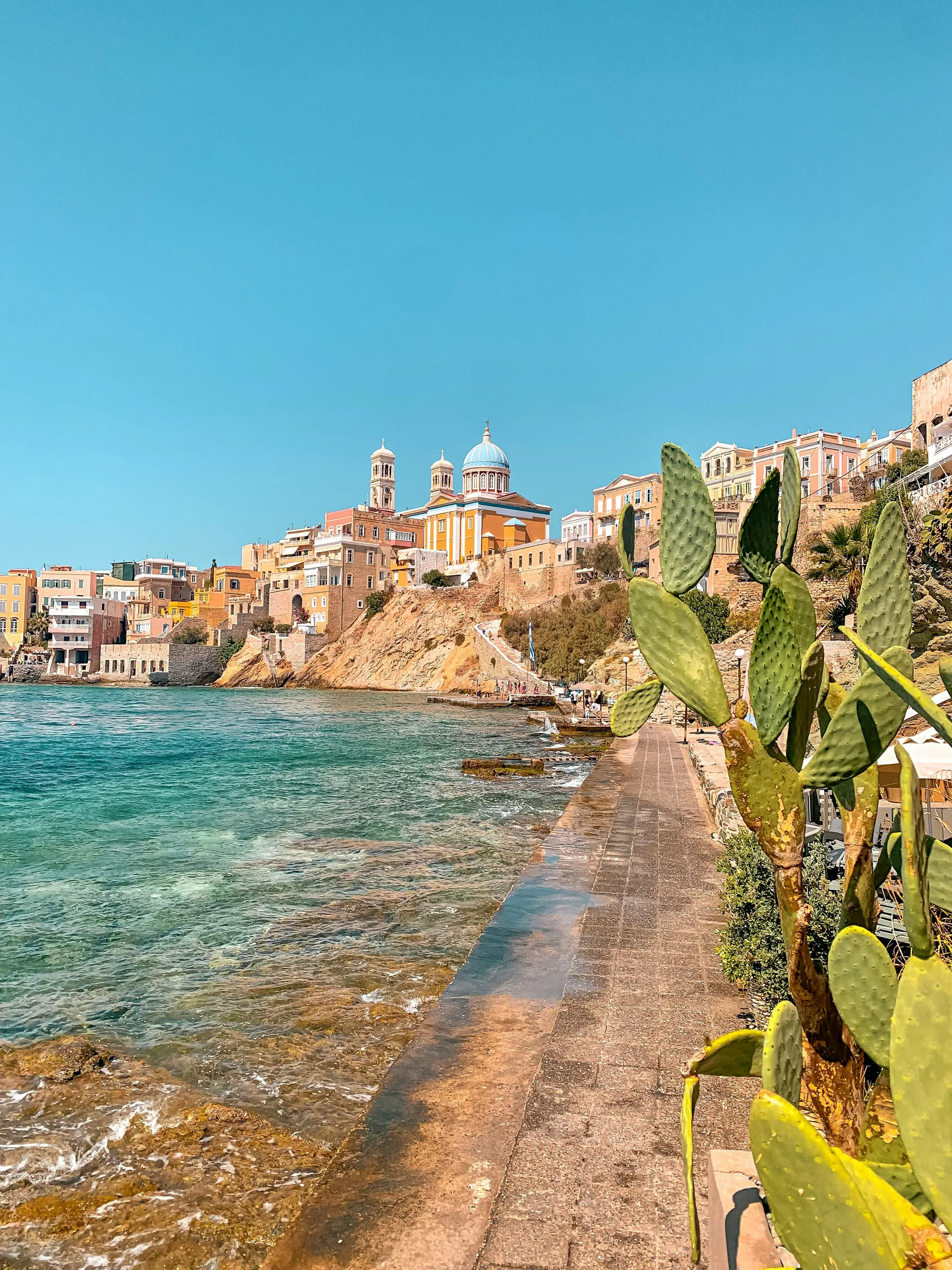
Long before the cosmopolitan buzz of Athens or the postcard perfection of Santorini captured the world's imagination, Syros quietly reigned as the commercial and cultural capital of the Cyclades. In the early nineteenth century, its port city of Ermoupolis — named for Hermes, the god of commerce — was the most important trading hub in all of Greece, a place where Venetian merchants, Orthodox monks, and Catholic aristocrats wove together a society unlike any other in the Aegean. That layered heritage endures today in every cobblestone lane, every frescoed ceiling, and every note of rebetiko drifting from a harbour taverna after dark.
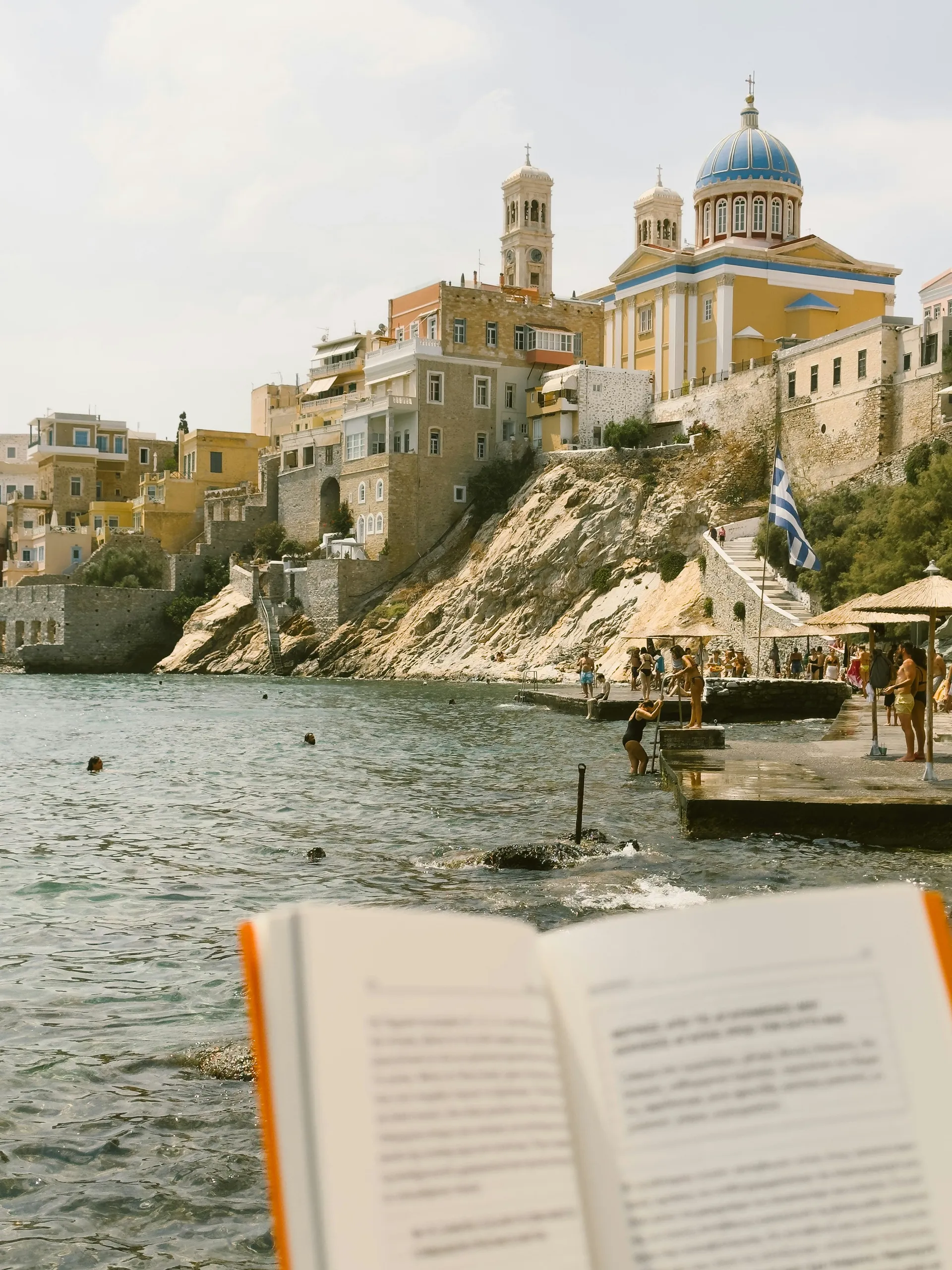
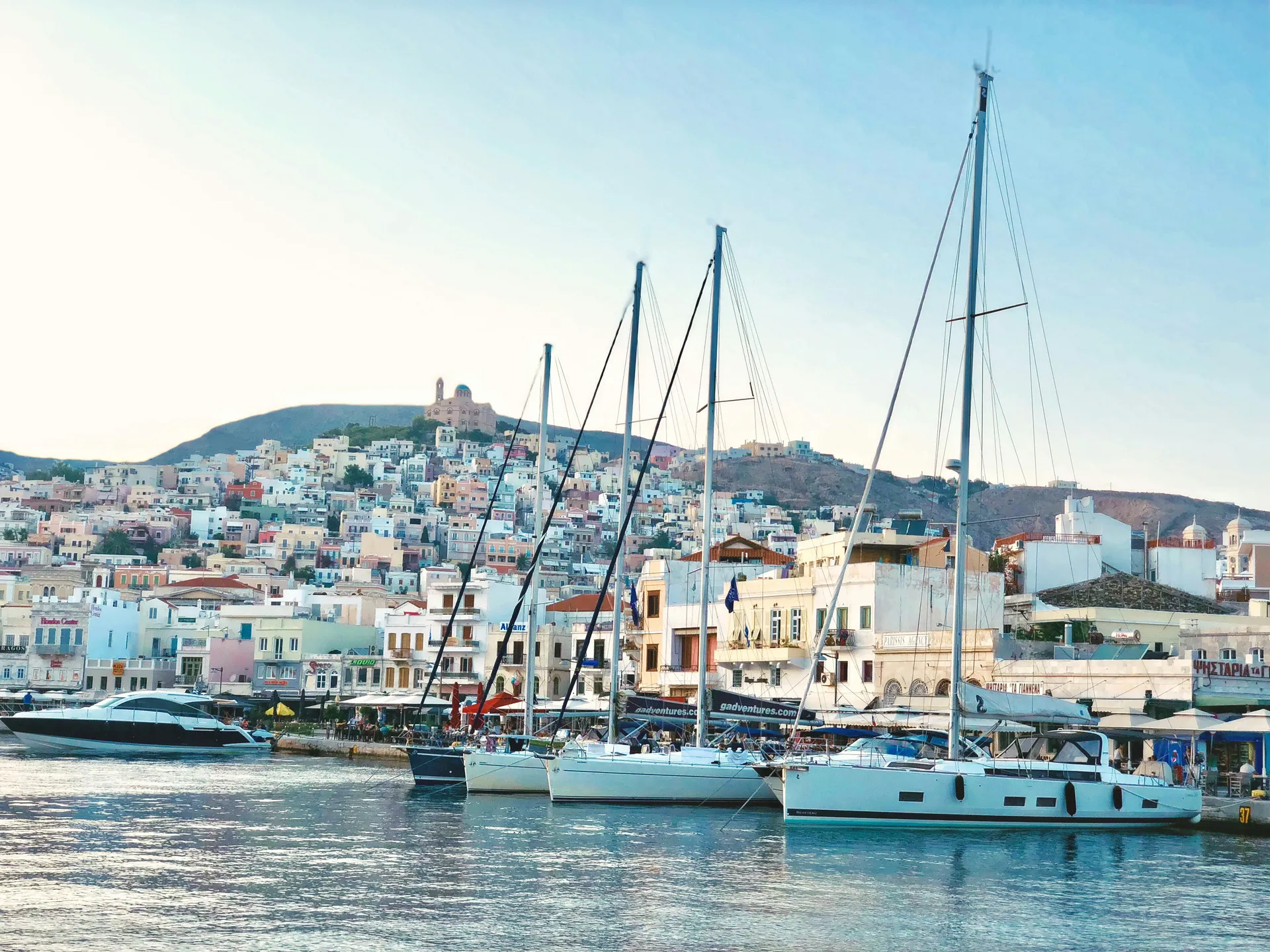
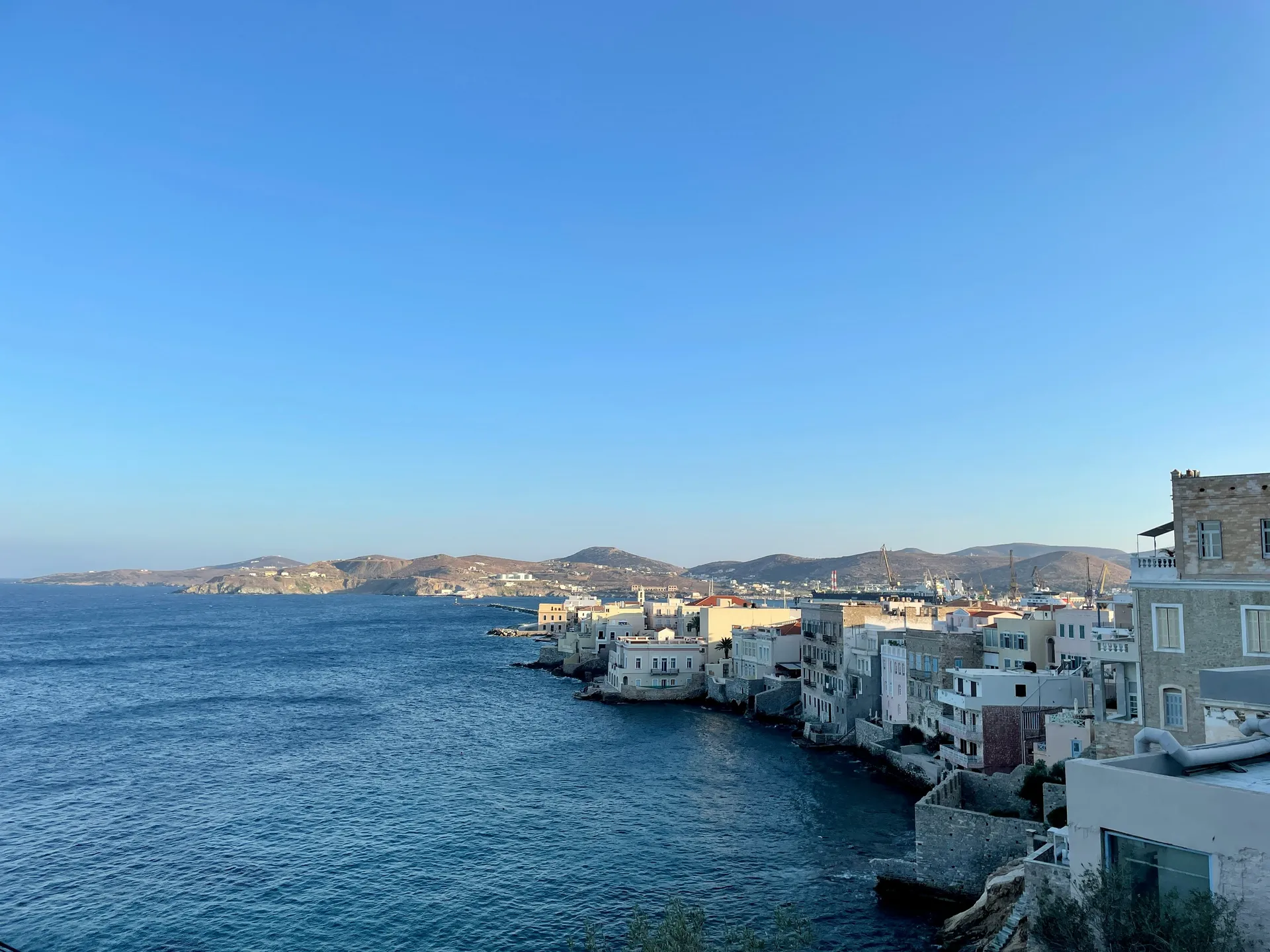
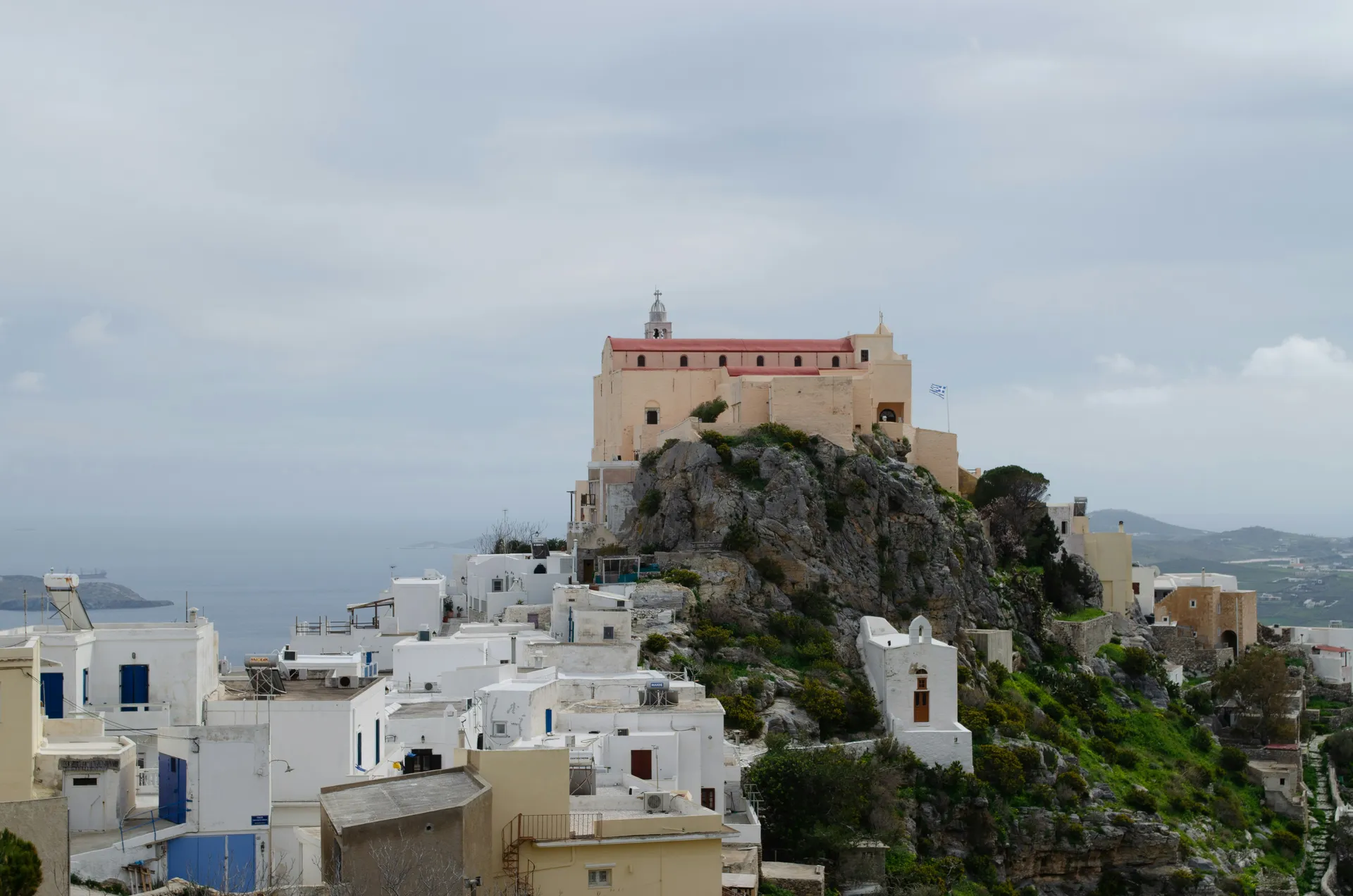
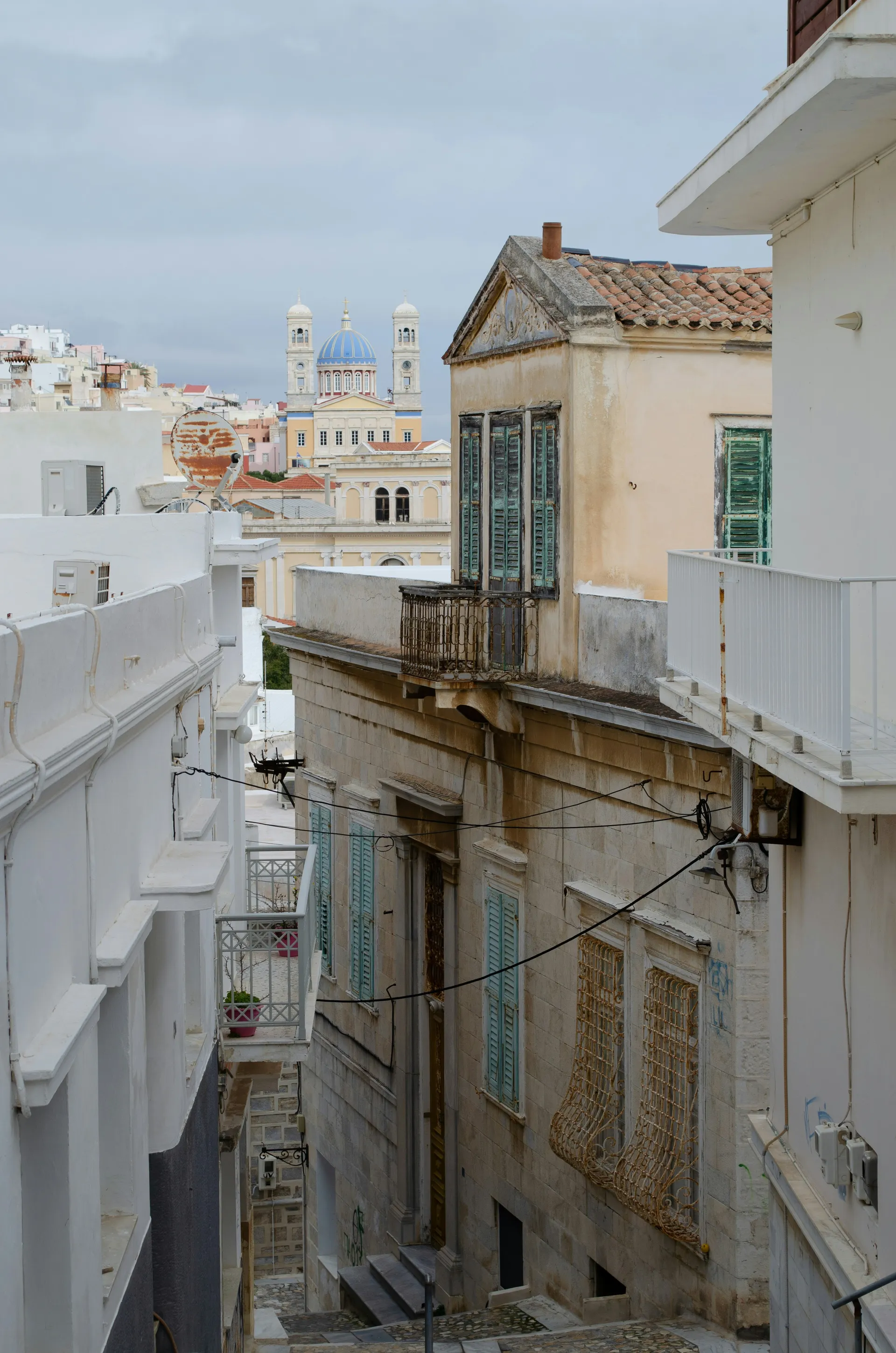
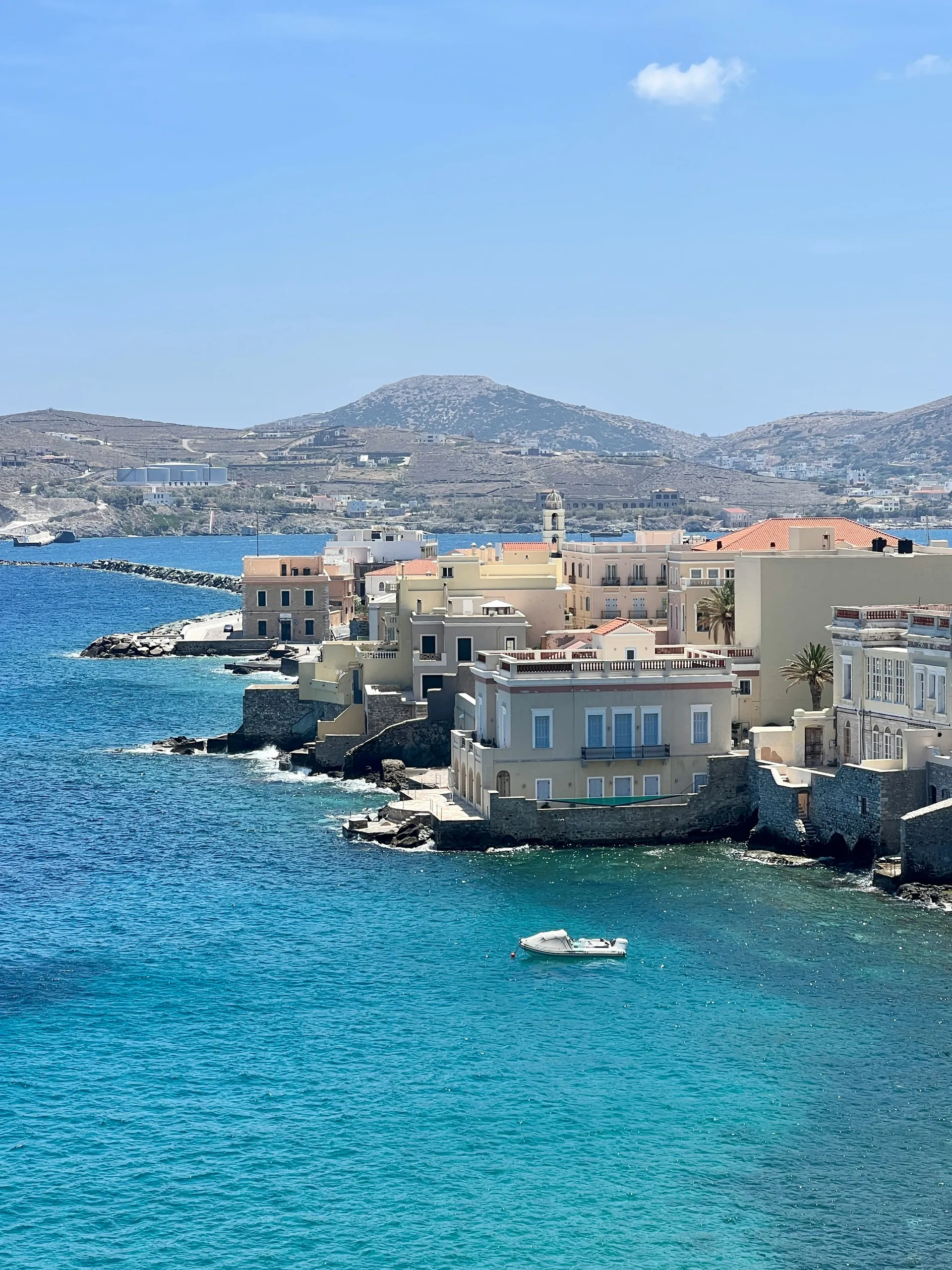
What strikes you first about Syros is its silhouette. Twin hills rise above the harbour like a stage set: Ano Syros, crowned by the medieval Catholic quarter and the Cathedral of St. George, on one side; Vrodado, topped by the Orthodox Church of the Resurrection, on the other. Between them, Ermoupolis cascades in a luminous amphitheatre of neoclassical mansions, their ochre and rose facades catching the late-afternoon Aegean light. The town hall, modelled on Ernst Ziller's grand designs, anchors Plateia Miaouli — one of the most elegant public squares in Greece — while the Apollo Theatre, a miniature replica of Milan's La Scala, speaks to an era when Syros considered itself every bit as cultured as the Italian peninsula across the sea.
Food on Syros is a revelation of terroir and tradition. The island's famous San Michali cheese — a hard, aged variety produced only here — pairs beautifully with a glass of local assyrtiko at any of the harbour-front ouzeries. Loukoumia, Syros's refined take on Turkish delight, have been handcrafted in family workshops since the 1830s and make for an irresistible souvenir. Pull up a chair at a waterfront taverna in Ermoupolis for grilled octopus, wild capers, and kopanisti, the peppery whipped cheese spread that Cycladic grandmothers have perfected over generations. For a deeper immersion, follow the coastal road to the beaches of Galissas or Kini, where simple fish tavernas serve the morning catch with nothing more than lemon, olive oil, and a view of the infinite blue.
Day-trippers from Syros can reach the sacred island of Delos — birthplace of Apollo — in under two hours, while the quieter charms of Symi, the mountain village of Neméa on the Peloponnese, and the green slopes of Skopelos are all within comfortable sailing distance. Back on Syros itself, the hilltop labyrinth of Ano Syros rewards a leisurely wander through arched passageways, past Jesuit and Capuchin monasteries dating to the seventeenth century, and up to panoramic viewpoints that sweep across the entire Cycladic chain. The island's cultural calendar peaks in summer with the Ermoupolis International Festival of the Aegean, filling the Apollo Theatre and open-air stages with opera, chamber music, and contemporary dance.
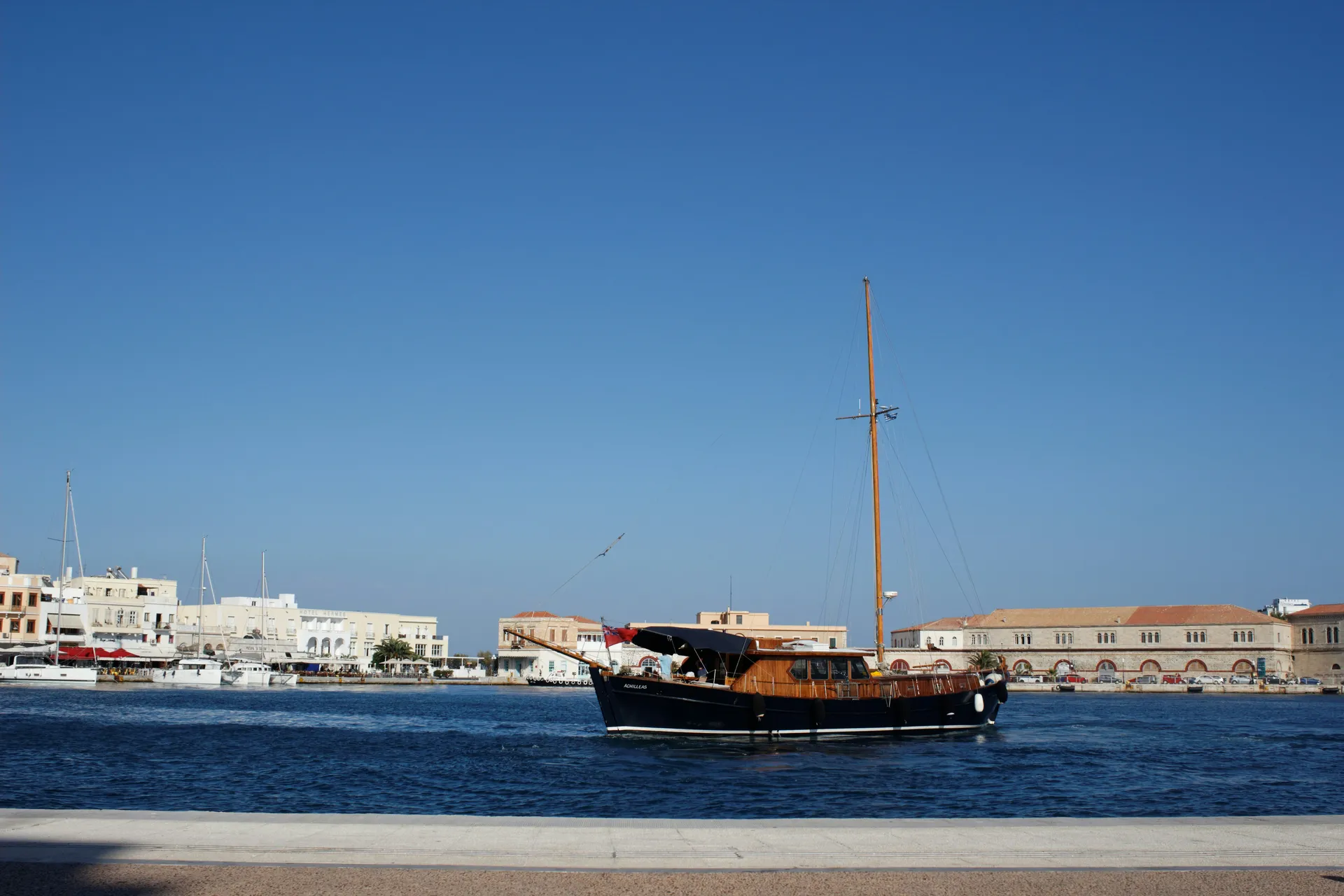
Syros is served by MSC Cruises on select Aegean and Eastern Mediterranean itineraries, offering a refreshing alternative to the better-known Cycladic stops. The main port of Ermoupolis is compact and walkable, with the town's highlights — museums, churches, shops, and cafés — all within a pleasant stroll from the quay. The best time to visit is May through October, when warm Meltemi winds keep temperatures agreeable and the island's cultural scene is in full swing. For travellers seeking the authentic soul of the Cyclades, far from the cruise-ship crowds that flood Mykonos and Santorini, Syros is the quietly magnificent answer.