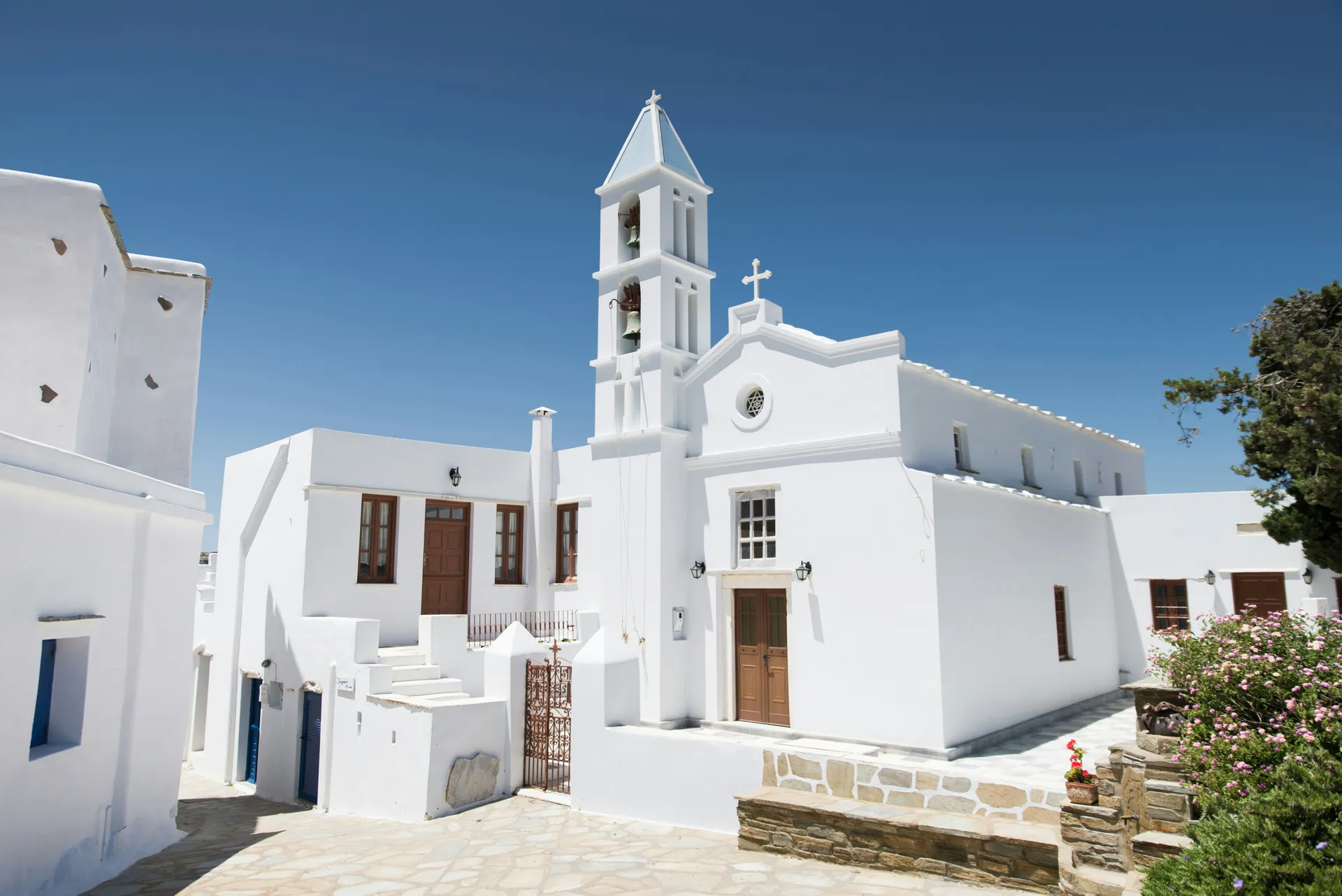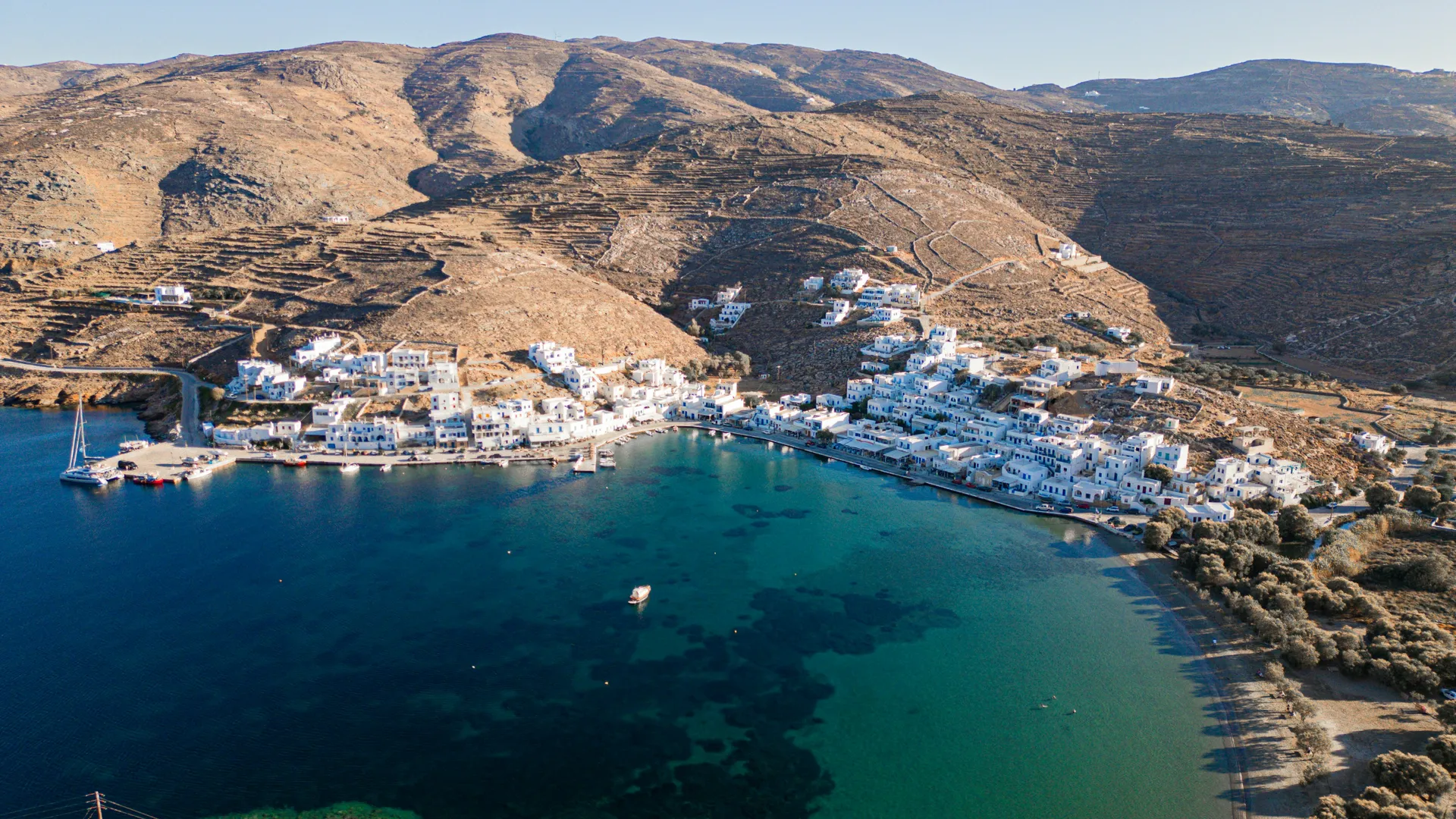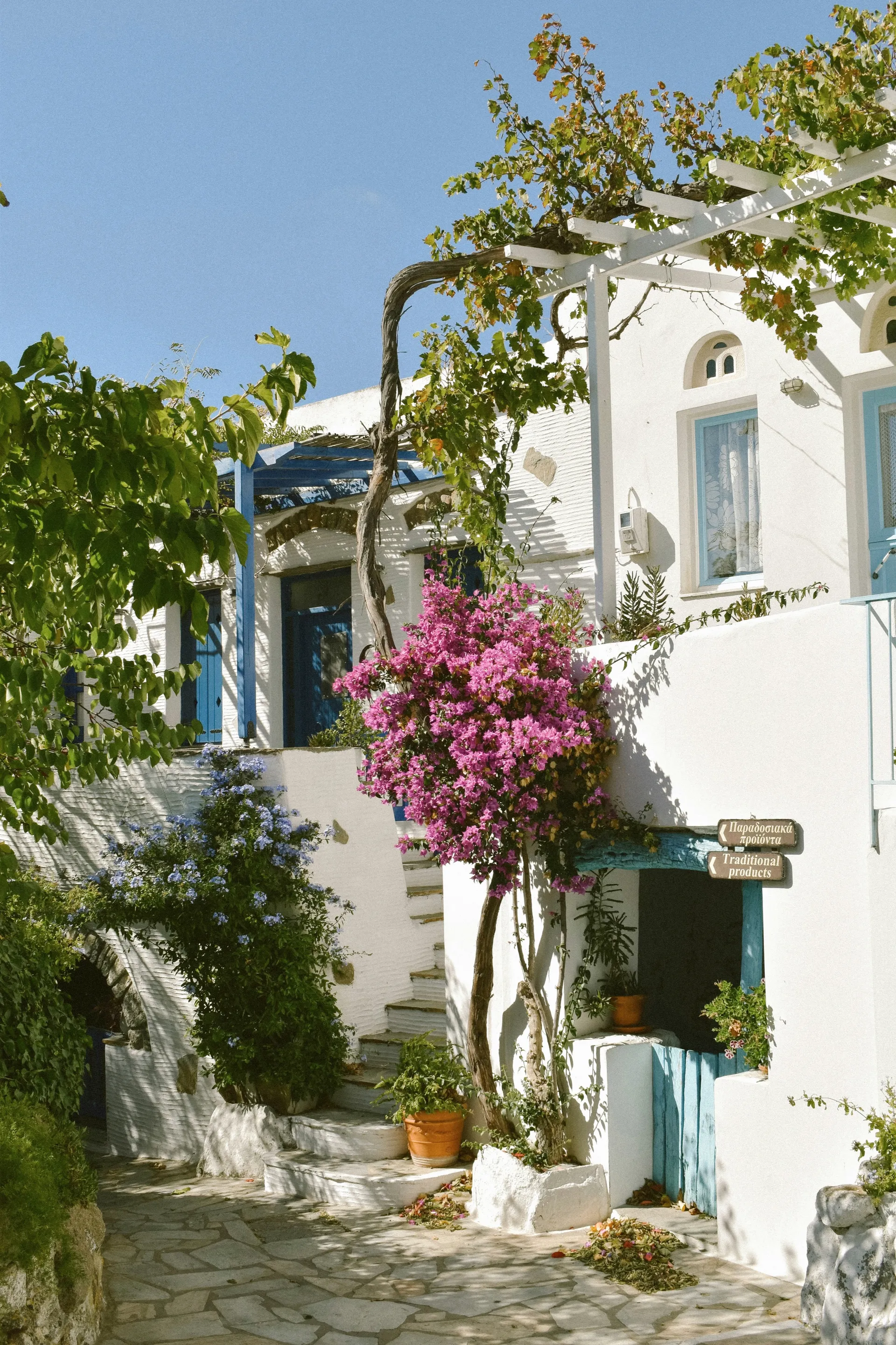
Tinos occupies a paradoxical position in the Cyclades — it is simultaneously the most sacred island in Greece and one of the most rewarding for secular pleasures. Each August 15th, the Feast of the Assumption, tens of thousands of pilgrims converge on the Church of Panagia Evangelistria, many crawling on their knees up the broad avenue from the harbour to the church that houses a miraculous icon of the Virgin Mary. Yet beyond this annual spectacle of devotion, Tinos reveals itself as an island of extraordinary artistic heritage, over forty traditional villages, and a landscape that combines Cycladic minimalism with an unexpectedly verdant interior.
The island's artistic reputation rests on its marble. Tinos has been quarrying and carving marble since antiquity, and the tradition continues in workshops scattered across the island — particularly in the village of Pyrgos, which has produced generations of sculptors whose work adorns public buildings throughout Greece. The Museum of Marble Crafts in Pyrgos, designed by the celebrated architect Aristides Antonas, is one of the finest small museums in the Cyclades, documenting a craft tradition that stretches from ancient temple decoration to contemporary art. The dovecotes of Tinos — over a thousand intricately decorated stone towers scattered across the landscape — represent another distinctive artistic tradition, their geometric patterns in whitewashed stone creating a uniquely Tinian decorative vocabulary.
Tinos' villages are among the most authentic in the Cyclades, their character shaped by the island's mixed Catholic and Orthodox population — a legacy of Venetian rule that gives Tinos a cultural complexity unusual in the Greek islands. Volax, surrounded by a surreal landscape of giant granite boulders, specializes in basket weaving. Kardiani cascades down a green hillside with views across the Aegean. Loutra's hot springs have attracted bathers since antiquity. Each village maintains its own festivals, traditions, and local specialties, creating a micro-diversity that rewards unhurried exploration.
The culinary scene on Tinos reflects the island's agricultural richness. The interior valleys produce artichokes, capers, honey, and the aromatic herbs that define Cycladic cooking. Local cheeses — particularly the pungent kopanisti and the mild volaki — are produced in small quantities by island families. The restaurants of Tinos Town and the villages serve excellent taverna fare: grilled octopus, stuffed courgette flowers, and fresh fish from the Aegean, accompanied by local wines from small vineyards that are gaining recognition for quality. Louza, a cured pork tenderloin seasoned with spices, is the island's most distinctive charcuterie.
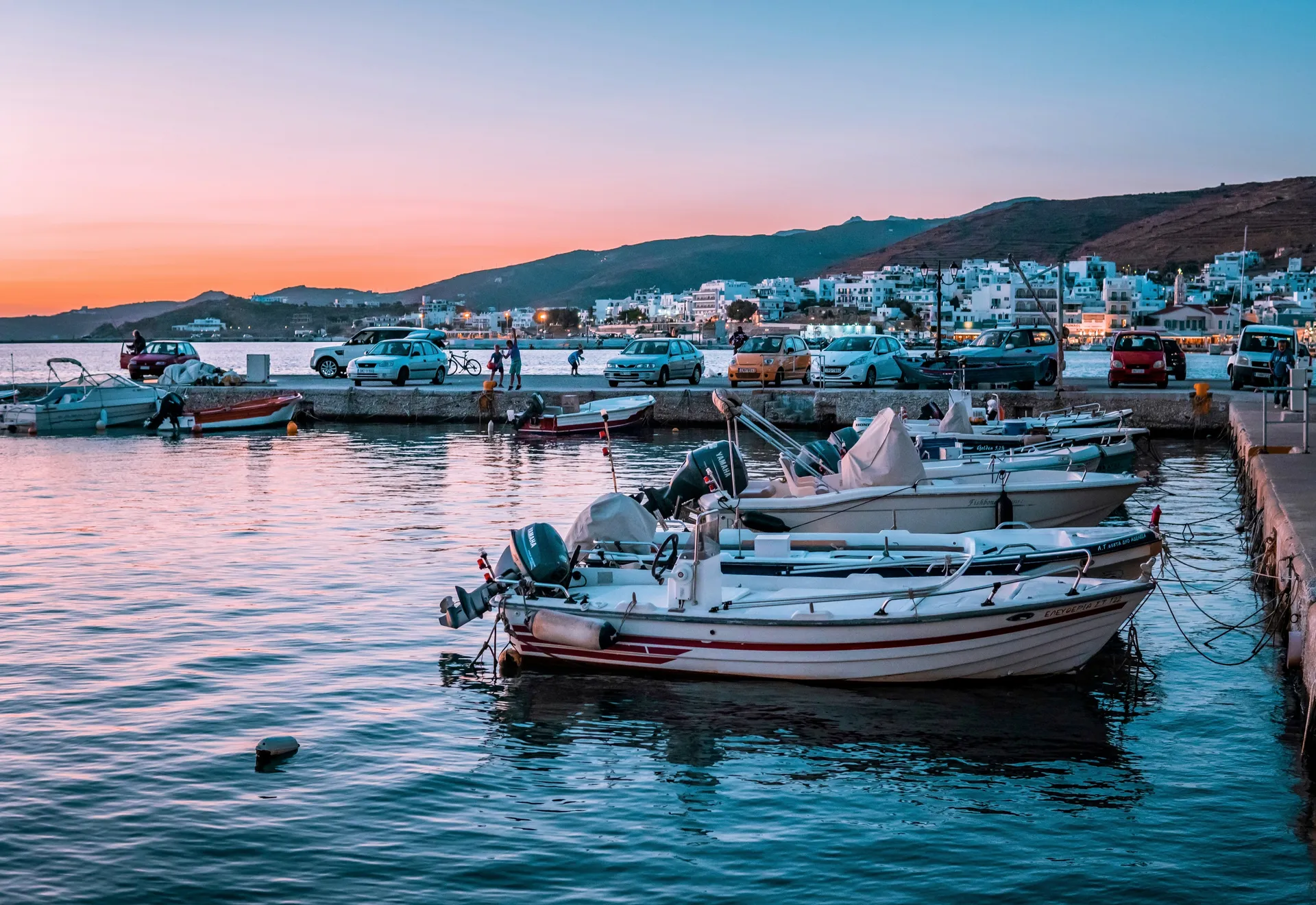
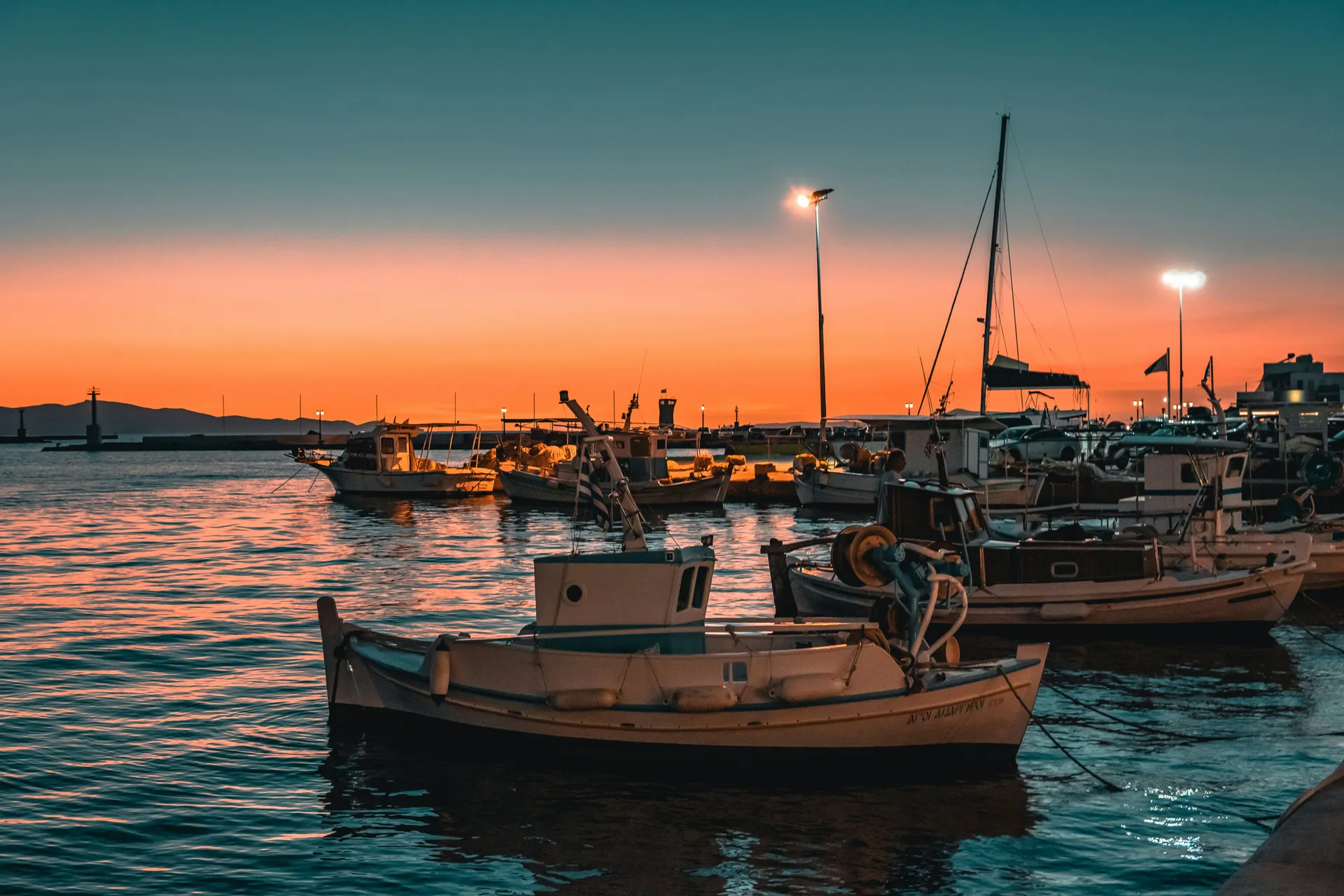
Tinos is reached by ferry from Piraeus (approximately four hours by conventional ferry, two by high-speed) or from nearby Mykonos (fifteen minutes). The island has a small port suitable for yachts and smaller cruise ships. The best visiting season is May through October, with June and September offering warm weather without the intense crowds of July and August. Tinos rewards the traveller who comes looking for the Greece beyond the postcard — an island of genuine cultural depth, artistic heritage, and Cycladic beauty that has been overlooked by mass tourism in favour of its flashier neighbours.