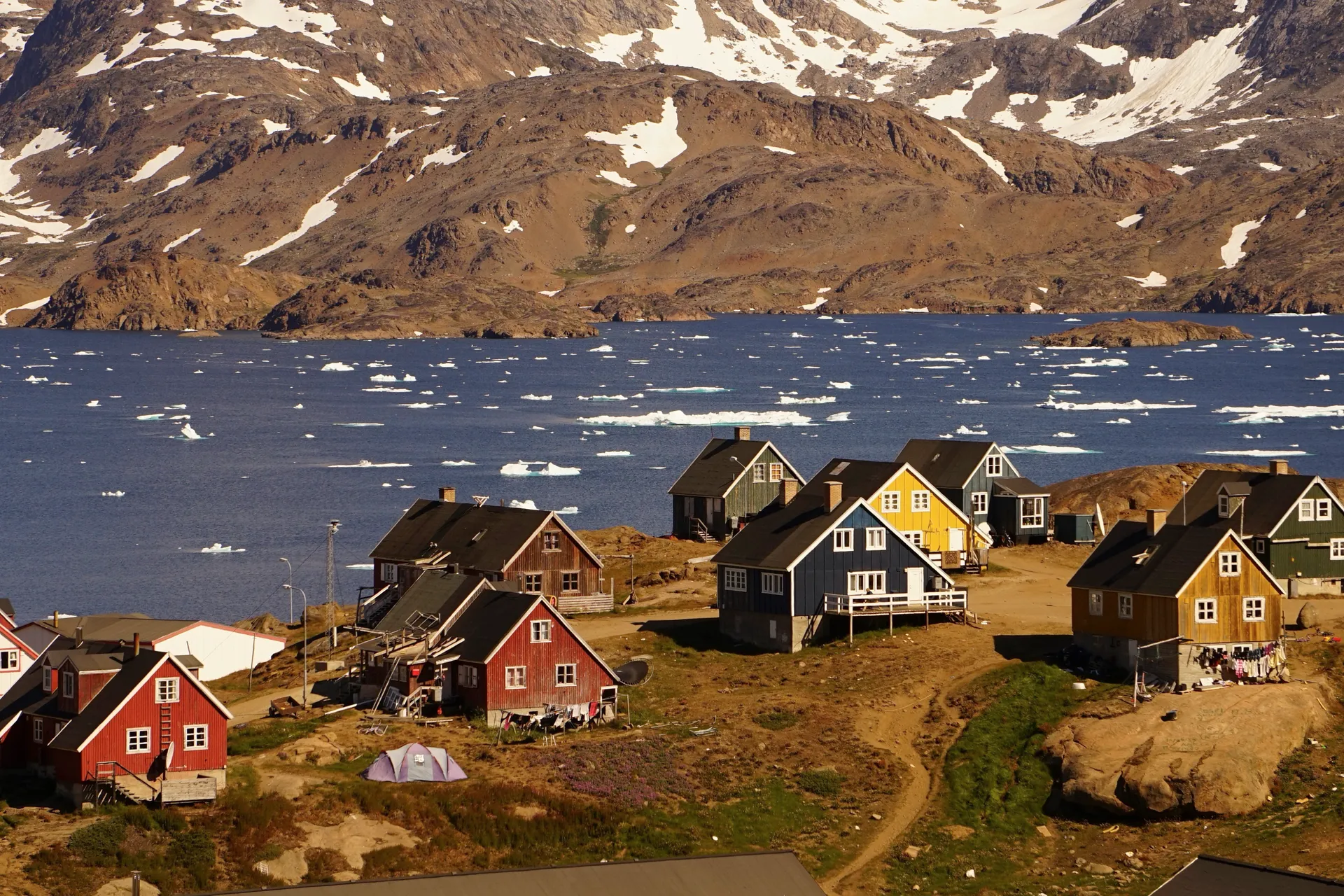
On the northwestern coast of Greenland, where the Thule district meets the frozen waters of Baffin Bay at latitudes where the concept of night disappears entirely for months at a time, the settlement area historically known as Dundas occupies one of the most extreme inhabited landscapes in human history. This region—home to the Inughuit, the northernmost indigenous people on earth—was the staging ground for many of the great polar expeditions, including Robert Peary's disputed claims to the North Pole and the establishment of Thule Air Base during the Cold War. The forced relocation of the Inughuit community from their ancestral lands at Dundas to the settlement of Qaanaaq in 1953, to make way for the American military base, remains one of the most contentious episodes in Greenlandic history.
The character of this region is defined by the extremes of the High Arctic environment. During the polar night, which lasts from October through February, the world is illuminated only by starlight, moonlight, and the aurora borealis—whose displays at this latitude can be of extraordinary intensity, filling the entire sky with cascading curtains of green and violet light. In summer, the midnight sun circles the horizon for over four months, bathing the ice cap, fjords, and tundra in a perpetual golden glow that renders sleep difficult and landscape photography sublime. The Greenland Ice Sheet, which covers the interior to depths exceeding three kilometers, sends its glaciers westward to calve into Baffin Bay, creating an ever-changing seascape of icebergs, bergy bits, and growlers.
The Inughuit culture of this region represents humanity's most extreme adaptation to polar conditions. Traditional hunting of narwhal, walrus, and polar bear—using techniques refined over thousands of years—continues to sustain the community alongside modern conveniences. Dog sledding remains a primary mode of winter transport, the teams of Greenlandic sled dogs providing reliable locomotion across sea ice and frozen fjords where no vehicle could operate. The community of Qaanaaq, where most Inughuit now live, maintains the cultural practices of their ancestors while navigating the complexities of modern governance, climate change, and the geopolitical significance of their homeland's position between North America and Europe.
The natural environment of the Dundas region harbors wildlife adapted to the most extreme conditions on the planet. Polar bears roam the sea ice and coastline, hunting ringed seals at their breathing holes with patience measured in hours. Narwhal pods pass through the offshore waters in summer, their spiral tusks breaking the surface in groups that can number in the hundreds. Walrus congregate at traditional haul-out sites on the rocky shores, while Arctic foxes, hares, and the elusive musk ox inhabit the ice-free areas during the brief summer. The bird cliffs at nearby Saunders Island host one of the largest little auk colonies in the world—millions of birds that darken the sky during their evening flights.
The Dundas area is accessible only by expedition cruise vessel navigating the waters of northwestern Greenland, or by helicopter from Thule Air Base (access restricted). Expedition vessels typically visit as part of High Arctic itineraries that may include the Northwest Passage or circumnavigation of Greenland. The brief visiting season runs from July through early September, when sea ice has retreated sufficiently to permit navigation. Ice conditions are highly variable, and itineraries in this region require maximum flexibility. Temperatures during the summer visiting season range from minus five to plus ten degrees Celsius, and visitors should be prepared for conditions that can change from calm sunshine to blizzard within hours.

