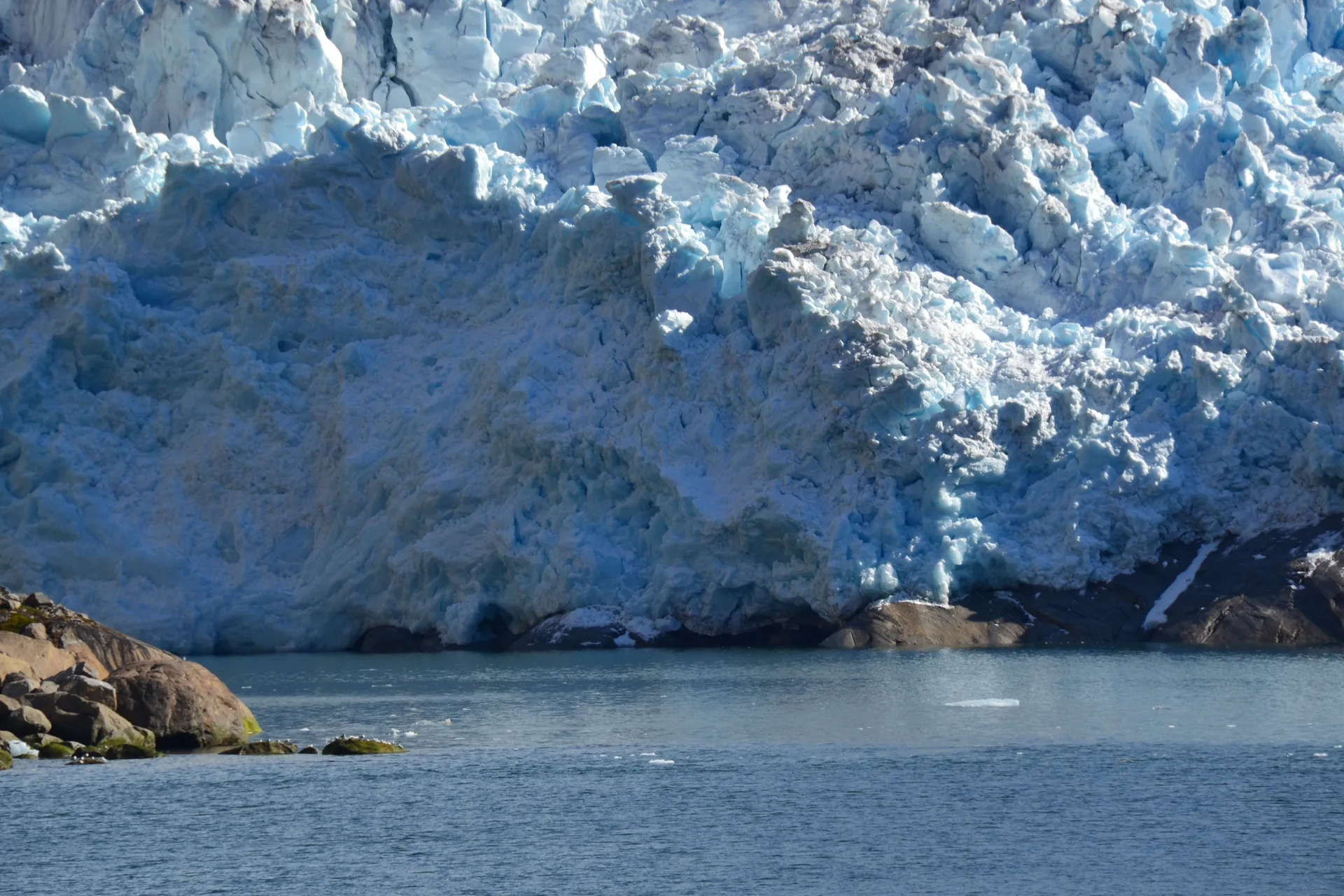
On the western coast of Greenland, approximately eighty kilometres north of the town of Ilulissat, the Eqi Glacier — known locally as Eqip Sermia — presents one of the most accessible and spectacular calving glacier experiences in the Arctic. This massive tidewater glacier, roughly five kilometres wide where it meets the sea, is one of the few in Greenland where visitors can safely watch enormous icebergs being born in real time, as chunks of ice the size of apartment buildings crack away from the glacier face and crash into the fjord with thunderous explosions that echo off the surrounding mountains.
The glacier was a source of fascination for early polar explorers. Paul-Émile Victor, the French explorer and ethnologist, established a scientific station near Eqi in the 1940s to study both the ice and the Greenlandic Inuit communities of the region. The glacier has been retreating significantly since those observations began, a visible and dramatic manifestation of climate change that gives any visit to Eqi a dimension beyond scenic appreciation. The retreat has accelerated markedly in recent decades, making each visit to the glacier a record of a landscape in rapid transformation.
The experience of approaching Eqi by ship or Zodiac is one of intensifying drama. The fjord is littered with icebergs calved from the glacier face — some towering thirty metres above the waterline, their submerged mass many times greater, glowing with the deep blue that indicates extremely compressed, ancient ice. The glacier face itself is a wall of white, blue, and grey, riven with deep crevasses and undercut by the tidal waters. Calving events can happen at any moment — a deep rumble, a cascade of ice and spray, and then a wave that sets every iceberg in the fjord rocking. The scale is humbling: the glacier face stands over two hundred metres high, and the ice sheet feeding it extends hundreds of kilometres inland.
The surrounding landscape is Arctic Greenland at its most dramatic. Barren rock mountains, scoured by glaciers over millions of years, rise on either side of the fjord. In summer, the tundra above the shoreline supports a sparse but colourful carpet of Arctic flowers. The waters are rich in marine life — humpback whales feed in the nutrient-stirred currents near the glacier face, and seals rest on ice floes. The midnight sun, shining continuously from May through July, bathes the glacier in a golden light that photographers find irresistible.
Eqi Glacier is visited by expedition cruise ships transiting the Disko Bay region and by day boats from Ilulissat, the nearest town with regular air service from Kangerlussuaq and Copenhagen. A rustic camp near the glacier offers overnight stays for those who wish to spend extended time watching the calving process. The visiting season runs from June through September, with July and August offering the most reliable conditions. The unpredictability of calving events is part of the experience — patience is rewarded with moments of natural spectacle that rank among the most powerful the Arctic can offer.

