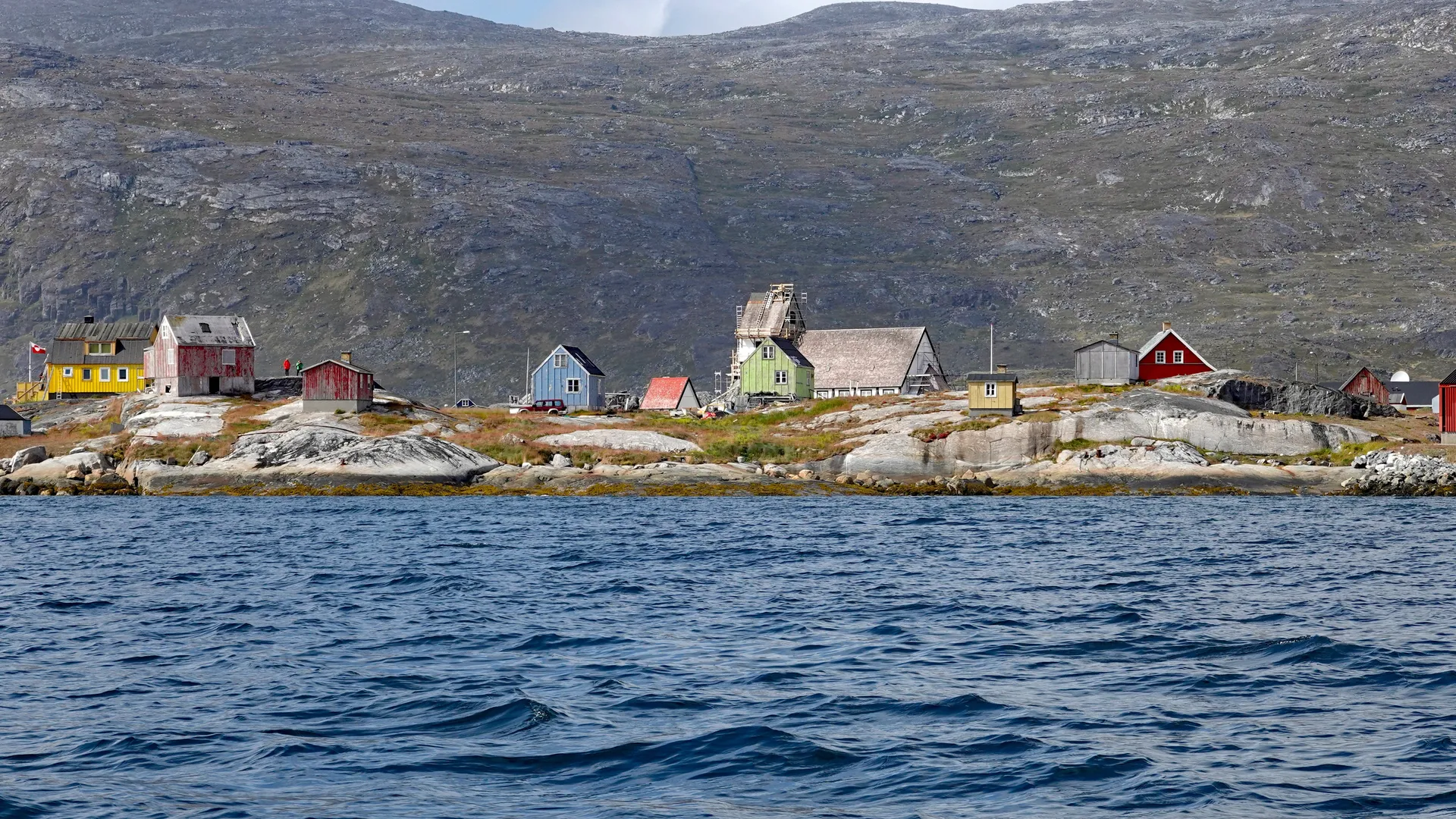
Nanortalik sits at the southern tip of Greenland like a sentinel at the edge of the inhabitable world—the last town before the open waters of Cape Farewell and the North Atlantic beyond. Its name means "place of polar bears" in Kalaallisut, the Greenlandic Inuit language, and while bears are less frequently sighted today than when the settlement was established in 1770, the name still captures the raw, frontier quality of life at 60 degrees north. This is a town of barely 1,200 people, painted wooden houses clinging to granite bedrock above a harbor where icebergs the size of cathedrals drift past in stately silence—the calved remnants of glaciers that have been retreating for millennia.
The town's setting is nothing short of operatic. Nanortalik occupies an island in a fjord system surrounded by some of the most dramatic mountain scenery in the Arctic. The Tasermiut Fjord, accessible by boat from town, has been called the "Patagonia of the Arctic" for its sheer granite walls rising 1,500 meters directly from the water—Big Wall climbers from around the world make pilgrimages here to attempt routes that rival Yosemite's El Capitan in scale and difficulty. Less extreme visitors can hike to viewpoints above town that reveal the full sweep of the fjord system, with glaciers calving into turquoise meltwater lakes and the Greenland Ice Sheet glinting on the distant horizon. The Hvitserk and Ketil spires, twin granite towers visible from the harbor, have become iconic symbols of South Greenland's wild beauty.
Life in Nanortalik maintains connections to traditional Inuit culture that have frayed in larger Greenlandic settlements. The open-air museum preserves traditional turf houses, kayak frames, and hunting equipment, offering context for a way of life that persisted largely unchanged until the mid-twentieth century. Seal and whale meat still appear on family tables alongside imported provisions, and the harbor's fishing boats supply the town with cod, halibut, and Arctic char. The community church, built in 1916, serves as the social heart of the settlement. Local artisans produce remarkable carvings in soapstone, bone, and reindeer antler—the tupilaq figurines, originally created as spiritual guardians, have become highly sought-after collectors' items that represent some of the finest indigenous art in the circumpolar world.
The culinary traditions of Nanortalik are inseparable from the sea and the hunt. Mattak—raw narwhal or whale skin with a thin layer of blubber—is considered a delicacy and a vital source of vitamin C in the Arctic diet. Dried fish, particularly Arctic char and cod, hangs on wooden racks throughout town, its pungent aroma carried on the breeze. Seal soup, enriched with onions, rice, and sometimes curry powder (a legacy of Danish colonial provisioning), is comfort food in its most elemental form. For visitors, the hotel restaurant offers more familiar preparations of local ingredients—grilled musk ox, pan-seared halibut, and reindeer stew—alongside Greenlandic coffee, a dramatic tableside preparation of coffee, whisky, Kahlúa, and Grand Marnier served flaming and topped with whipped cream.
Crystal Cruises, Fred Olsen Cruise Lines, Seabourn, and Viking all include Nanortalik on their Greenland and North Atlantic expedition itineraries. Ships anchor in the harbor and tender passengers ashore to the town pier. The visiting season spans July through September, when temperatures hover around 5–10°C and the fjords are navigable. Weather can change rapidly, and fog, rain, and wind are common even in peak summer—layered, waterproof clothing is essential. What Nanortalik offers in exchange for any meteorological discomfort is an encounter with a landscape of almost incomprehensible grandeur, a community that embodies Arctic resilience, and the sobering, exhilarating knowledge that beyond this point, there is nothing between you and the open ocean.

