Northeast Greenland National Park is the largest national park on Earth — a protected area of 972,000 square kilometres that is bigger than all but 29 of the world's countries. This vast, roadless wilderness of glaciers, ice caps, and tundra valleys occupying the entire northeastern quadrant of Greenland has no permanent human population, its only regular inhabitants being the personnel at a handful of military weather stations and the occasional scientific expedition. For the expedition cruise passenger, Northeast Greenland represents one of the last frontiers of wilderness travel — a landscape of such scale and silence that it redefines one's understanding of what "remote" means.
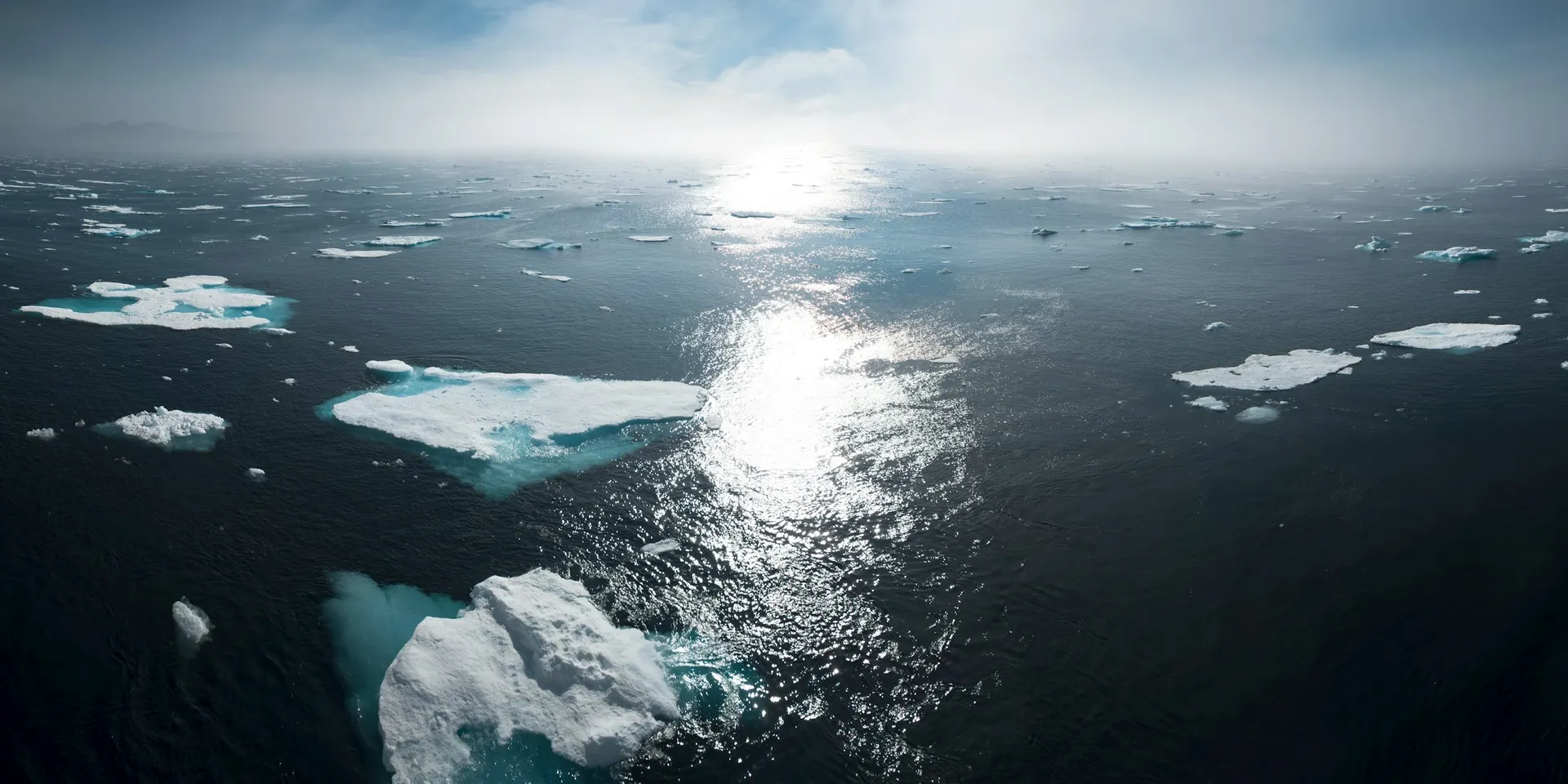
The coastline of Northeast Greenland is a labyrinth of fjords, sounds, and offshore islands that together constitute one of the most scenically dramatic shorelines in the Arctic. Scoresby Sund, the world's largest fjord system, penetrates over 350 kilometres into the Greenland ice sheet, its branches flanked by mountains rising to 2,000 metres and glacial tongues that calve icebergs the size of city blocks into water of impossible turquoise. Kaiser Franz Joseph Fjord and King Oscar Fjord, further north, offer equally spectacular glacial scenery, their waters often dotted with sculptural icebergs whose shapes — arches, pinnacles, tabletops — change hourly as they melt and rotate in the current.
The wildlife of Northeast Greenland is adapted to one of the most extreme environments on the planet. Musk oxen, the shaggy, ice-age survivors that have roamed these tundra plains for tens of thousands of years, graze in herds on the sparse vegetation of the coastal lowlands, their thick qiviut undercoat providing insulation against temperatures that plunge below minus 40 degrees in winter. Arctic hares, Arctic foxes in their white winter coats, and the elusive Arctic wolf inhabit the valleys and ridgelines. Polar bears patrol the sea ice and coastal margins, their presence a constant consideration for expedition landing parties. In summer, the tundra comes alive with nesting birds — barnacle geese, king eiders, and ivory gulls — that have migrated thousands of kilometres to breed in this predator-sparse environment.
The geological story of Northeast Greenland spans over three billion years. Ancient gneiss formations along the coast are among the oldest rocks on Earth, while Devonian-era sandstones in the Jameson Land area contain some of the world's richest fossil beds — petrified forests, early amphibians, and the remains of the lobe-finned fish that would eventually give rise to all terrestrial vertebrates. The Inland Ice, Greenland's ice sheet, is visible from many coastal vantage points as a white wall on the western horizon — a frozen reservoir containing enough water to raise global sea levels by seven metres, and a visible reminder of the climate dynamics that are reshaping the Arctic at an accelerating pace.
Northeast Greenland is visited by Ponant and Quark Expeditions on Arctic expedition itineraries, typically operating between July and September when sea ice conditions permit access to the fjord systems. These voyages are true expeditions — itineraries are flexible, dependent on ice and weather conditions, and every landing is a genuine exploration of terrain that receives only a few hundred visitors per year. August and early September offer the longest ice-free window and the most reliable access to the deepest fjords.

