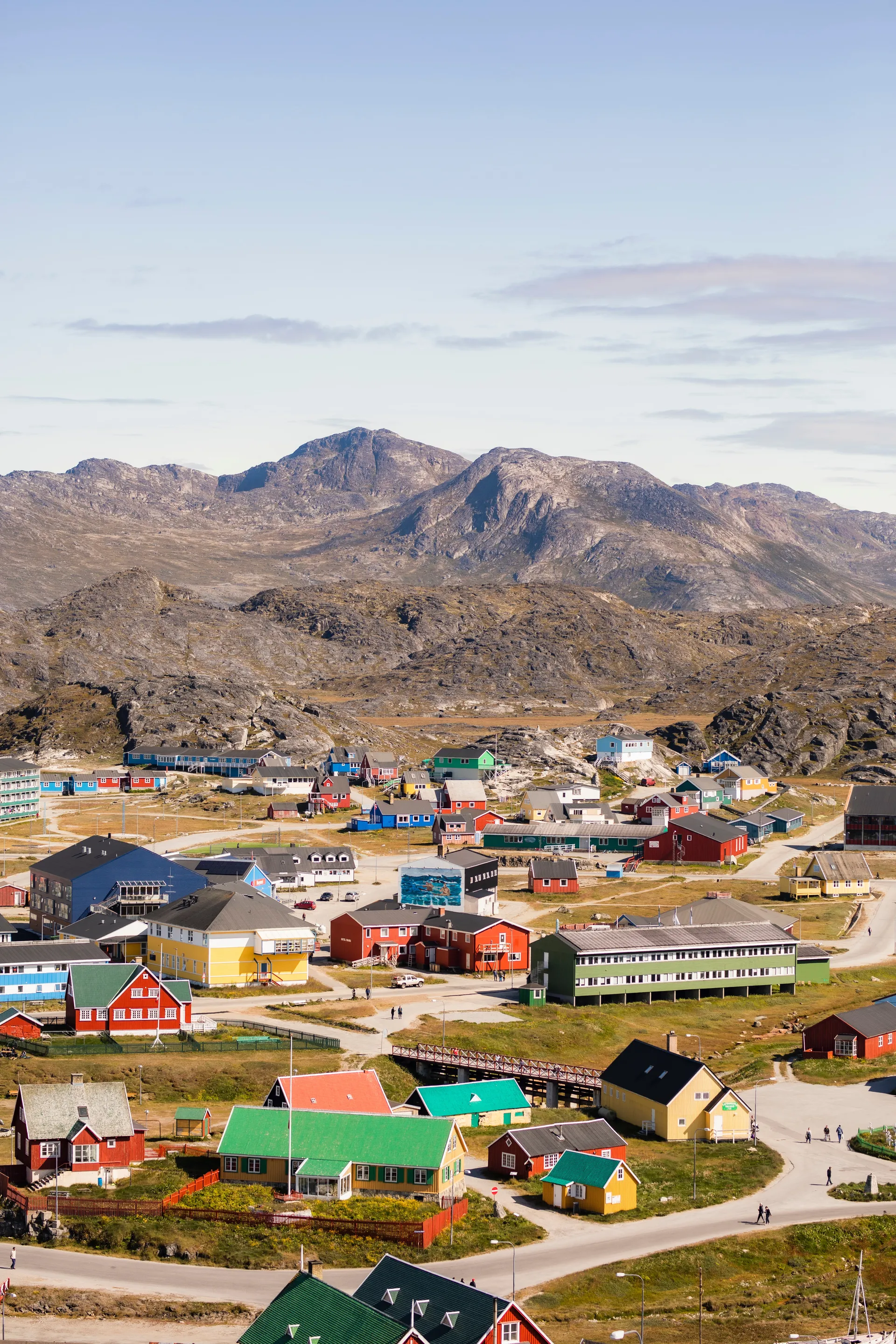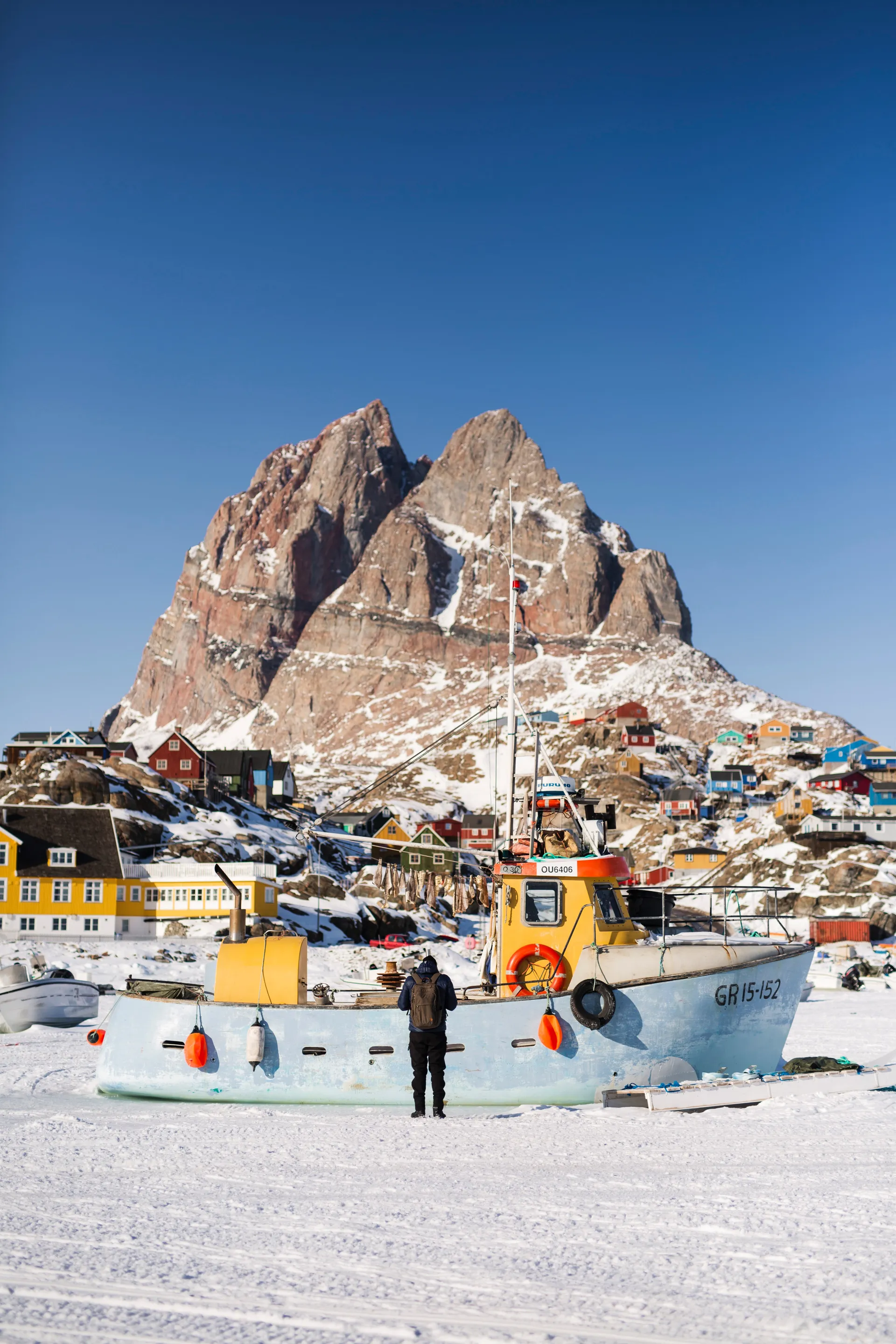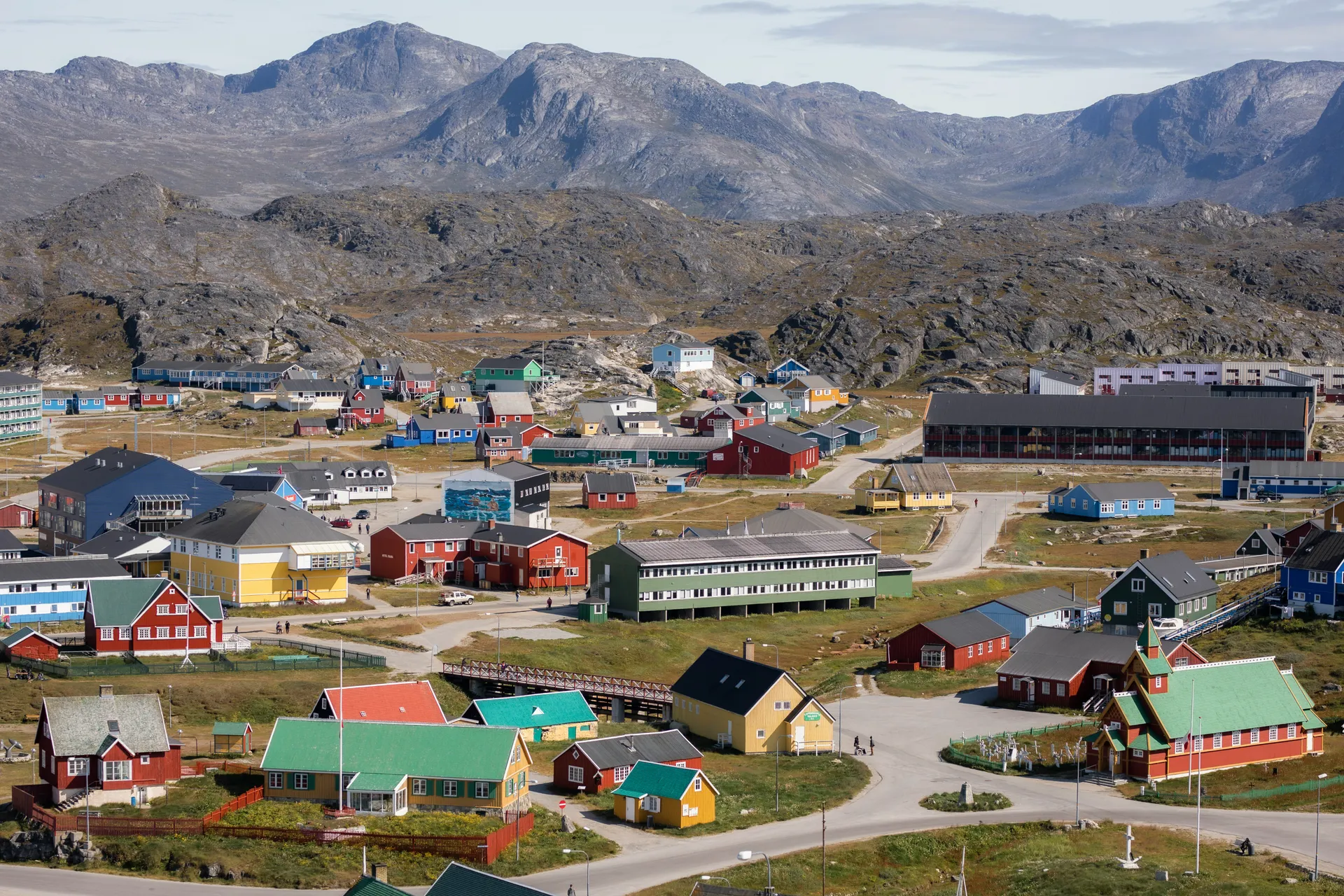
Paamiut — known until 1979 by its Danish colonial name Frederikshåb — clings to the southwestern coast of Greenland at 62 degrees north latitude, a small town of approximately 1,400 people wedged between the ice cap and the sea in one of the most sparsely populated regions on Earth. Founded as a Danish trading station in 1742 to exploit the cod fishery and acquire seal and whale products from the indigenous Kalaallit people, Paamiut spent two centuries as a modestly prosperous colonial outpost before the collapse of the cod stocks in the 1990s devastated its economy and triggered an outmigration that halved the population. Today, the town is reinventing itself through tourism, arts, and the quiet determination of a community that has survived in this extraordinary landscape for generations.
The setting is magnificent in a way that demands recalibration of one's sense of scale. Behind the town, mountains of bare rock and ice rise to over 1,500 meters, their flanks scarred by glacial valleys that channel meltwater to the sea in braided rivers of milky blue. Before the town, the Davis Strait stretches westward toward Canada, its cold waters enriched by the meeting of Arctic and Atlantic currents. Icebergs — calved from the glaciers of the ice cap — drift past the harbor with the unhurried grandeur of floating cathedrals, their forms constantly reshaped by sun, wind, and wave. In summer, the town enjoys near-perpetual daylight; in winter, the brief hours of twilight are compensated by the aurora borealis, whose green and violet curtains dance above the mountains with hypnotic frequency.
The culinary traditions of Paamiut are rooted in the Arctic larder. Seal meat, both fresh and dried, remains a dietary staple — its rich, iron-heavy flavor an acquired taste for visitors but essential sustenance for a people whose relationship with the sea is literally existential. Arctic char, halibut, and shrimp from the fjords provide the town's principal commercial catch. Mattak — raw whale skin with a thin layer of blubber — is a traditional delicacy offered at community gatherings and national celebrations. For visitors, the local hotel and a few small eateries offer more familiar fare alongside traditional dishes, and the experience of eating fresh-caught halibut within sight of the icebergs that cooled the water it swam in is a gustatory experience unique to the Arctic.
The surrounding landscape offers experiences of profound solitude and beauty. Hiking trails lead from the town into the backcountry, where the only signs of human passage are the occasional inukshuk cairn left by earlier travelers. The ruins of Norse settlements — remnants of the Viking colonization that lasted from the tenth to the fifteenth century — dot the coast south of town, their collapsed stone walls a reminder that European civilization has ebbed and flowed in Greenland for over a thousand years. Whale watching from the harbor — humpback, minke, and fin whales feed in the nutrient-rich waters from June through September — is a regular occurrence rather than a scheduled activity. And the sea kayaking, navigating between icebergs and past seal-hauled rocks in water so clear you can see the bottom at twenty meters, is among the most extraordinary paddling experiences on the planet.
Paamiut is accessible by Air Greenland helicopter from Nuuk (the capital, approximately 160 kilometers north) or by coastal ferry. Expedition cruise ships call during the summer season, typically anchoring offshore and tendering passengers to the small harbor. The visiting season runs from June to September, when temperatures hover between 5°C and 15°C and the midnight sun illuminates a landscape of incomparable grandeur. Visitors should pack for all weather conditions — the Arctic climate can shift from sunshine to sleet within an hour — and approach the community with the cultural sensitivity appropriate to a small, close-knit society that has survived in this demanding environment for thousands of years.