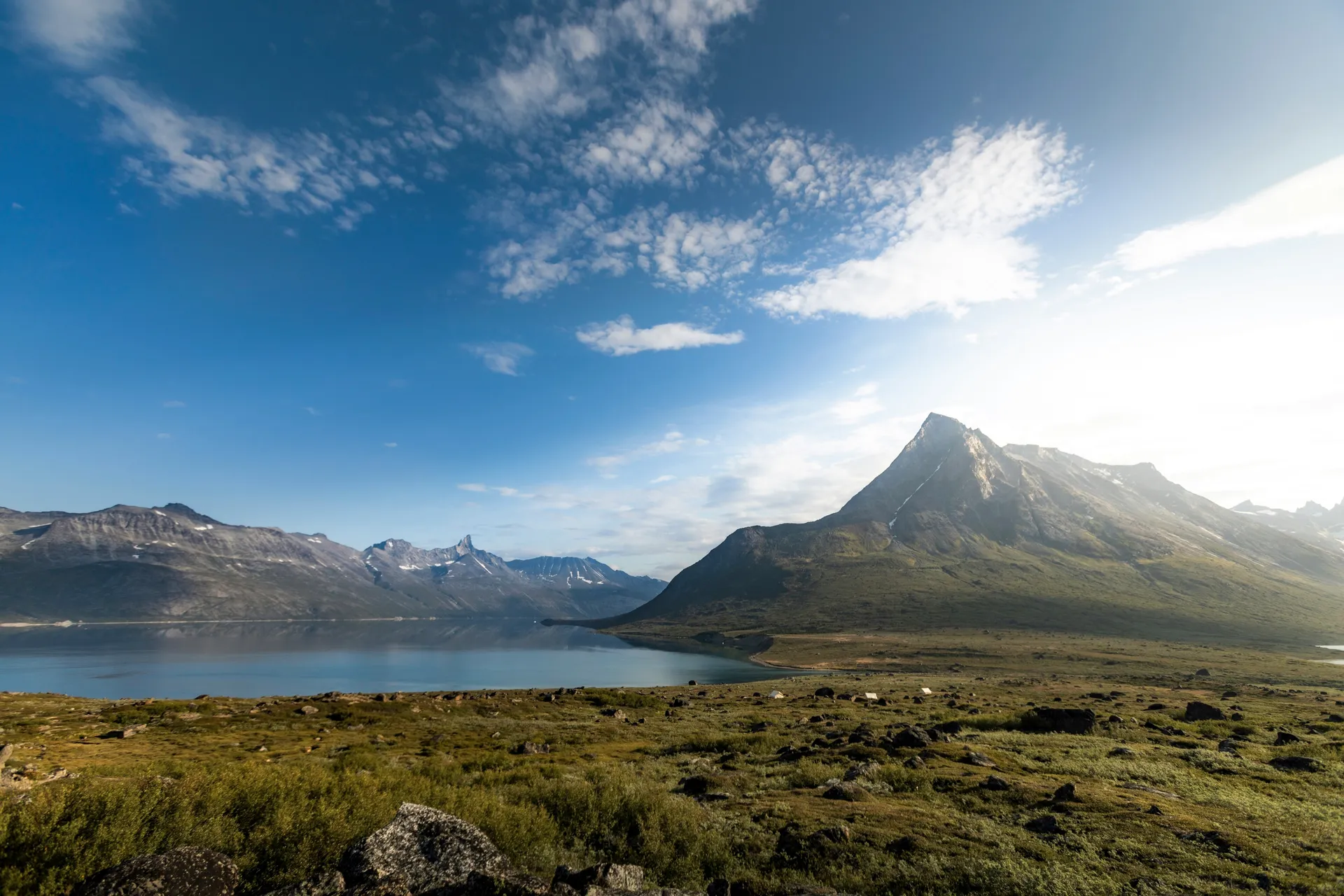
Tasermiut Fjord penetrates deep into the heart of southern Greenland's most dramatic mountain landscape, its dark waters reflecting granite towers that rival Patagonia's spires in sheer vertical grandeur. The Klostertal—or "Monastery Valley"—that branches from the fjord's eastern shore takes its name from the extraordinary cathedral-like rock formations that line its walls, their Gothic profiles suggesting a place of worship designed by geological forces over hundreds of millions of years.
The fjord's granite walls rise with staggering verticality. Ulamertorsuaq, a 1,858-meter peak with a 1,500-meter vertical face, is considered one of the world's great big-wall climbing objectives, drawing elite alpinists from around the globe. Ketil, Nalumasortoq, and the other towers that line the fjord present faces of clean, golden granite that glow in the low Arctic light, their summits often crowned with wisps of cloud or capped with snow that persists well into summer. For non-climbers, the visual experience of cruising between these monoliths—their scale only comprehensible when a Zodiac at their base provides a point of reference—is simply breathtaking.
The valley floors beneath these peaks tell a gentler story. Fed by glacial meltwater, the lowlands support some of Greenland's most lush vegetation—thickets of dwarf willow and birch, meadows of wildflowers, and grass so green it seems imported from another latitude entirely. This was recognized by the Norse settlers who established farms in Tasermiut's sheltered coves over a thousand years ago. The ruins of their homesteads, including foundations and remnants of animal enclosures, can still be found along the fjord's shores, quiet testimony to the ambition and ultimate vulnerability of European settlement in this magnificent but demanding landscape.
The Inuit communities that have inhabited this region for centuries maintain a deep connection to the fjord's resources. Seal hunting, fishing for Arctic char, and gathering crowberries and angelica remain important seasonal activities. The scattered settlement of Tasiusaq, near the fjord's mouth, serves as a base for local hunters and a landing point for expedition vessels. Here, traditional Greenlandic culture exists in close proximity to the modern world—snowmobiles parked beside drying racks hung with seal meat, children playing among satellite dishes.
Expedition ships navigate Tasermiut Fjord during the Arctic summer from late June through early September, when ice conditions typically permit access to the inner reaches. Zodiac cruises beneath the granite walls, shore landings for hikes to Norse ruins and wildflower meadows, and visits to Inuit communities are the primary activities. The fjord's relatively southern position (latitude 60°N, similar to Oslo) provides milder conditions than many Greenland destinations, with summer temperatures occasionally reaching double digits. Clear weather reveals the full majesty of the granite spires, though the fjord maintains its dramatic atmosphere even under the moody overcast skies that frequently prevail.

