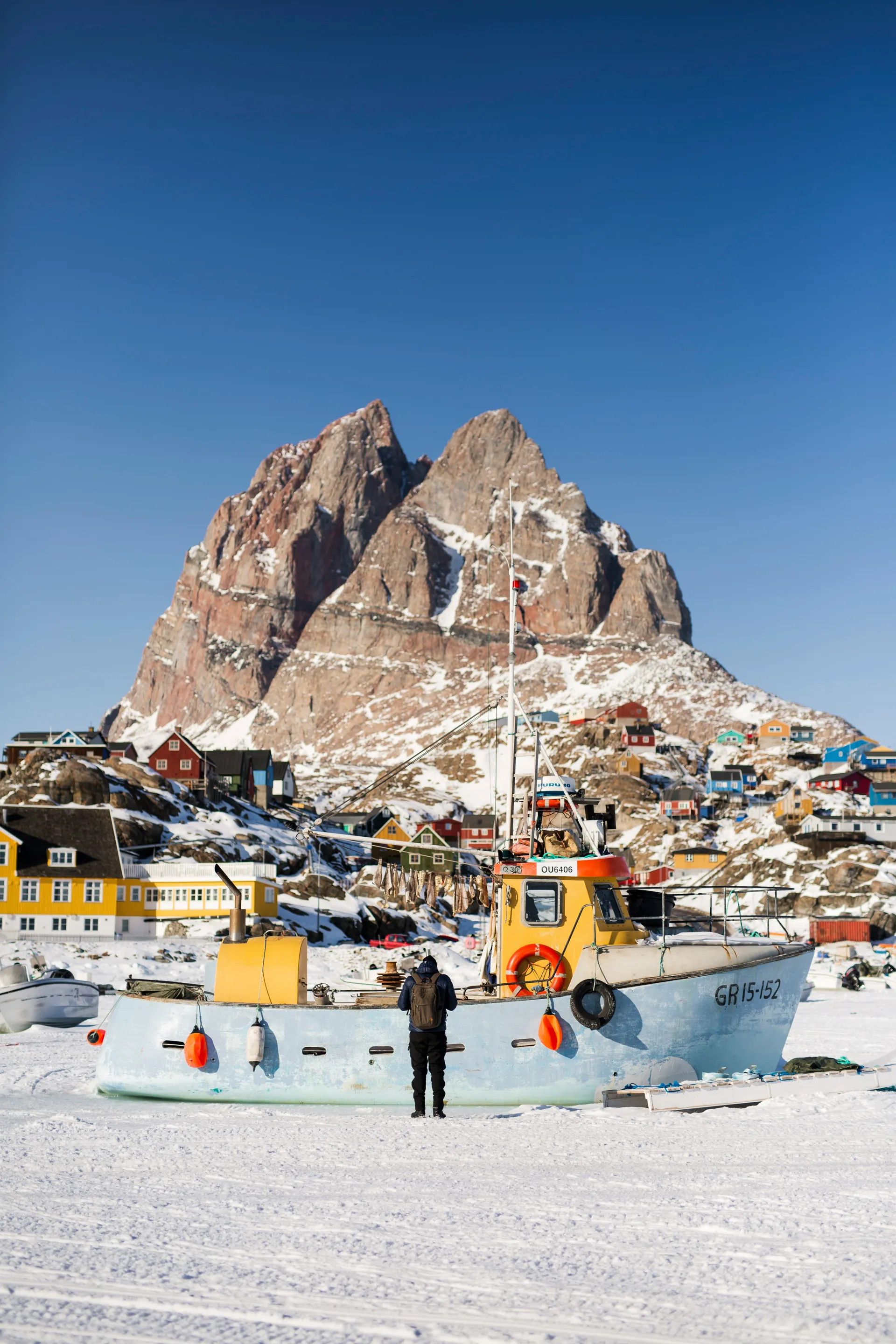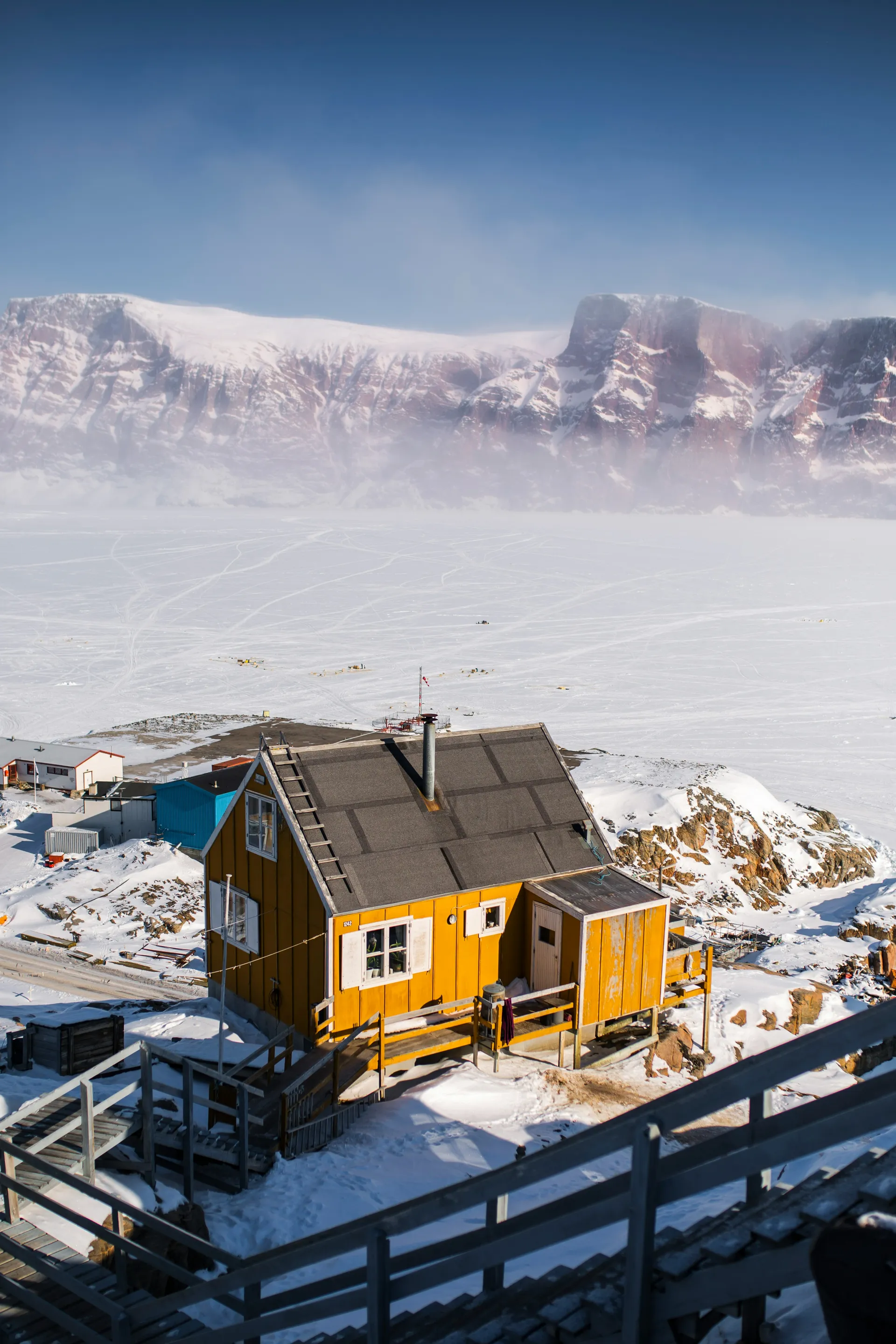
Uummannaq rises from the icy waters of Baffin Bay like a heart-shaped mountain wrapped in Arctic light — and indeed, the town's name means "heart-shaped" in Kalaallisut, the Greenlandic language, referring to the distinctive 1,175-meter peak that dominates the island on which this remote settlement of roughly 1,200 souls clings to the rocks. Located at 70°N latitude, well above the Arctic Circle on Greenland's western coast, Uummannaq is one of the most northerly towns in the world and one of the most visually arresting: brightly painted wooden houses — red, yellow, blue, green — perch on bare granite ledges above a harbor filled with icebergs of cathedral proportions.
The town's history stretches back thousands of years. The Thule people, ancestors of modern Greenlandic Inuit, settled this coast around 1000 AD, drawn by the rich marine life of Baffin Bay and the hunting opportunities provided by narwhals, seals, and polar bears. European contact came through Norse settlers and later Danish colonists, and Uummannaq became a center for Arctic exploration — the Uummannaq Museum, housed in the 1930s former hospital, documents this layered history with exhibits on traditional hunting, dogsledding, and the impact of climate change on a community whose way of life depends entirely on the ice. The ruins of a twelfth-century Norse church, one of Greenland's oldest known European structures, sit on the island's southern shore.
Life in Uummannaq revolves around the sea and the seasons. The town's fishermen pursue halibut through holes cut in the winter sea ice, using traditional methods alongside modern equipment. Seal meat and mattak (whale skin with blubber) remain staples of the local diet, prepared according to traditions passed through generations. During the brief summer, the midnight sun bathes the icebergs in the harbor with a ceaseless golden-pink glow that creates some of the most extraordinary photographic conditions on Earth. In winter, the northern lights dance across skies so dark and clear that the stars seem close enough to touch, and dogsleds provide the primary means of transport across the frozen fjord.
The Uummannaq Fjord system is one of Greenland's most spectacular natural landscapes. Massive icebergs, calved from the Greenland Ice Sheet's outlet glaciers, drift through the fjord in a slow procession of frozen architecture — some towering fifty meters above the waterline, their underwater bulk extending hundreds of meters below. The nearby Qarajaq Glacier is one of the fastest-moving glaciers in the Northern Hemisphere, producing icebergs at a rate visible to the naked eye. Zodiac cruises through the iceberg field offer close encounters with ice in every shade of blue, white, and turquoise, while the fjord's waters host humpback whales, narwhals, and belugas during the summer months.
HX Expeditions, Quark Expeditions, and Silversea include Uummannaq on their Arctic Greenland itineraries, with expedition vessels anchoring in the harbor and passengers exploring the town and surrounding fjord by zodiac and on foot. The visiting season runs from June through September, with July and August offering the warmest temperatures (5-10°C) and the midnight sun. Uummannaq is a destination that demands patience — weather and ice conditions can change plans without notice — but rewards it with an experience of Arctic life and landscape that few places on Earth can equal.