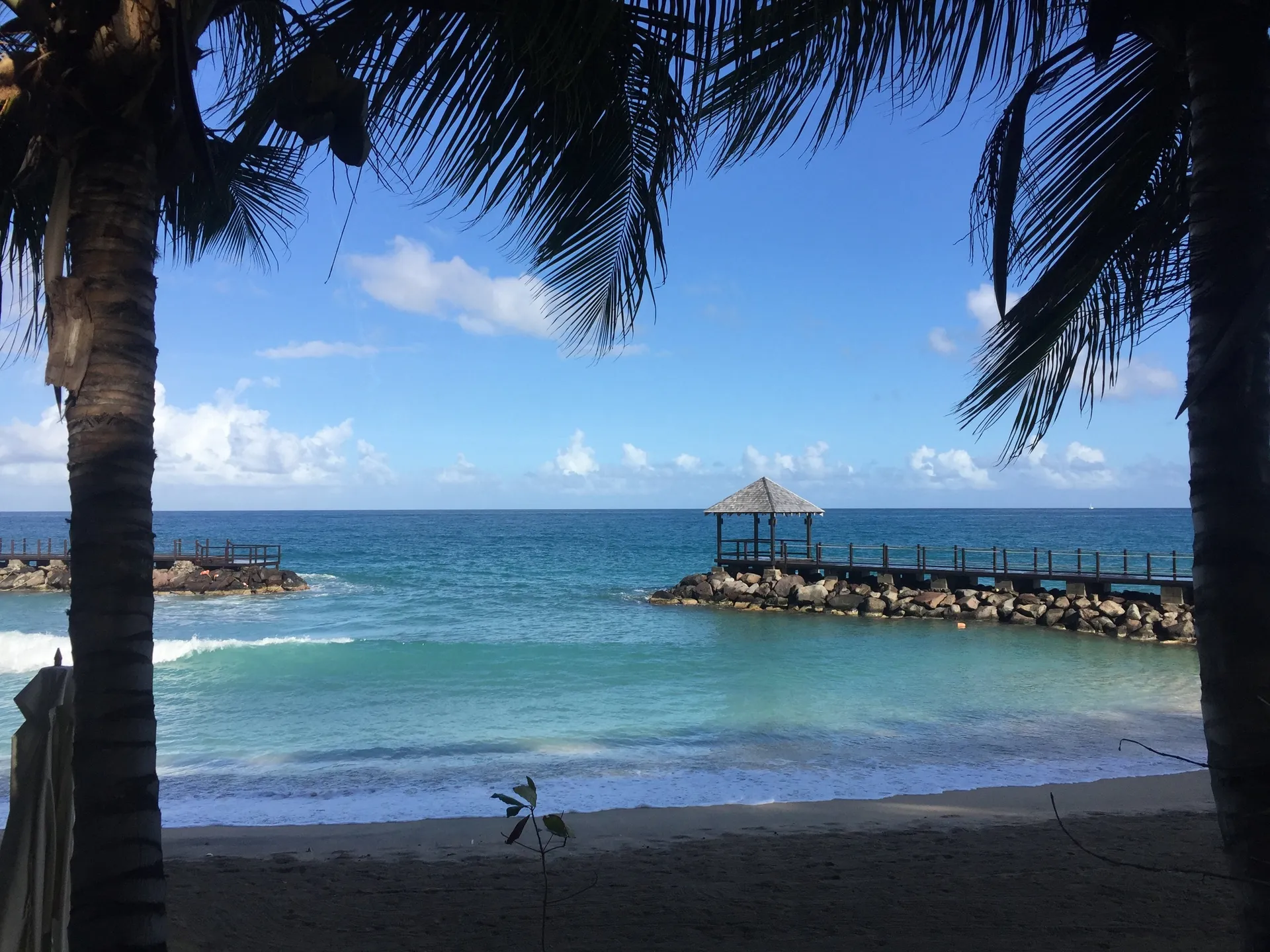
In the sapphire waters between Carriacou and the main island of Grenada, Sandy Island rises barely a meter above the Caribbean Sea — a tiny, uninhabited coral cay fringed with coconut palms and encircled by a reef of astonishing clarity. This is the Caribbean stripped to its essence: no buildings, no electricity, no roads — just a crescent of white sand, a handful of swaying palms, and water so transparent that fish are visible from fifty meters away. Sandy Island has been a protected marine area since 2010, and its pristine condition reflects both Grenada's commitment to conservation and the simple fact that some places are too beautiful to develop.
Arriving at Sandy Island by tender or zodiac, the first impression is one of impossible perfection. The sand is fine and white, the palms provide just enough shade for a beach picnic, and the surrounding reef drops off into graduated shades of turquoise and cobalt. Snorkeling directly from the beach reveals brain corals, fan corals, and sponges in vivid pinks and purples, along with parrotfish, sergeant majors, angelfish, and the occasional hawksbill turtle gliding with languid grace through the warm shallows. The reef is healthy and diverse — a testament to the protected status that has kept spearfishing and anchoring at bay.
The broader Grenadines context gives Sandy Island its full meaning. Carriacou, the larger island visible just to the north, is Grenada's cultural treasure — a place where African, French, and British heritage has produced a unique Creole culture of boat-building, Big Drum dance, and Maroon festivals that celebrate the island's enslaved ancestors who fought for freedom. The main island of Grenada, known as the Spice Isle, produces more nutmeg per capita than anywhere else on Earth, along with cinnamon, cloves, and cocoa. A day that begins with snorkeling at Sandy Island and ends with a nutmeg-spiced rum punch in St. George's is a day that captures the Grenadines' full spectrum of pleasures.
The waters surrounding Sandy Island are part of a broader marine ecosystem that makes this corner of the Caribbean particularly rewarding for divers and snorkelers. The reefs between Carriacou and Grenada are among the healthiest in the Lesser Antilles, supporting not only tropical reef fish but also octopuses, moray eels, and the occasional reef shark. Drift dives along the channels between islands offer encounters with eagle rays and barracuda, while the calm, clear conditions make this an ideal location for both beginners and experienced divers.
Ponant includes Sandy Island on its Caribbean itineraries, with the line's small expedition vessels ideally suited to the island's intimate scale and shallow approach. The island is typically visited as a beach stop, with snorkeling gear provided for reef exploration directly from shore. The best time to visit is December through May, when the dry season brings consistent sunshine, calm seas, and the best underwater visibility. Sandy Island may measure just a few hundred meters from end to end, but in a world of overdeveloped coastlines and crowded resorts, its unspoiled simplicity feels like the rarest luxury of all.

