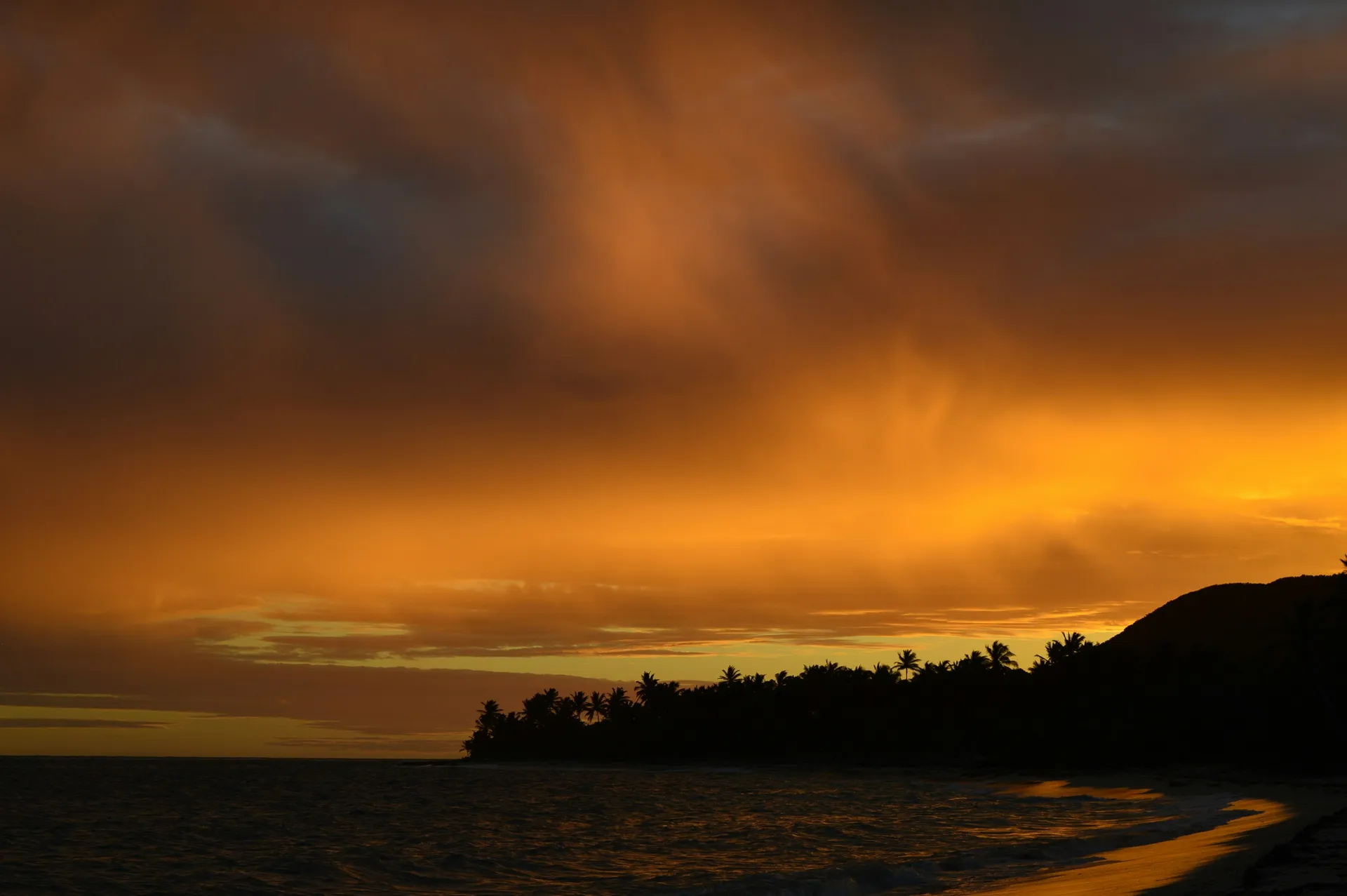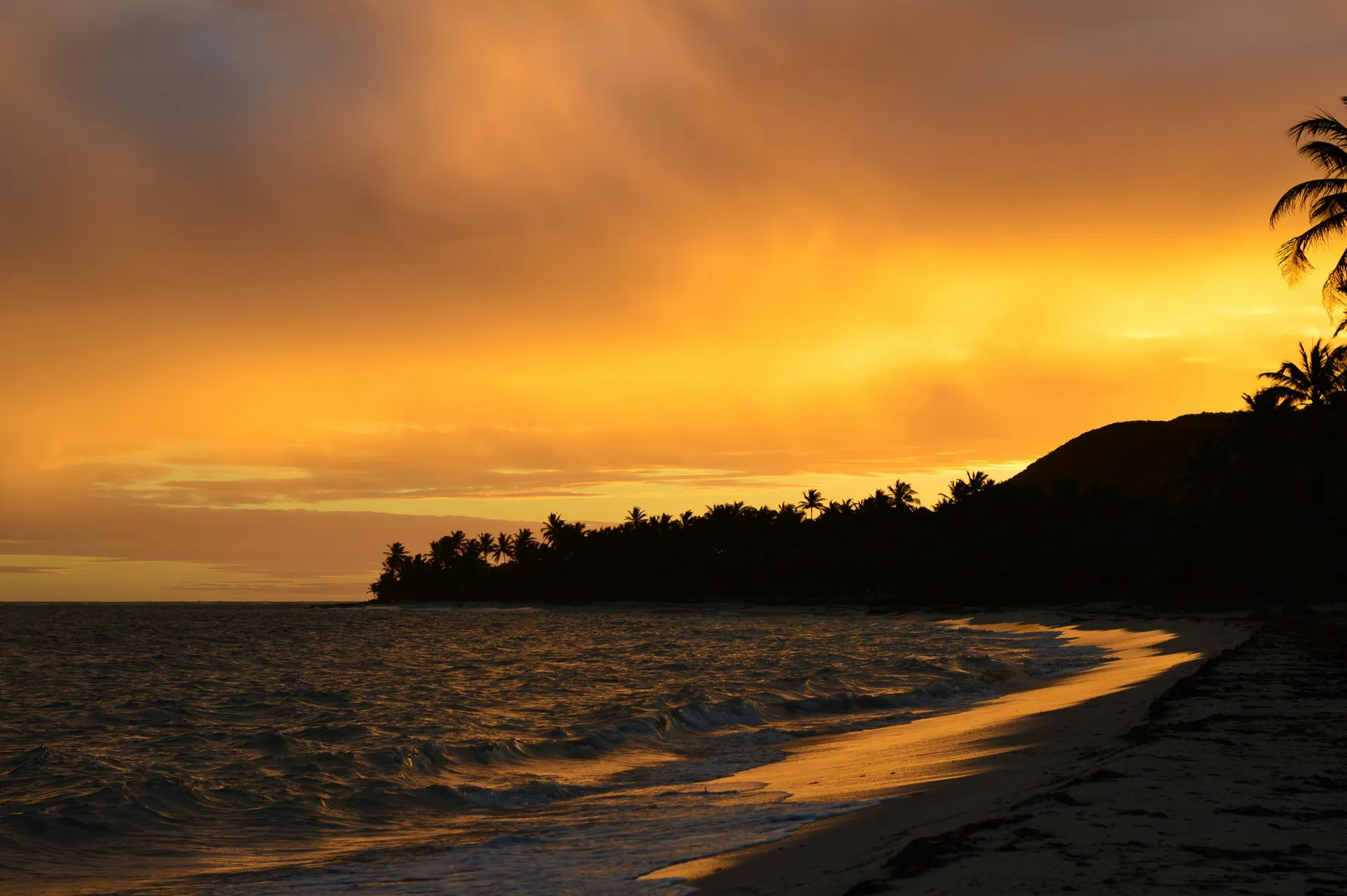
Christopher Columbus named this island after his flagship, the María Galante, when he sighted it in November 1493 during his second voyage to the New World. Five centuries later, Marie-Galante remains one of the Caribbean's most authentic and least touristed islands — a flat, circular disc of sugarcane fields, ox-cart trails, and deserted beaches that feels like Guadeloupe's quieter, more contemplative sibling. Known to locals as the "island of a hundred windmills" for the stone ruins that dot its landscape, Marie-Galante has resisted the resort development that has transformed much of the French Caribbean, preserving a way of life that moves to the rhythm of the cane harvest and the trade winds.
The island's three communes — Grand-Bourg, Capesterre, and Saint-Louis — are small, unhurried towns where life revolves around the market, the church, and the rum distillery. And it is rum that defines Marie-Galante's identity most forcefully. The island's three distilleries — Bellevue, Bélère (Poisson), and Bielle — produce what many connoisseurs consider the finest rhum agricole in the entire French Caribbean, distilled from fresh-pressed sugarcane juice rather than molasses. A tasting tour of all three is an essential pilgrimage, revealing the nuances of terroir and technique that differentiate each house's expression. Père Labat, the brand produced at Poisson, is especially revered among rum enthusiasts worldwide.
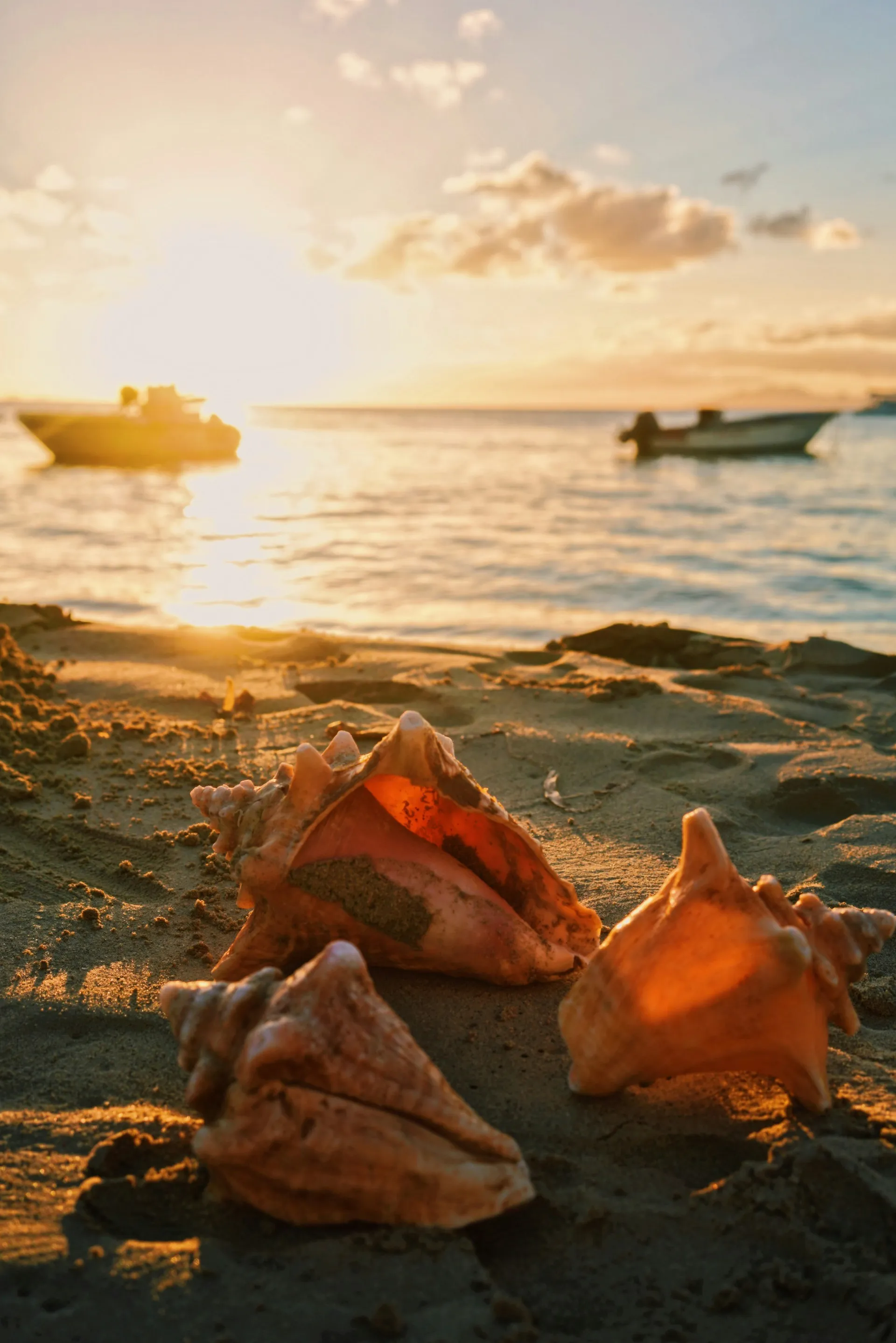
Marie-Galante's beaches are the island's other great treasure. Plage de la Feuillère, a long sweep of golden sand backed by sea-grape trees and facing the gentle Caribbean, is regularly cited as one of the finest beaches in the French Antilles — yet it remains blissfully uncrowded even in high season. Anse Canot, tucked into a rocky cove on the north coast, offers excellent snorkeling among reef fish and sea fans. The dramatic Gueule Grand Gouffre, a natural sea arch carved into the island's limestone cliffs, provides one of the Caribbean's most unusual coastal landscapes — a collapsed cave where ocean swells surge and retreat with hypnotic force.
The cuisine of Marie-Galante is Creole comfort food at its most genuine. Court-bouillon de poisson — fish simmered in a spiced tomato broth — is the island's signature dish, served with white rice and red beans. Boudins créoles (blood sausages spiced with chives and piment), accras de morue (salt cod fritters), and colombo de cabri (goat curry) appear at every fête and family gathering. Sugar-derived treats abound: tourment d'amour (a coconut-filled pastry whose name translates as "torment of love") is a beloved local confection, best purchased warm from a bakery in Grand-Bourg. Pair everything with a ti'punch — rhum agricole, lime, and cane syrup — the cocktail that anchors every social occasion in the French Antilles.
Ponant includes Marie-Galante on its French Caribbean itineraries, with ships tendering into Grand-Bourg's harbor. The island's compact size makes it easily explorable by taxi, bicycle, or even ox-cart. Nearby ports of call include the Îles des Saintes, mainland Guadeloupe, and Deshaies. The best time to visit is December through May, when the dry season brings reliable sunshine and gentle breezes, though Marie-Galante's gentle pace and unspoiled beauty make it rewarding in any season.