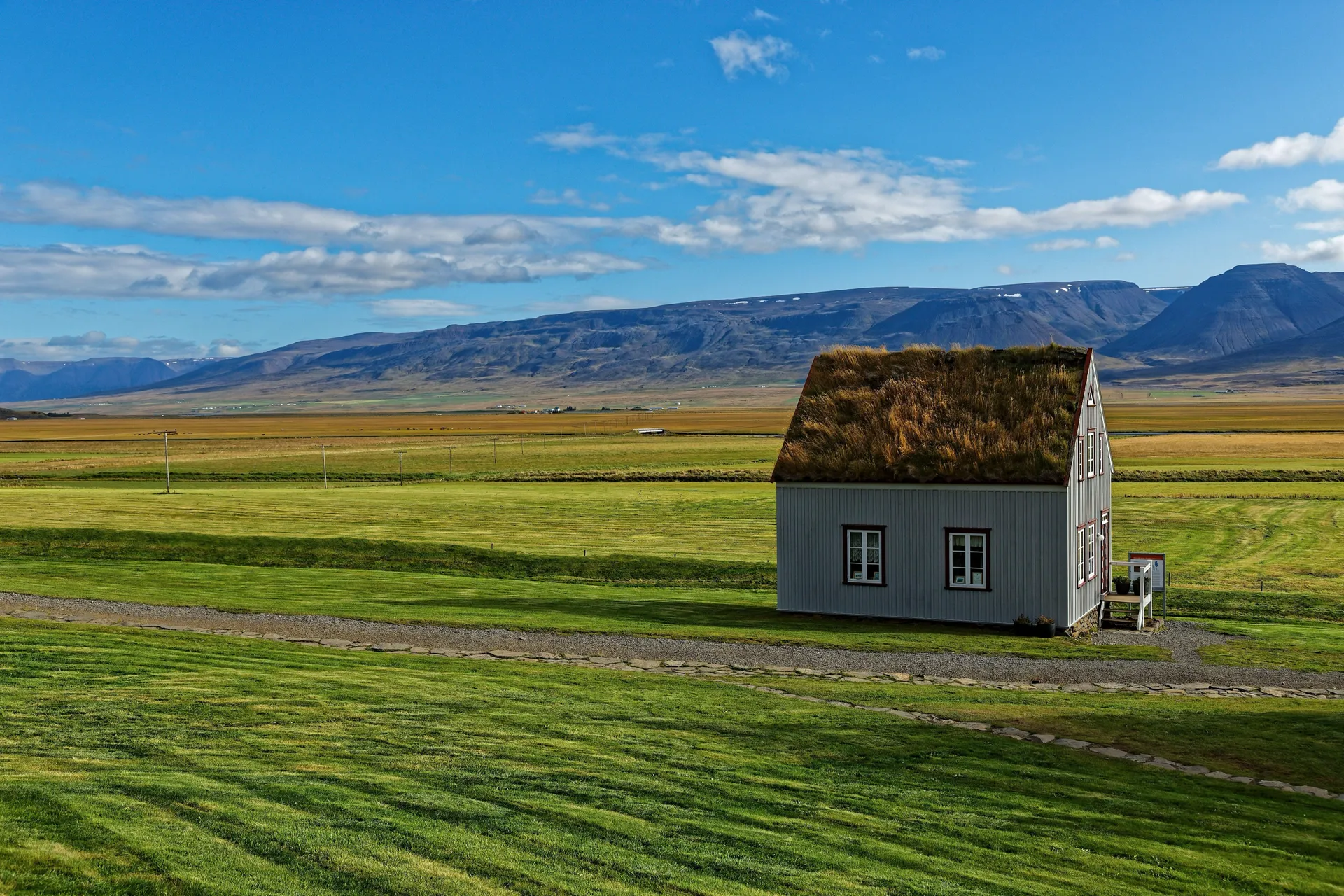
In Iceland's remote Westfjords, where the island's northwestern peninsula fragments into a labyrinth of fjords, mountains, and coastal cliffs, Patreksfjörður occupies one of the region's most dramatically situated harbors. This small fishing town of roughly seven hundred residents serves as the gateway to Látrabjarg — Europe's westernmost point and one of the continent's most spectacular seabird cliffs — and to some of the most stunningly empty landscapes in all of Iceland.
Látrabjarg, located roughly sixty kilometers west of Patreksfjörður, is a fourteen-kilometer wall of cliff rising up to 441 meters above the North Atlantic. During the breeding season from May through August, these cliffs host millions of seabirds — puffins, razorbills, guillemots, and northern gannets — in such density that the cliff face appears to be in constant motion. The puffins at Látrabjarg are famously approachable, having experienced relatively little human disturbance over the centuries, and photographers can achieve extraordinary close-up images of these charismatic birds without telephoto lenses. The cliff-edge experience, with the vast Atlantic stretching toward Greenland and the seabird chorus filling the salt air, is one of the most exhilarating wildlife encounters available in Europe.
The beach at Rauðisandur — Red Sand Beach — lies between Patreksfjörður and Látrabjarg and presents a landscape of almost surreal beauty. This enormous expanse of golden-red sand, backed by mountains and fronted by a shallow lagoon that reflects the sky like a vast mirror, stretches for kilometers in magnificent emptiness. On clear days, the interplay of sand, water, sky, and distant snow-capped mountains creates compositions that seem designed for contemplation rather than photography — though photographers will find it impossible to resist.
Patreksfjörður itself is a characterful Westfjords settlement whose economy has shifted from commercial fishing to a mix of fishing, tourism, and services. The town's small but well-stocked restaurants serve fresh fish — often caught that same day by the boats visible from the dining room window — prepared with the confident simplicity that characterizes Icelandic cuisine at its best. The local swimming pool, heated by geothermal water, offers the quintessential Icelandic social experience: hot tubs under open skies where locals and visitors alike soak and converse.
Cruise ships dock at Patreksfjörður's fishing harbor, where the town's compact layout makes independent exploration straightforward. Excursions to Látrabjarg and Rauðisandur require vehicle transport, as the distances involved exceed comfortable walking range. The Westfjords' remote location means that weather can be unpredictable, and flexibility is essential — fog can obscure the cliffs, and wind can make the cliff-edge walk challenging. The optimal visiting window is June through August, when the seabird colonies are active, daylight is nearly continuous, and temperatures reach their most comfortable (though rarely exceeding 15°C). The Westfjords receive a fraction of Iceland's tourist traffic, ensuring an experience of genuine remoteness even at the height of summer.

