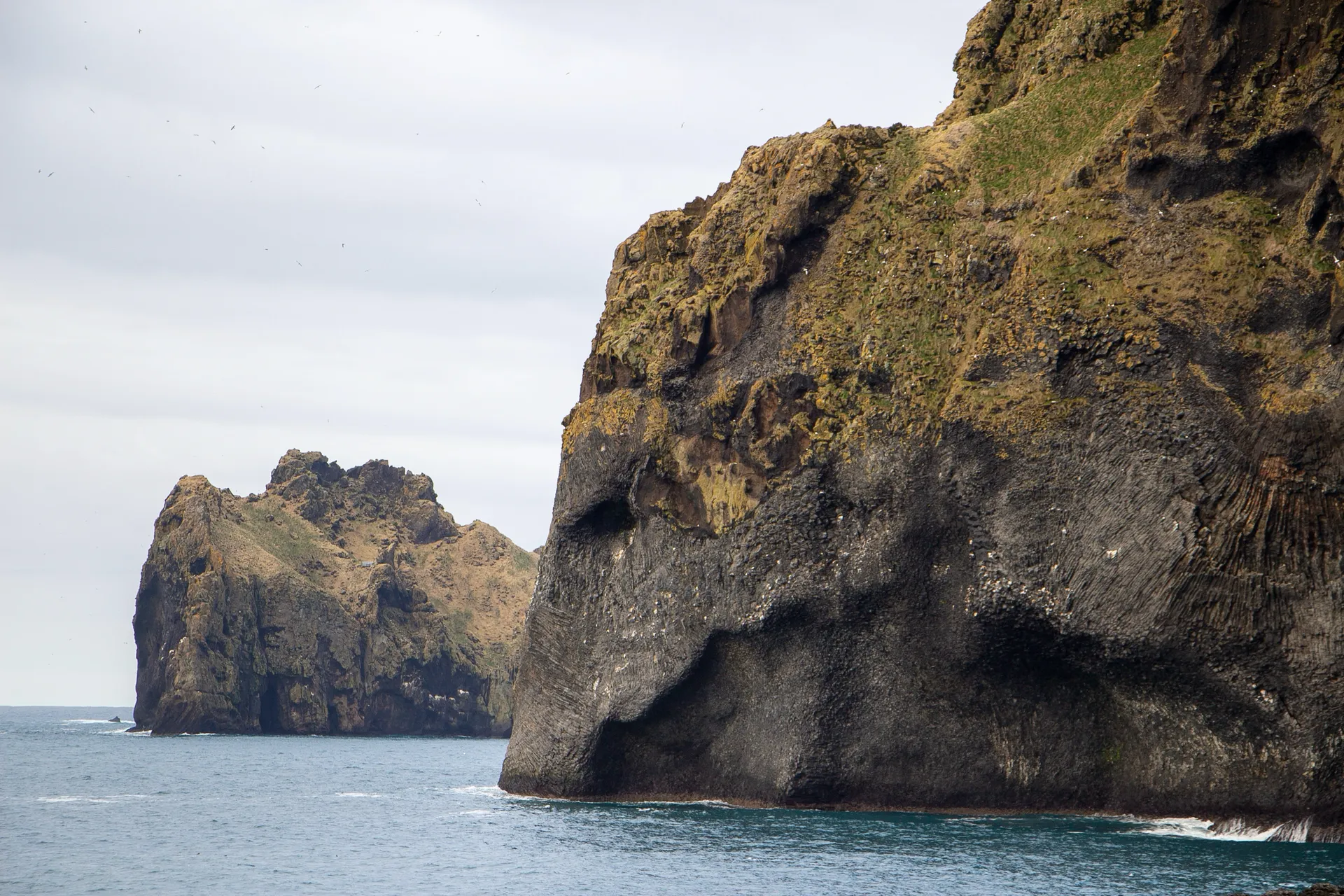
In 1973, the residents of Heimaey — the only inhabited island in Iceland's Westman Islands archipelago — were awakened at 1:47 AM by the eruption of a volcano that had not existed the day before. Over the next five months, the Eldfell eruption buried a third of the town under lava and ash, extended the island's landmass by 2.2 square kilometres, and threatened to close the harbour that sustained the fishing community's existence. The 5,000 residents were evacuated overnight — a logistical feat accomplished by the fishing fleet that happened to be in port due to a storm — and when they returned months later, they dug their homes out of the tephra and carried on. This quality of resilient pragmatism in the face of geological violence defines the Westman Islands and the people who have chosen to live on them.
The Westman Islands — Vestmannaeyjar in Icelandic — are a volcanic archipelago of 15 islands and 30 rock stacks lying off Iceland's south coast, formed by submarine eruptions along the Mid-Atlantic Ridge. Only Heimaey is permanently inhabited, its 4,500 residents making their living primarily from fishing — the harbour, saved from the 1973 lava flow by a heroic effort to cool the advancing rock with seawater pumped through fire hoses, is one of Iceland's most productive fishing ports. The Eldheimar museum, built around a house excavated from the 1973 tephra (the "Pompeii of the North"), provides a visceral experience of the eruption's human impact, its preserved rooms filled with ash-encrusted domestic objects that tell the story of a community interrupted mid-sentence.
The birdlife of the Westman Islands is staggering. The sea cliffs host the largest Atlantic puffin colony in the world — an estimated eight to ten million puffins nest on the archipelago between April and August, their comical, orange-billed faces peering from burrows on every grassy cliff top. The annual puffin season is a cultural event in Heimaey: children patrol the town at night during August "puffling season," rescuing young birds that have been disoriented by the town's lights on their first flight to sea and carrying them in cardboard boxes to the cliff edge for release at dawn — a tradition so deeply embedded in local culture that it functions as the community's informal coming-of-age ritual.
The volcanic landscapes of the Westman Islands provide hiking of extraordinary drama. The ascent of Eldfell — the volcano that erupted in 1973 — takes about 20 minutes and leads to a crater rim where the ground is still warm to the touch and steam rises from crevices in the red and black scoria. The view from the summit encompasses the entire archipelago, the dark ramparts of the Icelandic mainland, and the open Atlantic stretching south toward the Faroe Islands. Surtsey, the youngest island in the archipelago, emerged from the sea in a series of eruptions between 1963 and 1967 and has since become one of the world's most important natural laboratories — a UNESCO World Heritage Site where scientists study the colonisation of sterile volcanic rock by plant and animal life, with no public access permitted.
The Westman Islands are visited by Viking on Iceland circumnavigation itineraries, with ships anchoring in Heimaey's harbour. The ideal visiting season is June through August, when the puffins are nesting, the days are longest, and the weather is most favourable for hiking and coastal exploration. The annual Thjodhatid festival on the first weekend of August — a three-day celebration of music, bonfires, and communal singing in a natural amphitheatre — is one of Iceland's most beloved cultural events.

