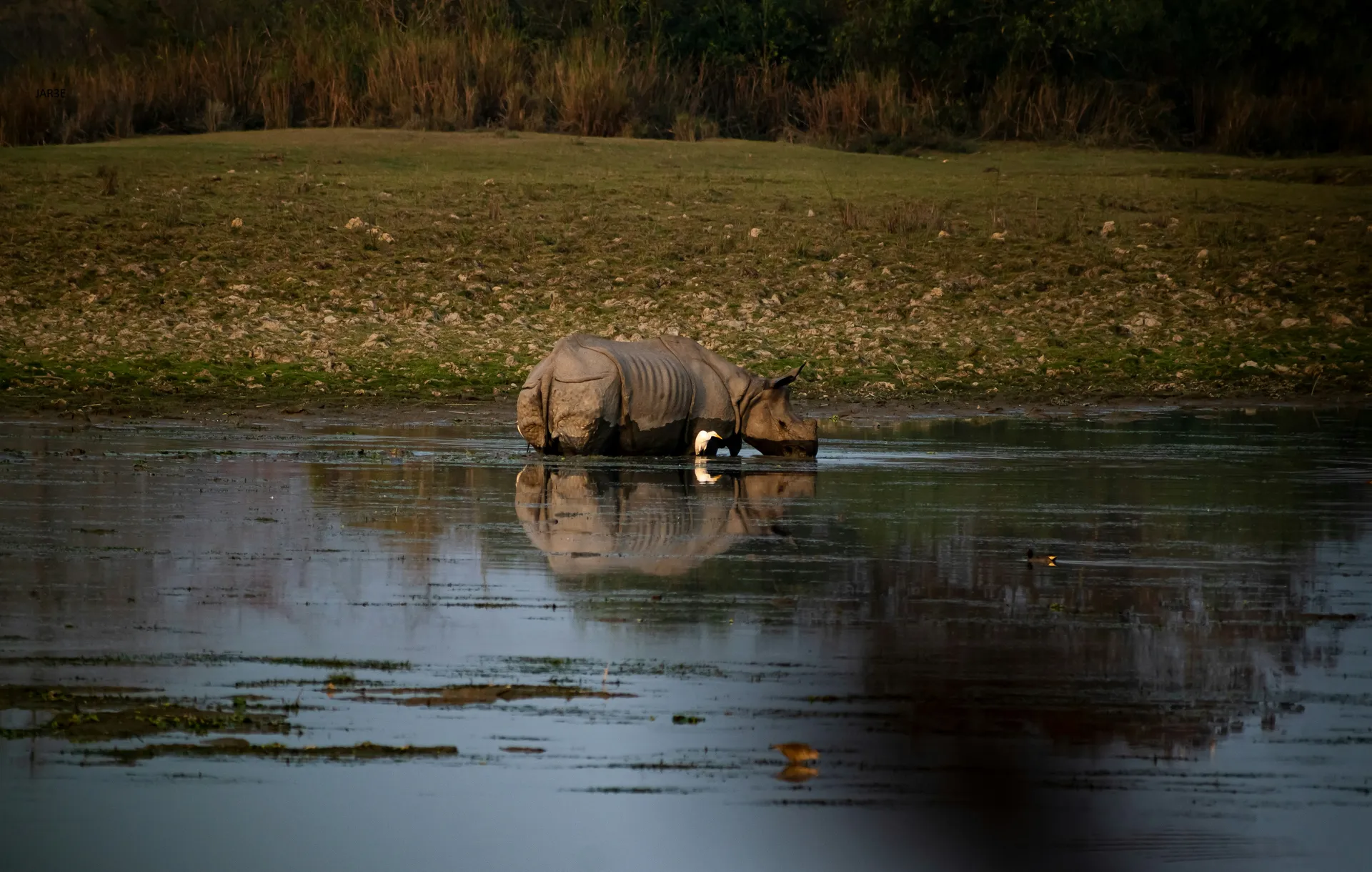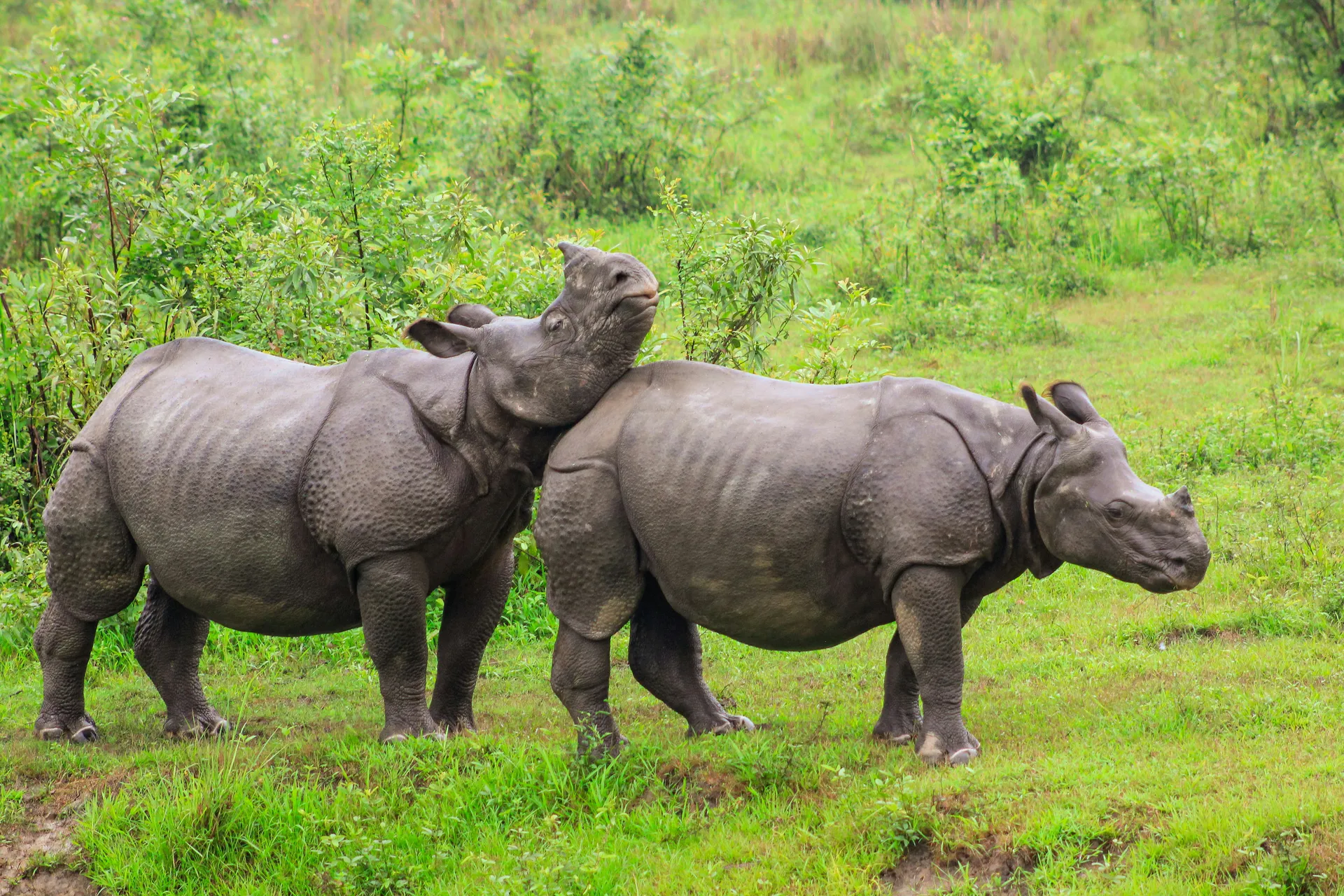
Kaziranga National Park occupies a broad floodplain along the southern bank of the Brahmaputra River in the northeastern Indian state of Assam, protecting one of the last great concentrations of megafauna in Asia. This UNESCO World Heritage Site, covering 430 square kilometers of tall elephant grass, marshland, and tropical forest, is home to two-thirds of the world's one-horned rhinoceros — over 2,400 individuals of a species that was hunted to near extinction in the early twentieth century before Kaziranga's establishment as a reserve in 1908.
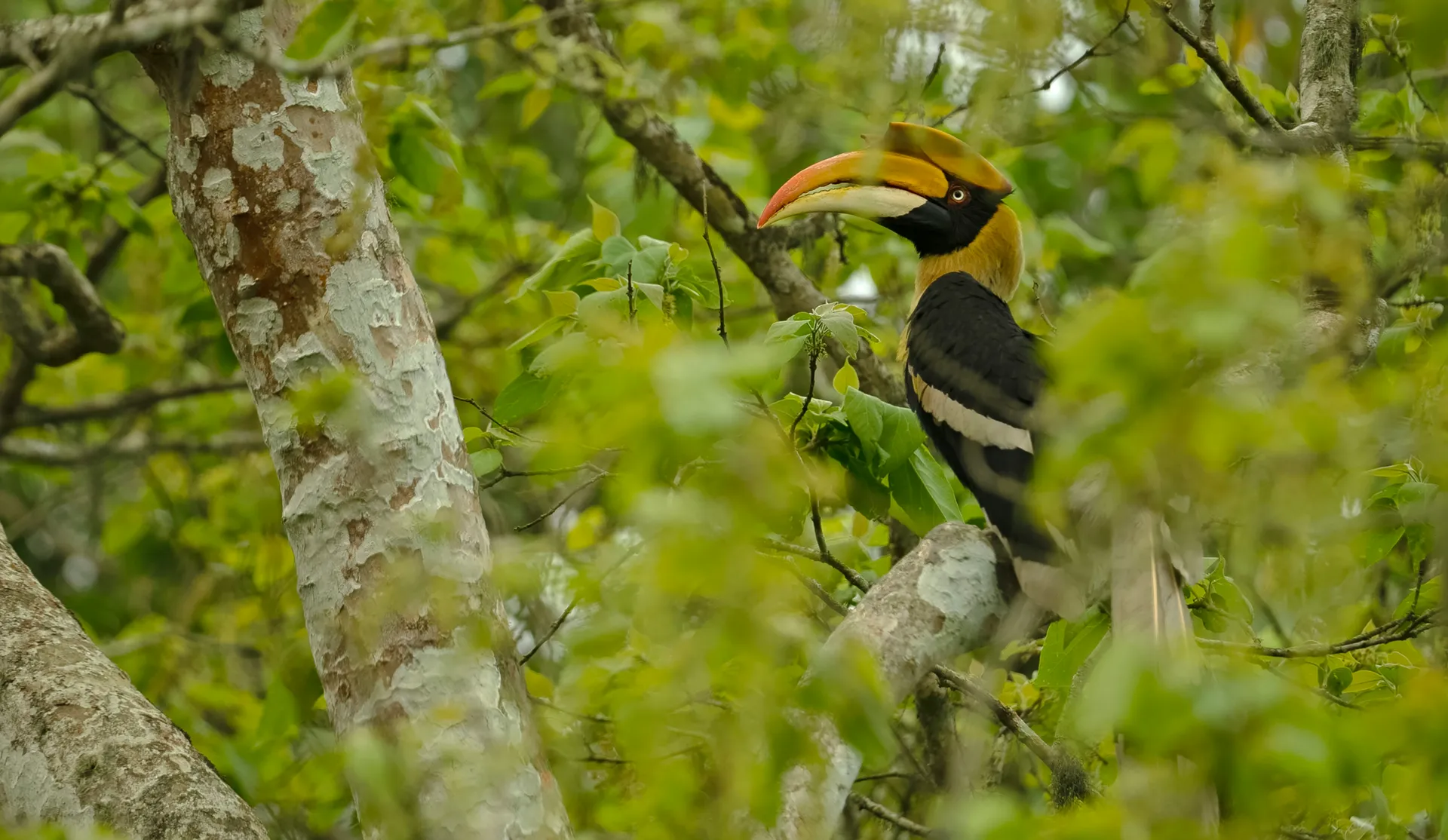
The Indian one-horned rhinoceros is Kaziranga's star attraction, but the park's wildlife roster reads like a catalogue of Asian megafauna. It supports the highest density of Bengal tigers of any protected area in the world, along with Asian elephants, wild water buffalo, swamp deer, hoolock gibbons, and the endangered Ganges river dolphin in the Brahmaputra's channels. The park's birdlife is extraordinary: over 500 species have been recorded, including the globally threatened Bengal florican, greater adjutant stork, and white-winged wood duck.
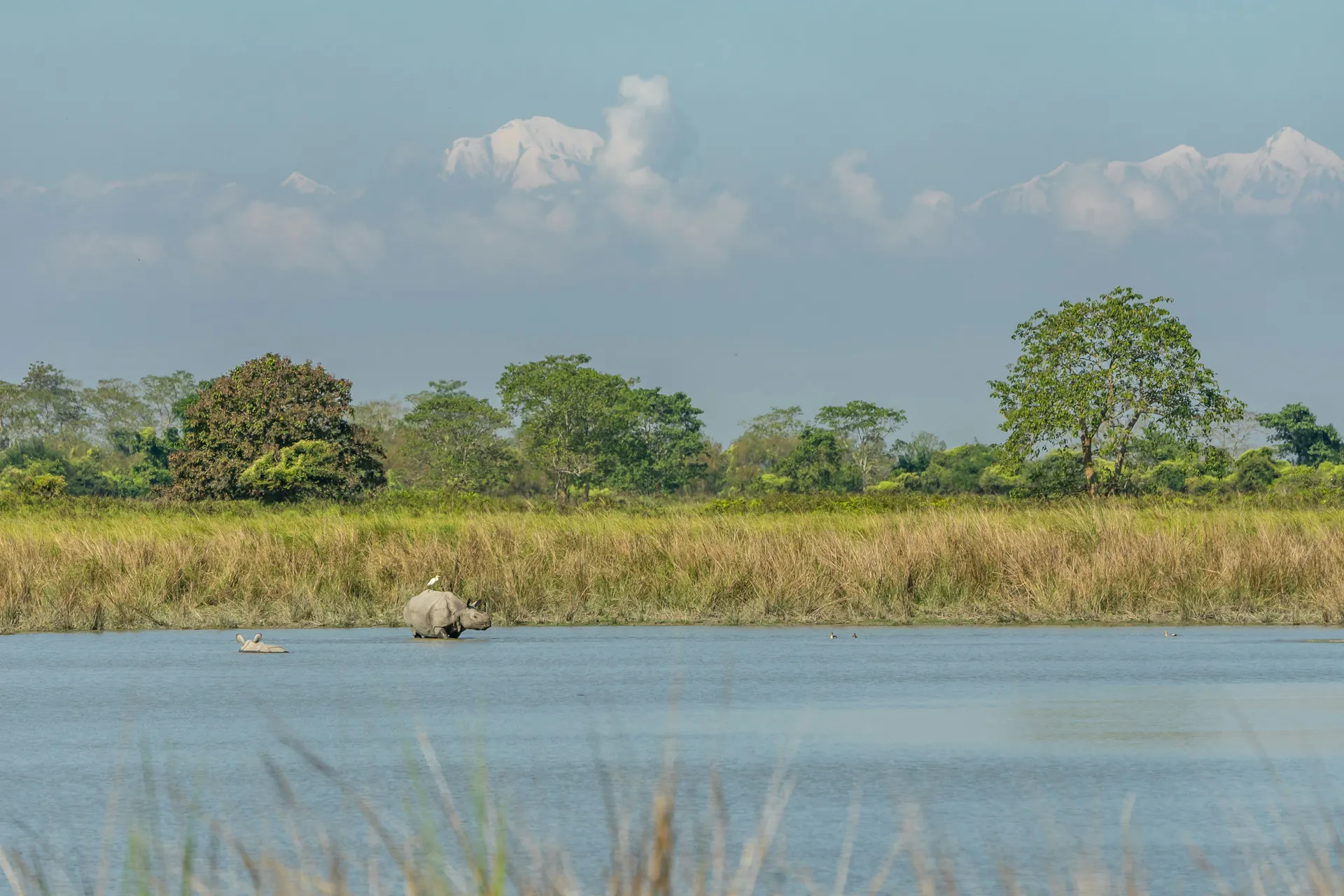
Safari experiences in Kaziranga are among the most rewarding in Asia. Jeep safaris through the park's four ranges — Kohora, Bagori, Agaratoli, and Burapahar — traverse landscapes that shift from towering elephant grass (reaching heights of four meters, tall enough to hide a rhino) to open marshes where herds of wild buffalo graze and elephants wade through shallow water. Elephant-back safaris, while increasingly debated on welfare grounds, have traditionally offered closer approaches to rhinoceros in the dense grass. The park's guides are knowledgeable and passionate, and close encounters with rhinos — sometimes at distances of just ten meters — are common.
The Brahmaputra River, which borders the park to the north, is one of the world's great rivers — flowing over 2,900 kilometers from Tibet through Assam to Bangladesh and the Bay of Bengal. River cruises on the Brahmaputra provide a unique perspective on Kaziranga, approaching the park from the water and observing the floodplain ecosystem from a distance. The annual monsoon flooding, which inundates much of the park from June through September, is both a destructive and regenerative force — displacing wildlife to higher ground but also depositing the nutrient-rich sediment that sustains the park's extraordinary productivity.
Kaziranga is accessible from the town of Golaghat or the city of Guwahati, Assam's capital, approximately five hours by road. River cruise ships on the Brahmaputra can arrange shore excursions into the park. The park is open from November through April, with February through March generally considered the best period for wildlife viewing — the grass is shorter, water levels have receded, and animals congregate around remaining water sources. The monsoon closure (May through October) allows the ecosystem to regenerate. Kaziranga is a conservation triumph — proof that with sufficient political will and local engagement, even the most endangered species can be brought back from the brink.