Mumbai is India's maximum city — a megalopolis of 21 million that operates at a frequency and intensity matched by few places on Earth. Built on seven islands that were gradually connected by land reclamation into a single peninsula thrusting into the Arabian Sea, Mumbai concentrates India's extremes into the most densely packed urban landscape in Asia: the stock exchange that drives the world's fifth-largest economy coexists with the informal settlements that house over half the population; Bollywood produces more films annually than Hollywood; and the city's restaurants span the full spectrum from Michelin-level innovation to street stalls whose dosas and vada pav have been perfected over generations.
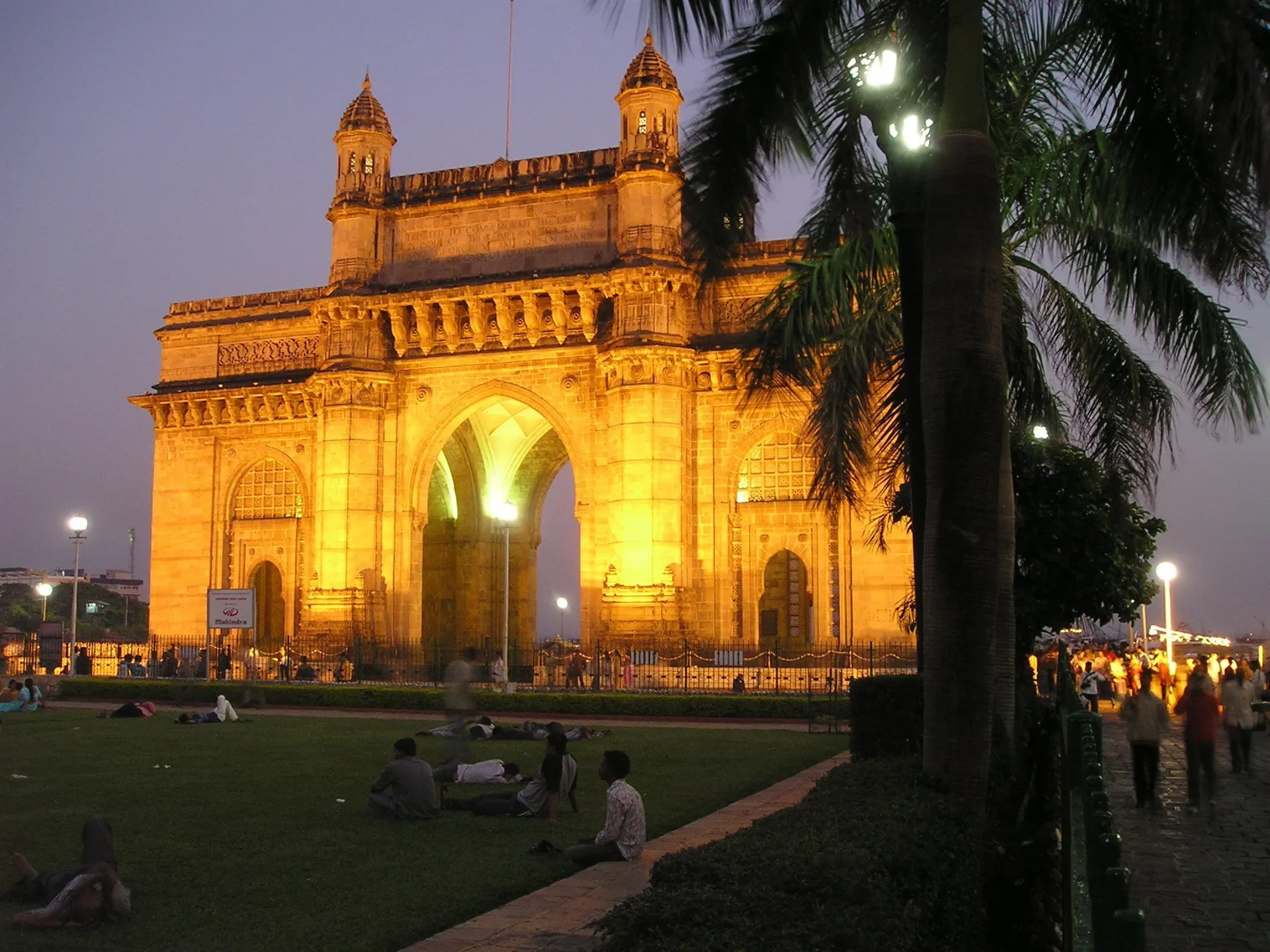
The Gateway of India, the basalt triumphal arch on the Apollo Bunder waterfront completed in 1924 to commemorate the visit of King George V, is Mumbai's most recognizable landmark — and a potent symbol of the colonial history that shaped the city's architecture and commercial culture. The Taj Mahal Palace Hotel, facing the Gateway across a public square where balloon sellers, photographers, and fortune tellers compete for attention, has been Mumbai's most prestigious address since its founding in 1903 by Jamsetji Tata — the industrialist whose Tata Group remains one of India's most powerful conglomerates. The Chhatrapati Shivaji Maharaj Terminus (formerly Victoria Terminus), a UNESCO World Heritage Site, is the most extravagant railway station ever built — a Gothic-Saracenic fantasy of turrets, stained glass, and carved stone that handles 7.5 million commuters daily.
Mumbai's food culture is arguably the most diverse in Asia. The city's street food — vada pav (a spiced potato fritter in a bun, sometimes called the "Mumbai burger"), pani puri (crisp shells filled with spiced water and chickpeas), and bhel puri (puffed rice with chutneys and vegetables) — constitutes one of the world's great pavement cuisines, its flavours calibrated by generations of vendors to the Mumbai palate's love of sweet, sour, spicy, and crunchy in simultaneous combination. The restaurants of Bandra and Lower Parel serve Iranian-influenced Parsi cuisine (dhansak, patra ni macchi), Bohri Muslim feasts (raan, nalli nihari), and the seafood of the Konkan coast — pomfret, bombil (Bombay duck), and the prawn preparations that are Mumbai's proudest culinary contribution.
The cultural life of Mumbai is as multilayered as the city itself. The Kala Ghoda art precinct, anchored by the Chhatrapati Shivaji Maharaj Vastu Sangrahalaya (formerly Prince of Wales Museum), concentrates galleries, theatres, and bookshops in a walkable quarter of Indo-Gothic architecture. Dharavi, one of Asia's largest informal settlements, is also one of its most economically productive — the leather workshops, pottery studios, and recycling operations within its boundaries generate an estimated annual turnover exceeding $1 billion, and the guided tours operated by community-based organisations provide a respectful introduction to a neighbourhood that defies Western stereotypes of slum poverty.
Mumbai is served by Celebrity Cruises, Oceania Cruises, and Uniworld River Cruises on Indian and Arabian Sea itineraries, with ships docking at the Mumbai cruise terminal. The most comfortable visiting season is November through February, when temperatures hover in the comfortable mid-20s to low 30s and the monsoon season — a torrential, dramatic, and oddly beautiful four months from June through September — has passed.