At the edge of the Arafura Sea, where rivers drain from the central highlands of Papua through some of the most extensive mangrove and swamp forests on Earth, the town of Agats rises on stilts above the tidal mudflats — the de facto capital of the Asmat region, home to one of the world's most powerful and least understood artistic traditions. The Asmat people, whose ancestors practiced headhunting within living memory, produce woodcarvings of such extraordinary expressiveness and spiritual intensity that they are sought by major museums and collectors worldwide.
Asmat art is not decoration — it is the visible manifestation of a complex cosmological system in which the world of the living and the world of the dead are in constant communication. The bis pole, a towering carved figure (some exceeding six meters in height) created to honor the recently deceased and compel their spirits to depart for the afterworld, is the most dramatic expression of this tradition. Carved from a single mangrove trunk and featuring intertwined human figures, the bis pole represents both a portrait of the dead and a vehicle for spiritual transition. The best examples display a dynamic energy — figures seeming to climb, grasp, and emerge from the wood — that rivals the finest sculpture of any tradition.
The Museum of Asmat Culture in Agats houses a remarkable collection of carvings, shields, drums, and ceremonial objects that document the breadth and sophistication of Asmat artistic production. The shields, carved in low relief with intricate spiraling patterns, served both practical and spiritual purposes — their designs intended to intimidate enemies and channel protective spiritual power. The museum also provides cultural context for visitors who may be encountering Asmat art for the first time, explaining the cosmological significance of recurring motifs and the ceremonial contexts in which objects were created and used.
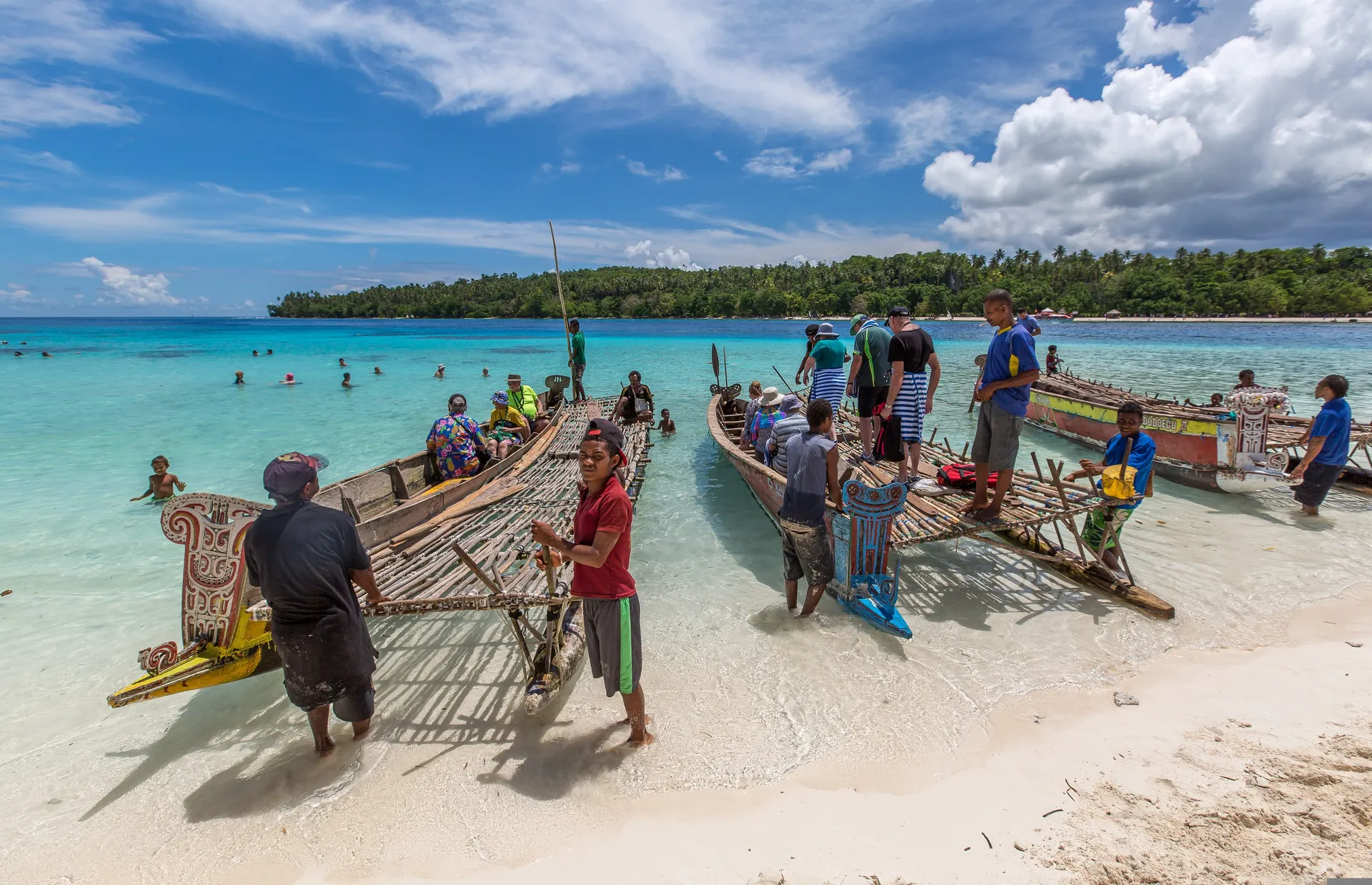
Agats itself is an extraordinary settlement. Built entirely on raised wooden walkways above the tidal swamp, the town connects its buildings — government offices, churches, shops, and residences — by boardwalks that serve as both streets and social spaces. The surrounding landscape of mangrove forest and river channels is navigated exclusively by dugout canoe, and the sight of Asmat men paddling their slender craft through the maze of waterways, standing in the stern with the effortless balance of lifelong canoeists, is one of the region's most evocative images.
Expedition cruise ships anchor offshore at Agats and use tenders to reach the town's waterfront. The town is accessible only by sea or air (a small airstrip connects to regional cities), and visitor infrastructure is minimal — this is genuine frontier territory. The dry season from September through March offers the most manageable conditions, though "dry" is a relative term in a region that receives over 5,000 millimeters of rainfall annually. Humidity is perpetually high, and visitors should prepare for hot, damp conditions. The annual Asmat Cultural Festival, typically held in October, draws carvers from across the region for competitions and performances that provide the most concentrated introduction to this extraordinary artistic tradition.

