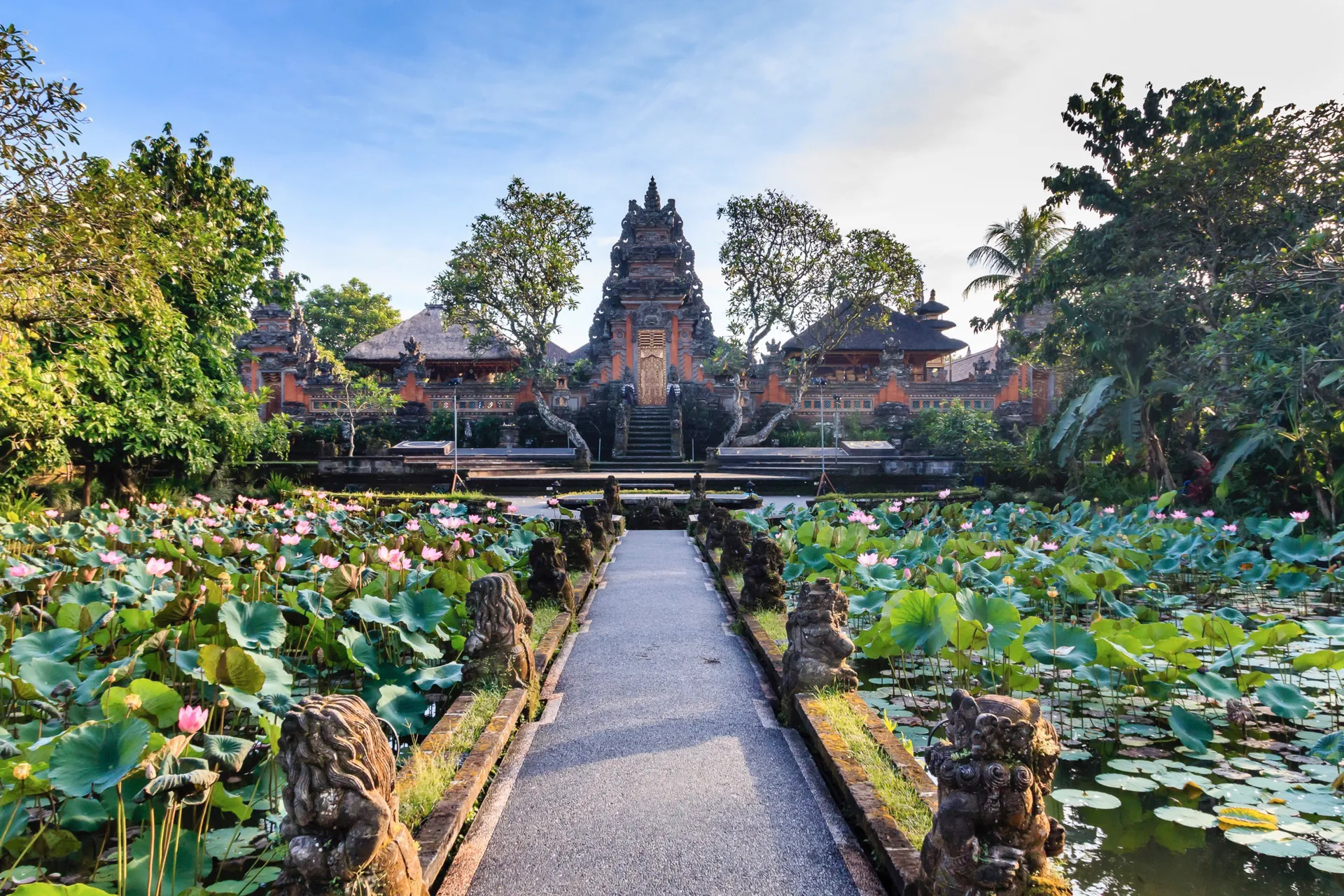
Bali needs no introduction, yet it continues to surprise even the most seasoned travelers with the depth and diversity contained within its modest 5,780 square kilometers. The Island of the Gods—as Indonesians themselves call it—has been a magnet for seekers, artists, and adventurers since the first Western visitors arrived in the early twentieth century and were overwhelmed by a civilization that seemed to integrate art, religion, and daily life into a seamless whole. Every village has its temple, every temple has its ceremony, and every ceremony involves music, dance, and offerings of such artistic refinement that the boundary between the sacred and the aesthetic effectively dissolves. Benoa, the cruise port on Bali's southern coast, serves as the gateway to all of this.
The cultural heartland of Bali lies inland, in the rice terrace country around Ubud. Here, the Tegallalang rice terraces cascade down volcanic hillsides in patterns that are as much engineering as art—the subak irrigation system that maintains them has been designated a UNESCO Cultural Landscape for its thousand-year-old integration of human activity and natural systems. Ubud itself has evolved from a quiet artists' village into a sophisticated cultural center, but its essential character endures in the nightly dance performances at the Royal Palace, the morning offerings placed on every doorstep and dashboard, and the tropical gardens of the former royal family's Puri Saren compound. The Tirta Empul water temple, where Balinese Hindus come for ritual purification in spring-fed pools, offers visitors a profound encounter with living spirituality.
Balinese cuisine is a revelation for those who venture beyond hotel buffets. Babi guling (spit-roasted suckling pig, crisp-skinned and fragrant with turmeric, coriander, and lemongrass) is the island's most celebrated dish—entire restaurants are devoted to it, with Ibu Oka in Ubud being the most famous. Bebek betutu (duck slow-cooked in banana leaves with a complex spice paste) requires a full day's preparation and rewards with extraordinary depth of flavor. Lawar, a ceremonial salad of minced meat, grated coconut, and spices, varies from village to village. The warungs (small family-run eateries) that line every road serve nasi campur—rice with an assortment of vegetable, meat, and sambal side dishes—for prices that seem impossibly modest given the quality. Luwak coffee, processed through the digestive system of the Asian palm civet, remains controversial but is widely available for the curious.
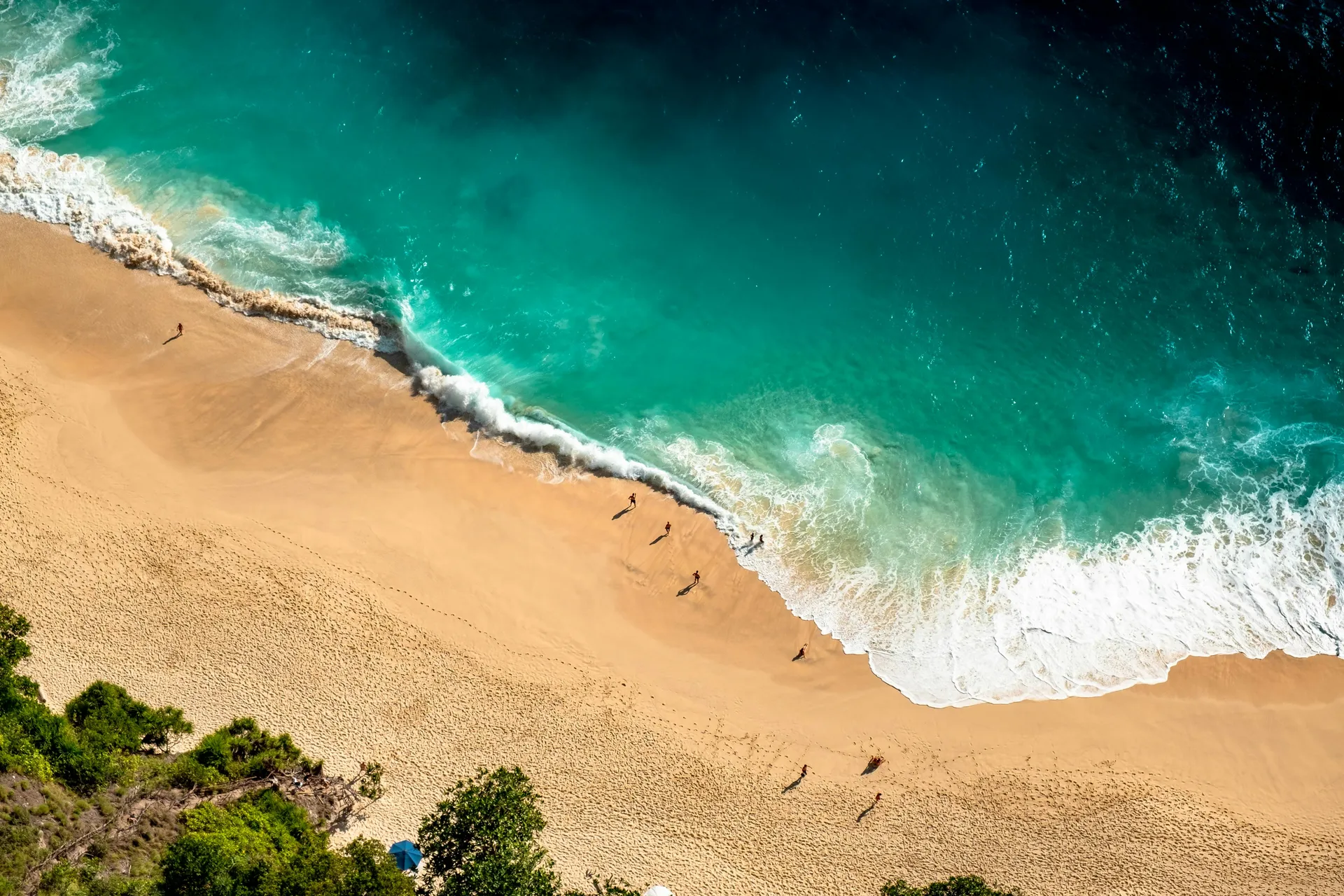
Beyond the cultural interior, Bali's coastlines and volcanic highlands offer extraordinary natural diversity. The Uluwatu Temple, perched on a sheer cliff above the Indian Ocean, hosts sunset kecak dance performances against a backdrop of crashing surf and infinite horizon. Mount Agung, the island's highest peak at 3,031 meters and its most sacred mountain, dominates the eastern skyline and can be climbed (conditions permitting) for sunrise views that encompass the entire island and neighboring Lombok. The dive sites around Nusa Penida—the manta ray cleaning station at Manta Point, the crystal-clear waters of Crystal Bay—are world-class. The black volcanic sand beaches of Amed on the northeast coast offer snorkeling directly from shore over the wreck of a Japanese freighter from World War II, now transformed into a coral garden of remarkable beauty.
Celebrity Cruises, Holland America Line, P&O Cruises, Princess Cruises, Silversea, and Viking all call at Benoa port on Bali's southeastern coast. The port is well-equipped with modern facilities and is conveniently located for excursions to both the southern beach areas and the interior cultural sites. The dry season from April through October is the ideal time to visit, with lower humidity, minimal rainfall, and comfortable temperatures around 27–30°C. The wet season (November–March) brings afternoon downpours but also lush greenery and fewer crowds. Bali's enduring magic lies not in any single attraction but in the cumulative effect of a culture that has elevated beauty and devotion to the organizing principles of daily life—an island where the extraordinary has, through centuries of practice, become ordinary.