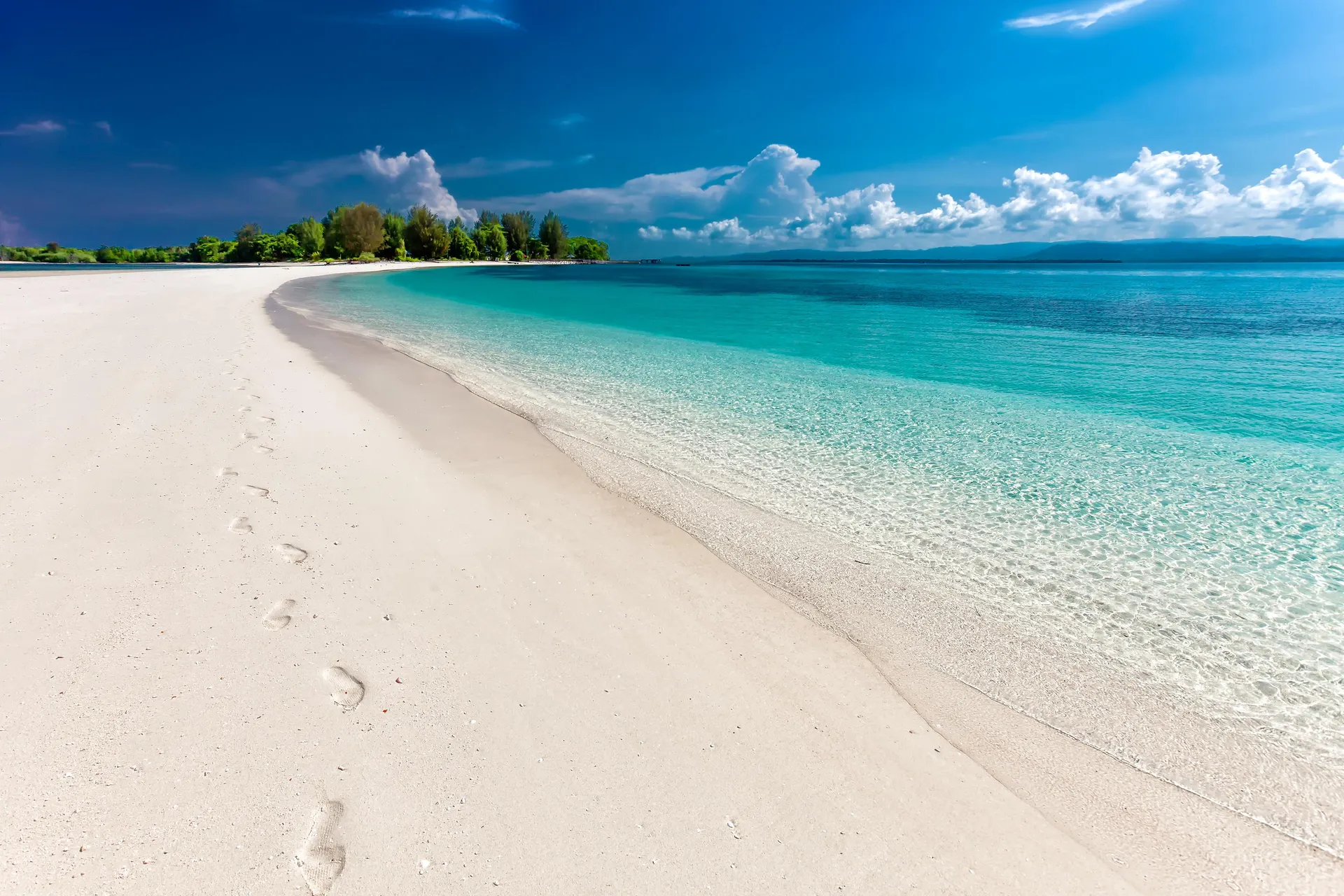
In the far eastern reaches of Indonesia's Maluku province, where the archipelago begins its transition toward the Melanesian world of Papua, the Kai Islands rise from the Banda Sea with beaches so white, water so clear, and reefs so pristine that early European sailors described them as the most beautiful islands they had ever seen. Modern visitors, arriving in these remote waters after days at sea, frequently reach the same conclusion — the Kai Islands possess a natural beauty that is almost hallucinatory in its perfection.
Pasir Panjang on Kei Kecil (Small Kai Island) is the beach that defines the archipelago's reputation — an unbroken sweep of powder-white sand stretching for over three kilometers along a coast of crystal-clear, turquoise water backed by coconut palms and tropical forest. Unlike the famous beaches of Southeast Asia's tourist centers, Pasir Panjang remains virtually deserted, its only regular visitors the local fishermen who pull their outrigger canoes onto the sand at the end of the day's work. The absence of resort development, vendors, and crowds creates an experience of tropical beach perfection that has become vanishingly rare in the modern world.
The Kai Islands' cultural landscape is as distinctive as its natural beauty. The population, a mix of indigenous Melanesian, Malay, and mixed heritage, maintains a social structure organized around the mel-mel system — a complex web of reciprocal obligations that governs trade, marriage, and conflict resolution between clans. Traditional wooden boats, their hulls decorated with intricate carvings, are still built using techniques passed down through generations. The islands' religious diversity — Catholic, Protestant, and Muslim communities coexisting peacefully — reflects the complex history of trade, colonialism, and cultural exchange that has shaped eastern Indonesia.
The marine environment surrounding the Kai Islands benefits from the nutrient-rich currents that flow through the Banda Sea, creating conditions for exceptional coral growth and fish diversity. The reefs around Pulau Tayando and the smaller offshore islets are particularly impressive, with walls of soft coral descending into deep blue water where pelagic species patrol the edge of the continental shelf. Dugongs inhabit the seagrass meadows of the shallower bays, and hawksbill turtles nest on the more remote beaches.
Expedition cruise ships anchor in the sheltered waters off Kei Kecil's western coast, with tenders providing access to beaches and village landing sites. The town of Tual, the administrative center on the adjacent island of Dullah, offers basic services and a lively market. The dry season from October through March generally offers the calmest seas and best conditions for reef activities, though the Kai Islands' position in the transition zone between Pacific and Indian Ocean weather systems means that conditions can be less predictable than in western Indonesia. The journey to reach the Kai Islands is long — they lie over 2,000 kilometers east of Java — but their extraordinary beauty and cultural richness reward every nautical mile of the voyage.

