At the southwestern tip of Timor, Indonesia's easternmost major island, Kupang is a sun-baked port city that sits at the crossroads of Indonesian and Melanesian cultural worlds. As the capital of East Nusa Tenggara province, this city of roughly 450,000 inhabitants serves as the administrative and commercial hub for one of Indonesia's most culturally diverse and geographically remote regions — a place where ancient ikat weaving traditions persist alongside modern urban life, and the landscapes range from parched savanna to pristine coral reef.
Kupang's most famous historical connection involves one of the greatest feats of maritime survival ever recorded. It was here, in June 1789, that Captain William Bligh and eighteen loyal crew members arrived after a 47-day, 6,700-kilometer journey in an open longboat following the mutiny on HMS Bounty. A modest monument near the waterfront commemorates their arrival, though the city's own residents are more likely to direct visitors to Kupang's vibrant traditional markets and the beautifully woven ikat textiles that represent the region's most celebrated artistic tradition.
The ikat weaving of West Timor and the surrounding islands is among the finest in Indonesia — and indeed in the world. Each district and ethnic group produces textiles of distinctive patterns and colors, their motifs encoding clan identity, spiritual beliefs, and social status in a visual language that has been transmitted through generations of women weavers. The Oesapa market in Kupang displays textiles from across the province, and visits to weaving villages in the surrounding countryside offer the opportunity to watch the painstaking process of natural dyeing and hand-weaving that produces these extraordinary fabrics.
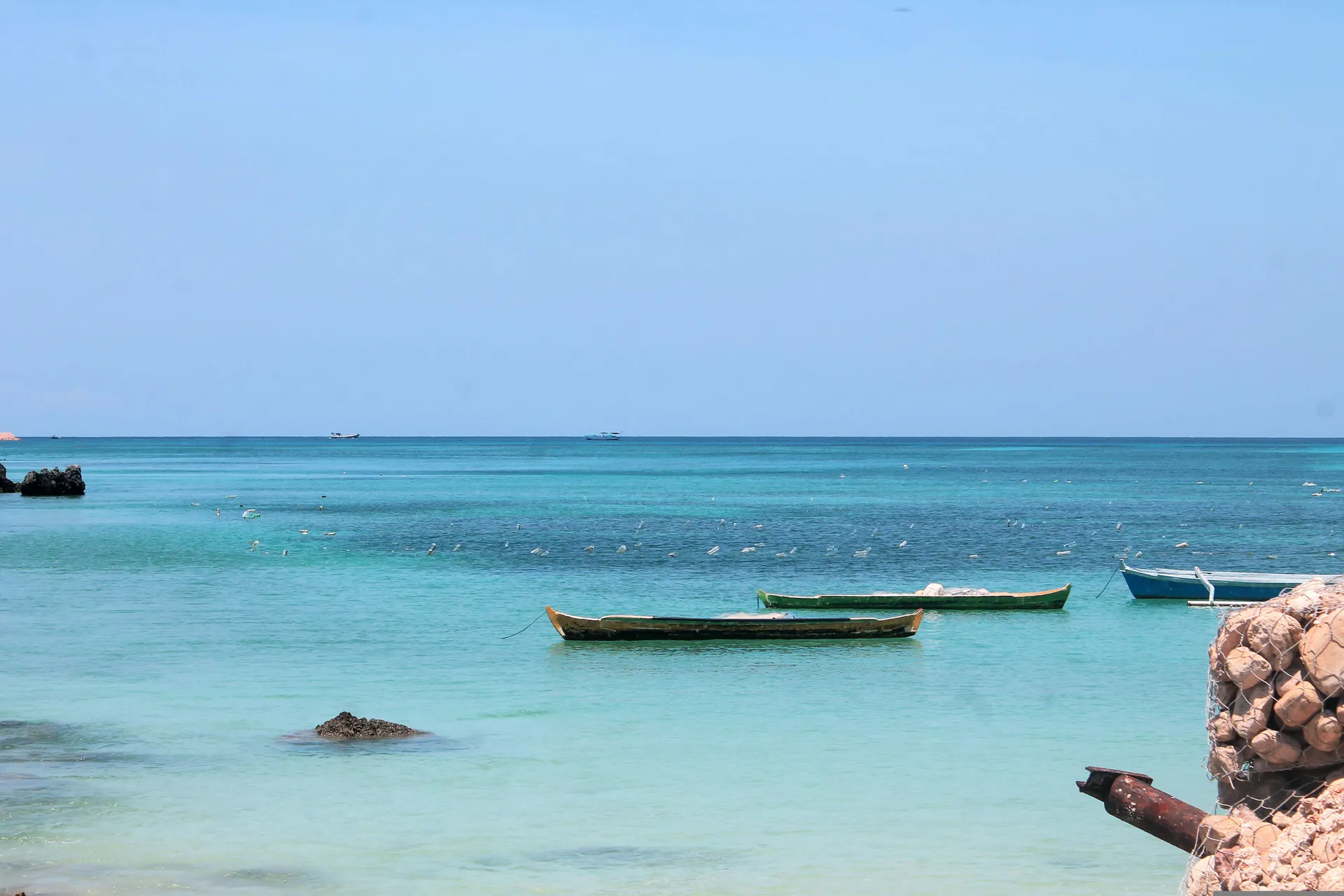
The natural environment around Kupang combines dry-tropical landscapes with surprisingly rich marine habitats. Tablolong Beach, west of the city, offers snorkeling over coral gardens inhabited by a diversity of tropical fish. Crystal Cave (Gua Kristal) near Bolok features an underground pool of remarkably clear freshwater. The offshore islands of Semau and Rote — the latter sometimes called the southernmost point of Indonesia — provide white-sand beaches and excellent surfing conditions that have earned growing international attention while remaining blissfully uncrowded.
Kupang's Eltari Airport and Tenau Port provide the primary access points for this region. Cruise ships dock at Tenau Port, approximately fifteen kilometers from the city center. The climate is distinctly tropical dry, with a pronounced dry season from May through November bringing clear skies and comfortable humidity. The wet season from December through April brings afternoon thunderstorms but also greener landscapes and fewer visitors. Kupang functions best as a gateway — to the ikat villages, to Rote's surf breaks, to the ancient kingdoms of West Timor — and rewards visitors who use it as a launching point for deeper exploration of this fascinating and little-known corner of Indonesia.

