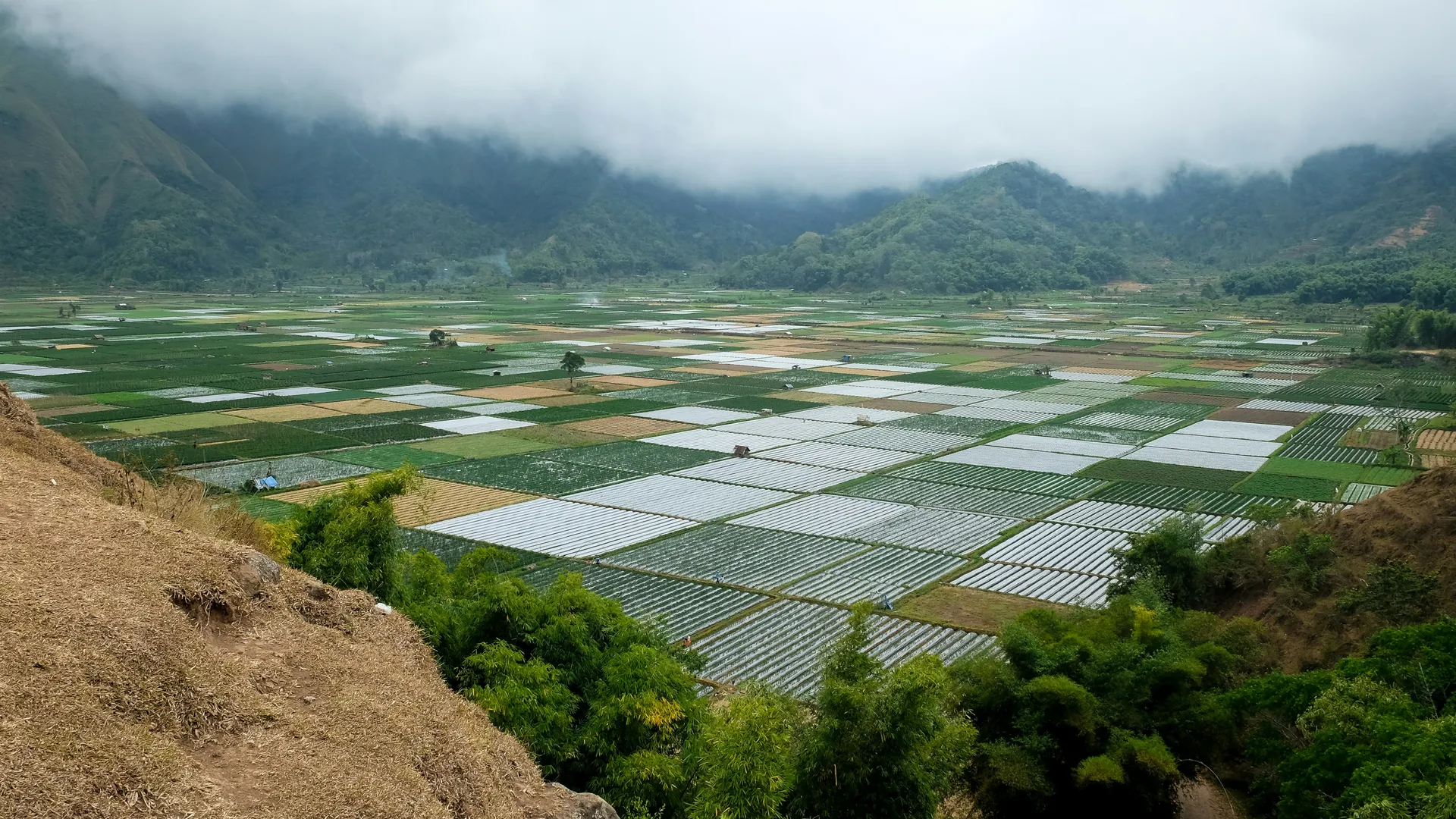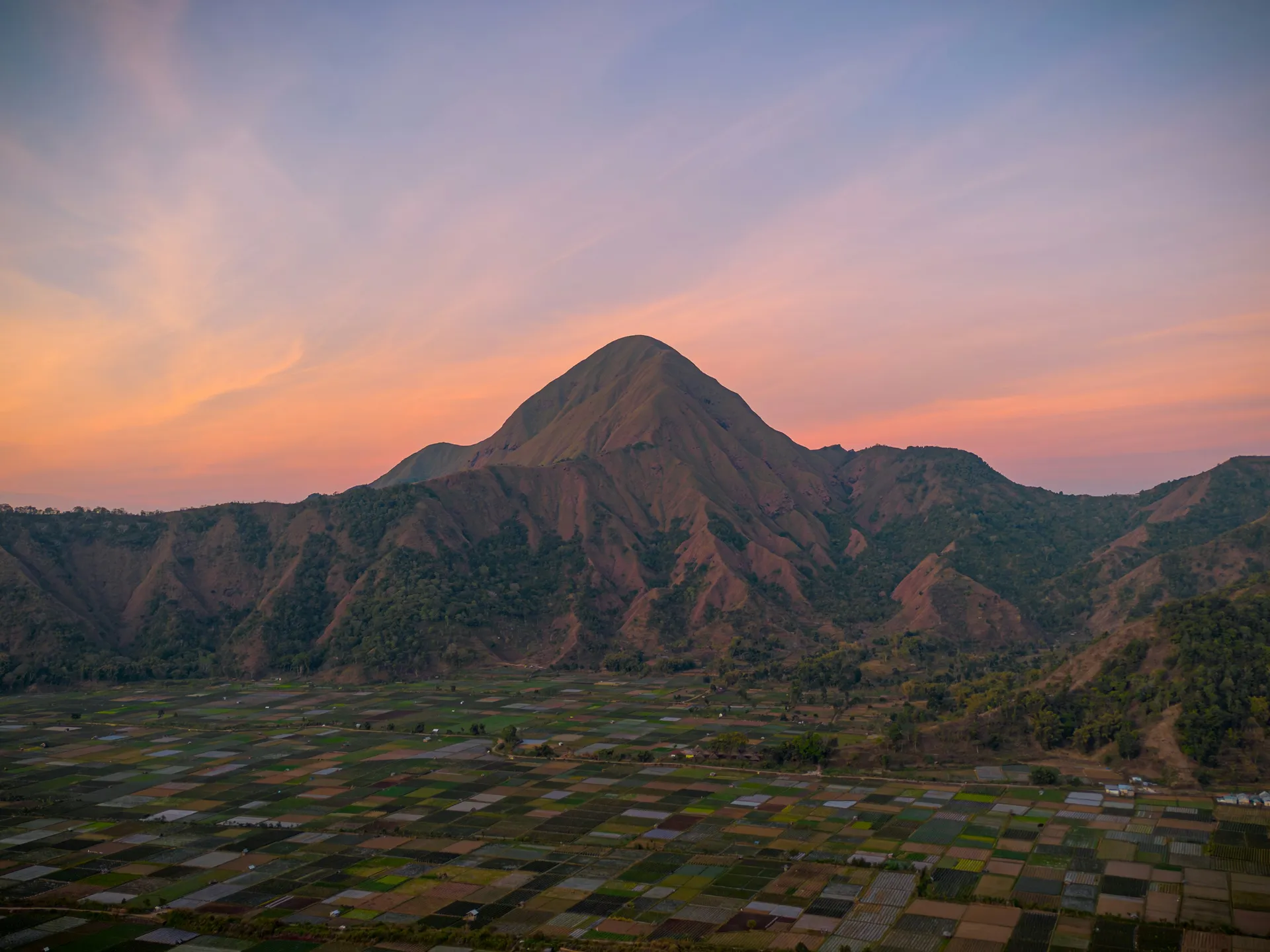
Lombok has been called "Bali thirty years ago," and while the comparison is reductive, it contains a kernel of truth that draws travellers seeking the Indonesia they imagined before the resort complexes, the traffic jams, and the Instagram influencers arrived. Separated from Bali by the 35-kilometre Lombok Strait — a deep channel that marks the Wallace Line, the biogeographic boundary between Asian and Australasian fauna — Lombok is geologically and culturally distinct from its famous neighbour. The island is dominated by Mount Rinjani, Indonesia's second-highest volcano at 3,726 metres, whose caldera lake of startling emerald fills a crater that the indigenous Sasak people regard as the dwelling place of God.
The Sasak, who comprise 85 percent of Lombok's population, are predominantly Muslim — a distinction from Hindu Bali that shapes the island's character, rhythm, and cuisine. Sasak villages, particularly in the traditional communities of Sade and Rambitan in the south, preserve a vernacular architecture of thatched rice-barn houses (lumbung) raised on wooden pillars, their communal layout reflecting social structures that have endured for centuries. The weaving tradition of the Sasak is one of the finest in Indonesia — intricate songket textiles, woven with gold and silver threads on backstrap looms, are produced in the village of Sukarara, where visitors can watch the weavers at work and purchase directly from the artisans.
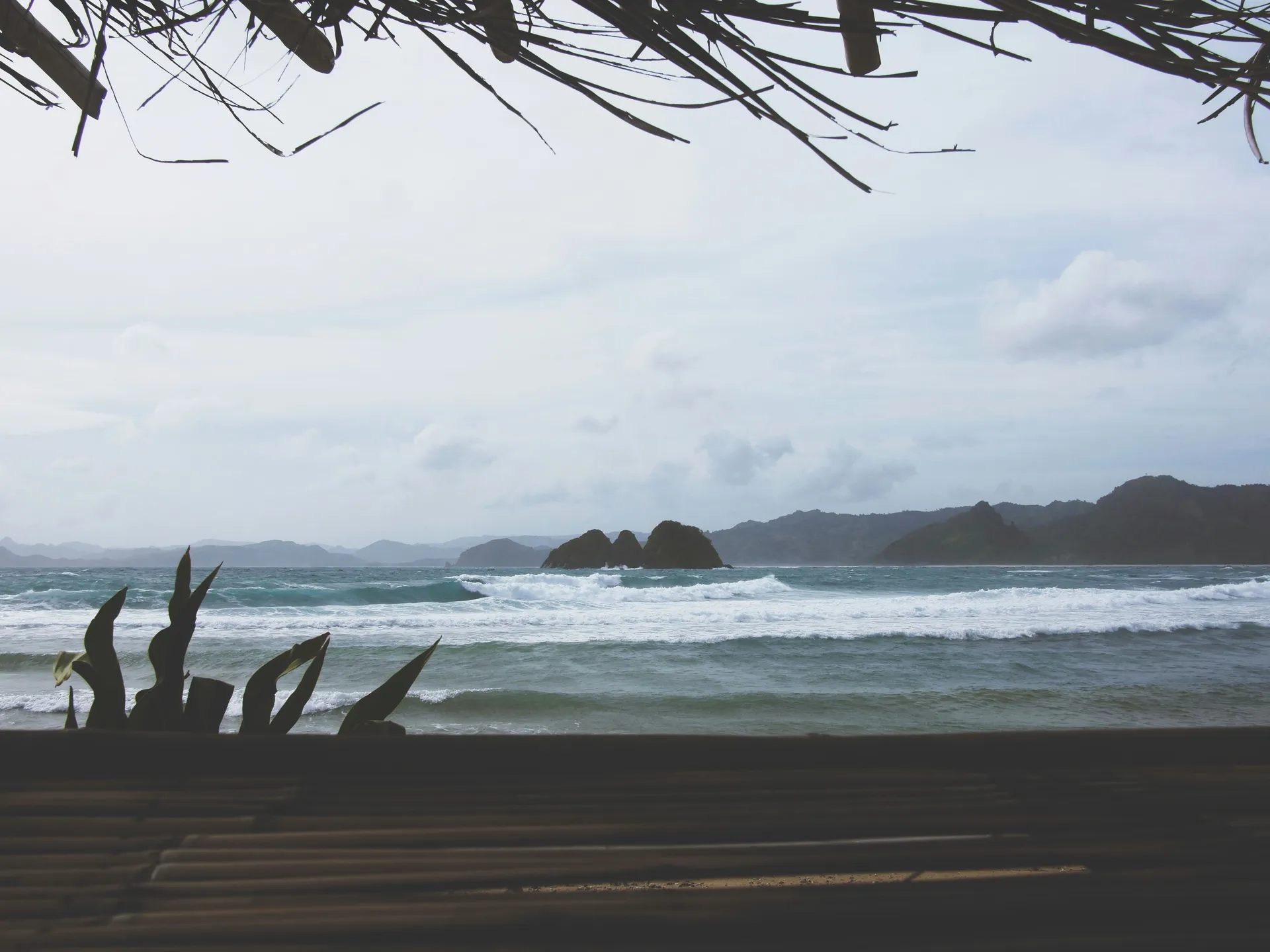
Lombok's culinary identity is bold, spice-driven, and distinctly different from Balinese cuisine. Ayam taliwang — grilled chicken marinated in a ferocious paste of chili, shrimp paste, and garlic, then charred over coconut-husk embers — is the island's signature dish, its incendiary heat moderated only slightly by the accompanying plecing kangkung (water spinach in sambal). Sate pusut, minced fish or meat pressed onto lemongrass skewers and grilled, offers a more approachable introduction to Sasak flavours, while nasi balap puyung — rice served with shredded chicken, beans, and sambal — is the island's beloved workday lunch. The beachside warungs of Kuta (Lombok's Kuta, not Bali's) serve fresh-caught fish grilled on the sand as the Indian Ocean surf crashes on pristine, largely empty beaches.
The southern coast of Lombok is where the island's tourism potential becomes most apparent. A series of white-sand beaches — Tanjung Aan, Mawun, and Selong Belanak — offer surf breaks, swimming coves, and the kind of undeveloped coastal beauty that Bali's Kuta Beach possessed decades ago. Offshore, the Gili Islands — Gili Trawangan, Gili Meno, and Gili Air — provide car-free, bicycle-and-cidomo island life surrounded by coral reefs where sea turtles are so common that snorkelling without seeing one would be remarkable. The ascent of Mount Rinjani, a three-day trek through tropical forest, savanna, and volcanic scree to the crater rim, is one of Southeast Asia's great hiking challenges, rewarding summit-standers with a 360-degree view encompassing Bali's Agung, Sumbawa's Tambora, and the Java Sea stretching to the horizon.
Lombok is visited by Seabourn, Silversea, and Viking on Indonesian archipelago itineraries, with ships anchoring at Lembar port or offshore at Senggigi. The dry season from May through October offers the best weather for both beach activities and Rinjani trekking, with July and August being the driest months. The Bau Nyale sea worm festival in February or March, a uniquely Sasak celebration combining ocean harvesting with traditional poetry recitation, adds cultural richness to a shoulder-season visit.