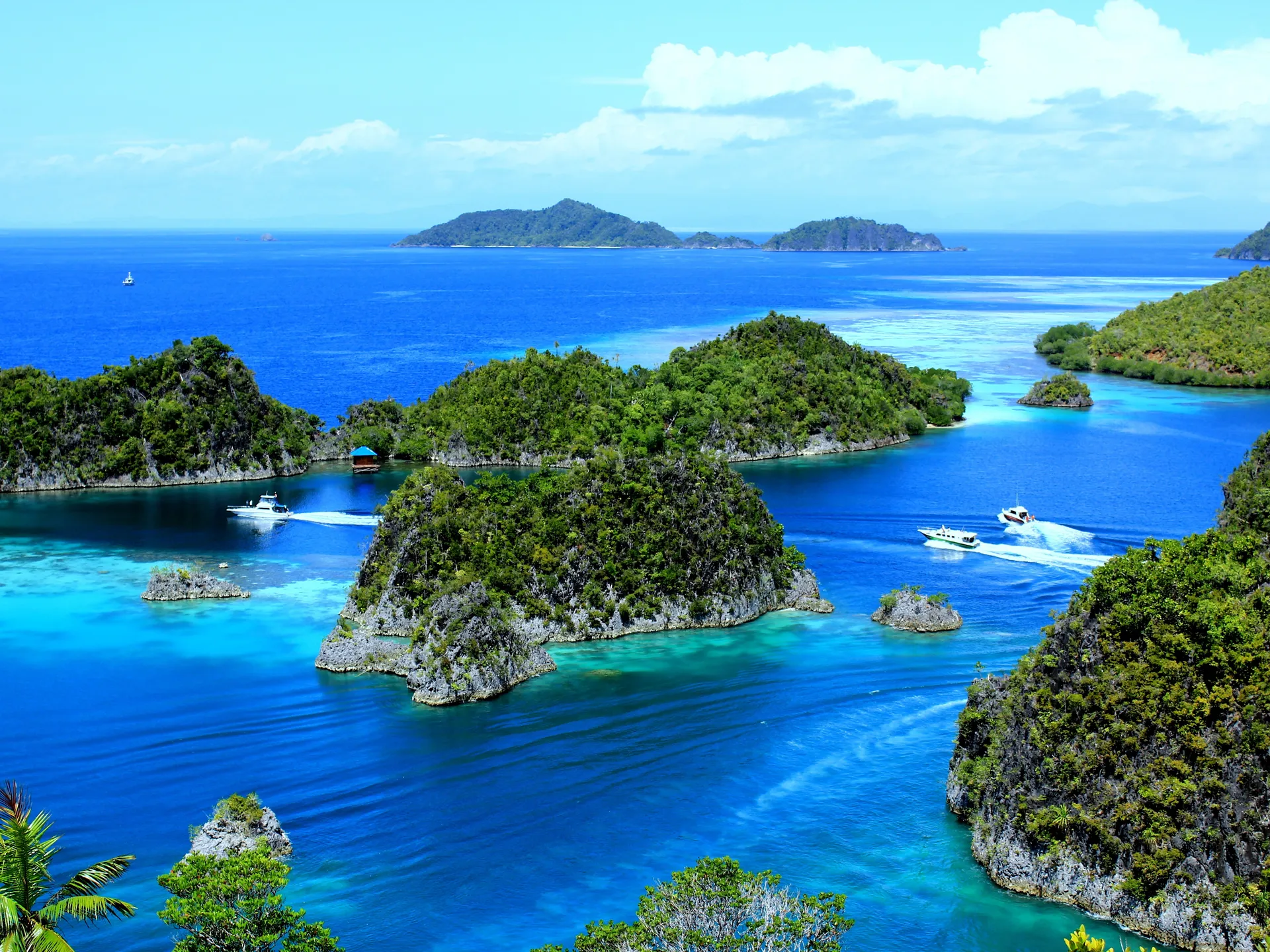
Raja Ampat—the "Four Kings"—is the marine epicenter of life on Earth. This archipelago of over 1,500 islands, cays, and shoals off the northwestern tip of New Guinea contains the highest recorded concentration of marine species of any comparable area on the planet, a fact that has been confirmed by successive scientific expeditions and that continues to astonish marine biologists with each new census. Within Raja Ampat's 40,000 square kilometers of marine area, scientists have documented over 1,600 species of reef fish, 600 species of hard coral, and 700 species of mollusk—numbers that outstrip any other marine environment on Earth.
The archipelago's four main islands—Waigeo, Batanta, Salawati, and Misool—create a complex geography of channels, straits, and sheltered bays through which powerful ocean currents flow, bringing nutrients and larvae from both the Pacific and Indian Oceans. This current dynamic, combined with the region's geological position at the confluence of several tectonic plates, has created conditions for speciation—the creation of new species—that have been operating for millions of years, producing the staggering biodiversity that earns Raja Ampat its title as the Coral Triangle's crown jewel.
Diving in Raja Ampat is an experience that defies the usual categories of underwater exploration. Misool's karst limestone islands, rising from the sea in mushroom-shaped towers and arches, create underwater seascapes of surreal beauty—swim-throughs, caverns, and vertical walls encrusted with soft corals in colors that range from cotton-candy pink to electric purple. The currents in passages like the Dampier Strait bring cleaning-station encounters with oceanic manta rays whose three-meter wingspans create momentary eclipses as they pass overhead. At night, the reefs come alive with walking sharks, cuttlefish, and the nocturnal crustaceans that emerge from every crevice to feed.
The terrestrial environment of Raja Ampat is scarcely less remarkable. The forests of Waigeo and Batanta are home to two species of bird-of-paradise—the red and Wilson's—whose courtship displays represent some of the most elaborate and beautiful behavioral repertoires in the animal kingdom. Wilson's bird-of-paradise, with its vivid blue head, emerald breast, and spiraling tail feathers, performs its display on a carefully cleared forest floor, and witnessing this performance—typically at dawn in remote forest locations—is one of the rarest and most rewarding wildlife experiences available anywhere.
Expedition cruise ships and liveaboard dive vessels are the primary means of exploring Raja Ampat, departing from Sorong on the Bird's Head Peninsula. The diving season runs year-round, with October through April offering the best combination of calm seas, warm water, and excellent visibility. Manta ray encounters peak between November and April at certain sites, while the dry season from September through November provides the clearest conditions for both underwater photography and bird-of-paradise viewing. The remoteness of the archipelago—no direct international flights, limited infrastructure—ensures that visitor numbers remain manageable and the marine environment retains the pristine condition that makes it the underwater destination against which all others are measured.

