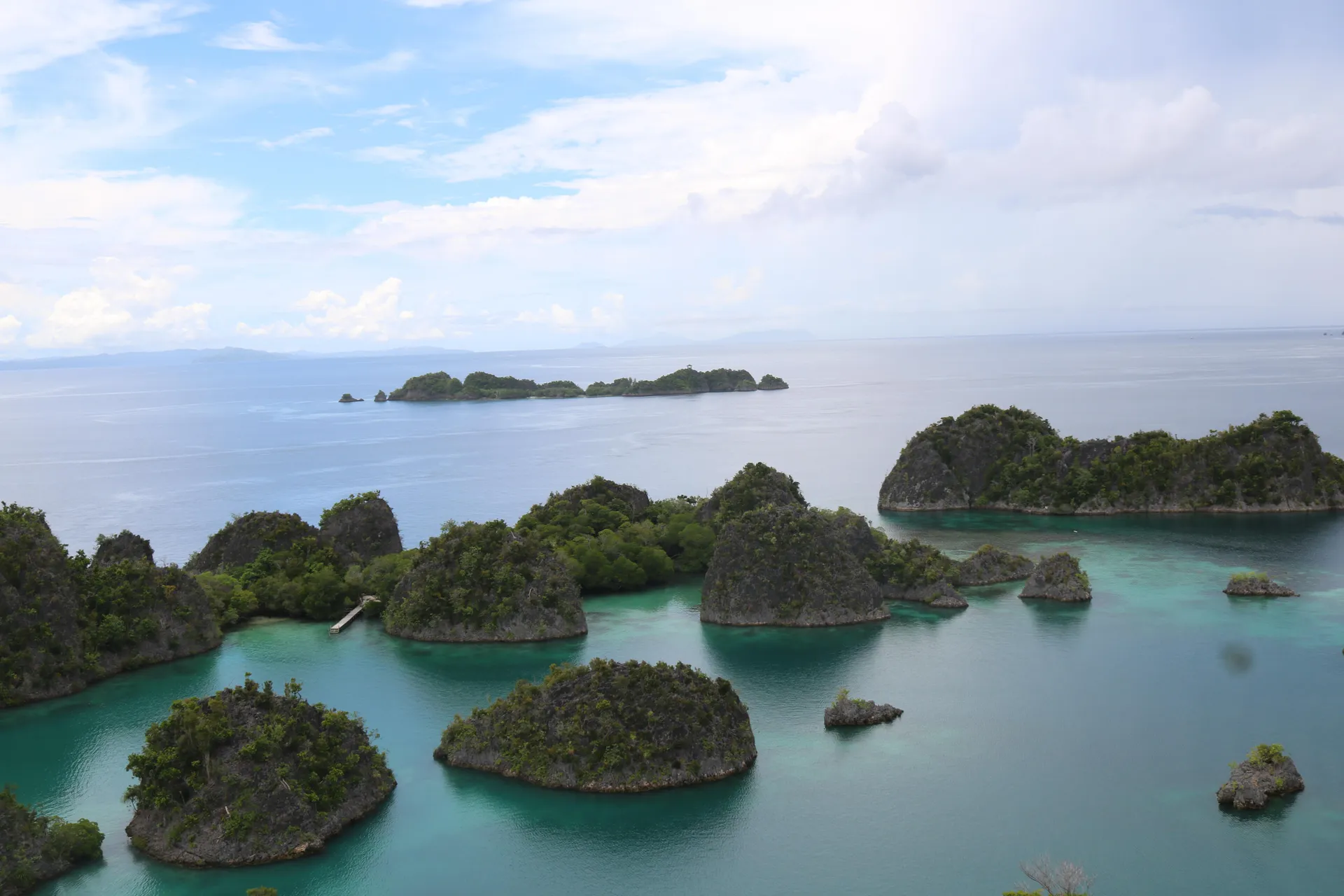
In the remote Kaimana Regency of West Papua, where the Bird's Head Peninsula meets the body of New Guinea, Triton Bay opens onto the Arafura Sea — a vast, sheltered body of water that has emerged in recent years as one of the world's most exciting underwater frontiers. The bay's combination of nutrient-rich upwelling, limited fishing pressure, and extreme remoteness has created marine conditions of almost absurd richness, with reef diversity and fish biomass that challenge even the legendary waters of Raja Ampat to the northwest.
The underwater landscape of Triton Bay is defined by its distinctive characteristics. Soft coral gardens of spectacular beauty cascade down walls and pinnacles in colors ranging from electric purple to vivid orange. Massive schools of fusiliers, surgeonfish, and baitfish create living curtains of movement that dim the available light. But Triton Bay's most famous attraction is its whale sharks — the world's largest fish, which congregate here year-round around the bagan (floating fishing platforms) where local fishermen attract and catch small baitfish using lights. The whale sharks have learned to associate the bagans with easy feeding, and snorkeling alongside these gentle, spotted giants as they vacuum up tiny fish beneath the platforms is one of the most extraordinary wildlife encounters available anywhere on Earth.
The bay's cultural landscape adds depth to its natural wealth. The Kamoro and Koiwai peoples of the coast maintain traditional ways of life that include some of the most elaborate woodcarving traditions in Papua. The rock art sites discovered around the bay — ancient paintings depicting hands, fish, and geometric patterns on limestone cliff faces — suggest human habitation dating back thousands of years. The coastal villages, accessible by small boat from the bay's waters, offer cultural encounters of genuine authenticity in a region where tourism remains a novelty rather than an industry.
The surrounding landscape is characteristically Papuan — dense lowland rainforest rising from mangrove-fringed shores to limestone karst formations of dramatic verticality. The birdlife is extraordinary, with numerous species of kingfisher, hornbill, and parrot inhabiting the forest canopy, and the region lies within the range of several bird of paradise species whose elaborate displays represent one of evolution's most spectacular achievements.
Triton Bay is accessible by liveaboard dive boat or expedition cruise vessel, with the nearest airport at Kaimana receiving flights from Ambon and other regional cities. The bay's remote location means that infrastructure is minimal and logistics require careful planning. The best conditions for diving and snorkeling generally occur from October through April, when seas are calmest and visibility at its best. The whale sharks are present year-round, though their concentration around the bagans can vary. The combination of world-class marine biodiversity, unique whale shark encounters, and virtually unexplored cultural heritage makes Triton Bay one of the most compelling frontier destinations in all of expedition cruising.

