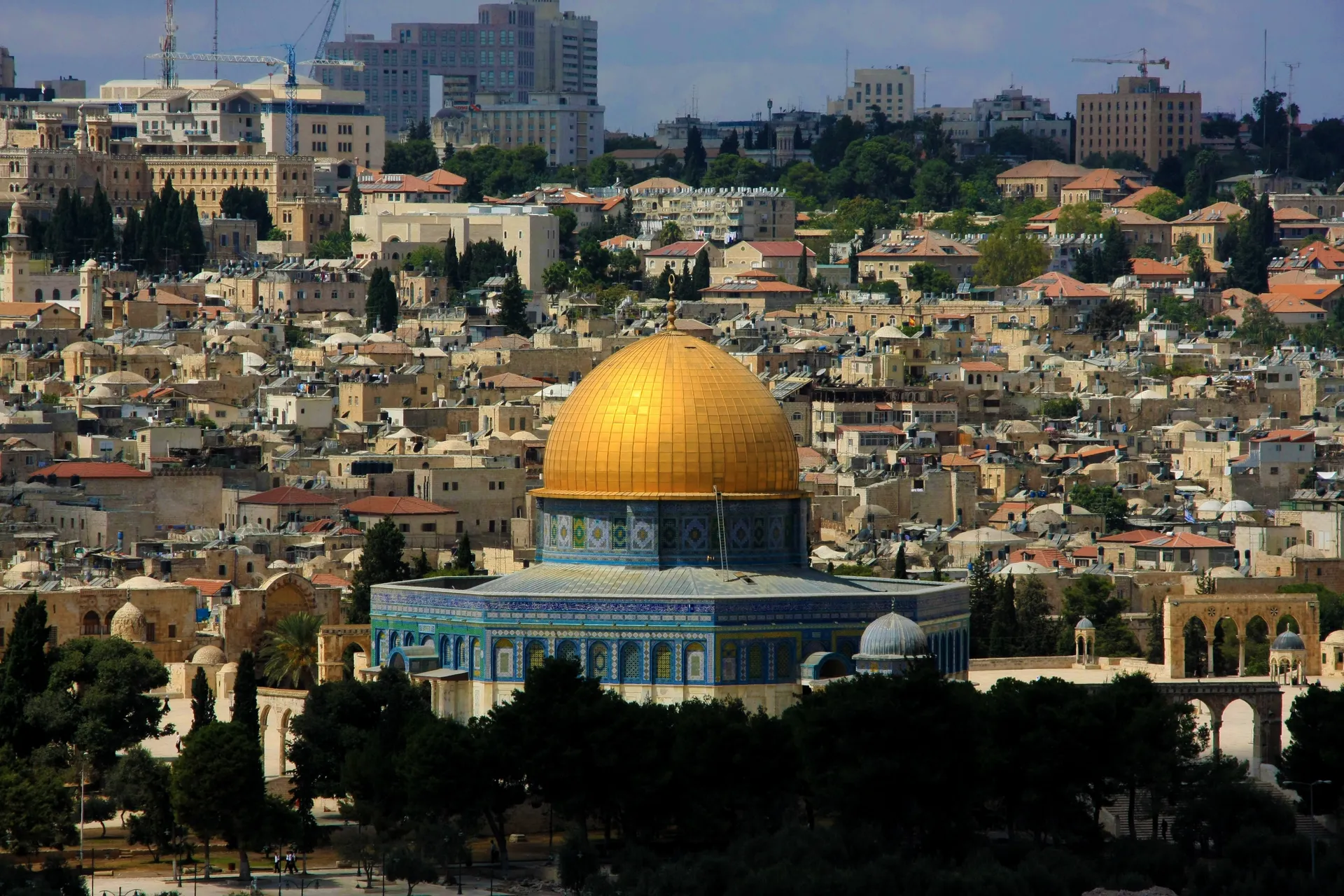
There is no city on Earth that carries the spiritual weight of Jerusalem. Sacred to three of the world's great monotheistic faiths, contested for three millennia, destroyed and rebuilt countless times, this ancient city in the Judean Hills continues to exert a gravitational pull on the human imagination that transcends politics, history, and geography. To walk its streets is to walk through layers of devotion, conflict, and hope that have accumulated over three thousand years of continuous habitation.
The Old City, enclosed within sixteenth-century Ottoman walls measuring barely one square kilometer, contains a concentration of sacred sites unmatched anywhere on Earth. The Western Wall — the last remnant of the Second Temple, destroyed by the Romans in 70 CE — draws Jewish worshippers who press their faces and prayers against its ancient stones. The Church of the Holy Sepulchre, built over the site where Christian tradition holds that Jesus was crucified, buried, and resurrected, resonates with the murmured devotions of pilgrims from every corner of Christendom. The Dome of the Rock, its golden cupola gleaming above the Temple Mount/Haram al-Sharif, marks the place from which Muslim tradition says the Prophet Muhammad ascended to heaven. These three sites, within a few hundred meters of each other, represent the spiritual axis of the Western world.
Beyond the sacred sites, Jerusalem is a living city of enormous vitality and complexity. The Mahane Yehuda Market — known locally as "the shuk" — pulsates with the energy of Israeli daily life: vendors hawking spices, dried fruits, fresh-baked challah, and halvah in a dozen varieties; juice stalls blending pomegranate and carrot with practiced flair; and restaurants serving everything from Yemeni soup to Moroccan fish to cutting-edge Israeli cuisine that has earned the city international gastronomic recognition. After dark, the market's shutters become canvases for street artists, and wine bars and craft cocktail establishments bring a different energy to the ancient stones.
The city's museums and cultural institutions are world-class. Yad Vashem, Israel's Holocaust memorial museum, presents the story of the six million with a narrative power and architectural sensitivity that leaves visitors profoundly moved. The Israel Museum houses the Dead Sea Scrolls — the oldest known biblical manuscripts — in the shrine-like Shrine of the Book, alongside an extensive collection of art and archaeology. The Tower of David Museum, within the Old City walls, uses cutting-edge technology to bring Jerusalem's stratified history to vivid life.
Jerusalem is typically accessed by cruise passengers from the port of Ashdod, approximately sixty kilometers to the west. The drive takes roughly ninety minutes, and a full day is the minimum required to experience even the highlights. The spring months of March through May and the autumn months of September through November offer the most comfortable temperatures (15-25°C) and the clearest skies. Summer (June-August) brings intense heat, particularly in the Old City's narrow streets, while winter (December-February) can bring cold rain and occasionally snow — a striking sight on the golden dome.

