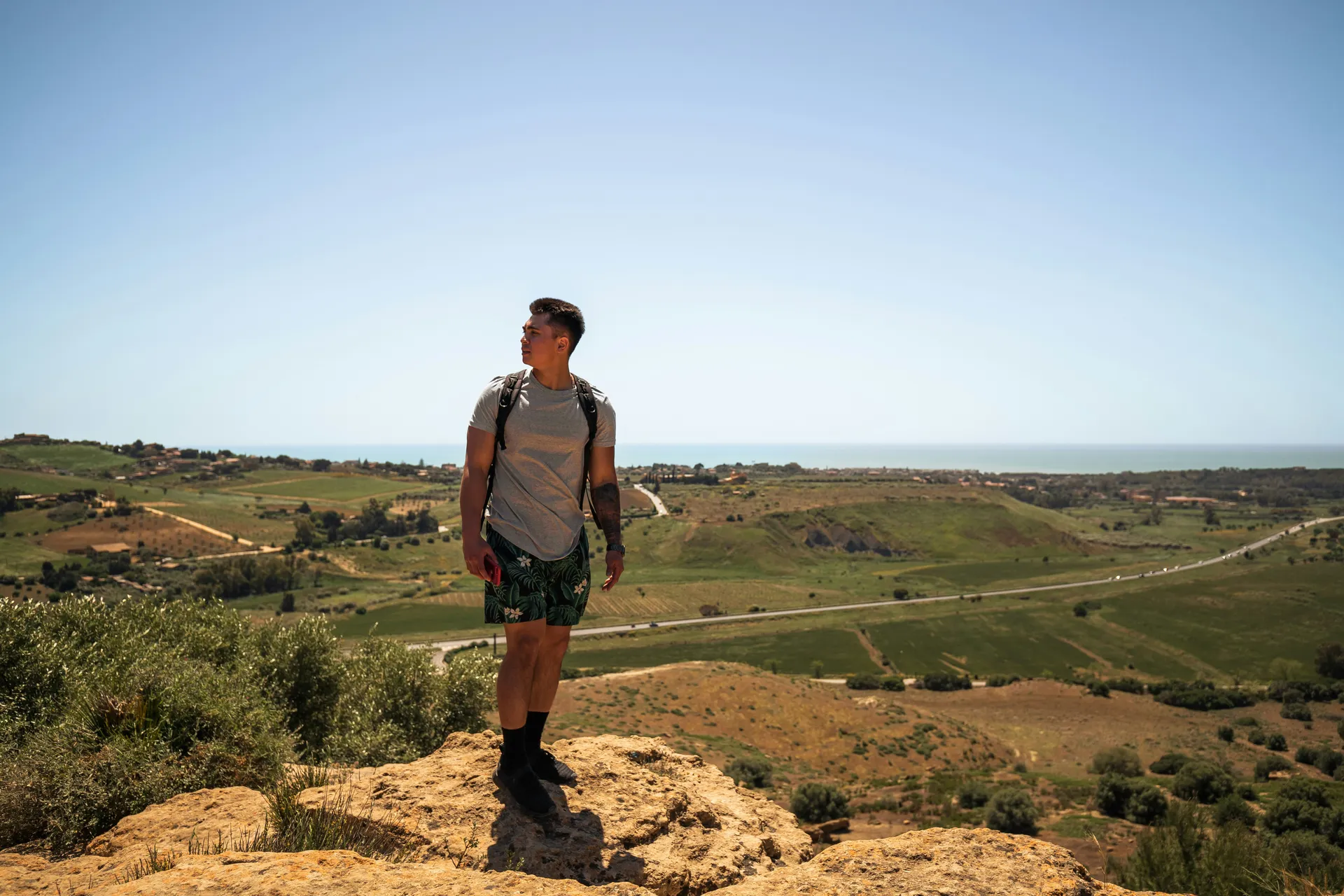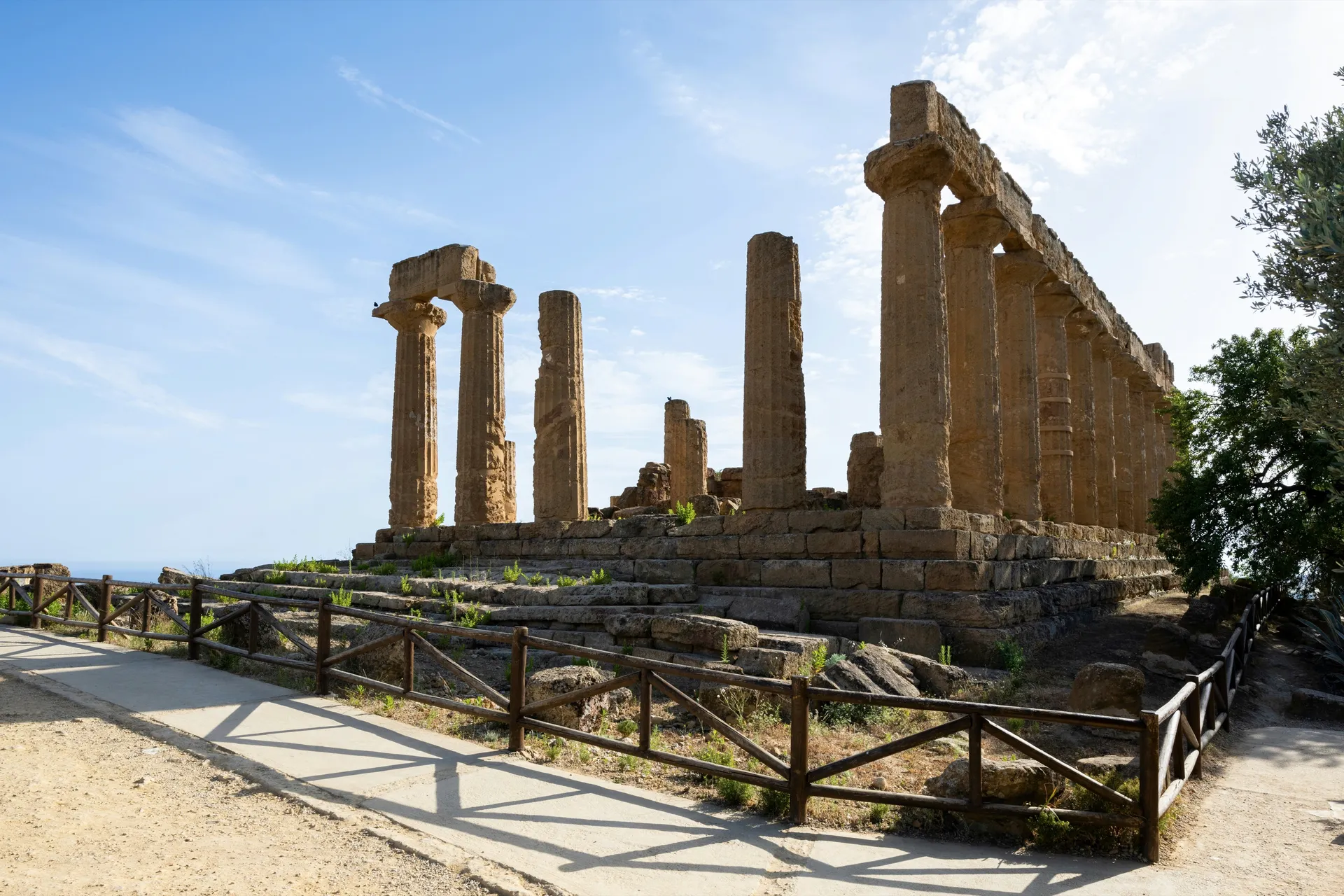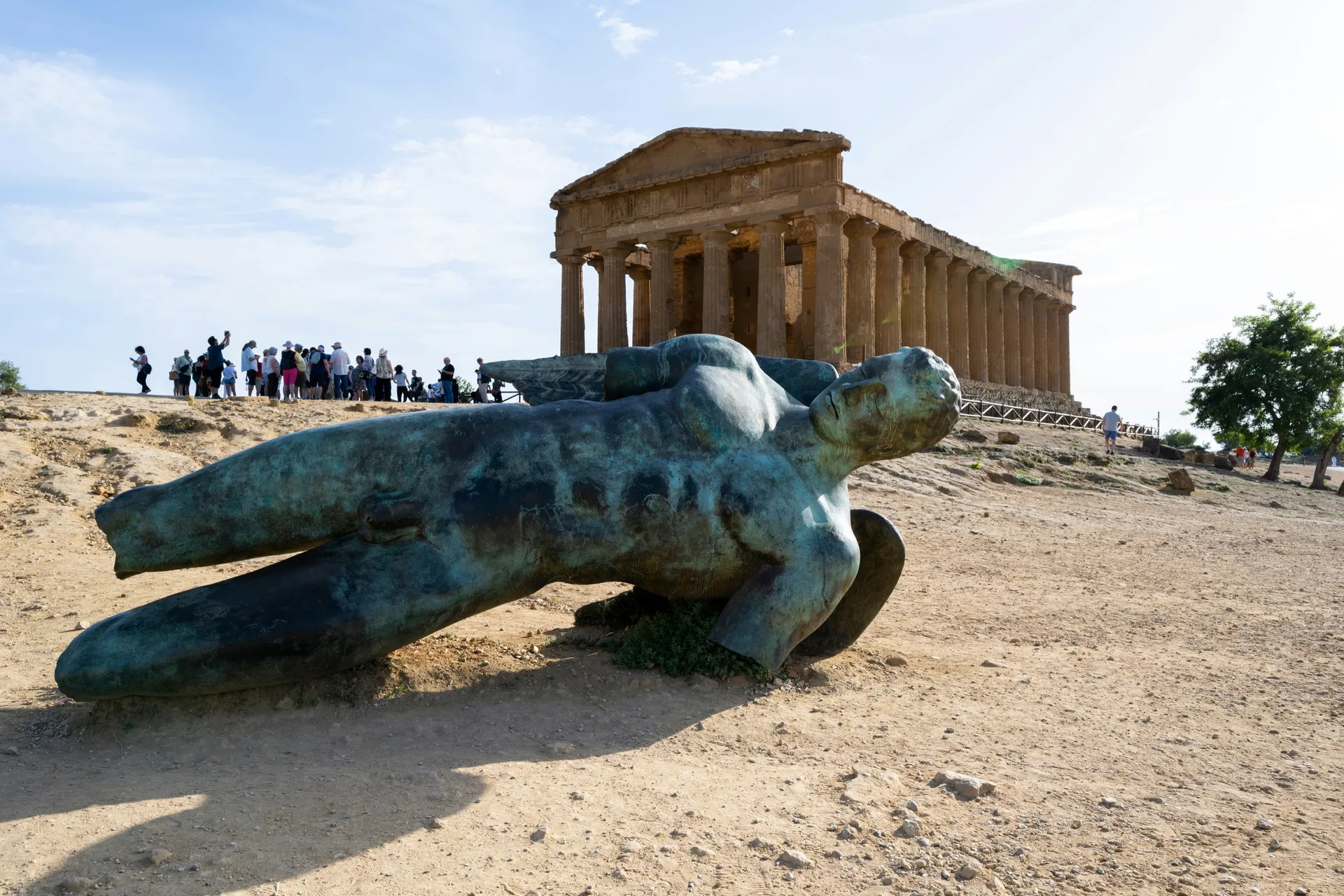
Agrigento occupies a ridge above the southern Sicilian coast, looking out over the Mediterranean toward Africa—a position that has made it a strategic prize for every civilization that has contested this sea. The ancient Greeks founded Akragas here in 582 BC, and within a century it had grown into one of the wealthiest and most powerful cities in the Greek world, with a population of over 200,000. The Valley of the Temples (Valle dei Templi), stretching along a ridge below the modern city, preserves the most complete collection of Doric temples outside mainland Greece—a UNESCO World Heritage Site that ranks among the most important archaeological sites in the Mediterranean.
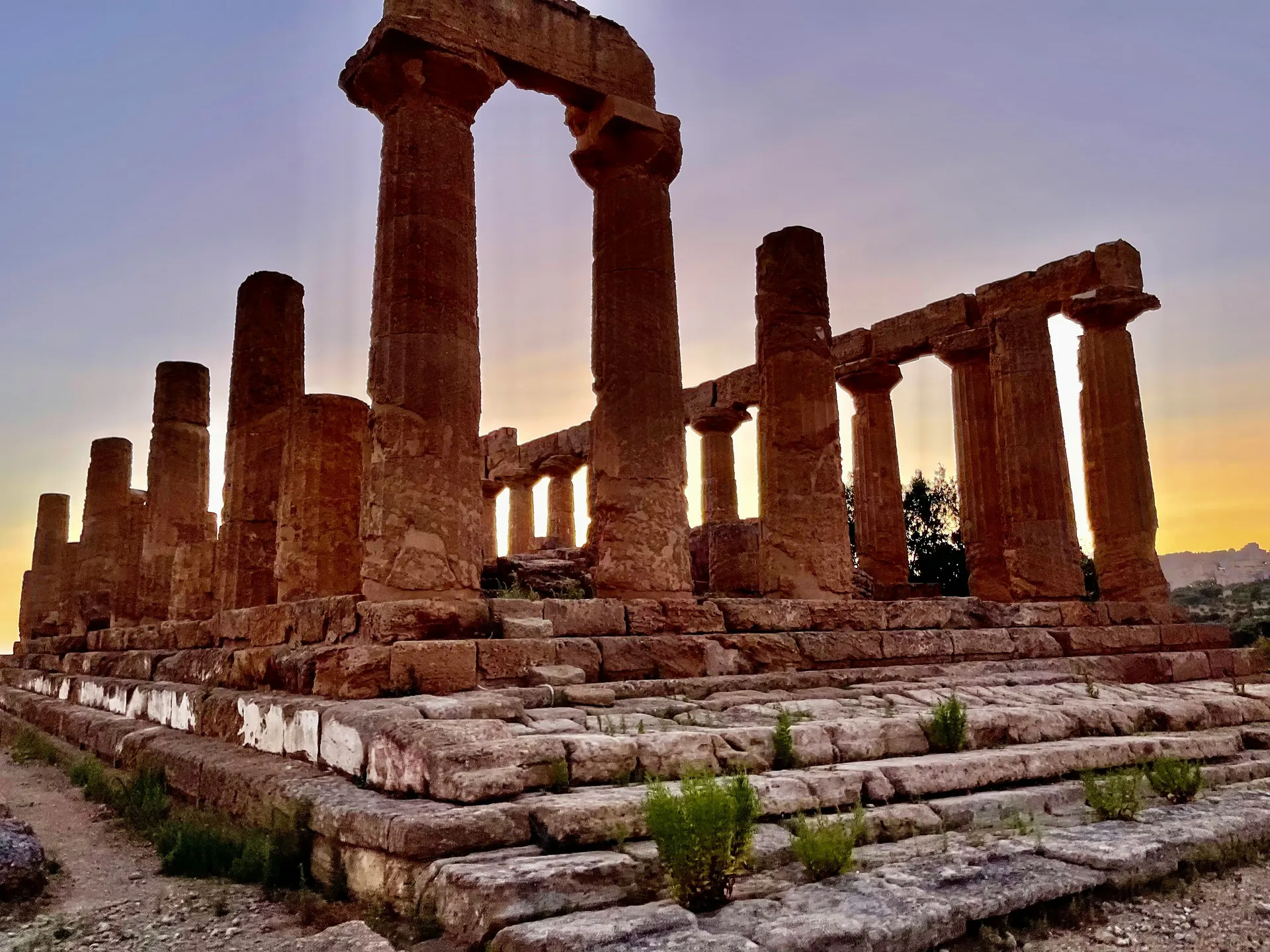
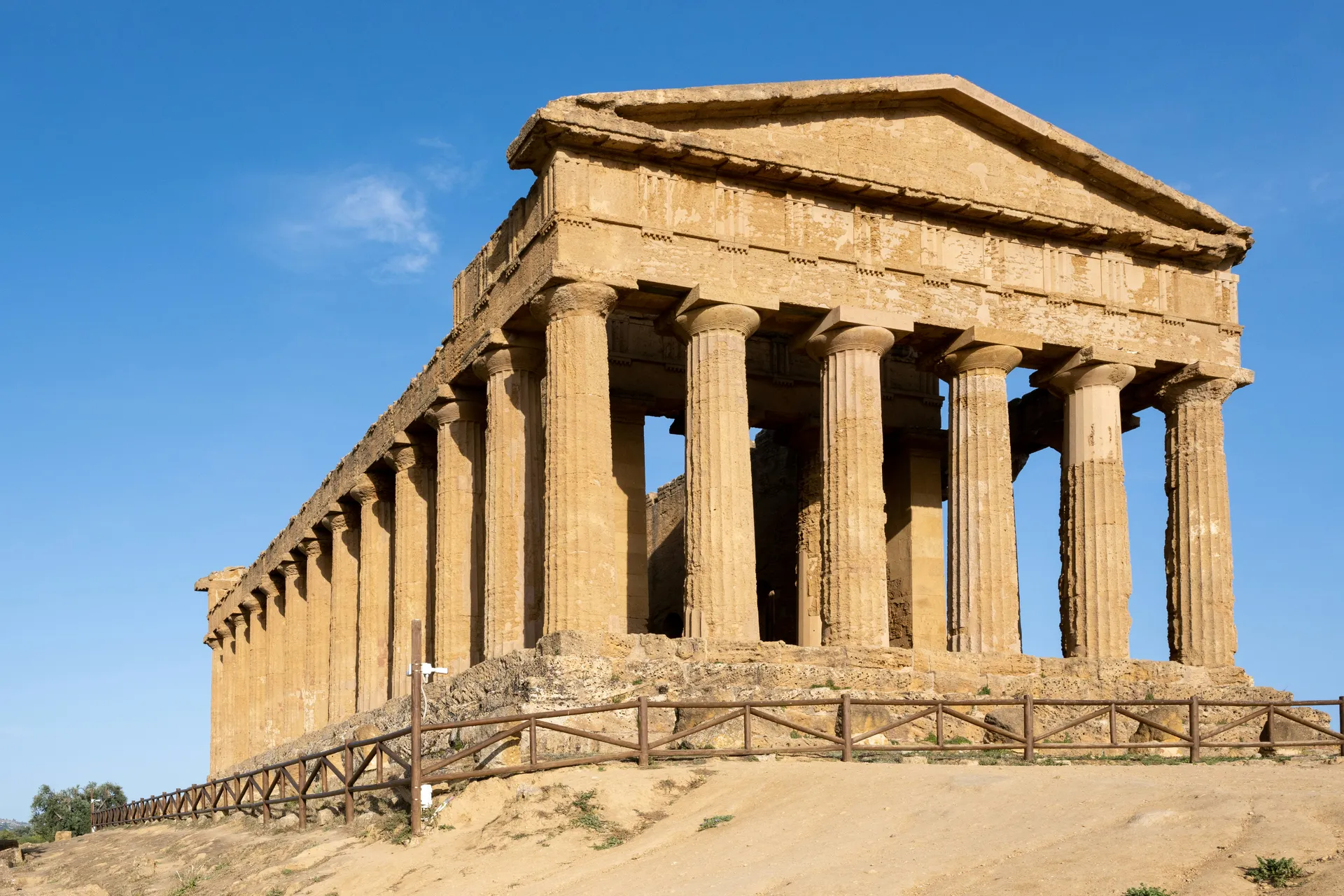
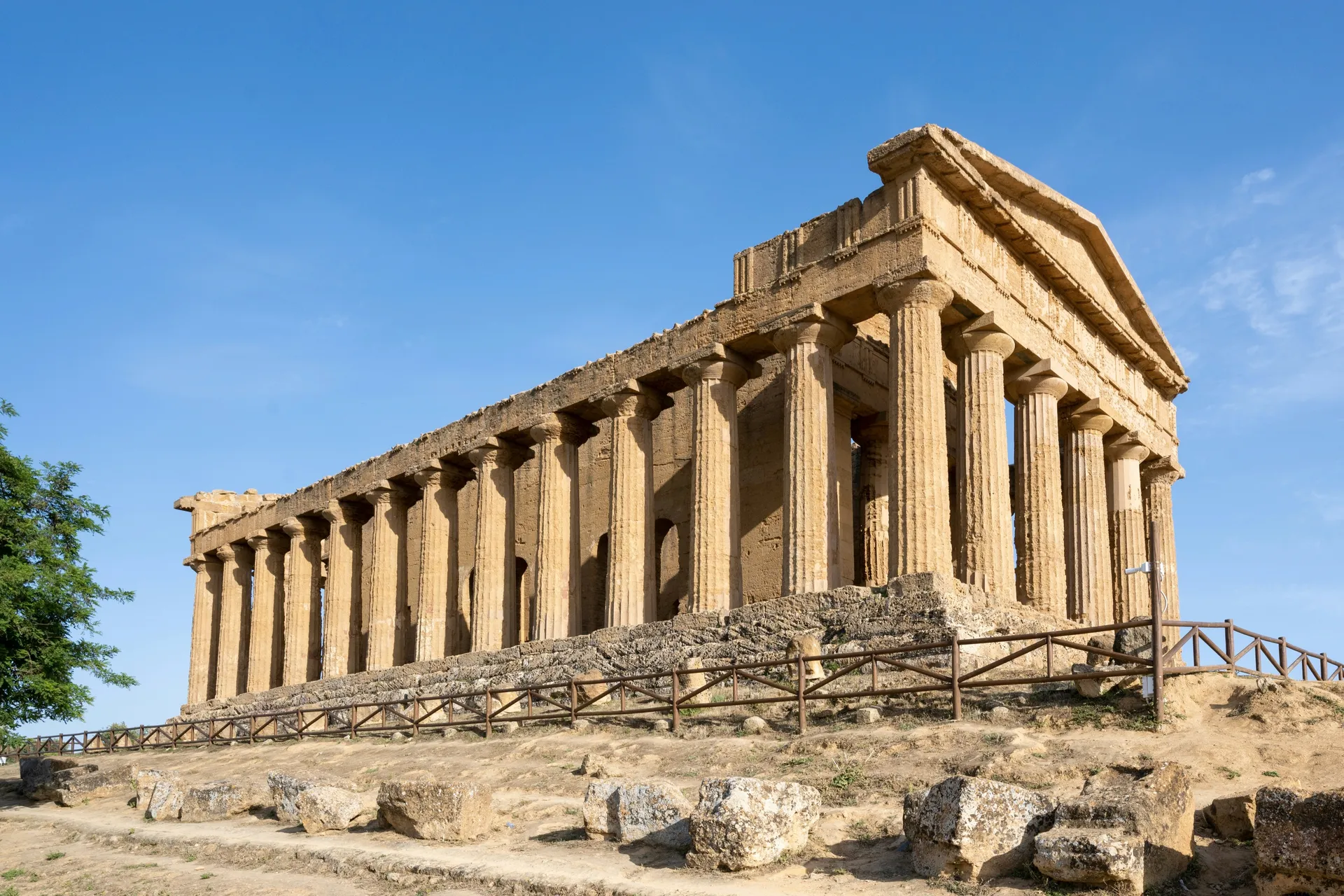
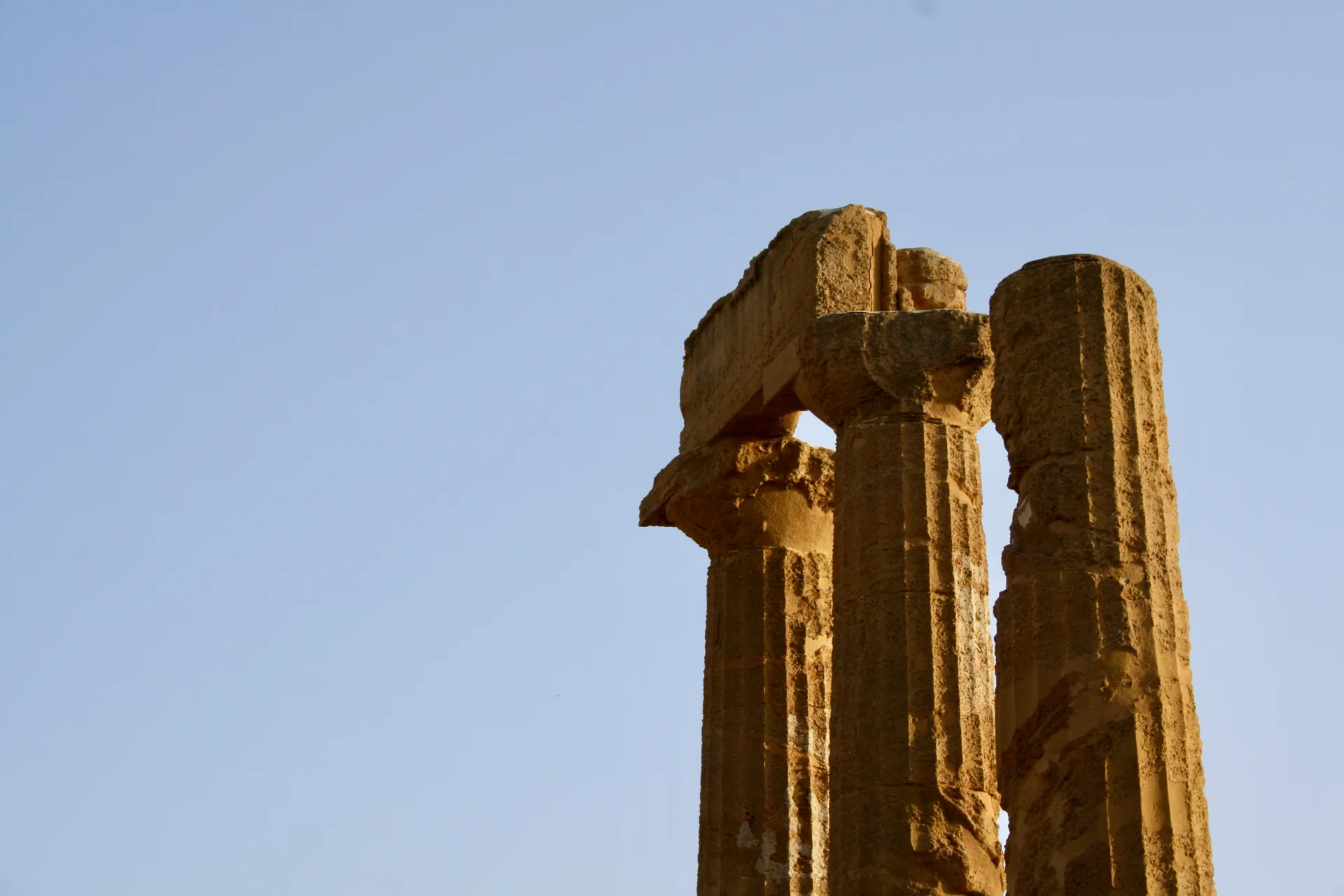
The Temple of Concordia, built around 430 BC, is the best-preserved Greek temple in the world outside the Theseion in Athens—its thirty-four columns standing at their original height, its pediments largely intact, its proportions displaying the mathematical perfection that was the hallmark of Classical Greek architecture. The Temple of Juno (Hera Lacinia), perched at the ridge's eastern end with views across the Mediterranean, provides one of the most romantically situated ruins in antiquity. The Temple of Heracles (Hercules), the oldest in the valley, survives in eight re-erected columns that stand as witnesses to the passage of two and a half millennia. Walking the Sacred Way that connects these temples, particularly at sunset when the warm stone glows against the darkening sky and the sea shimmers below, is an experience that transcends tourism and approaches pilgrimage.
The cuisine of Agrigento is Sicilian at its most sun-drenched. Couscous—a legacy of the island's Arab period—is served with fish stew (cuscus di pesce) in a preparation unique to western Sicily. Pasta with sardines, fennel, and pine nuts (pasta con le sarde) is the regional primo. The arancini (fried rice balls) of Sicily are the nation's finest street food, and Agrigento's version, stuffed with ragù and mozzarella, is exemplary. The almond pastries—pasta di mandorla—reflect the ancient groves that cover the surrounding hillsides, their blossoms in February creating a pink-and-white carpet beneath the temples that is one of the most celebrated sights in Sicily.
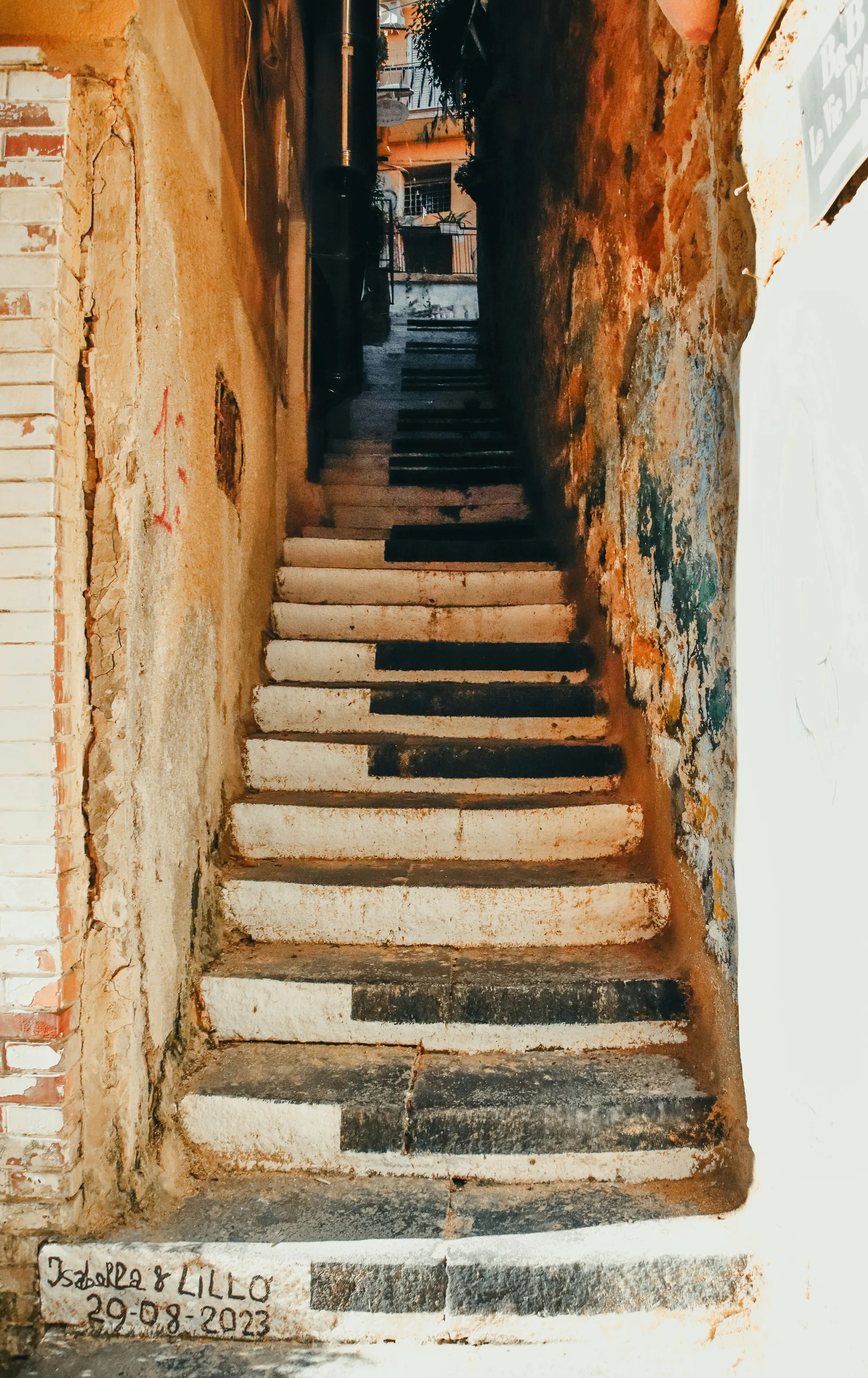
The Archaeological Museum of Agrigento, adjacent to the temple valley, houses an extraordinary collection that includes the telamon (giant male figure) from the Temple of Olympian Zeus—at 7.65 meters tall, it was one of the largest sculpted figures of the ancient world. The museum's ceramics, coins, and votive offerings provide intimate context for the monumental ruins outside. Beyond the temples, the medieval and Baroque old town of Agrigento, while less visited than the archaeological site, rewards exploration with its narrow streets, Norman-era churches, and the panoramic views from the cathedral terrace.
Agrigento is accessible from Palermo (two and a half hours) and Catania (two and a half hours), and serves as a shore excursion from Mediterranean cruise ships calling at the port of Porto Empedocle. The best time to visit is March through June and September through November, with the almond blossom festival in February providing a specific incentive for an early visit. Summer brings intense heat that makes afternoon visits to the open-air site challenging—morning and evening visits are recommended. The temples are spectacularly illuminated at night, and an after-dark visit is an unforgettable experience.