Where the Appian Way meets the Adriatic, Brindisi has welcomed travelers for over two millennia — a port city whose Roman columns still stand sentinel over the harbor where legionnaires once embarked for the Eastern Mediterranean. Founded as a Messapian settlement before falling under Roman dominion in 267 BC, Brindisi served as the terminus of the Via Appia, the queen of roads, making it the gateway between Rome and the Byzantine world. Its natural harbor, shaped like the antlers of a stag — from which the city derives its name, *brunda* in Messapian — has sheltered Crusaders, merchants, and poets, including Virgil, who drew his final breath here in 19 BC.
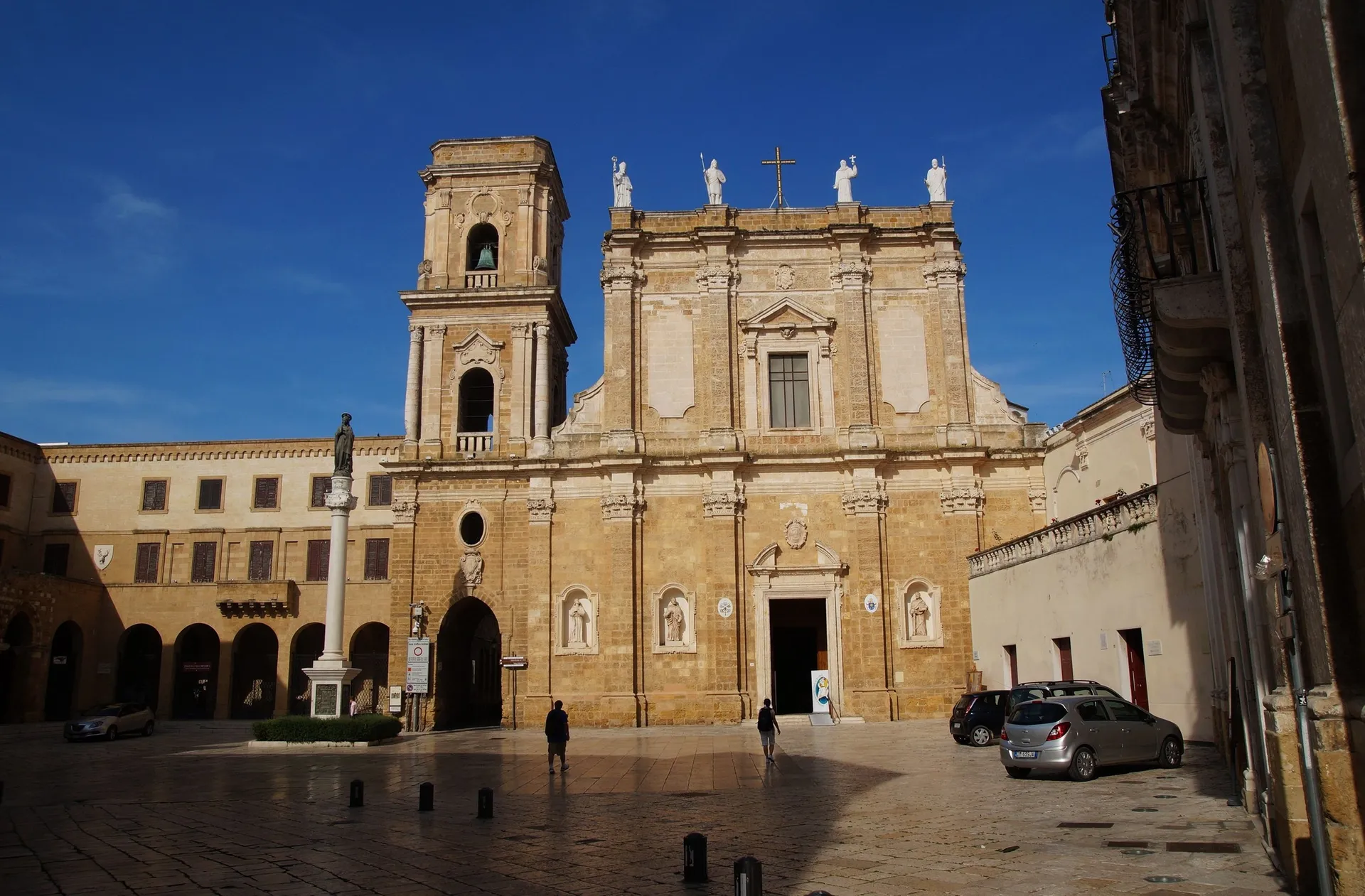
Today, Brindisi unfolds with the unhurried grace of a city that has seen empires rise and dissolve from its waterfront promenade. The Lungomare Regina Margherita traces the inner harbor in a gentle arc, flanked by palm trees and pastel-washed palazzi whose balconies overflow with bougainvillea in the warmer months. The Castello Svevo, a formidable Hohenstaufen fortress commissioned by Frederick II in 1227, anchors the port with its crenellated towers, while the round church of San Giovanni al Sepolcro — built by the Knights Templar in the twelfth century — offers a cool, frescoed interior that rewards those who wander beyond the seafront. This is not a city that performs for tourists; it simply lives, magnificently, as it always has.
Puglian cuisine reaches a particular refinement in Brindisi, where the Adriatic's bounty meets the region's ancient agricultural traditions. Begin with *ricci di mare* — raw sea urchin scooped from their spiny shells and eaten with nothing more than a squeeze of lemon and crusty bread — a delicacy that tastes of the sea itself. The local *orecchiette con le cime di rapa*, ear-shaped pasta tossed with broccoli rabe, anchovy, and a thread of local olive oil, is elevated here by the extraordinary quality of Puglia's oil, among the finest in the Mediterranean. Seek out *bombette pugliesi*, delicate rolls of capocollo stuffed with caciocavallo cheese and grilled over wood, best enjoyed at a rustic *masseria* in the surrounding countryside alongside a glass of Negroamaro from the Salento vineyards that stretch south toward Lecce.
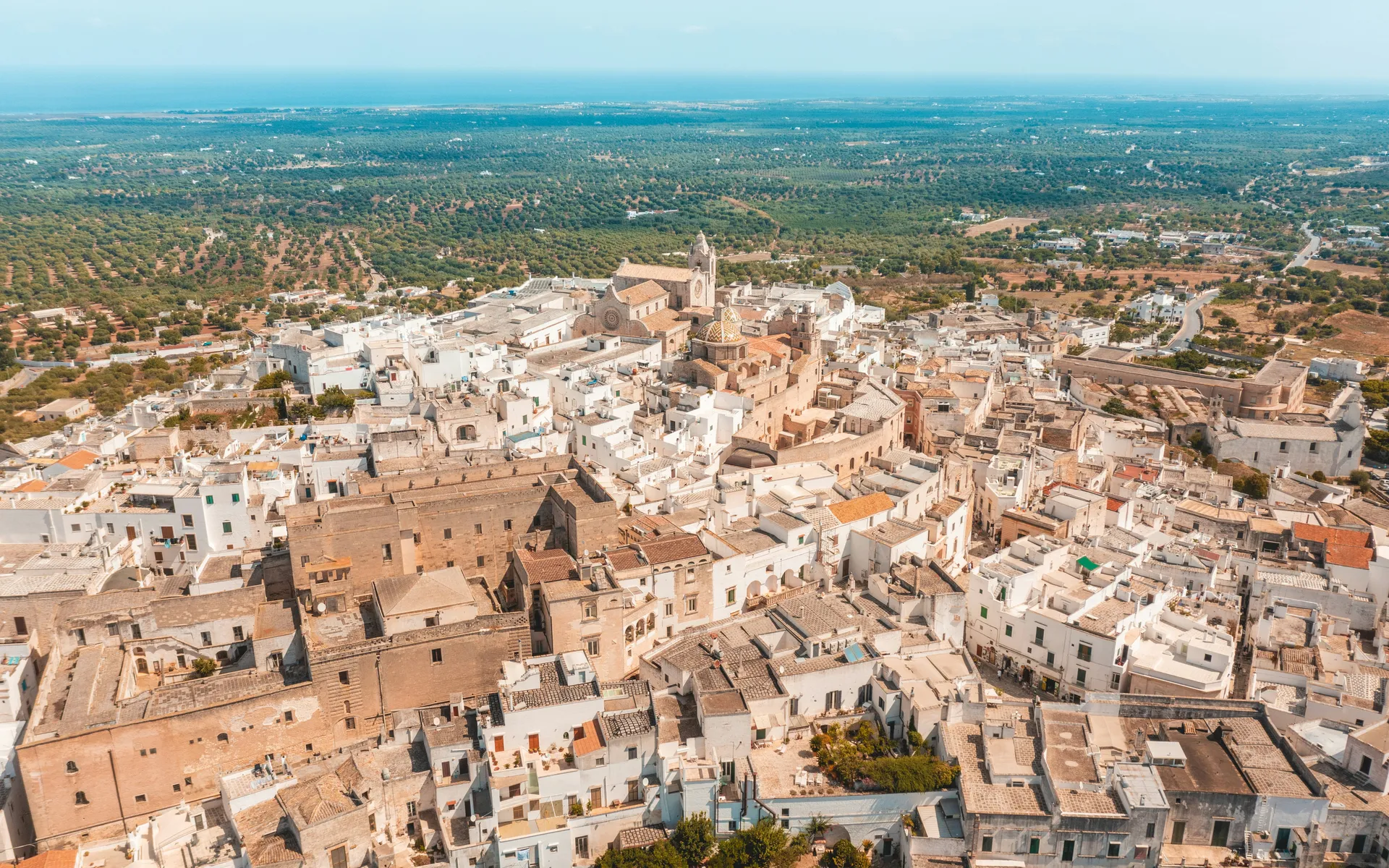
Brindisi's position along the Adriatic coast places it within reach of some of Italy's most captivating landscapes. The whitewashed hill town of Ostuni, the *Città Bianca*, rises like a mirage from olive groves just thirty minutes northwest, while the trulli-dotted Itria Valley and the baroque splendor of Lecce lie within an hour's drive. For those with a taste for island escapes, the crystalline waters surrounding Portoferraio on Elba and the rugged Sardinian capital of Cagliari offer compelling counterpoints on extended Mediterranean itineraries, each revealing a different facet of Italy's extraordinary coastal diversity. The quieter ports of the northern Adriatic — Porto Viro and the intimate anchorages near Candeli — present yet another Italy altogether, one of lagoons, river deltas, and the soft light of the Veneto.
Brindisi's deep-water harbor and compact city center make it an exceptionally civilized port of call, with the historic quarter reachable on foot within minutes of disembarkation. Seabourn's intimate vessels bring a curated elegance to the waterfront, while Explora Journeys offers its signature blend of contemporary luxury and Mediterranean sensibility on calls here. MSC Cruises and AIDA frequently include Brindisi on their Adriatic and Eastern Mediterranean rotations, providing access to Puglia's treasures for a broader audience of discerning travelers. Whether arriving at dawn to watch fishermen mend their nets along the inner harbor or departing at sunset as the Castello Svevo turns the color of aged gold, Brindisi rewards the traveler who understands that the most profound destinations are those that never try too hard to impress.