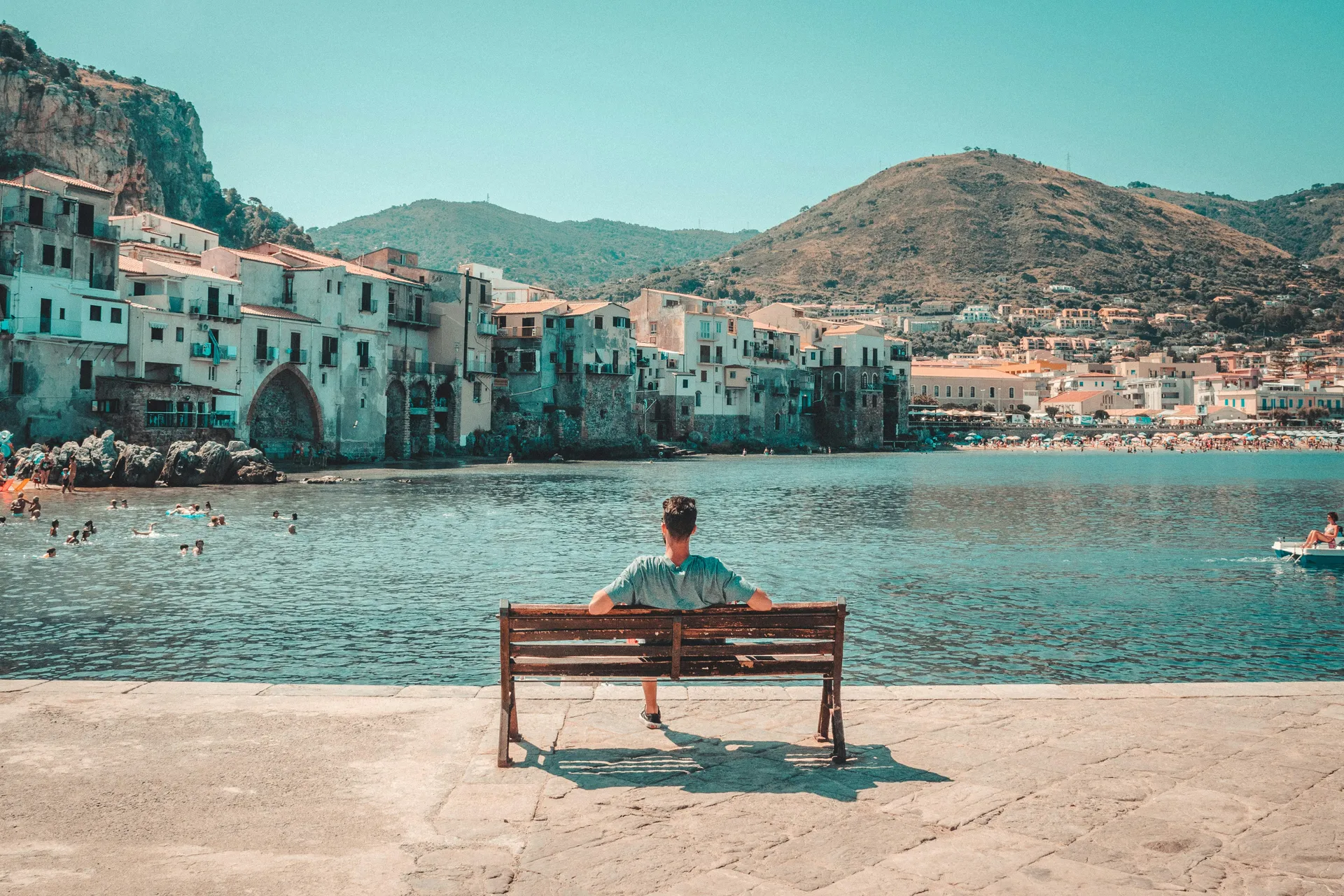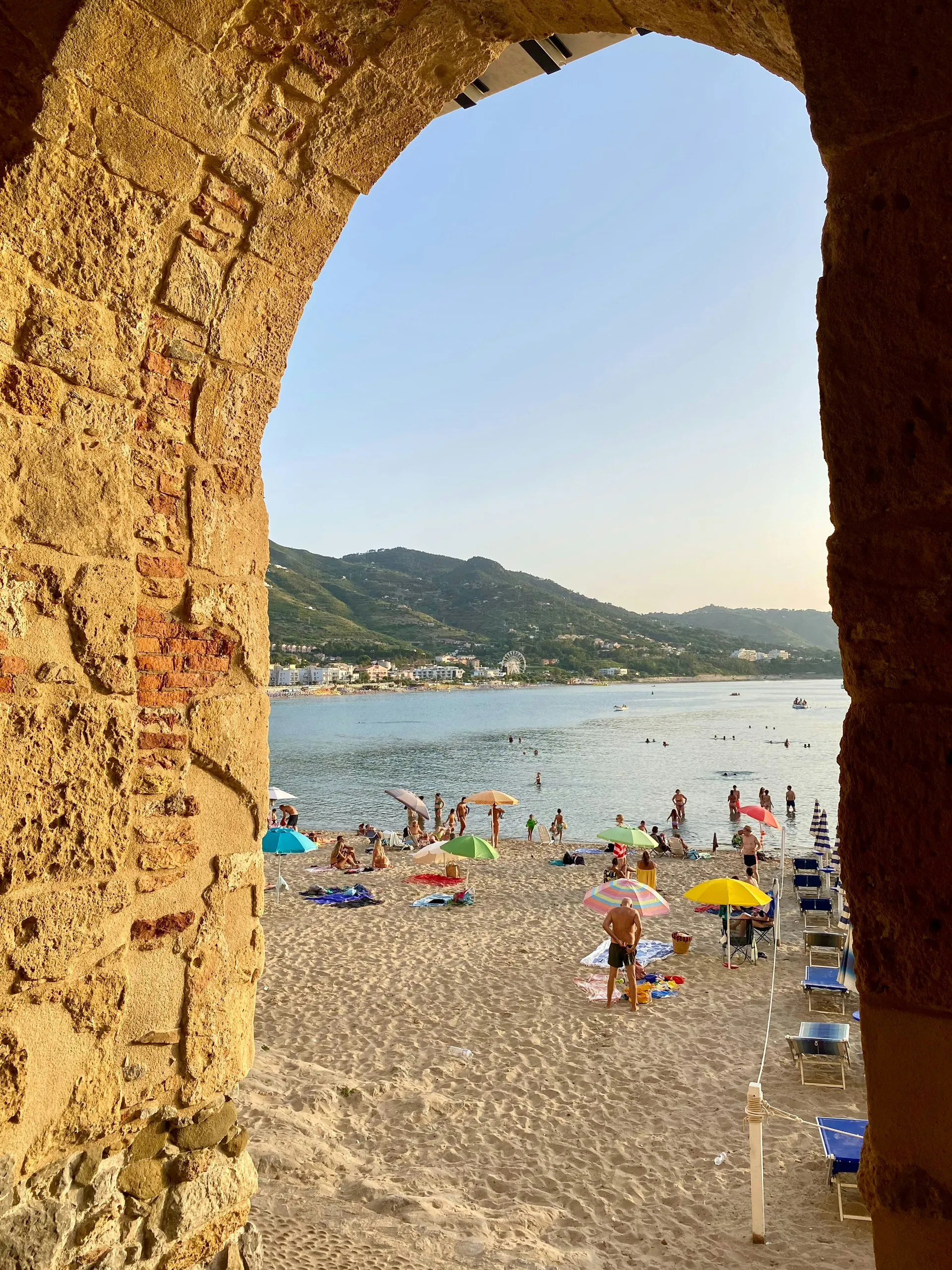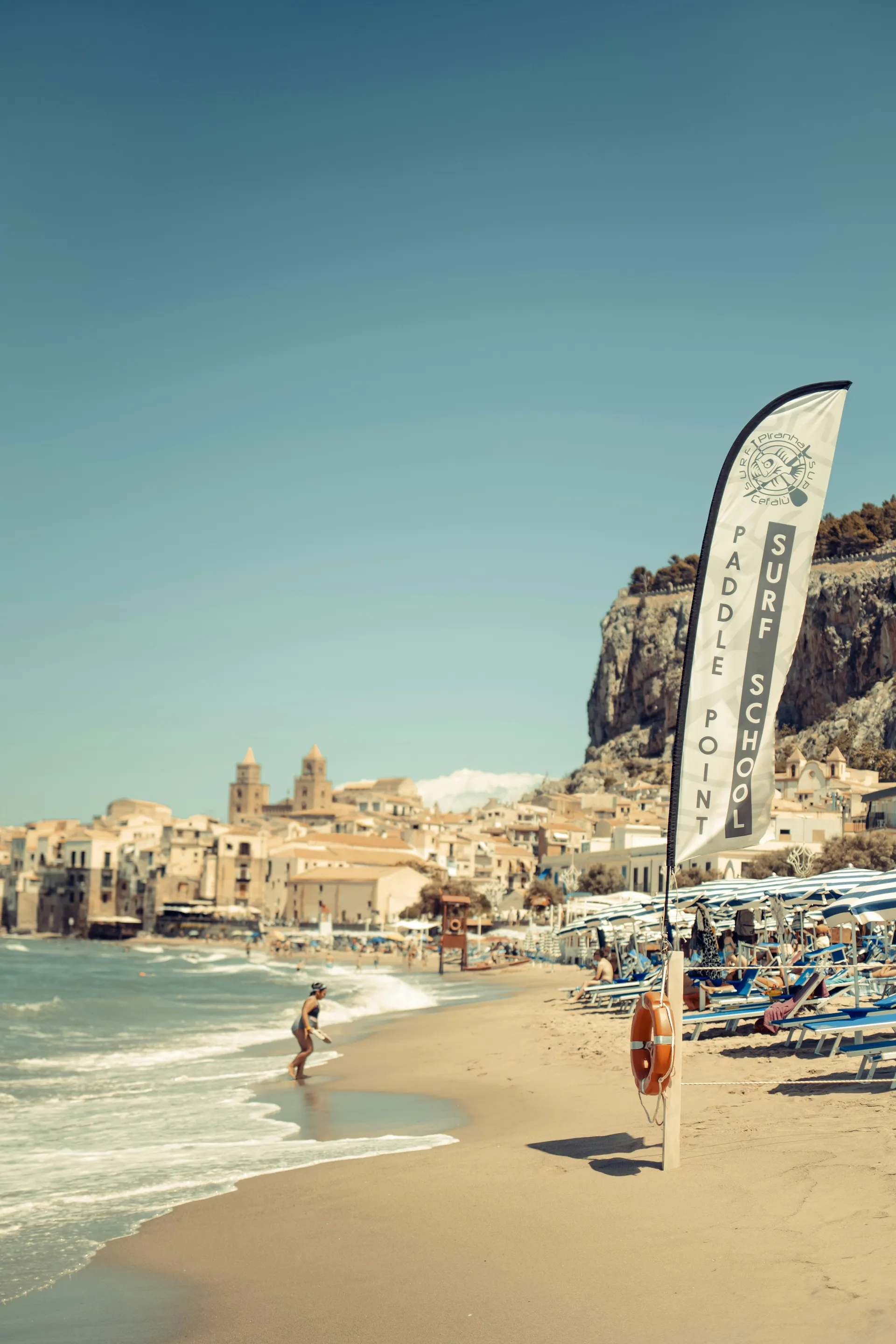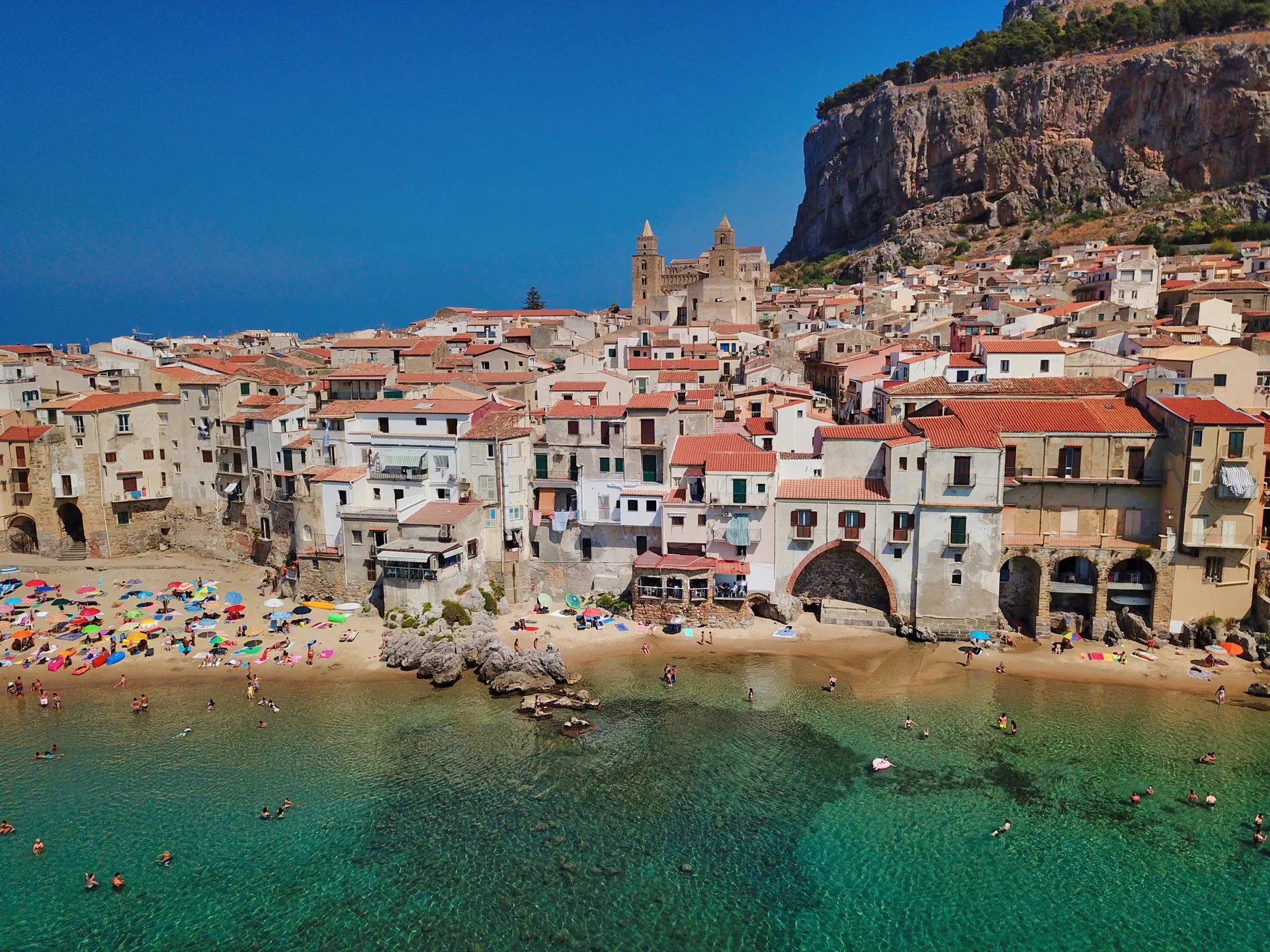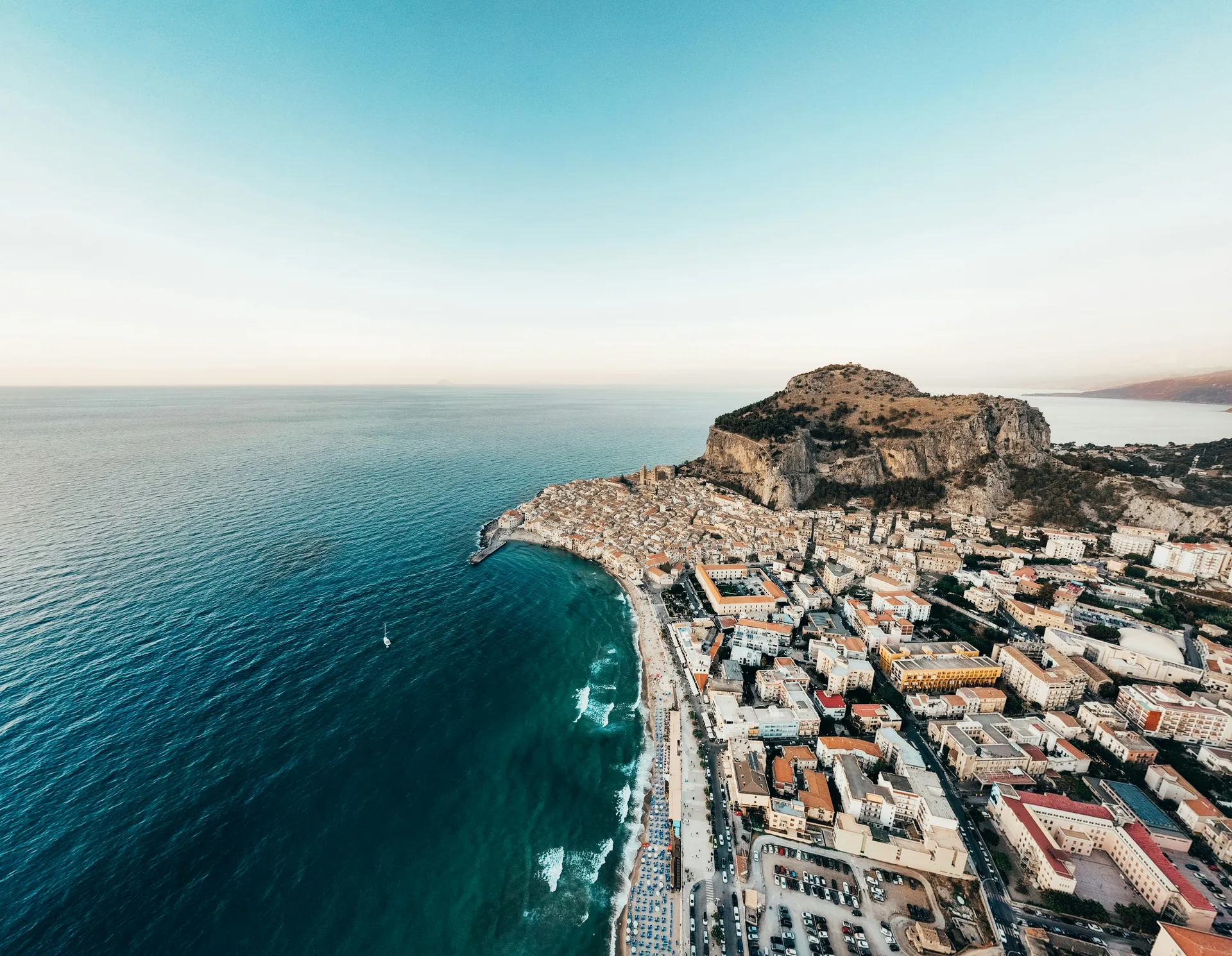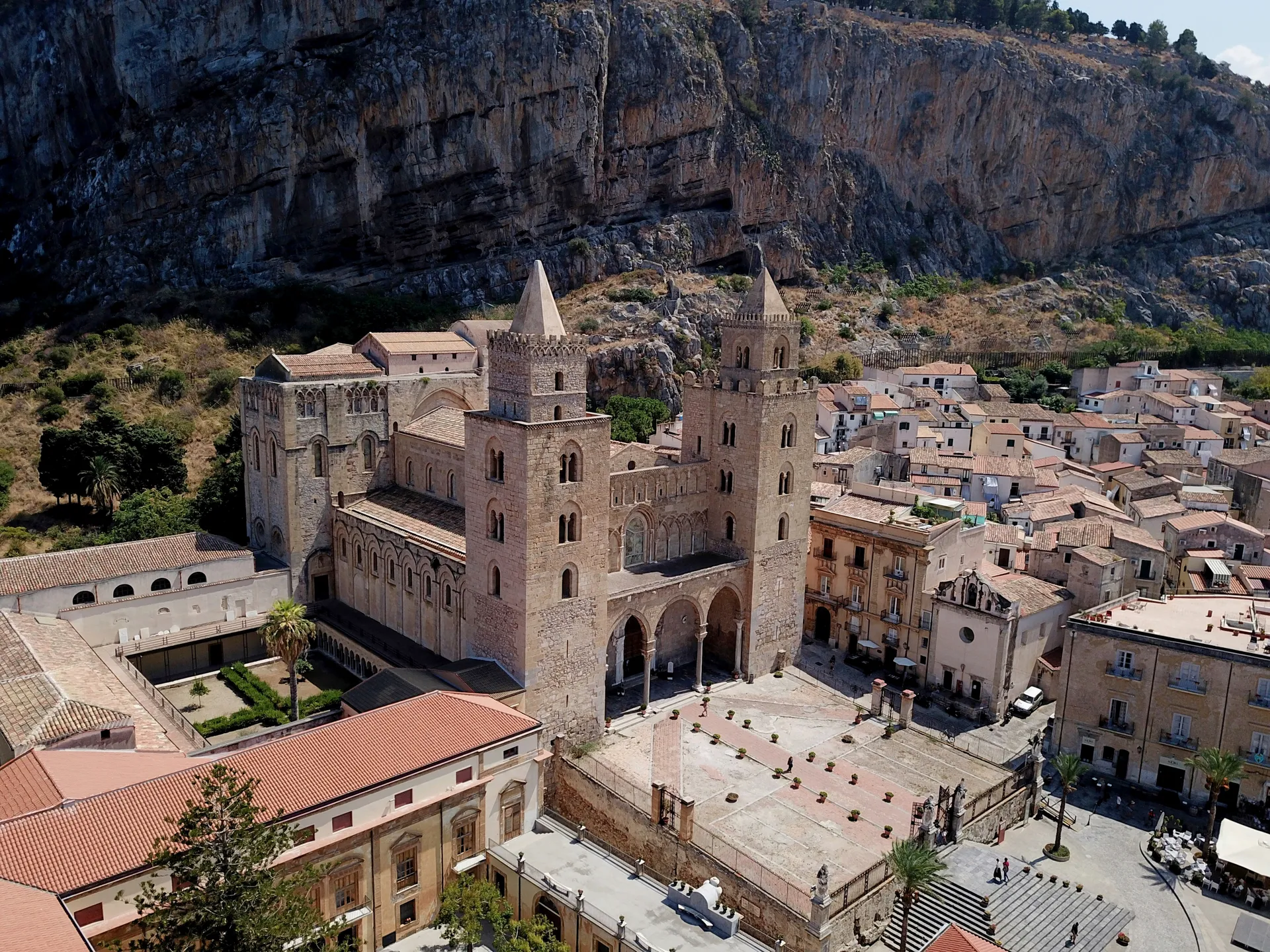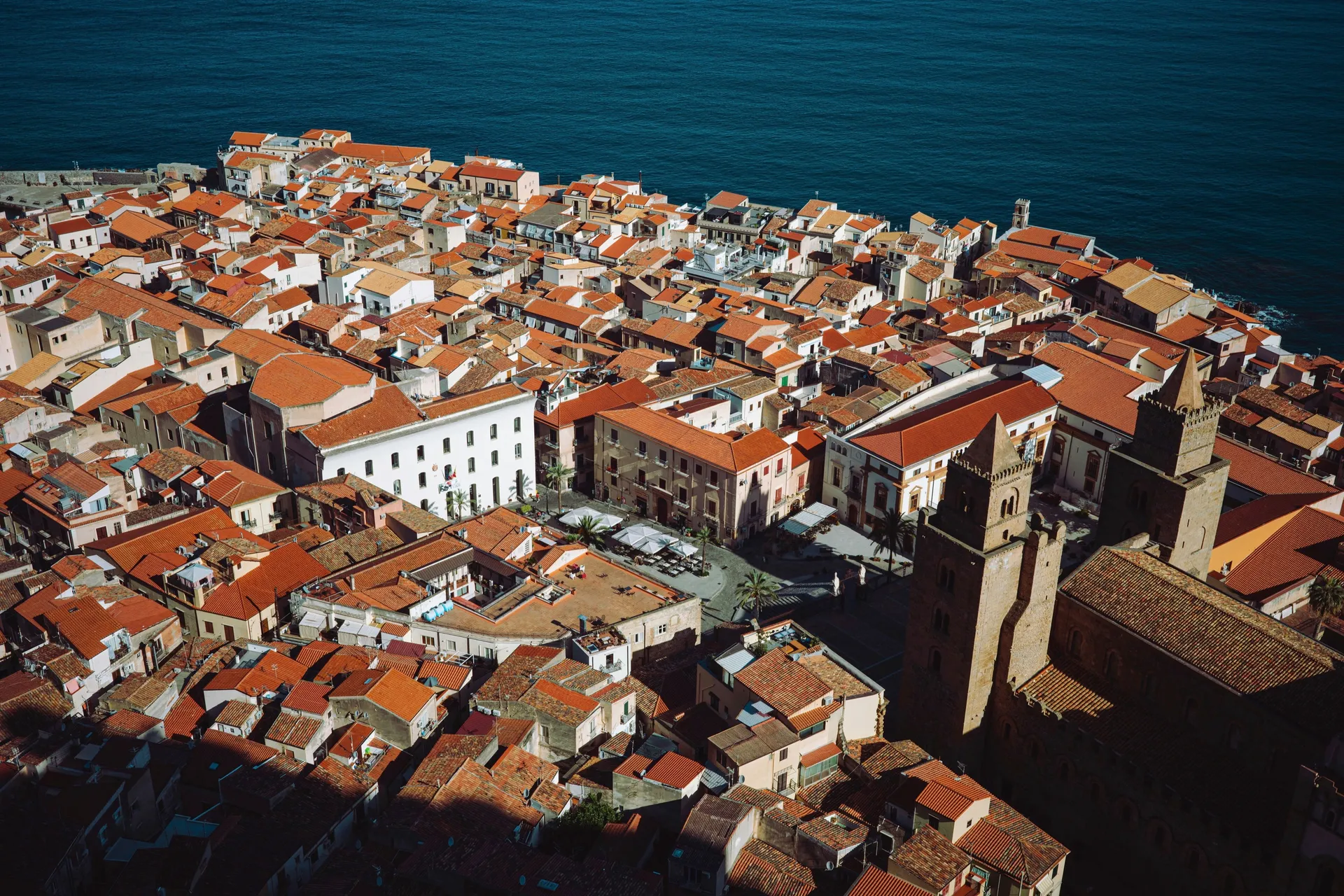
Cefalù is one of those Sicilian towns that seem to have been designed specifically to fulfill the Mediterranean fantasy — a fishing village of terracotta rooftops and Baroque church domes tumbling down a hillside to a crescent of golden sand, backed by a 270-meter limestone promontory called La Rocca that rears above the town like a natural cathedral. Located on Sicily's Tyrrhenian coast, approximately seventy kilometers east of Palermo, Cefalù has been inhabited since at least the fifth century BCE, when the Greeks established a settlement on the rocky summit. But the town's masterpiece — the reason that art historians and pilgrims have beaten a path here for nearly nine centuries — is the Cathedral, commissioned in 1131 by the Norman King Roger II and containing apse mosaics of Christ Pantocrator that rank among the supreme achievements of Byzantine art in Europe.
The Cathedral of Cefalù dominates the town in every sense. Its twin Norman towers, flanking a facade of warm golden limestone, are visible from miles out to sea — a deliberate statement of power by the Norman kings who conquered Sicily from the Arabs and then, with characteristic pragmatism, employed Byzantine Greek and Arab craftsmen to create buildings of unparalleled beauty. The apse mosaic of Christ Pantocrator — his enormous figure filling the conch of the apse, right hand raised in blessing, left hand holding an open gospel book inscribed in both Greek and Latin — is rendered with a spiritual intensity that the gold-ground mosaic technique amplifies into something approaching the numinous. Below the Pantocrator, ranks of angels, apostles, and saints descend in hierarchical order, their frozen gazes and gilded halos creating a visual theology that still communicates with overwhelming directness after nearly 900 years.
The cuisine of Cefalù is Sicilian coastal cooking at its most immediate. The day's catch — swordfish, tuna, sardines, red mullet, octopus — arrives at the harbor each morning and appears on restaurant tables by noon. Pasta con le sarde (pasta with sardines, wild fennel, pine nuts, and raisins) is Sicily's most celebrated pasta dish, and Cefalù's version, made with sardines caught within sight of the dining room, is exemplary. Arancini (fried rice balls), caponata (sweet-and-sour aubergine), and pannelle (chickpea fritters) represent the Arab-influenced street food that distinguishes Sicilian cuisine from that of the Italian mainland. The granita — crushed ice flavored with almond, pistachio, coffee, or seasonal fruit — is Sicily's answer to breakfast, served with a warm brioche for dipping in a ritual that is as much cultural performance as nutrition.
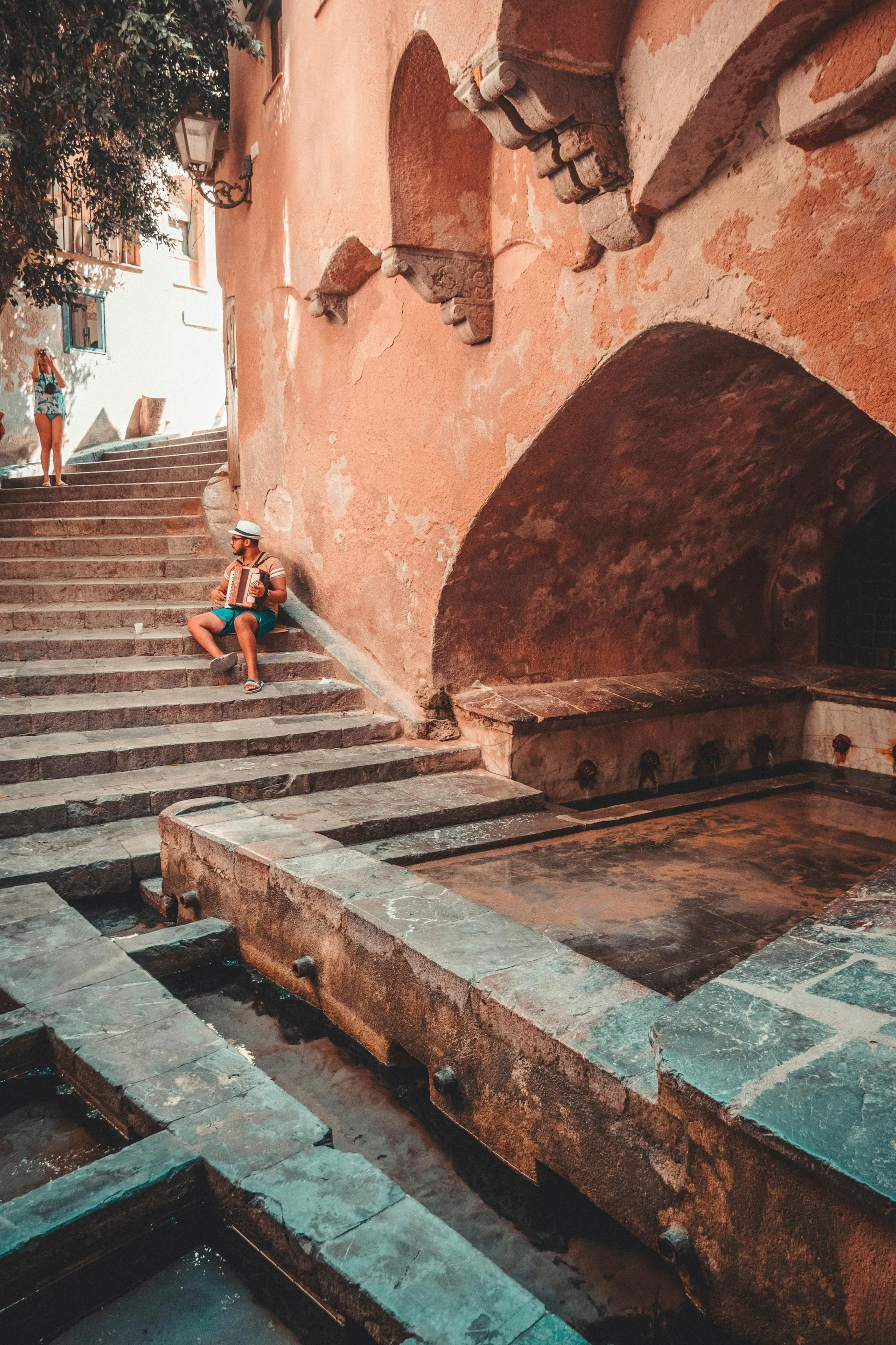
La Rocca, the massive limestone outcrop behind the town, rewards the steep climb (approximately twenty minutes from the old town) with panoramic views of Cefalù, the coastline, and the Madonie Mountains inland. The ruins of a ninth-century Arab castle and a fifth-century BCE Greek temple occupy the summit, their fragmentary walls providing the foreground to a panorama that extends to the Aeolian Islands on clear days. The medieval washtub house (Lavatoio) at the town's base — a public laundry fed by a river that emerges from beneath La Rocca — preserves one of the most atmospheric corners of old Cefalù, its stone basins and vaulted ceiling virtually unchanged since the medieval period.
Cefalù is one hour by train from Palermo and is a regular port of call for cruise ships operating in the Tyrrhenian Sea (tenders land passengers at the small harbor). The town is compact and walkable, with the Cathedral, beach, old town, and La Rocca all within easy reach. The summer months of June through September offer the warmest weather and best swimming, though July and August bring significant crowds to the beach and narrow streets. May and October provide the ideal compromise — warm enough for swimming, uncrowded enough for genuine exploration, and blessed with the quality of Sicilian light that makes every photograph look like a film still.